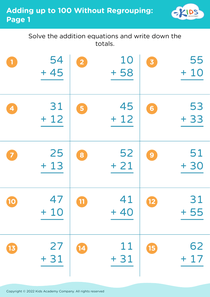
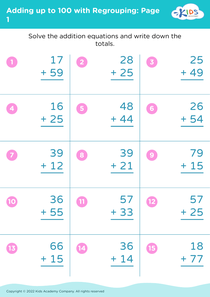
Understanding Sequences Adding up to 100 Misc Worksheets for 8-Year-Olds
4 filtered results
-
From - To
Welcome to our "Understanding Sequences Adding up to 100 Misc Worksheets" designed specifically for 8-year-olds! These engaging worksheets provide a fun and interactive way for children to learn about numerical sequences while building their addition skills. By practicing with various exercises, kids will enhance their ability to recognize patterns, improve mental math, and gain confidence in problem-solving. Each worksheet is carefully crafted to support different learning styles, ensuring that all students can thrive. Perfect for classroom use or at-home practice, these resources make learning enjoyable while reinforcing essential math concepts. Start exploring today!
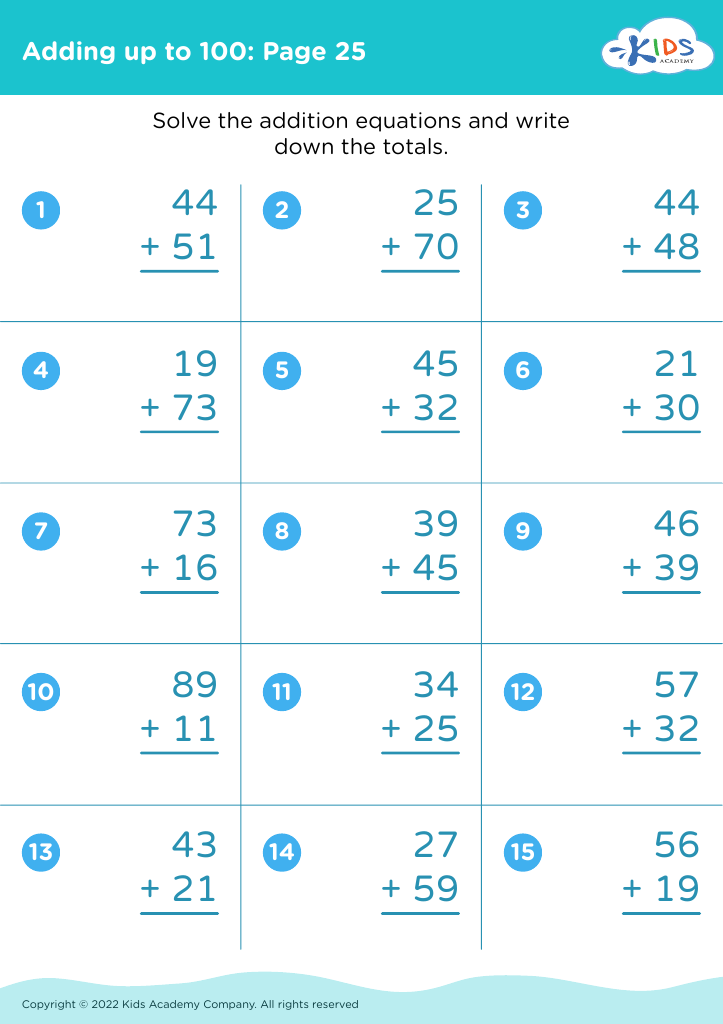
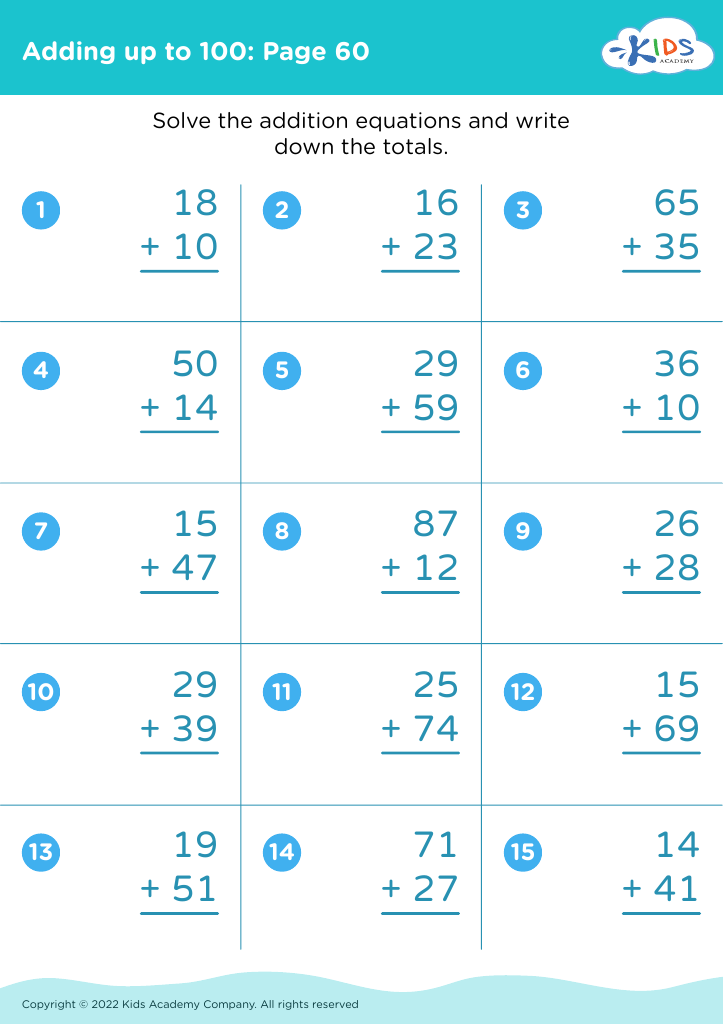
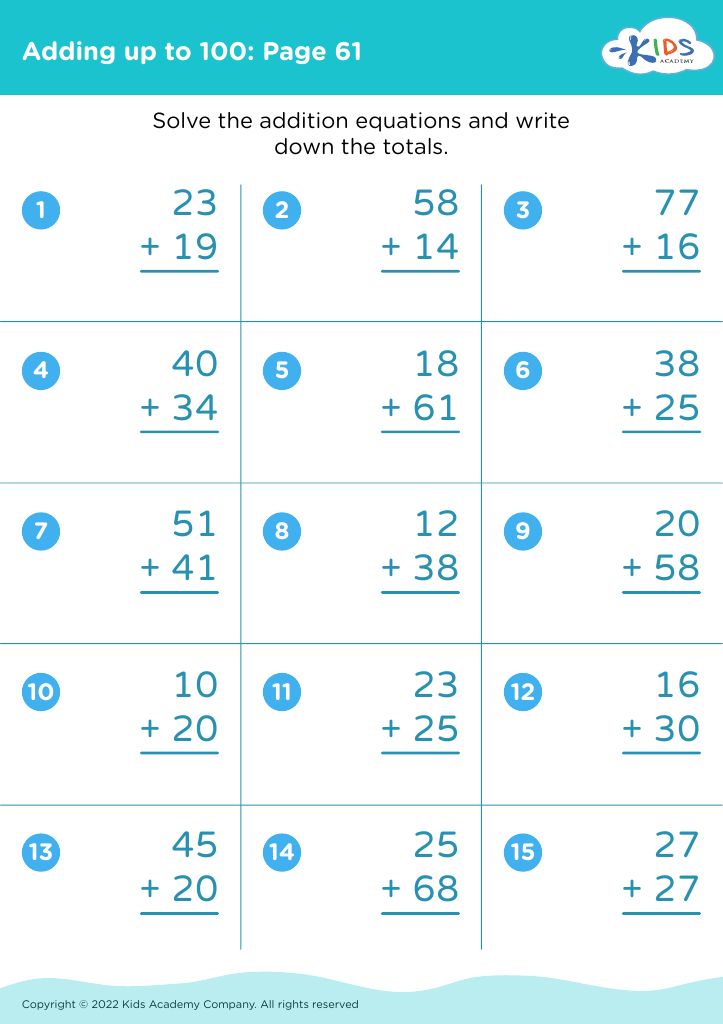
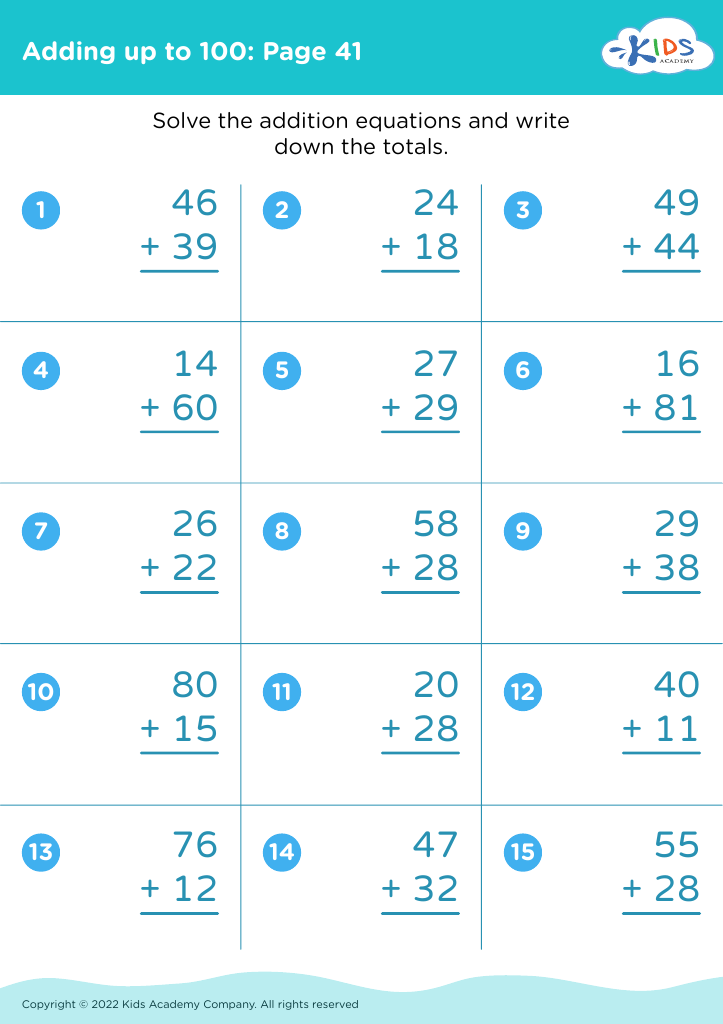


Understanding sequences that add up to 100 is vital for 8-year-olds, as it lays a foundational skill in mathematics and problem-solving. At this age, children are honing their cognitive abilities, and working with numbers in specific sequences develops their logical reasoning and critical thinking skills. When parents and teachers facilitate activities involving sequences, like counting in increments or recognizing patterns, they promote numeracy beyond simple addition or subtraction.
Moreover, sequences help children understand more complex mathematical concepts such as multiplication, division, and fractions. By recognizing how different numbers fit into a whole, young learners enhance their ability to tackle future math challenges confidently.
Additionally, engaging with sequences stimulates engagement and motivation. As children see their progress towards reaching a target like 100, it builds a sense of accomplishment and encourages perseverance.
Finally, investing time in understanding sequences supports real-world applications such as budgeting, planning activities, or even measuring ingredients in cooking. Parents and teachers should care about these practices, as they equip children with essential skills necessary for academic success and everyday decision-making, setting the groundwork for lifelong learning and problem-solving abilities.