Basic Math Skills Adding up to 1000 Misc Worksheets for 8-Year-Olds
3 filtered results
-
From - To
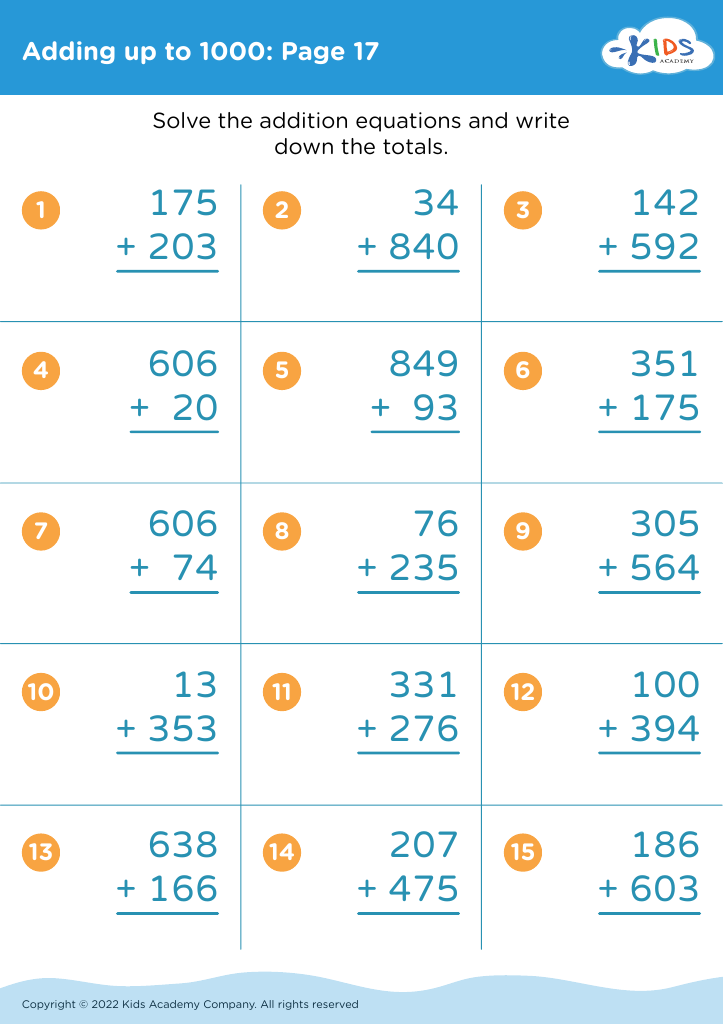
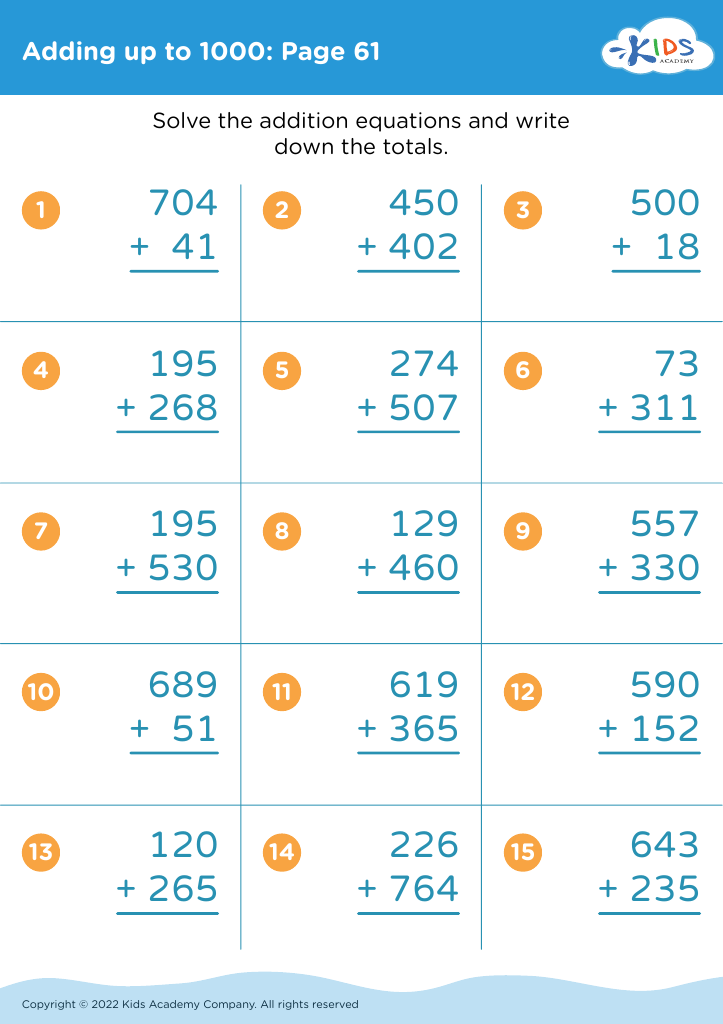
Explore our engaging "Basic Math Skills Adding Up to 1000 Misc Worksheets" designed specifically for 8-year-olds! This collection provides a variety of fun and interactive exercises to help young learners master addition concepts effortlessly. With worksheets that focus on adding numbers up to 1000, students will enhance their skills through diverse activities, making math enjoyable and accessible. Whether working independently or with parental guidance, children will develop confidence and proficiency in basic math. Dive into our resources to support your child's learning journey in mastering essential math skills! Perfect for homework, after-school activities, or classroom use!
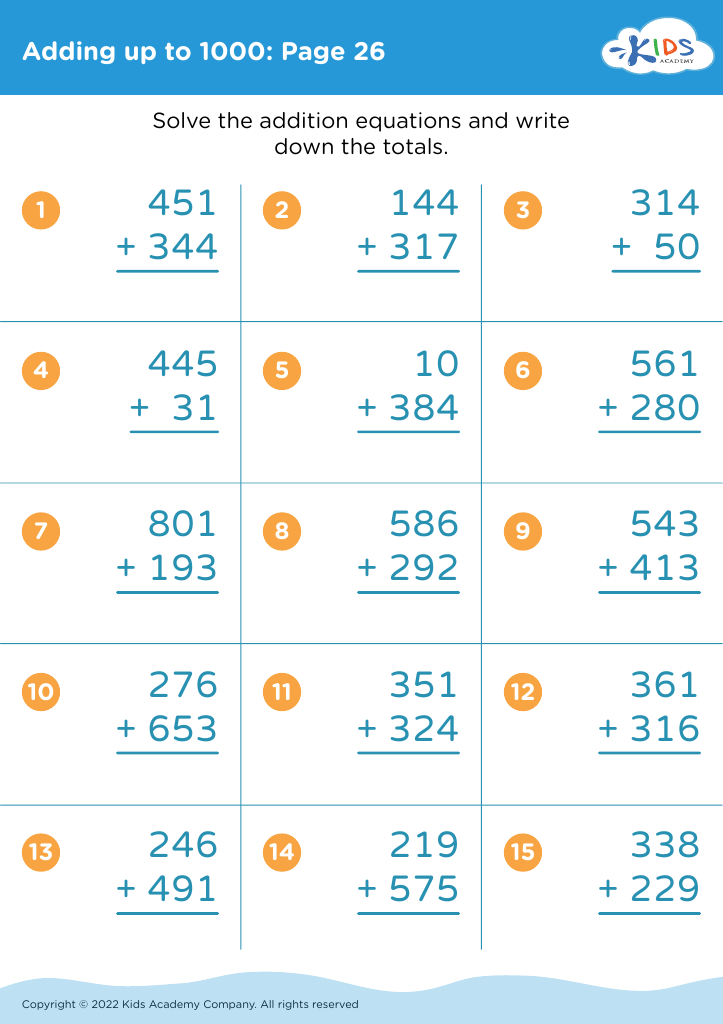


Basic math skills, particularly the ability to add up to 1,000, are foundational for 8-year-olds. At this age, children are developing critical thinking and problem-solving abilities that will serve them throughout life. Understanding addition, especially with larger numbers, strengthens their confidence and fosters a positive attitude toward math—a subject often feared by many.
By mastering addition skills, students develop number sense, which is essential for later mathematical concepts such as multiplication, division, and eventually, algebra. Engaging with numbers enhances cognitive development, allowing children to make connections between different mathematical concepts and real-world applications. For instance, adding up expenses while shopping helps them understand money management and budgeting.
Furthermore, basic math forms a crucial part of various academic subjects. Strong math skills help in logical reasoning and are integrated into science, history, and everyday tasks, like cooking or planning events.
By prioritizing these skills, parents and teachers equip children with tools essential for their academic journey and future career paths. Encouraging proficiency in basic math prepares them for challenges ahead, promotes resilience, and fosters a growth mindset—important traits in our fast-paced, information-driven world.