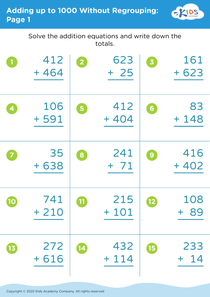
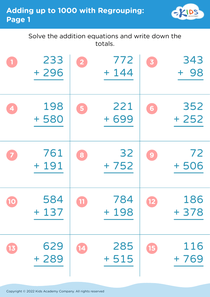
Reading comprehension Adding up to 1000 Misc Worksheets for 8-Year-Olds
4 filtered results
-
From - To
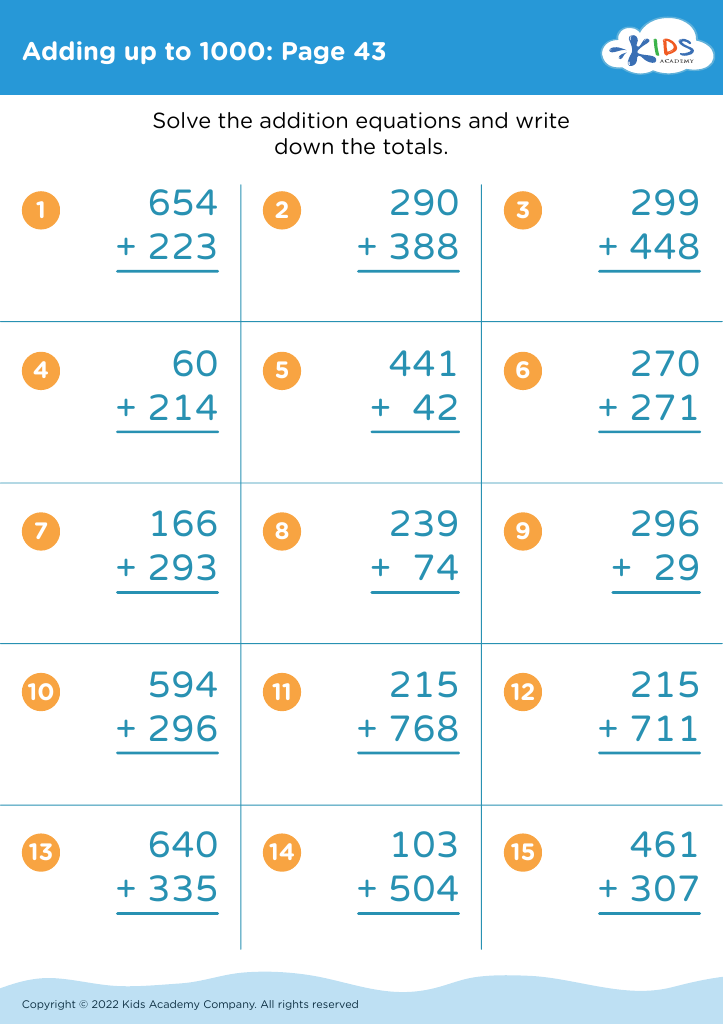
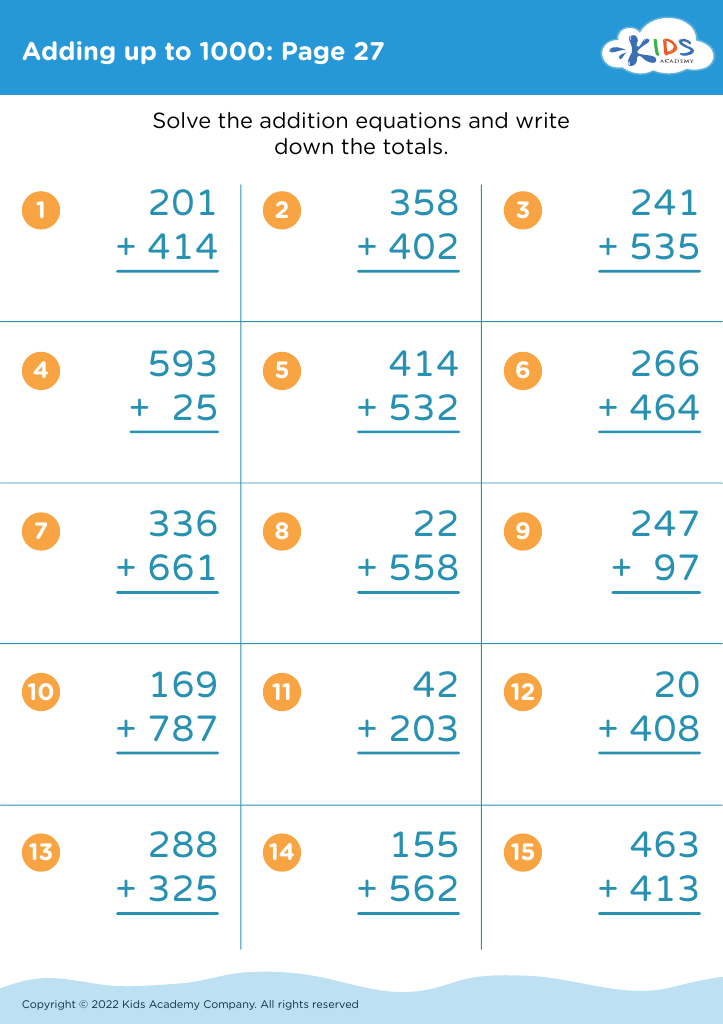
Enhance your 8-year-old's reading and math skills with our "Reading Comprehension Adding Up to 1000 Misc Worksheets." These engaging worksheets provide a unique blend of literacy and arithmetic, enabling children to practice reading comprehension while tackling addition problems that sum up to 1000. Each activity is thoughtfully designed to encourage critical thinking, improve vocabulary, and boost math competency. Perfect for homework or classroom use, these worksheets foster a fun and interactive learning environment. Help your child master essential skills while enjoying the process! Dive into our collection and watch your child's confidence soar as they become proficient readers and mathematicians.
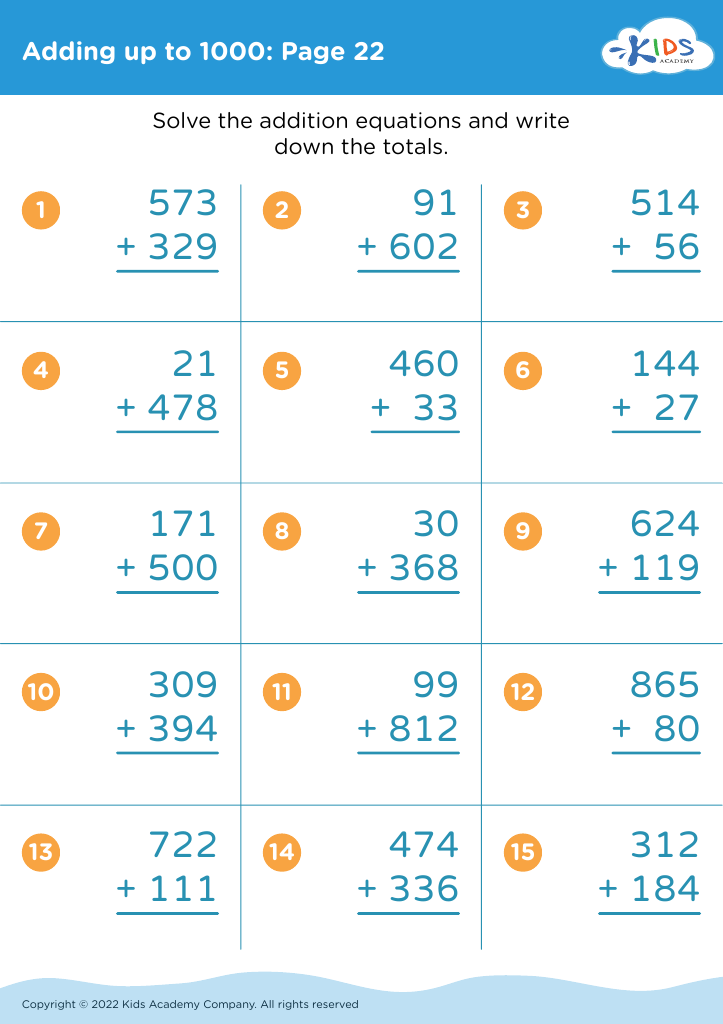
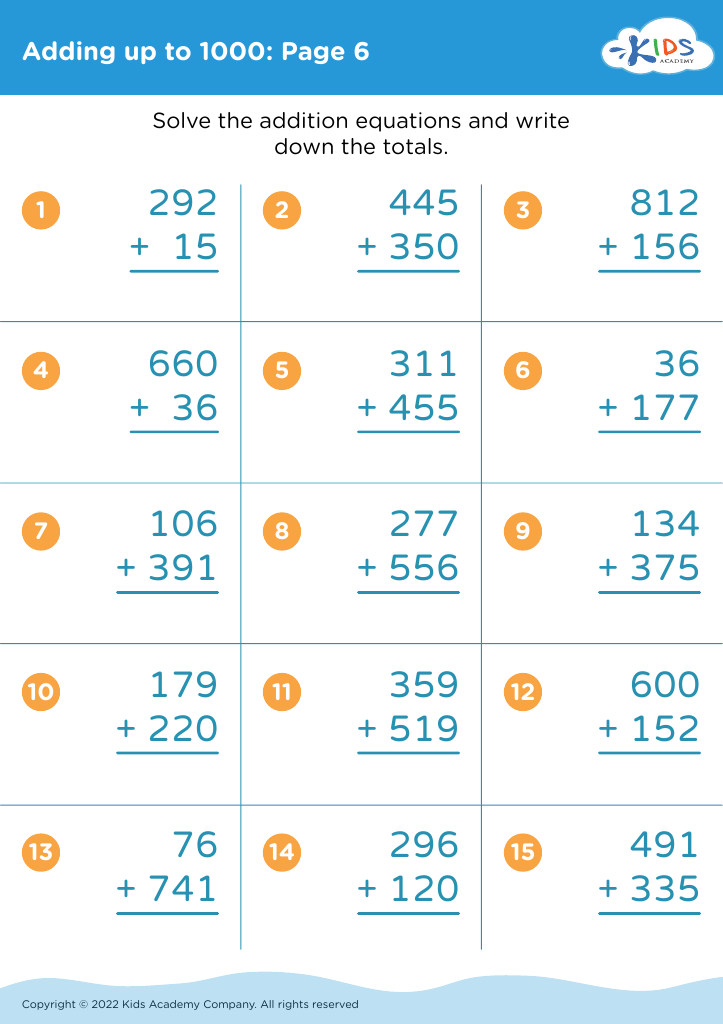


Reading comprehension is crucial for 8-year-olds as it forms the foundation for their educational journey and overall cognitive development. At this age, children transition from learning to read to reading to learn, making comprehension skills vital for academic success across subjects. Understanding texts enables them to access information, make connections, and develop critical thinking skills.
Parents and teachers should care deeply about fostering strong reading comprehension skills at this stage. This capacity allows students to grasp essential concepts in sciences, social studies, and mathematics, which rely heavily on textual information. Moreover, proficient comprehension skills contribute to improved vocabulary, writing skills, and creativity, enhancing a child’s ability to express thoughts coherently.
Additionally, strong reading comprehension promotes a love for literature, encouraging lifelong learning and cultural awareness. Engaging with varied texts also helps children navigate diverse perspectives, fostering empathy and emotional intelligence.
Investing in reading comprehension strategies—such as asking open-ended questions, discussing stories, and encouraging independent reading—can significantly improve children's literacy skills. Ensuring children understand what they read not only boosts their academic performance but also prepares them for future challenges, making it a priority for both parents and teachers.