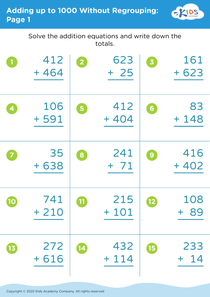
Fraction comparison Adding up to 1000 with Regrouping Worksheets for 8-Year-Olds
3 filtered results
-
From - To
Enhance your child's math skills with our engaging "Fraction Comparison: Adding Up to 1000 with Regrouping Worksheets" designed for 8-year-olds. These worksheets focus on teaching young learners how to compare fractions while mastering addition up to 1000, including crucial regrouping techniques. Packed with fun exercises, kids will develop a deep understanding of fractions and improve their problem-solving abilities. Each worksheet encourages critical thinking and reinforces foundational math concepts in a non-intimidating format. Ideal for homework or classroom activities, these resources ensure a well-rounded learning experience. Watch your child build confidence and excel in math with our comprehensive tools!
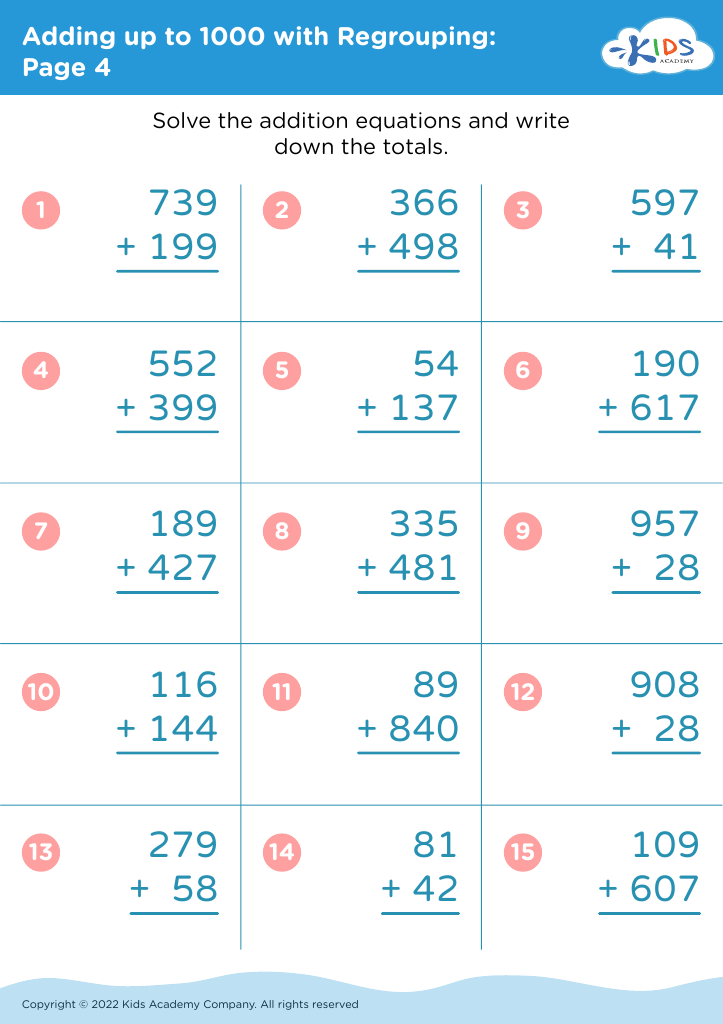
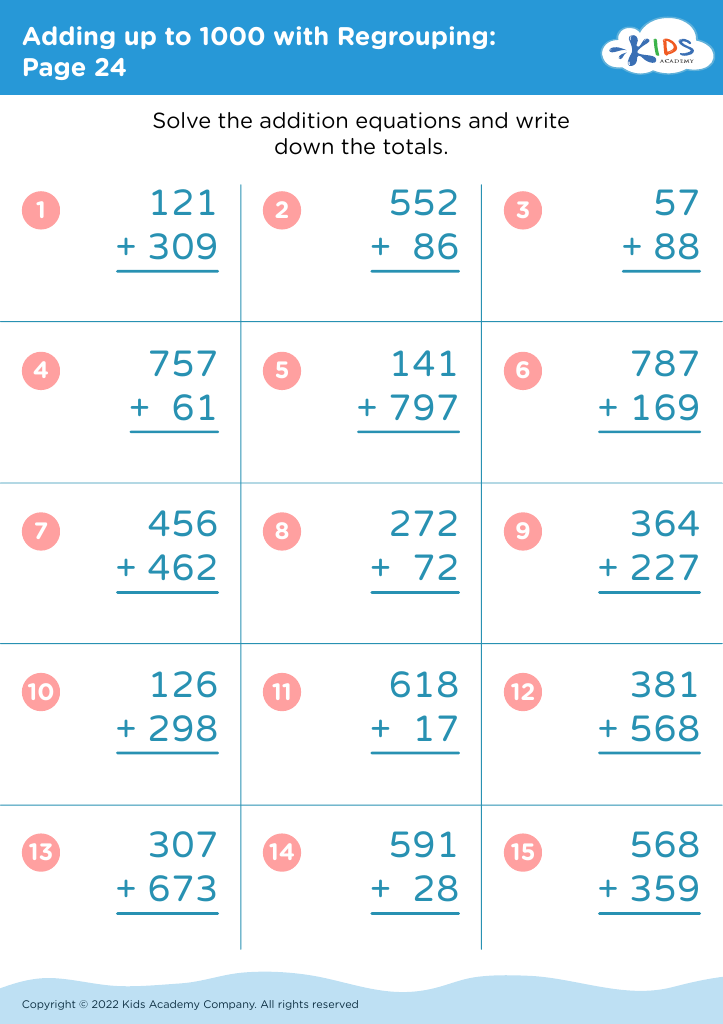
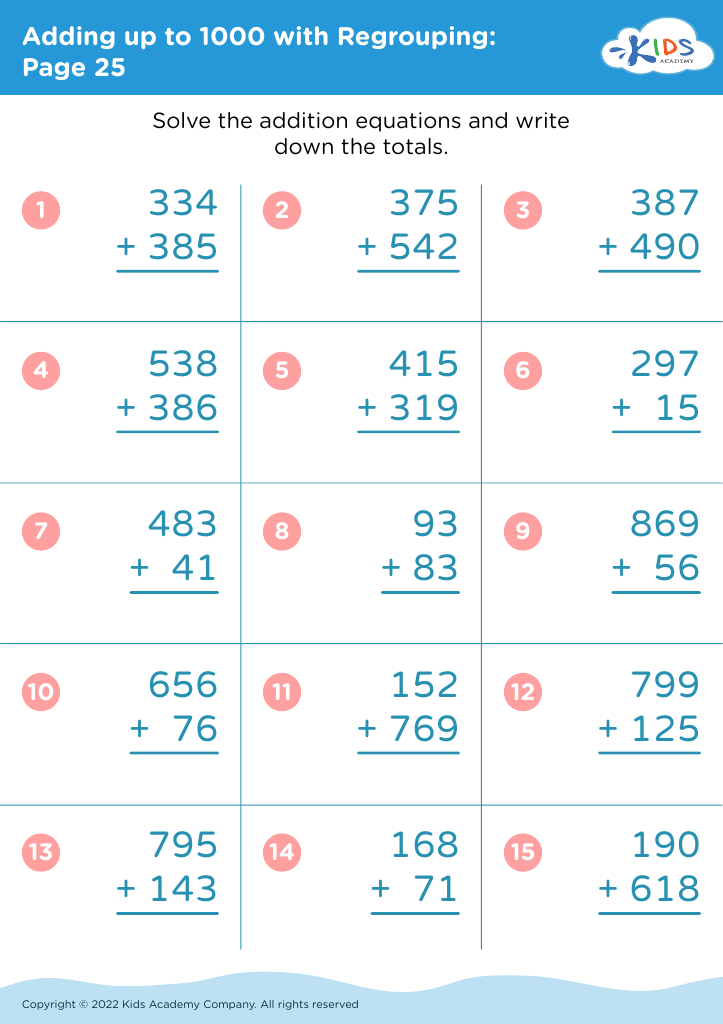


Fraction comparison and adding up to 1000 with regrouping are fundamental mathematical concepts that significantly impact 8-year-olds' educational development. Parents and teachers should care about these skills for several reasons.
Firstly, mastering fraction comparison is critical for understanding ratios, proportions, and critical real-life situations, such as cooking or budgeting. When children learn to compare fractions, they can develop logical reasoning and critical thinking skills, as they engage with concepts related to parts of a whole. This fosters mathematical literacy and promotes confidence in problem-solving.
Secondly, learning to add numbers, especially when regrouping, enhances children's ability to work with larger numbers—a foundation necessary for future mathematical equations and principles. Regrouping not only helps in addition but also deepens their understanding of place value, thereby strengthening their overall numerical comprehension.
These concepts work together to nurture resiliency and perseverance in learning. By building these skills at an early age, children are more likely to succeed in their higher-grade levels and have a better attitude towards math. Ultimately, this fosters a positive learning environment, empowering children to view math as an enjoyable challenge rather than an obstacle. Parents and teachers play a vital role in supporting this essential phase of cognitive growth.