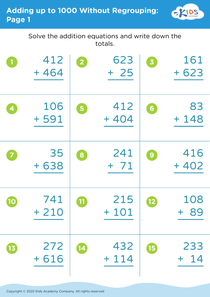
Mathematical reasoning Adding up to 1000 with Regrouping Worksheets for 8-Year-Olds
3 filtered results
-
From - To
Nurture your child's mathematical reasoning with our engaging "Adding Up to 1000 with Regrouping Worksheets" designed specifically for 8-year-olds. These worksheets offer a fun and interactive way to strengthen addition skills, emphasizing the concept of regrouping. Each activity guides young learners through the process of combining numbers up to 1000 while building confidence in their math abilities. With a variety of exercises catering to different learning styles, these worksheets help children grasp critical mathematical concepts effectively. Ideal for classroom use or at-home practice, our resources are perfect for making math enjoyable and accessible, ensuring your child thrives in their educational journey.
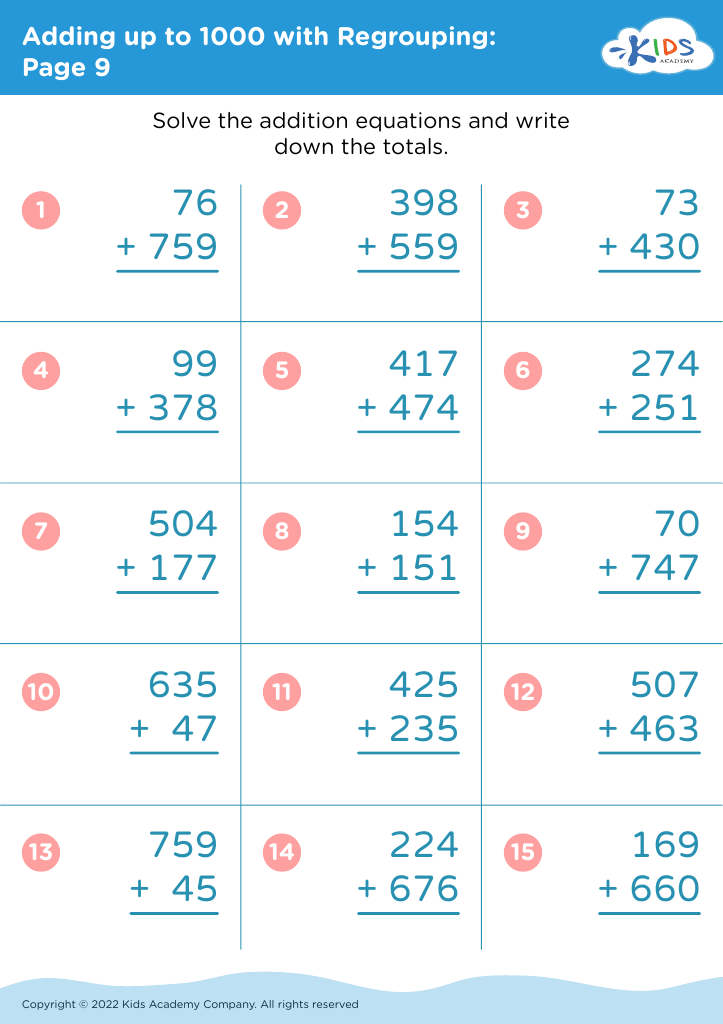
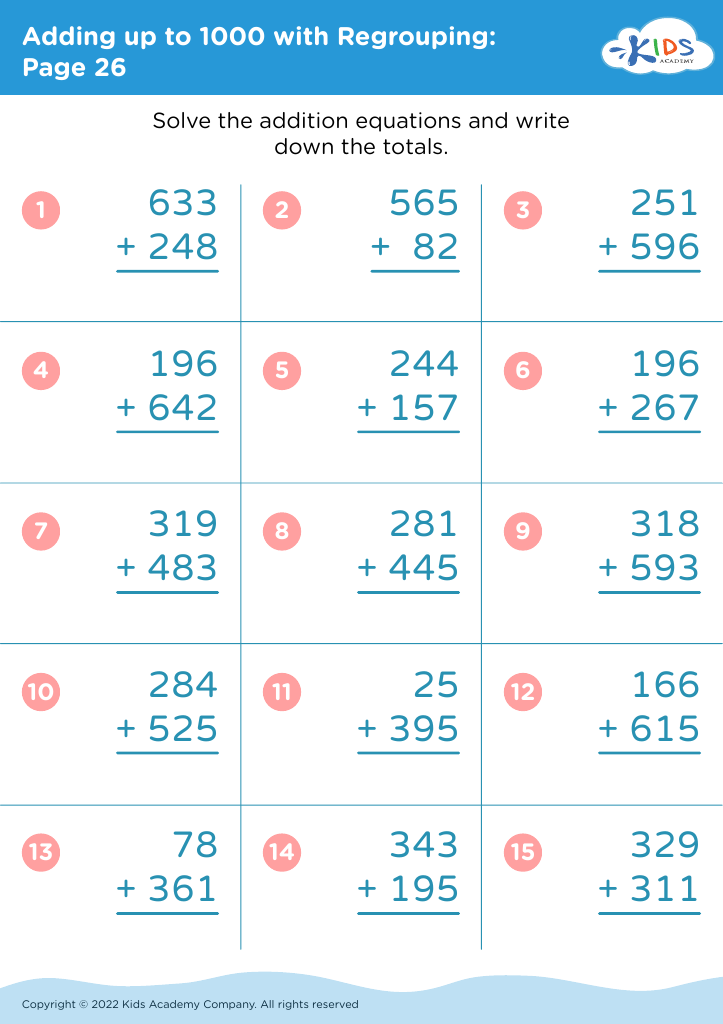
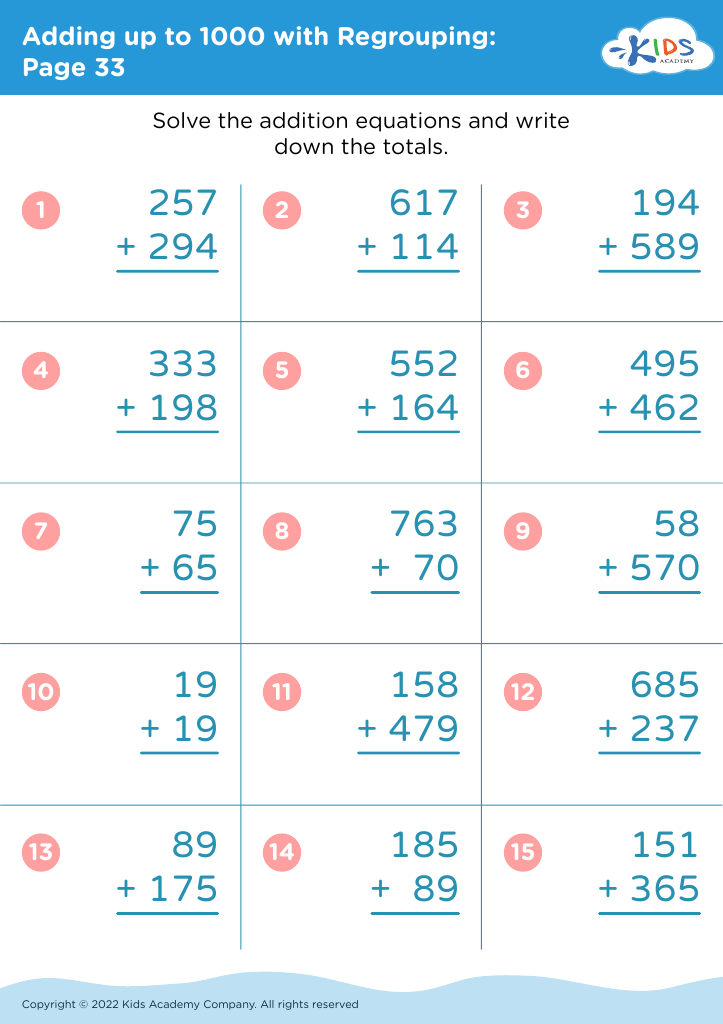


Mathematical reasoning, particularly in the context of adding up to 1000 with regrouping, is crucial for 8-year-olds as it lays the foundation for their future mathematical understanding. This skill not only strengthens basic arithmetic but also develops critical problem-solving abilities. When children engage in addition that requires regrouping, they learn to navigate more complex mathematical operations, enhancing their cognitive skills.
Moreover, mastering this skill encourages students to think logically and systematically. It fosters a deeper understanding of place value, which is essential for grasping higher-level concepts in mathematics. Parents and teachers who prioritize mathematical reasoning help children build confidence and reduce anxiety around math, promoting a positive attitude towards the subject.
Furthermore, understanding addition with regrouping cultivates perseverance and resilience. Children learn that making mistakes is part of the learning process, ultimately preparing them for future academic challenges. By nurturing these abilities, parents and teachers empower children to tackle not just math, but various problems they encounter in life, encouraging a growth mindset. Therefore, valuing mathematical reasoning is essential for holistic development, ensuring that students are well-equipped for more advanced topics as they progress in their education.