Alphabet Recognition Adding up to 1000 Without Regrouping Worksheets for 8-Year-Olds
3 filtered results
-
From - To
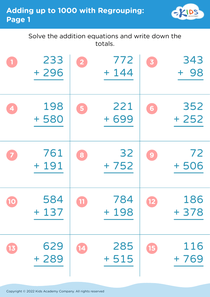
Introducing our Alphabet Recognition Adding up to 1000 Without Regrouping Worksheets designed for 8-year-olds by Kids Academy! These printables combine alphabet mastery with math skills, helping children confidently add numbers up to 1000 without regrouping. Ideal for both classroom and at-home learning, our engaging worksheets reinforce essential arithmetic skills and foundational language skills simultaneously. Each sheet encourages critical thinking and problem-solving, fostering a positive learning experience. Enhance your child's educational journey with high-quality, curriculum-aligned resources that make learning fun and effective. Explore Kids Academy for a variety of interactive worksheets and boost academic growth today!
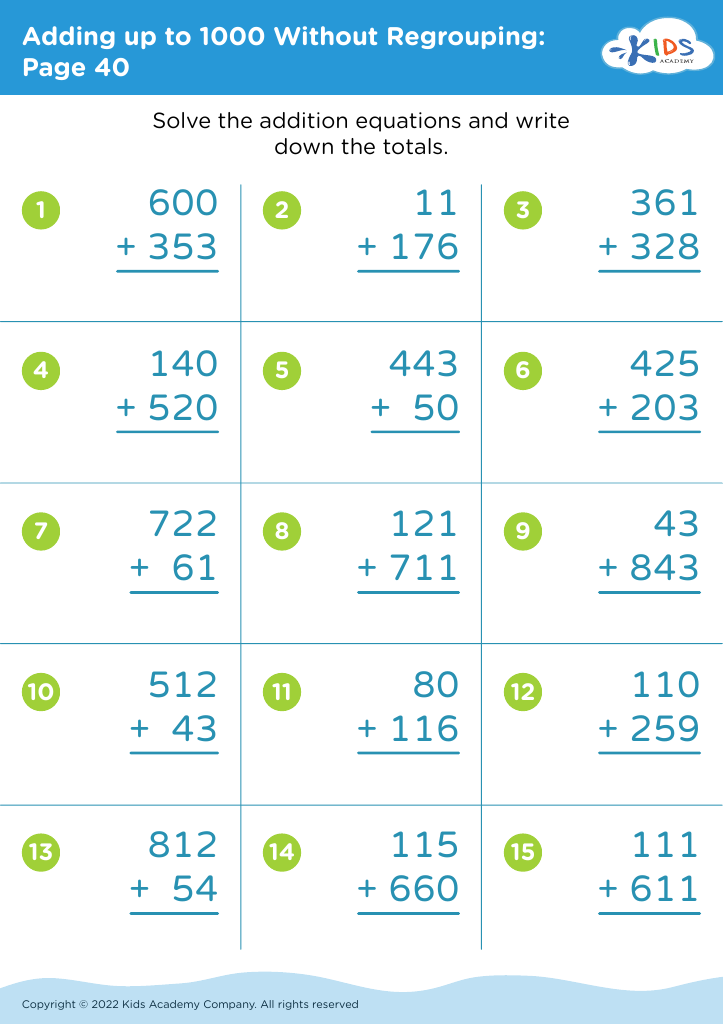
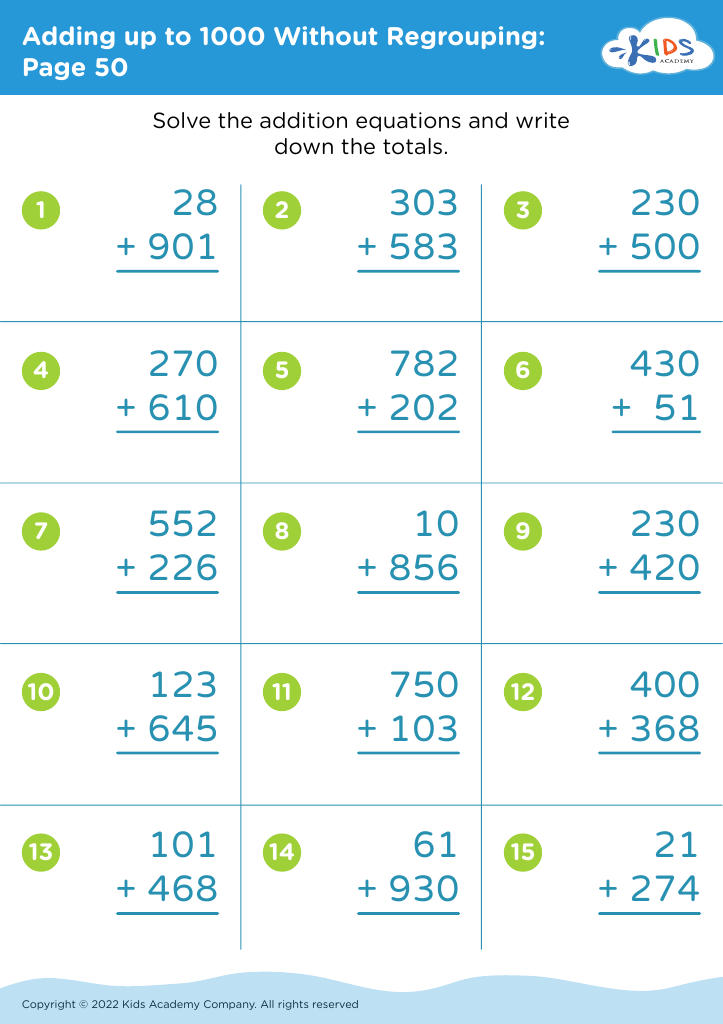
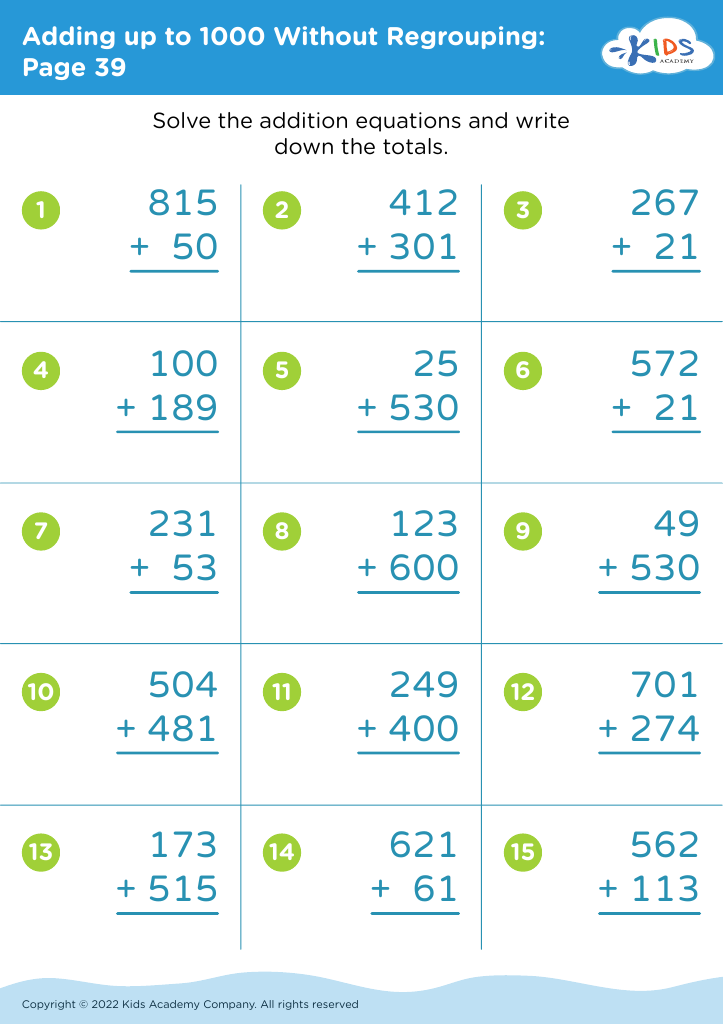


Alphabet recognition and basic arithmetic skills, such as adding up to 1000 without regrouping, are essential for 8-year-olds because they form foundational building blocks for future learning. Parents and teachers should care about these skills for several key reasons.
First, developing alphabet recognition ensures that children can read and understand written text. This is critical, as reading proficiency is closely linked to academic success in nearly all subjects. Being able to recognize and understand letters enables children to decode words, thereby building their vocabulary and comprehension.
Second, having a solid grasp of basic arithmetic, like addition up to 1000 without regrouping, deepens a child’s understanding of number sense, which is crucial in everyday life. This skill requires mental math strategies that foster problem-solving abilities and logical thinking. Competence in arithmetic fosters confidence, leading to a more positive attitude towards more complex math topics in the future.
Moreover, these early skills are significant predictors of later academic performance. Children who are proficient in these areas are more likely to enjoy school and excel in further aspects of their education. For these reasons, it's imperative that parents and teachers nurture both alphabet recognition and arithmetic skills in early childhood, laying a robust groundwork for lifelong learning and success.