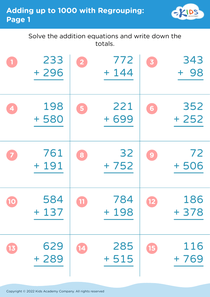
Comparing Fractions Adding up to 1000 Without Regrouping Worksheets for 8-Year-Olds
3 filtered results
-
From - To
Discover engaging worksheets designed to help 8-year-olds master the skill of comparing fractions that add up to 1000 without regrouping. Our carefully crafted activities encourage young learners to visualize and understand fractions in a fun way, reinforcing essential math concepts. Each worksheet presents a variety of problems, enabling children to practice identifying which fractions are larger or smaller. By integrating hands-on learning, kids will build confidence in their mathematical abilities. Perfect for classroom use or at-home practice, these worksheets support learners in developing critical thinking skills while boosting their overall mastery of fractions. Get started on the journey to math success today!
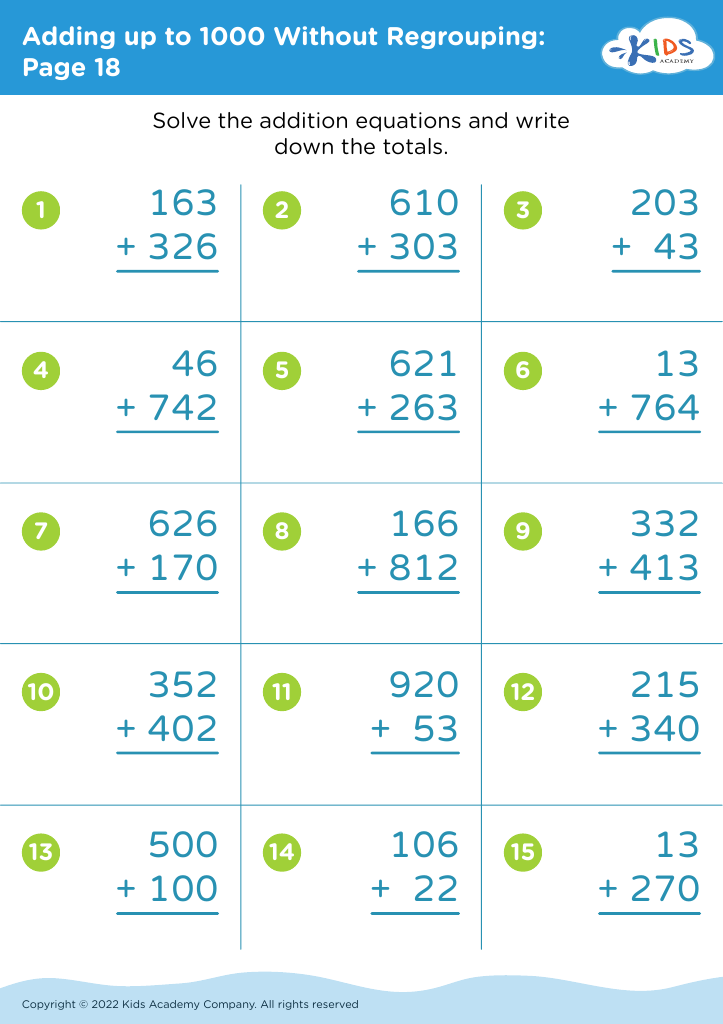
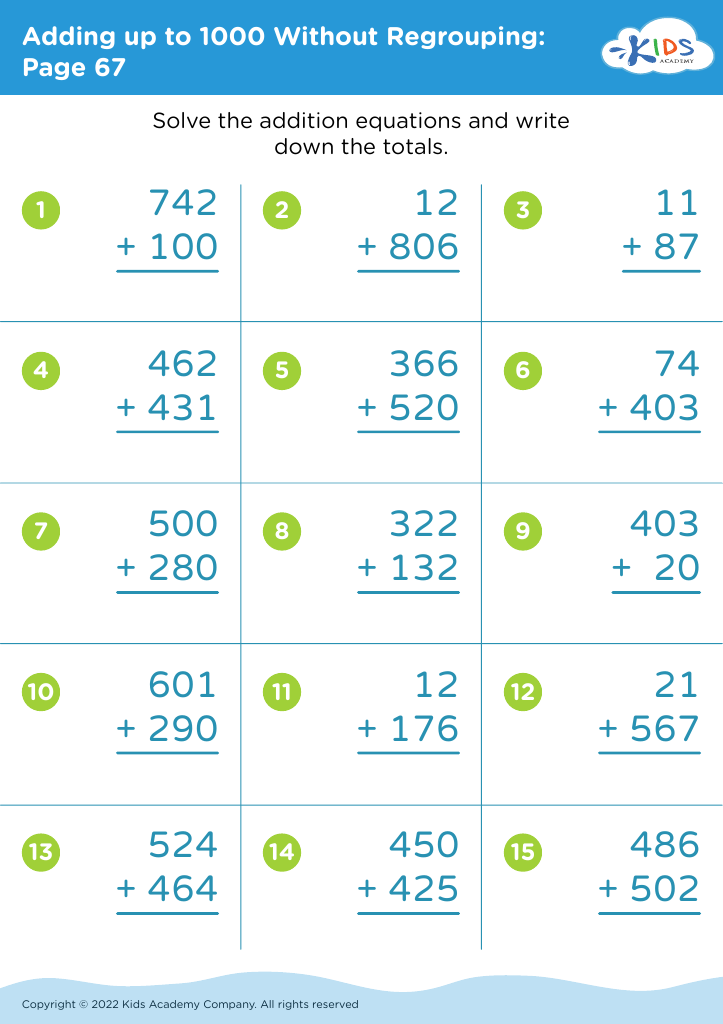
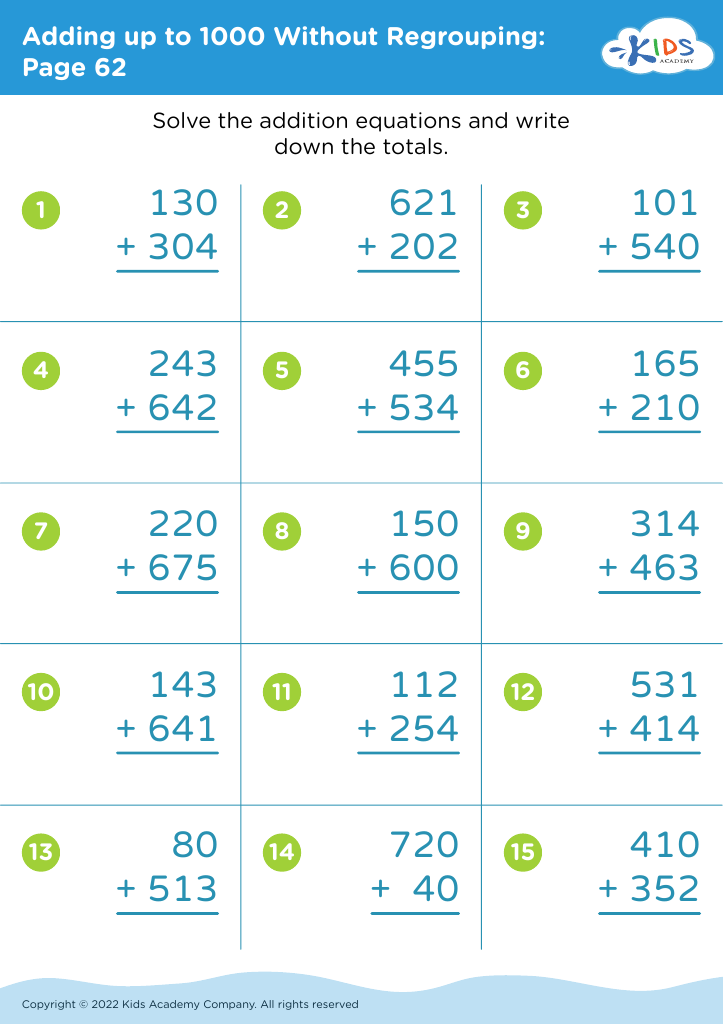


Understanding how to compare fractions and add up to 1000 without regrouping is vital for 8-year-olds, as it lays a foundation for more complex math skills. When children learn to compare fractions, they develop critical thinking and reasoning skills. This ability helps them grasp concepts of part-whole relationships, fostering a better understanding of division and proportions in real-world contexts, such as cooking or sharing resources.
Additionally, adding numbers up to 1000 without regrouping reinforces their proficiency in basic arithmetic, boosting confidence while laying the groundwork for advanced addition later on. Mastery in these areas supports problem-solving abilities, enhances focus, and encourages persistence—qualities essential for lifelong learning.
Teachers and parents should care because consistent practice in these skills can impact a child's overall academic performance, affecting future success in mathematics and other subjects. Furthermore, engaging children in enjoyable fraction and addition activities can spark an interest in math, encouraging a positive mindset toward the subject as they progress through their educational journey. Overall, fostering these foundational skills at an early age equips children with the tools necessary for tackling more challenging concepts later.