Improving counting skills Adding up to 1000 Without Regrouping Worksheets for 8-Year-Olds
4 filtered results
-
From - To
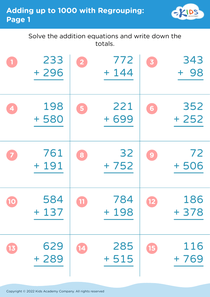
Enhance your 8-year-old’s math skills with our "Improving Counting Skills: Adding Up to 1000 Without Regrouping" worksheets. Designed to boost confidence and proficiency in basic arithmetic, these engaging worksheets focus on addition strategies without the complexity of regrouping. Children will practice adding numbers up to 1000 in a fun and interactive way, reinforcing their counting abilities while cultivating a strong foundation for future mathematical concepts. Ideal for classroom or at-home learning, these resources ensure your child develops essential skills and enjoys the learning process. Explore our collection and watch your child excel in counting and addition!
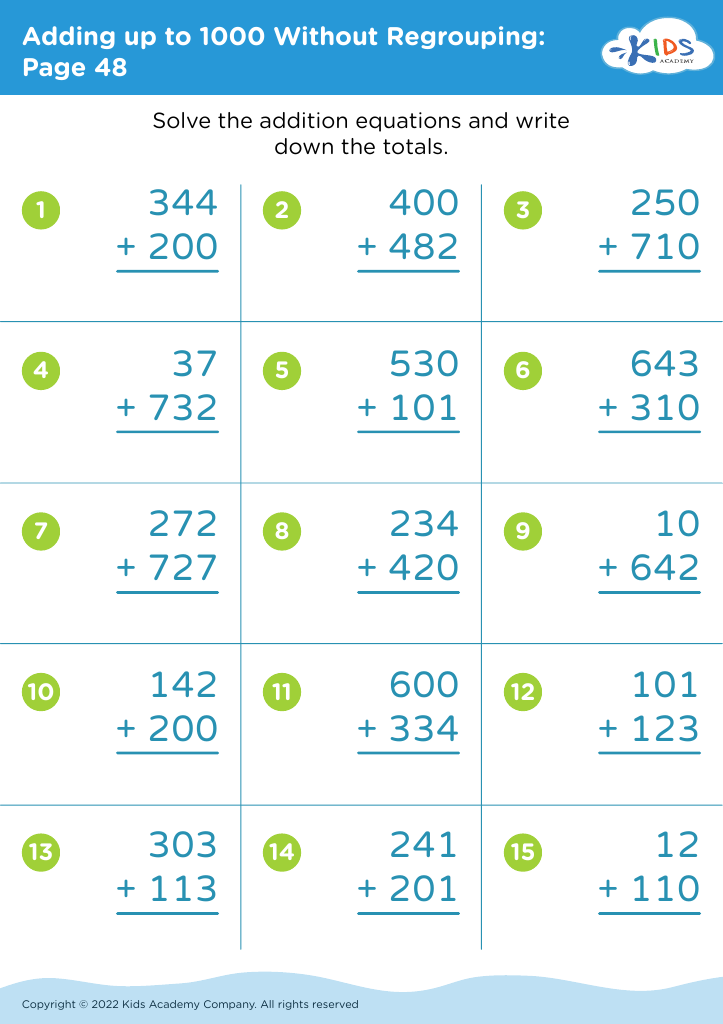
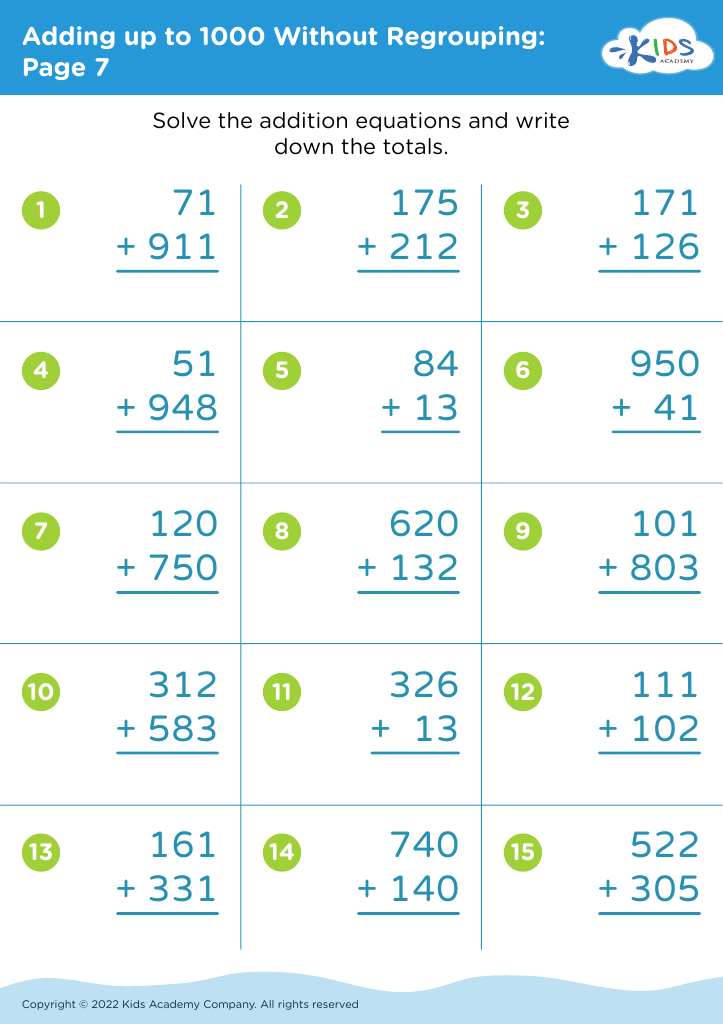
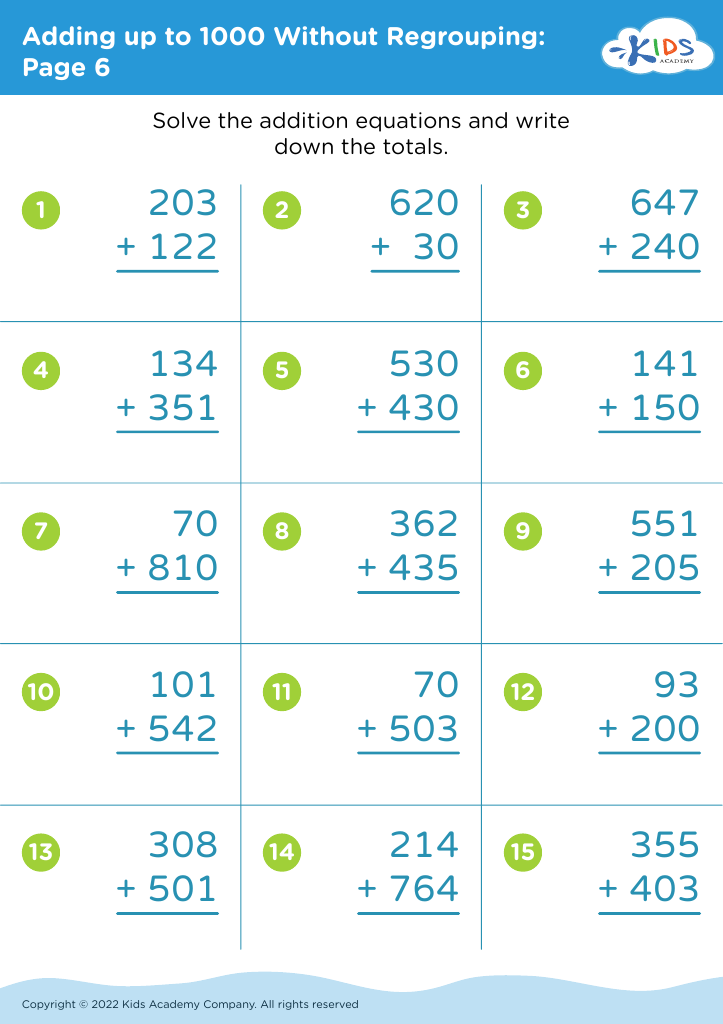
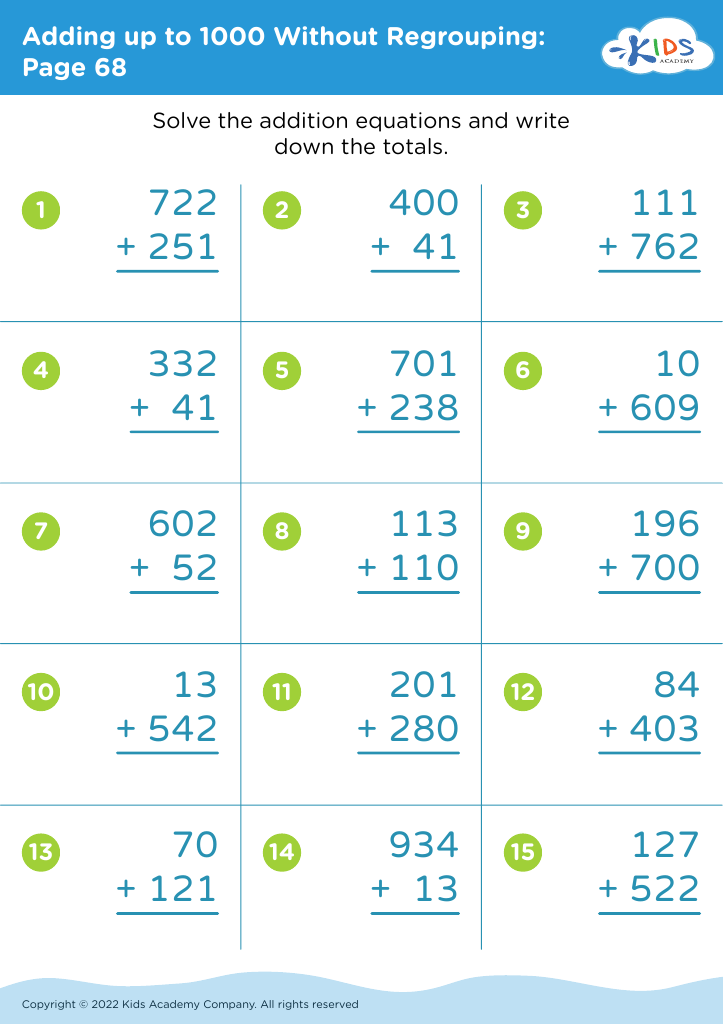


Improving counting skills and the ability to add up to 1000 without regrouping is vital for 8-year-olds for several reasons. Firstly, this foundational math skill enhances children's overall numeracy, which is essential for academic success across various subjects. When students excel in counting and addition, they build confidence in their math abilities, setting the stage for more complex concepts in the future.
Moreover, being proficient in counting and addition promotes critical thinking and problem-solving skills. As children encounter real-life situations, such as shopping or managing pocket money, solid counting abilities empower them to make informed decisions and understand the value of money.
Additionally, parents and teachers play a significant role in fostering these skills. By practicing simple non-regrouping addition exercises, they can provide essential support, aiding children in developing speed and accuracy. This practice also encourages persistence and patience, essential traits for long-term academic growth.
Ultimately, focusing on counting skills reinforces a child's cognitive development, boosts self-esteem, and prepares them for the challenges of higher-grade math while creating a solid mathematical foundation essential for life.