Number Recognition Adding up to 1000 Without Regrouping Worksheets for 8-Year-Olds
7 filtered results
-
From - To
Unlock the world of number recognition and math skills with our "Number Recognition Adding up to 1000 Without Regrouping Worksheets" designed specifically for 8-year-olds. These carefully crafted worksheets help children confidently add numbers up to 1000, enhancing their arithmetic abilities without the complexity of regrouping. Through engaging exercises, your child will master essential math skills while having fun. Perfect for home or classroom, these printables support the development of number sense and provide a strong foundation for more advanced math concepts. Make learning math enjoyable and stress-free with these free resources from Kids Academy!
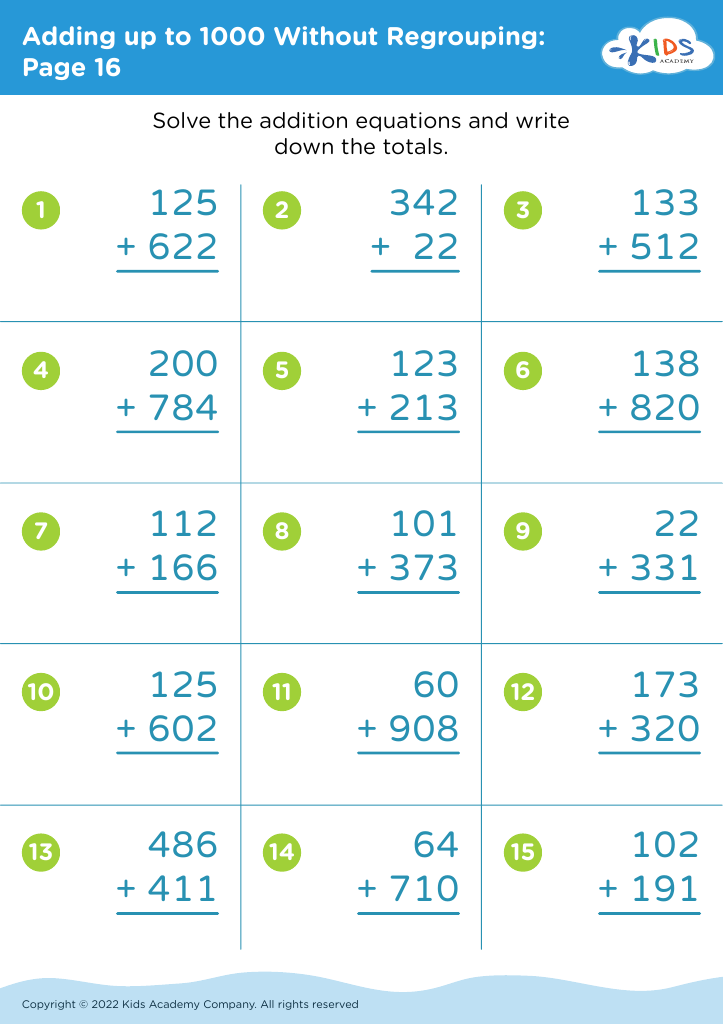
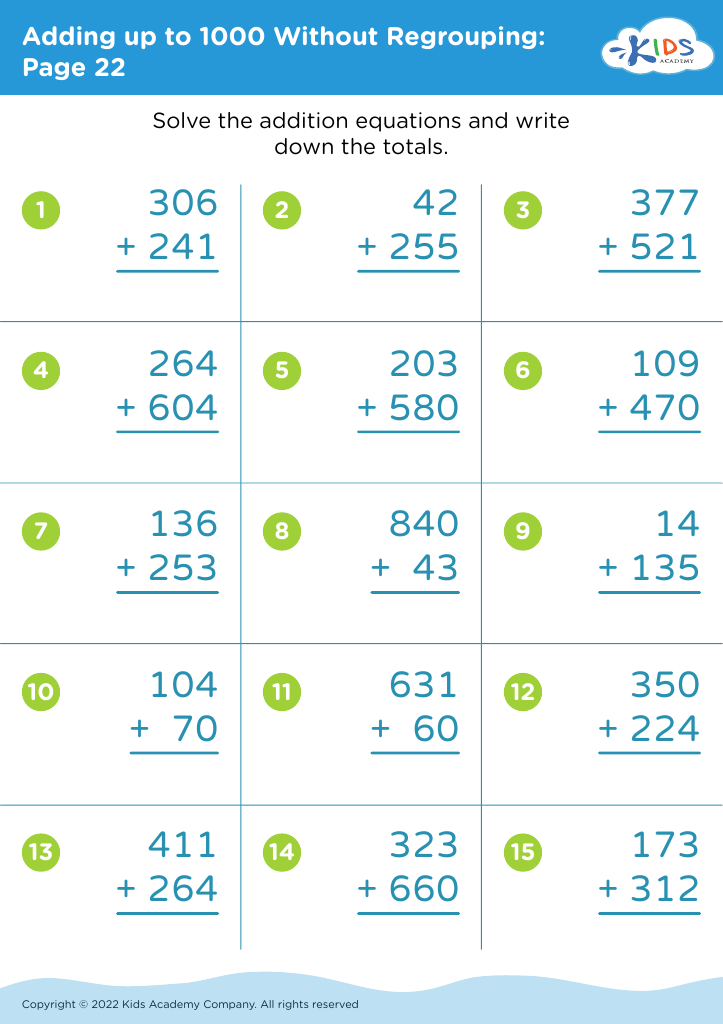
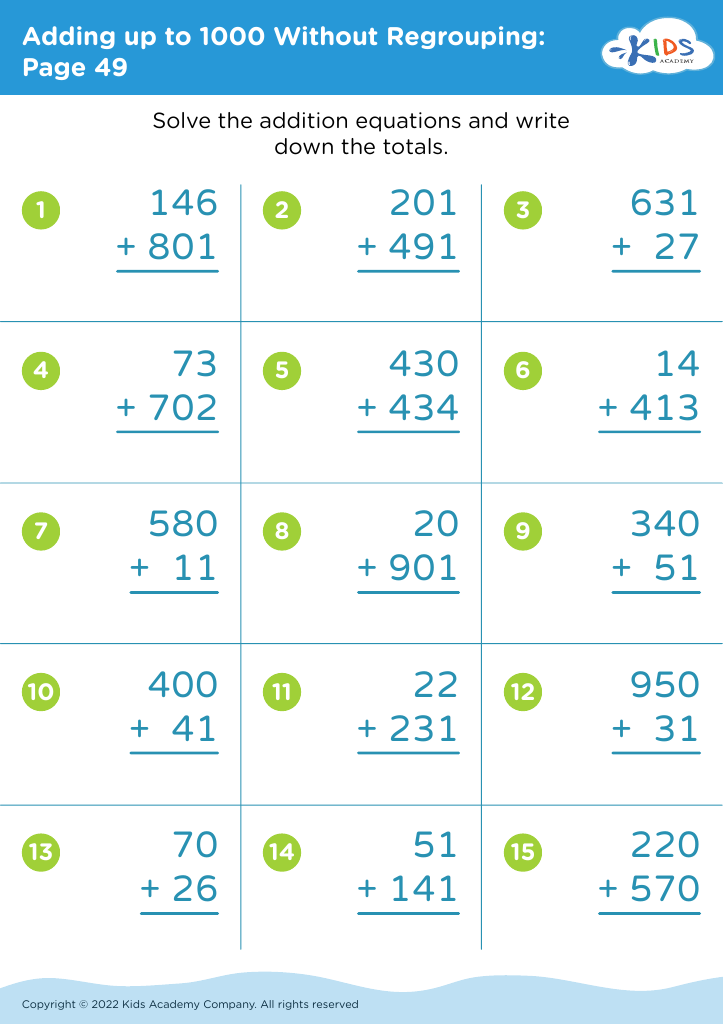
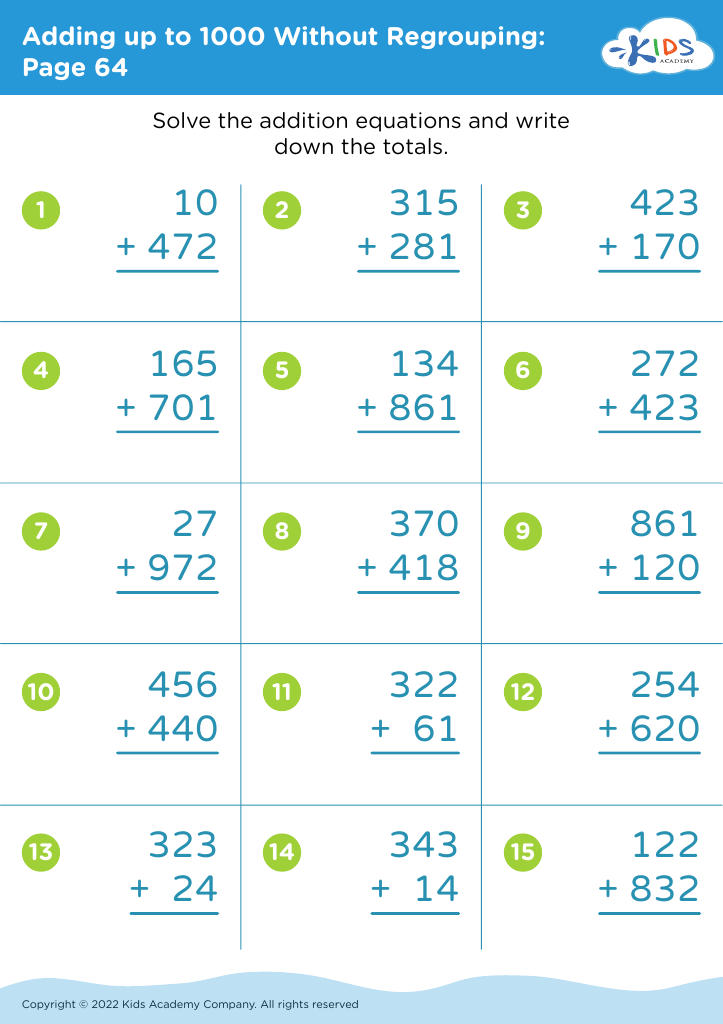
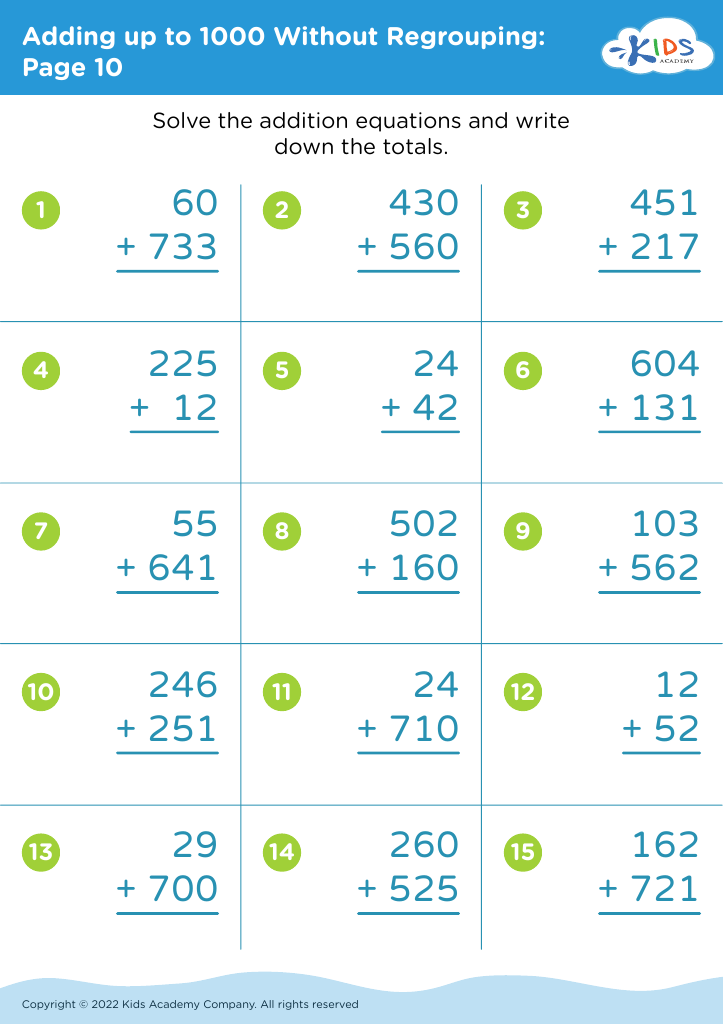
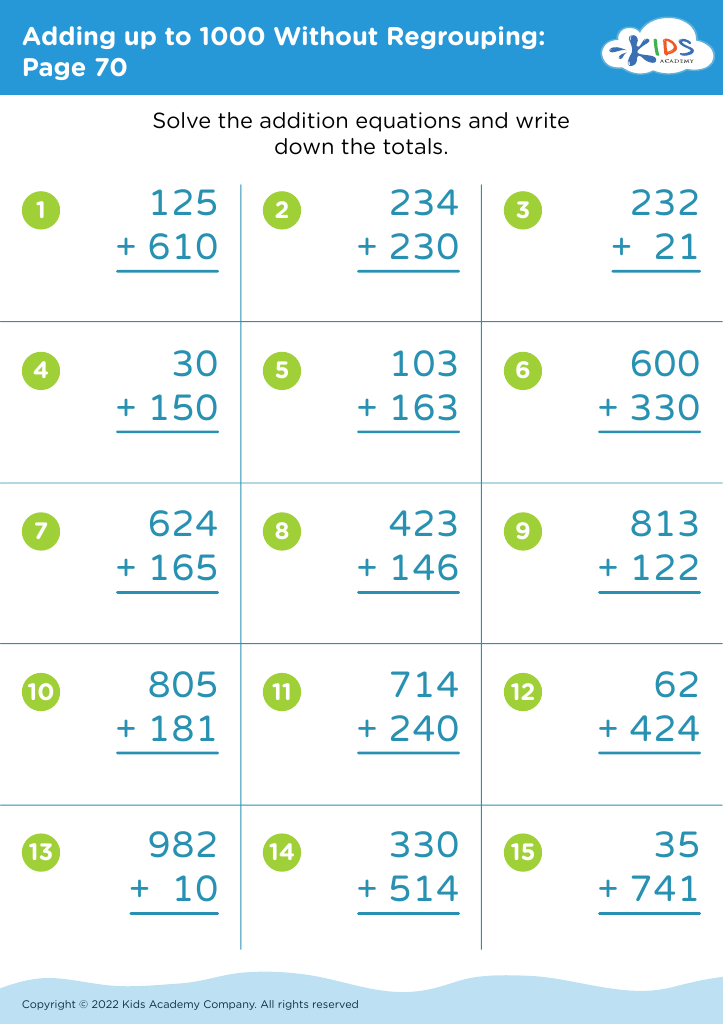
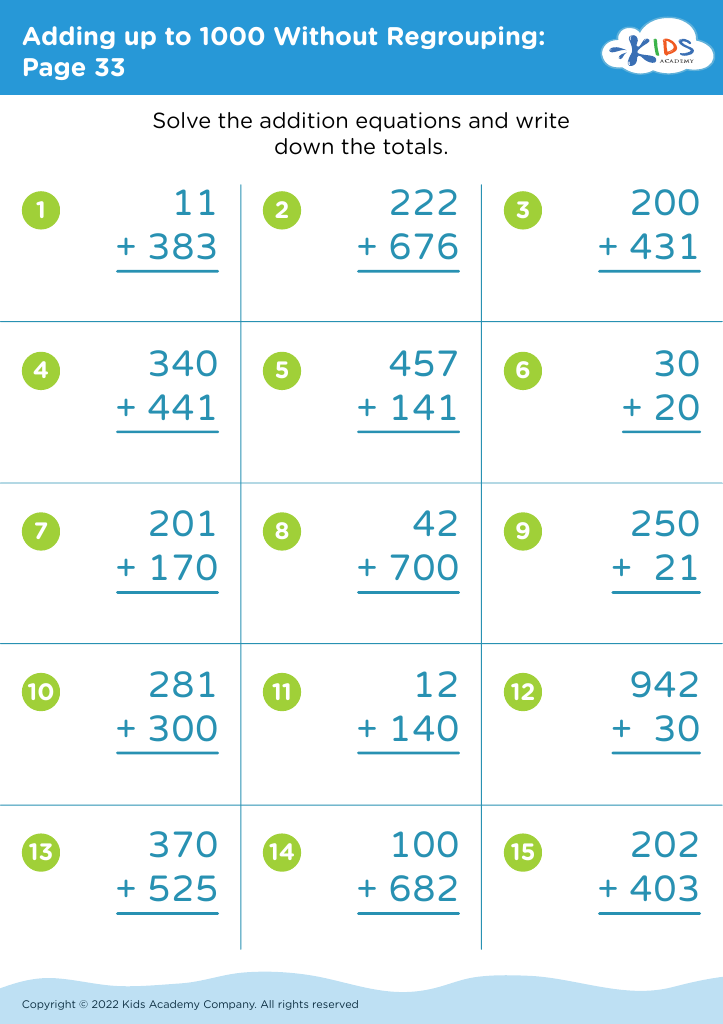


Number recognition and the ability to add up to 1000 without regrouping are crucial skills for 8-year-olds and hold significant educational value. At this stage in their development, children are beginning to grasp more complex mathematical concepts. Mastering these skills builds a robust foundation for future learning in mathematics.
When parents and teachers focus on number recognition, they foster a child’s familiarity with larger numbers. This helps in developing numerical fluency, enabling children to read, write, and understand numbers effortlessly. Knowing how to handle numbers up to 1000 increases a child’s confidence and competence, easing anxiety around larger figures often encountered in daily life and later in academic contexts.
Adding without regrouping boosts computational skills and helps children practice straightforward arithmetic. It strengthens their understanding of place value—how each digit in a number has a specific value depending on its position. This foundational knowledge is key for more advanced math, such as addition with regrouping, subtraction, multiplication, and division.
Encouraging and supporting 8-year-olds to achieve this milestone empowers them with critical thinking and problem-solving abilities. It prepares them for more complicated mathematical operations and helps them relate math to real-world situations, setting them up for continued academic success and practical life skills.