Shape Recognition Adding up to 1000 Without Regrouping Worksheets for 8-Year-Olds
3 filtered results
-
From - To
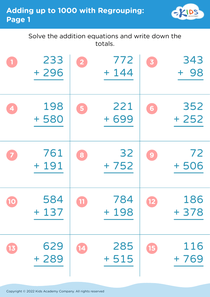
Explore our "Shape Recognition Adding up to 1000 Without Regrouping Worksheets" tailored for 8-year-olds, combining math and geometry skills. These printable worksheets help children practice adding up to 1000 without the complexity of regrouping, while also enhancing their ability to recognize and identify various shapes. Each worksheet is carefully designed to engage young learners, making math practice enjoyable and interactive. Perfect for classroom use or at-home learning, these worksheets are an excellent resource for strengthening foundational math skills and developing keen shape recognition abilities in a fun, educational way.
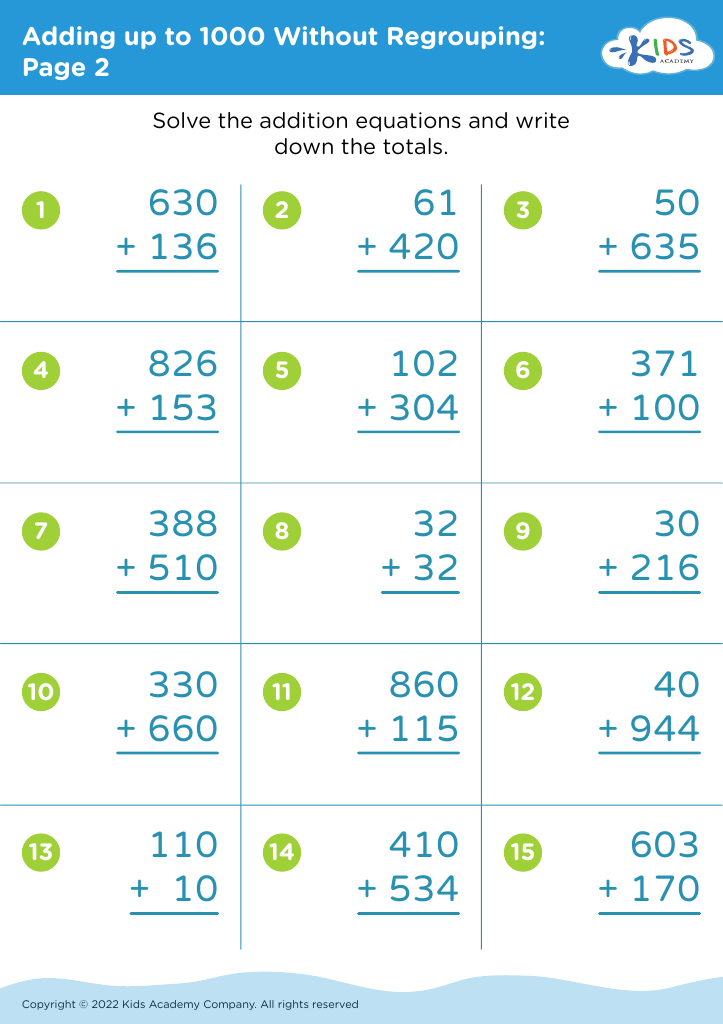
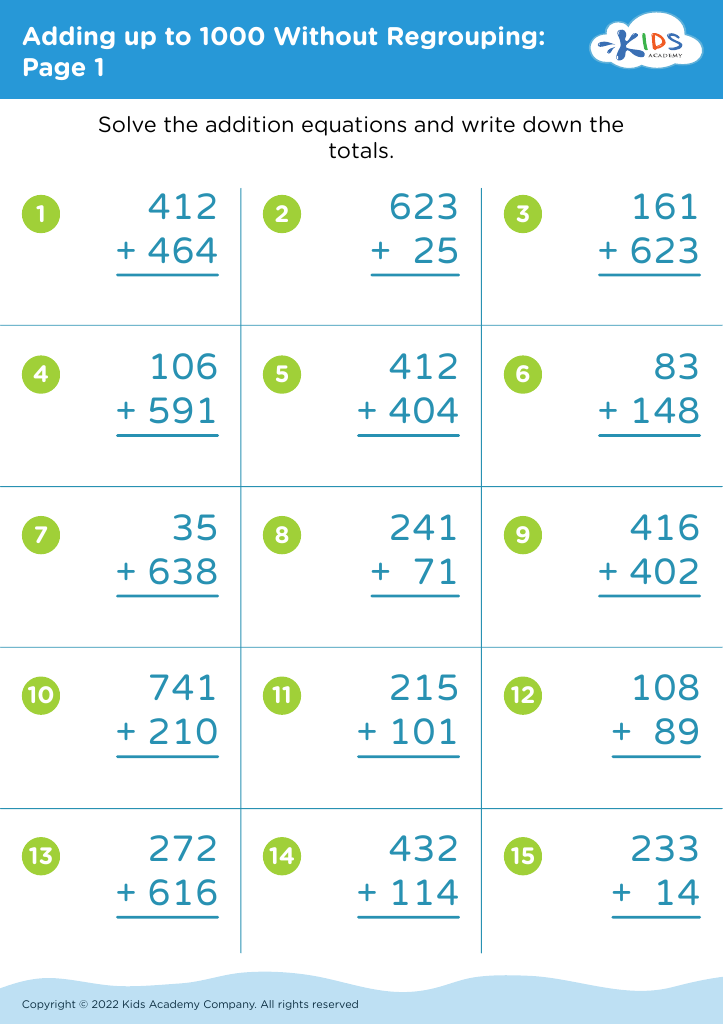
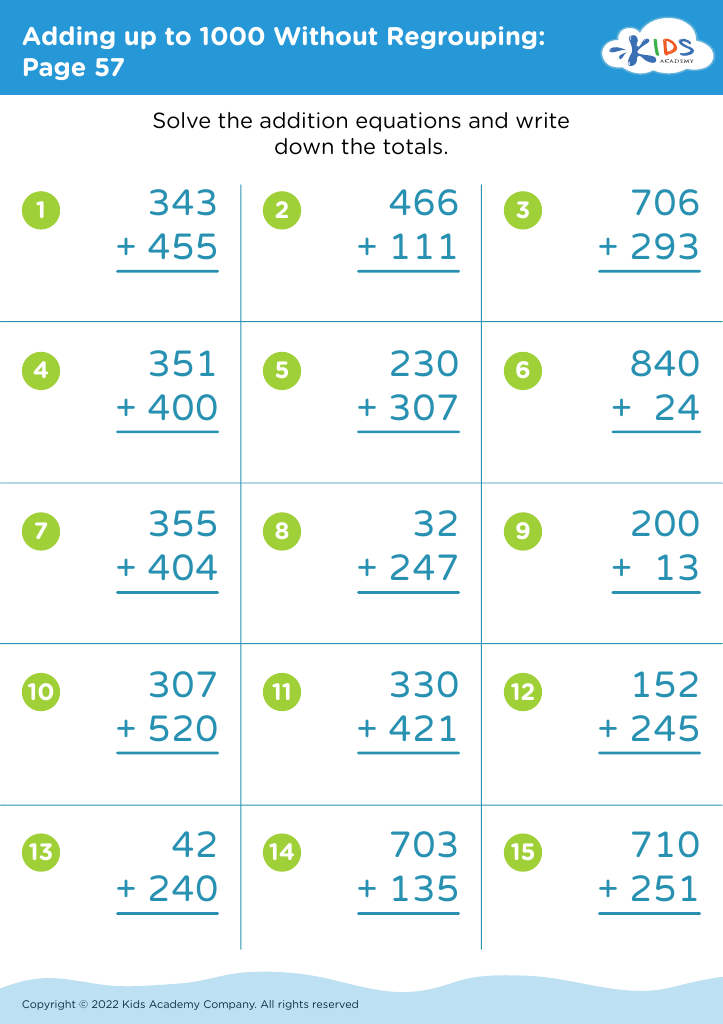


Shape recognition and adding up to 1000 without regrouping are critical skills that parents and teachers should care about for 8-year-old children, as they form foundational building blocks for more complex mathematical and cognitive abilities.
Shape recognition helps children to identify and understand different geometrical forms, which is essential for spatial awareness and problem-solving skills. This ability to notice and categorize shapes leads to improved fine motor skills, better recognition patterns, and stronger logical thinking, all of which are important across various subjects and daily life situations.
On the other hand, adding up to 1000 without regrouping tasks children with practice in basic arithmetic, essential for competent number sense. Mastering this concept enhances their computational fluency, allowing them to perform larger additions with ease and accuracy. This kind of mental math reinforces understanding of place value and the number line, which are cornerstones not just for future math success but also for real-world applications like budgeting or measuring.
Together, these skills promote a well-rounded cognitive development. Parents and teachers who prioritize shape recognition and straightforward addition provide children with the tools to think critically, solve problems efficiently, and approach more advanced topics with confidence. Early mastery builds a strong foundation for lifelong learning and success in both academic and everyday contexts.