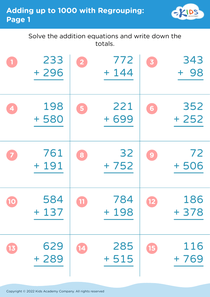
Understanding division Adding up to 1000 Without Regrouping Worksheets for 8-Year-Olds
3 filtered results
-
From - To
Discover our "Understanding Division Adding Up to 1000 Without Regrouping Worksheets" designed specifically for 8-year-olds! These engaging worksheets aim to enhance your child's division skills while reinforcing their understanding of basic math concepts. Each activity focuses on division without the need for regrouping, helping kids build confidence and foundational knowledge. Suitable for home or classroom use, our worksheets provide clear instructions, fun exercises, and plenty of opportunities for hands-on learning. Foster a love for math with resources that make learning division both enjoyable and effective. Start your child's journey towards mastering division today!
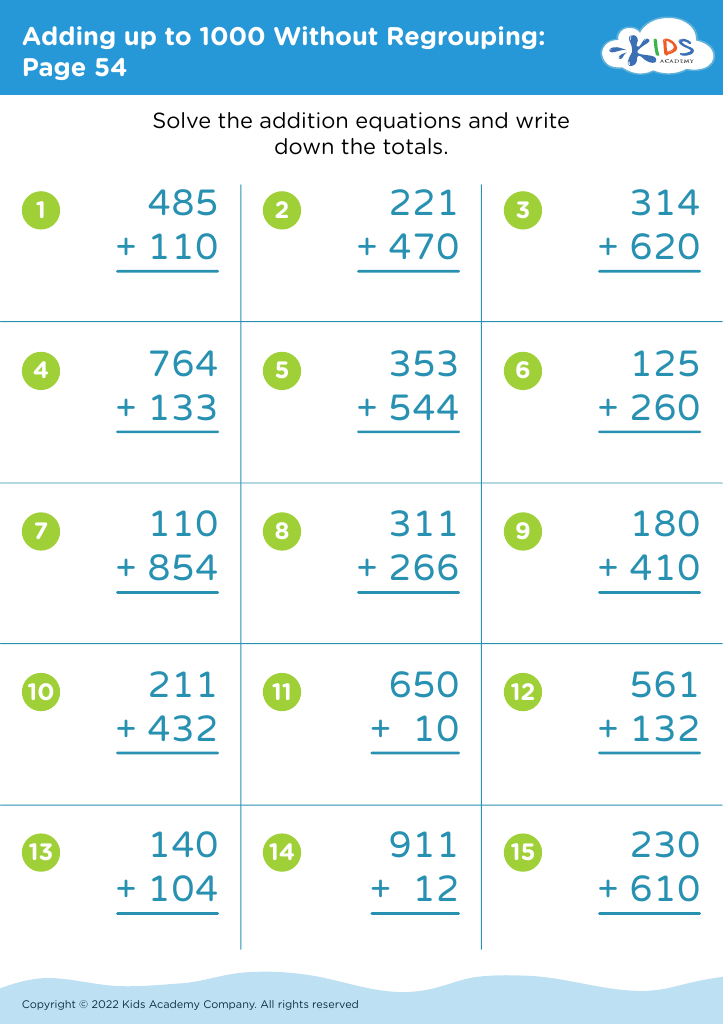
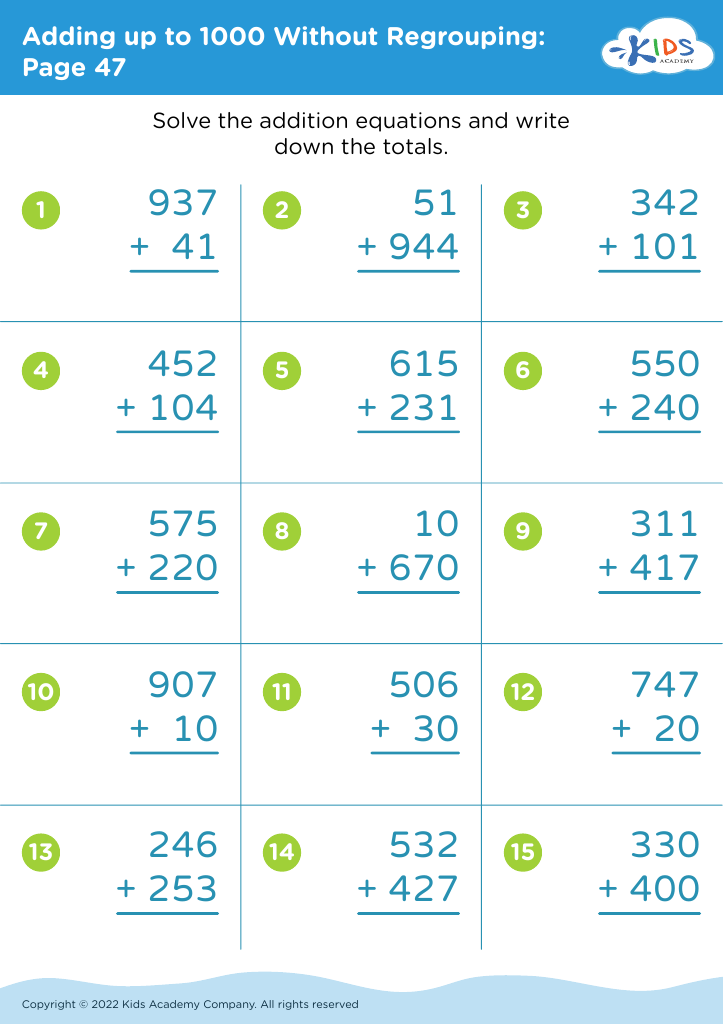
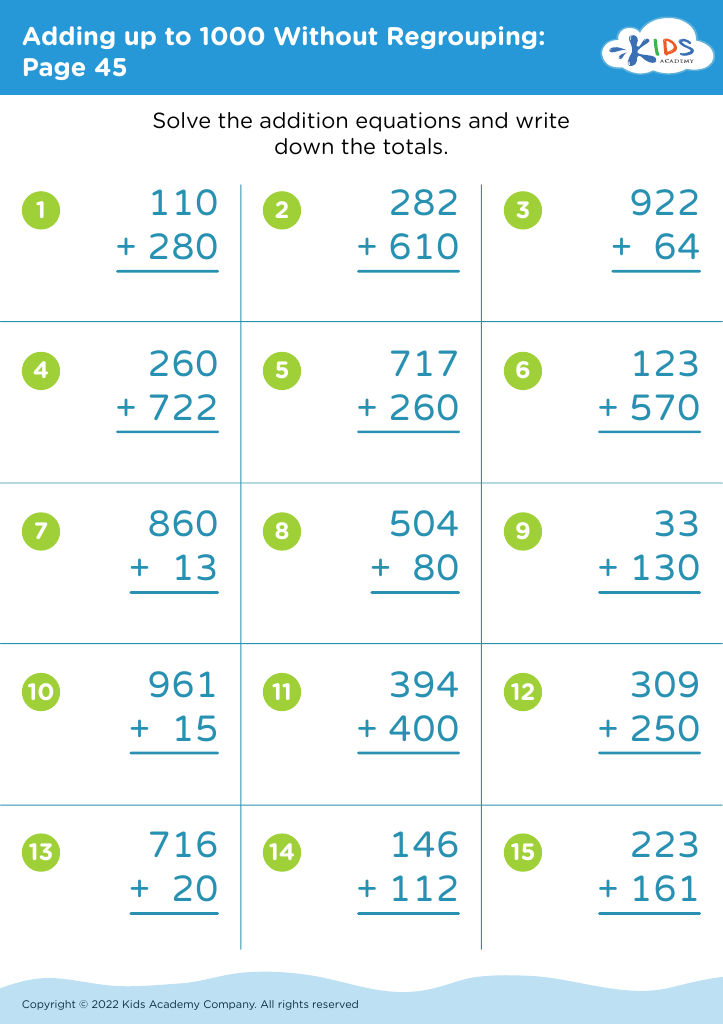


Understanding division and the ability to add numbers up to 1000 without regrouping is crucial for 8-year-olds as it lays foundational skills in mathematical literacy that they will carry into higher grades. At this age, children are developing critical thinking and problem-solving skills that are essential for both academics and real-life situations. Mastering division encourages logical reasoning and helps students understand the concept of sharing and distributing equal parts, which is applicable in everyday scenarios like sharing snacks or organizing groups.
Furthermore, adding numbers up to 1000 without regrouping strengthens their numerical fluency and confidence in handling larger numbers. It allows them to experiment with different ways to combine numbers, enhancing their understanding of place value and number sense. This competency is not only vital for future math topics, such as subtraction, multiplication, and more complex operations, but also for fostering a positive attitude towards mathematics.
When parents and teachers prioritize these skills, they contribute to a child's overall academic success, encouraging a healthy and positive relationship with math as a captivating subject. This enthusiasm and confidence can fuel their willingness to engage in further learning, mitigating anxieties related to math as they advance in their education.