Alphabet Recognition Adding up to 1000 Worksheets for 8-Year-Olds
4 filtered results
-
From - To
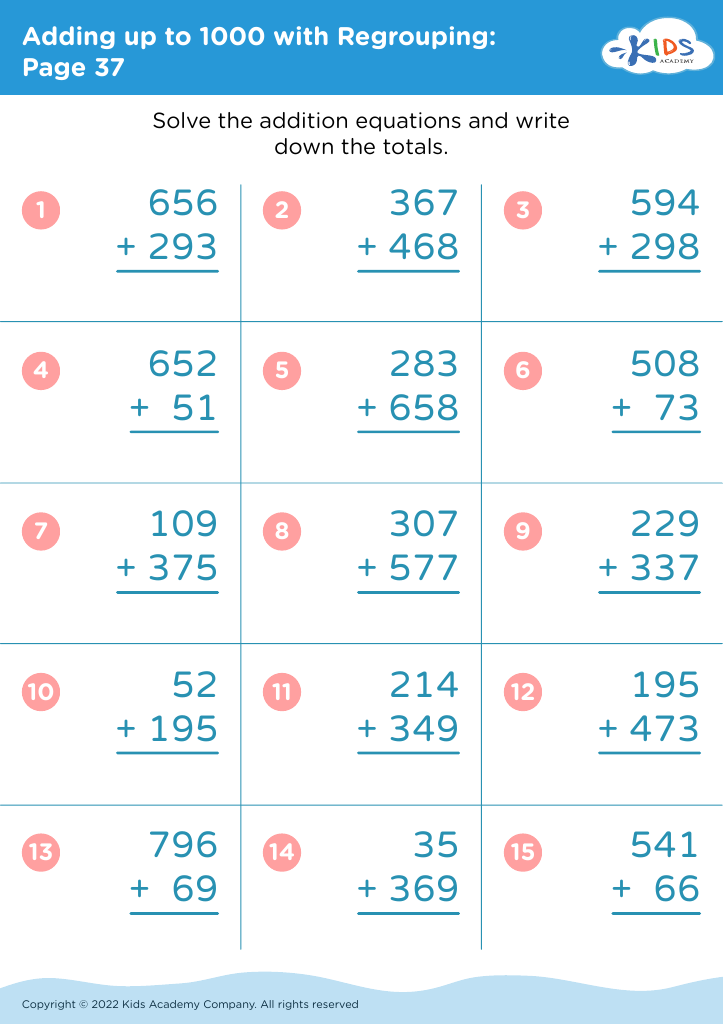
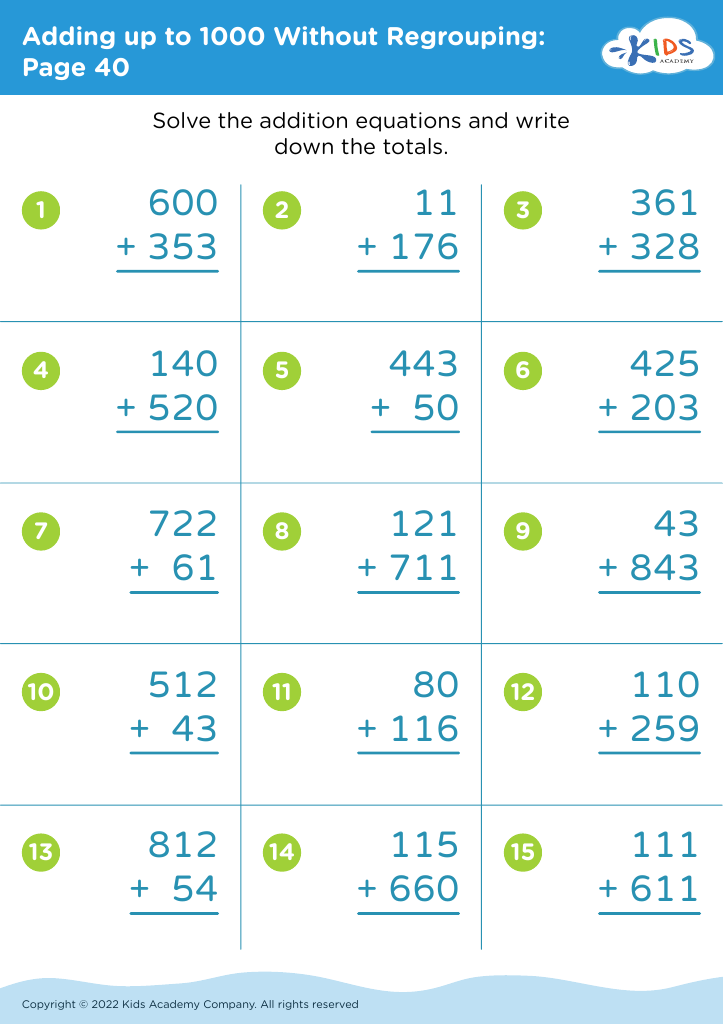
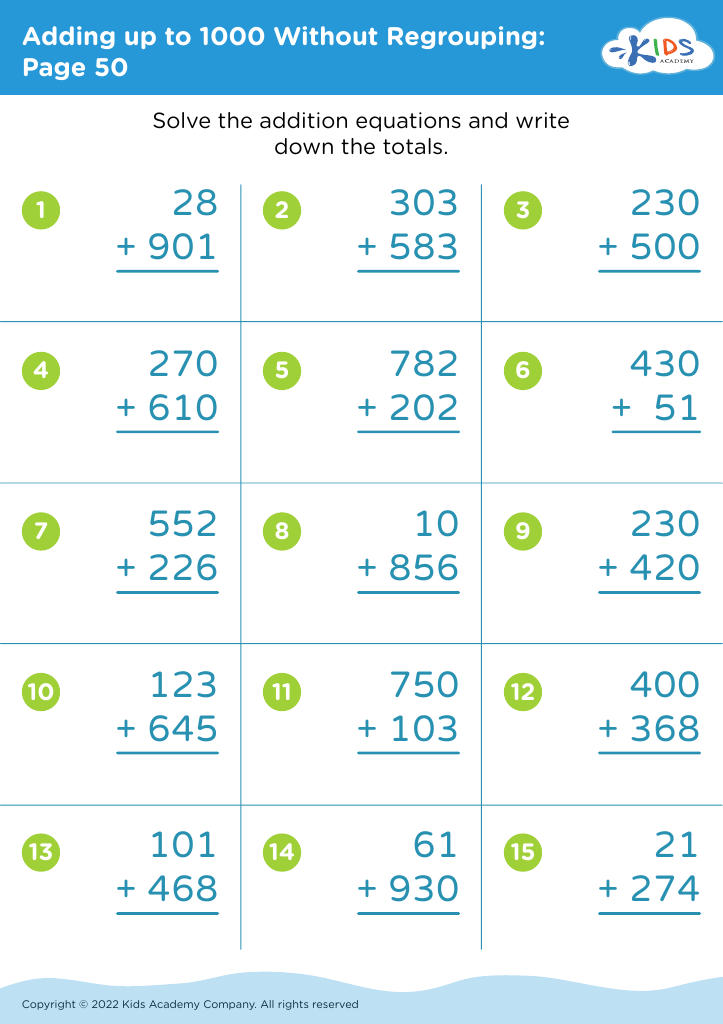
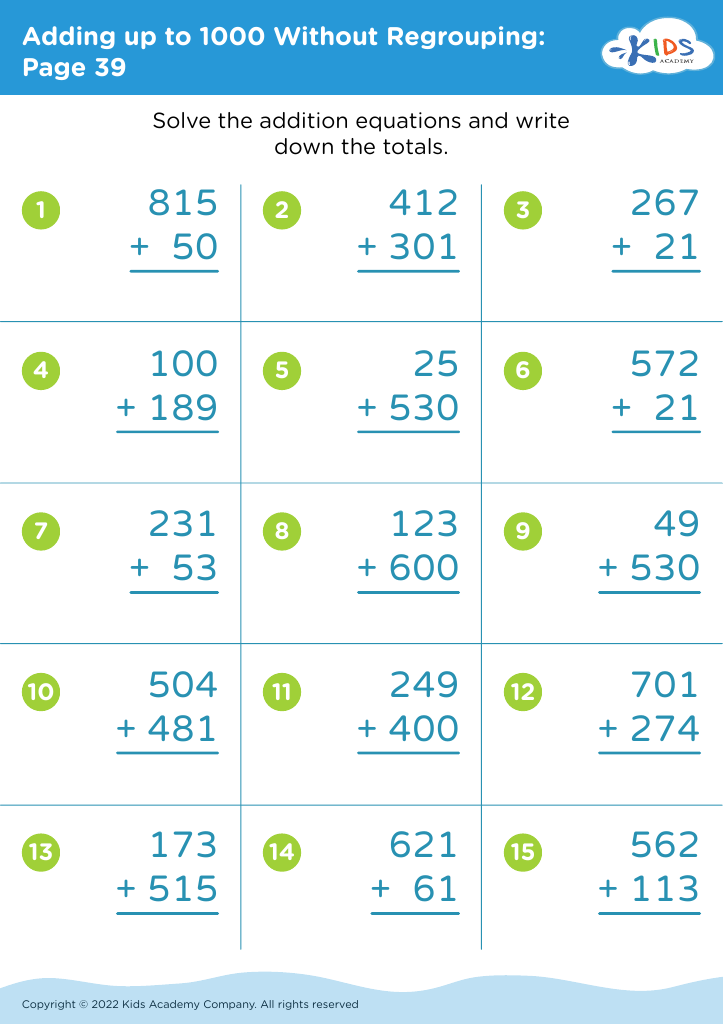
Discover our engaging "Alphabet Recognition Adding up to 1000 Worksheets" designed specifically for 8-year-olds! These printable worksheets combine vital literacy skills with fun math challenges, enhancing your child’s ability to recognize letters while tackling addition problems that sum to 1000. Kids will enjoy a variety of activities including matching letters with corresponding words, solving puzzles, and completing fun exercises that support both their alphabet recognition and math skills. Ideal for parents and educators seeking to boost foundational learning, these worksheets provide a balanced approach to education, ensuring children learn in an interactive and enjoyable way. Start exploring today!



Alphabet recognition is essential for young children, particularly for 8-year-olds, who are transitioning from learning basic literacy skills to becoming independent readers and writers. Mastery of the alphabet serves as a foundation for phonics, vocabulary development, and overall reading comprehension. When children can quickly recognize letters and their corresponding sounds, they become more confident in their reading abilities, which fosters a love for literature and enhances communication skills.
Moreover, recognizing letters aids in writing proficiency. An 8-year-old who effectively identifies letters can spell more accurately and articulate thoughts clearly in writing. This skill is critical as they begin to compose longer texts, reports, and narratives.
Additionally, encouraging alphabet recognition contributes to cognitive development. Research suggests that reinforcing these skills can enhance memory and critical thinking abilities. Parents and teachers, therefore, play a crucial role in providing enriched learning experiences through interactive games, reading sessions, and letter-based activities.
Engaging children in alphabet recognition not only supports academic success but also instills a sense of accomplishment. When children are well-equipped with these foundational skills, they are set up for future educational milestones, making alphabet recognition a priority for parents and teachers alike.








