Filters

16 filtered results

Clear all filters
Favorites
With answer key
Interactive

16 filtered results

Difficulty Level

Grade


Our "Comparing Fractions Adding up to 1000" worksheets, designed specifically for 8-year-olds, make learning fractions engaging and fun! These printable activities help children master the skill of comparing fractions while also getting comfortable with numbers up to 1000. Each worksheet features visual aids and practical exercises, guiding students through fraction comparisons step-by-step. Perfect for the classroom or at-home learning, our resources aim to build confidence and a solid mathematics foundation. Ideal for parents and teachers seeking effective, educational tools to enhance a child's math skills. Download now and watch your child excel with fractions!
Check out this FREE Trial Lesson on Adding up to 1000 for age 8!

X

Favorites
With answer key
Interactive
  • 8
  • Comparing Fractions
  • Adding up to 1000
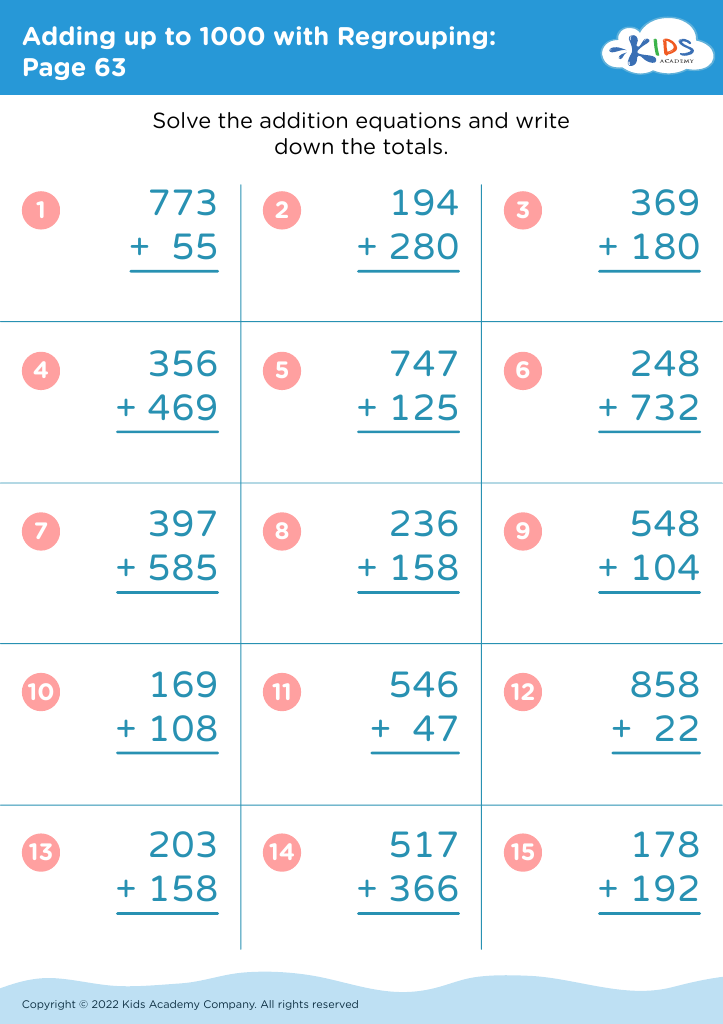
Adding up to 1000 with Regrouping: Page 63
Worksheet
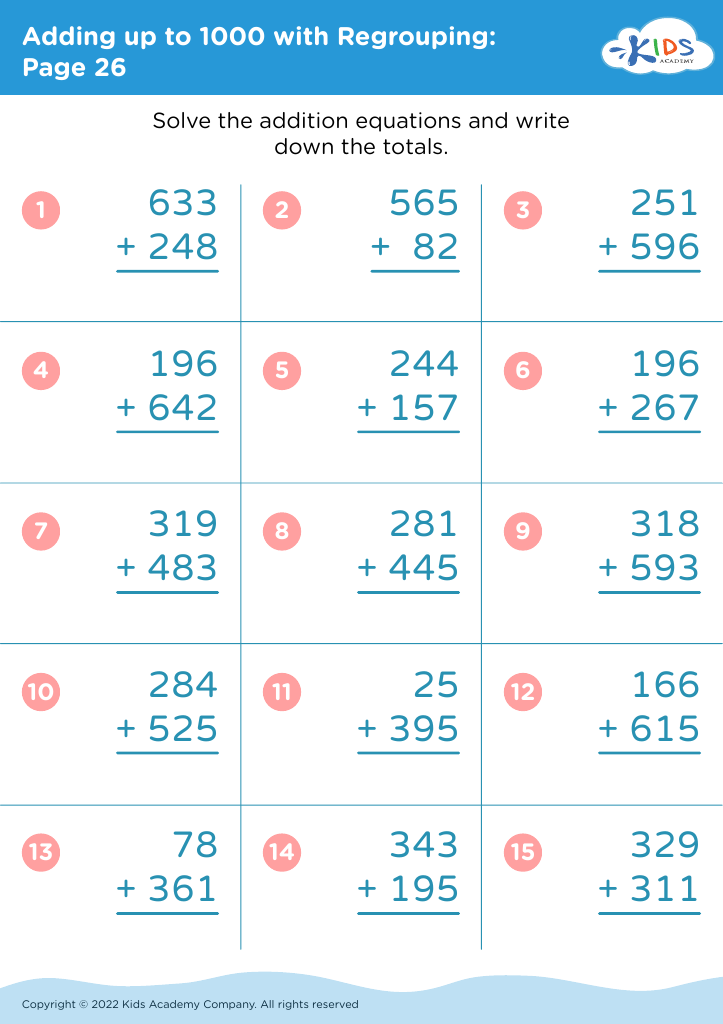
Adding up to 1000 with Regrouping: Page 26
Worksheet
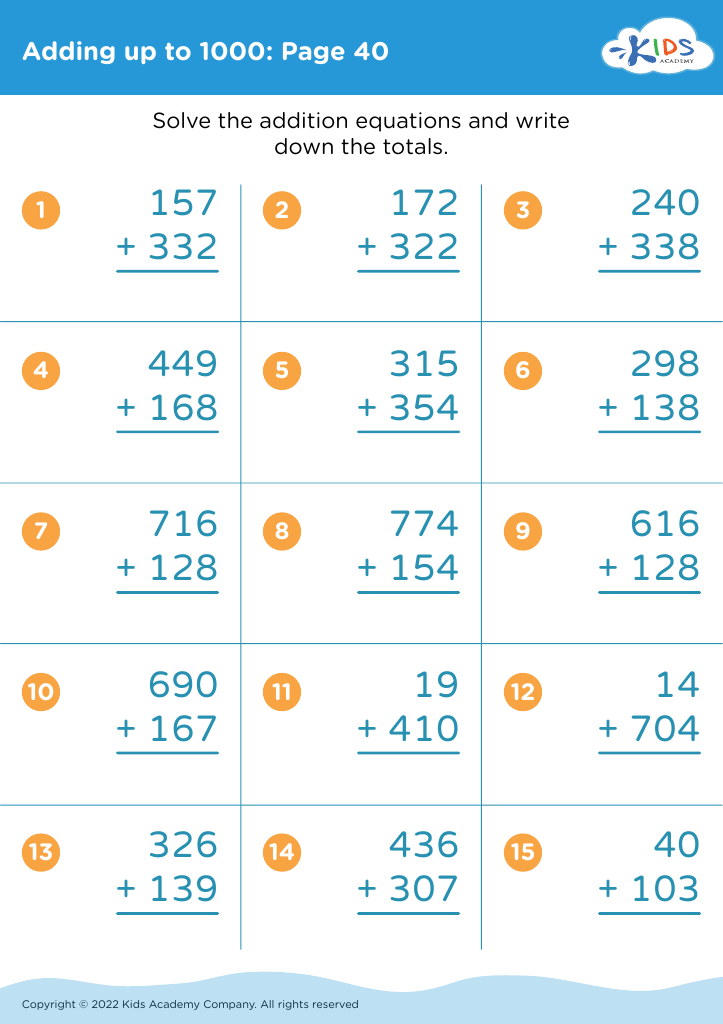
Adding up to 1000: Page 40

Adding up to 1000: Page 40

Adding up to 1000: Page 40
Worksheet
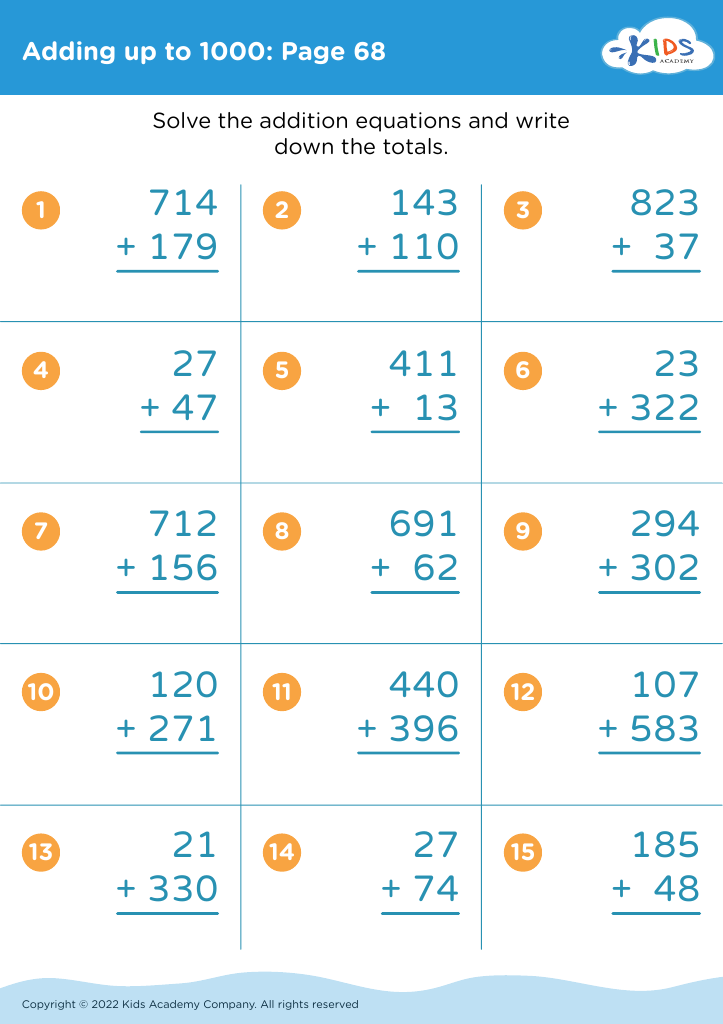
Adding up to 1000: Page 68

Adding up to 1000: Page 68

Adding up to 1000: Page 68
Worksheet
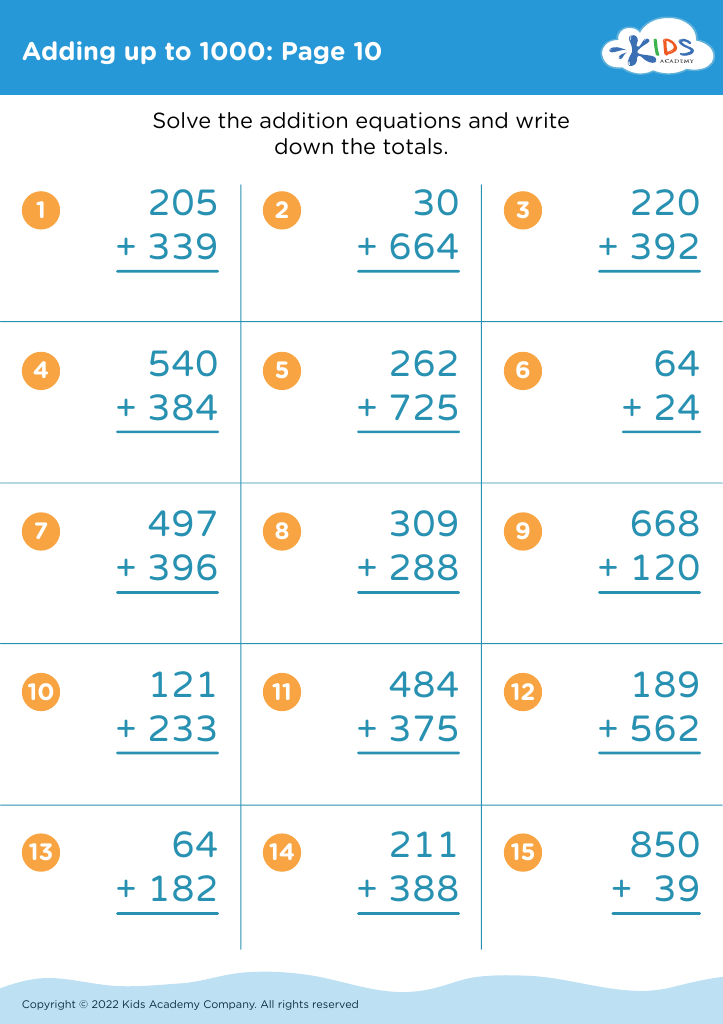
Adding up to 1000: Page 10

Adding up to 1000: Page 10

Adding up to 1000: Page 10
Worksheet
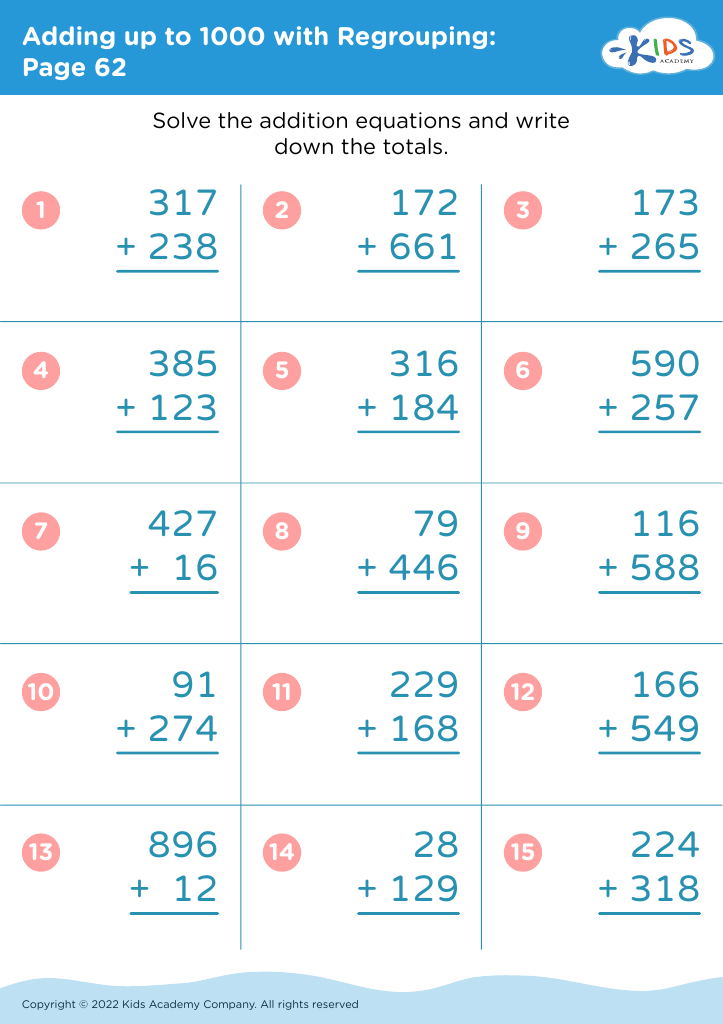
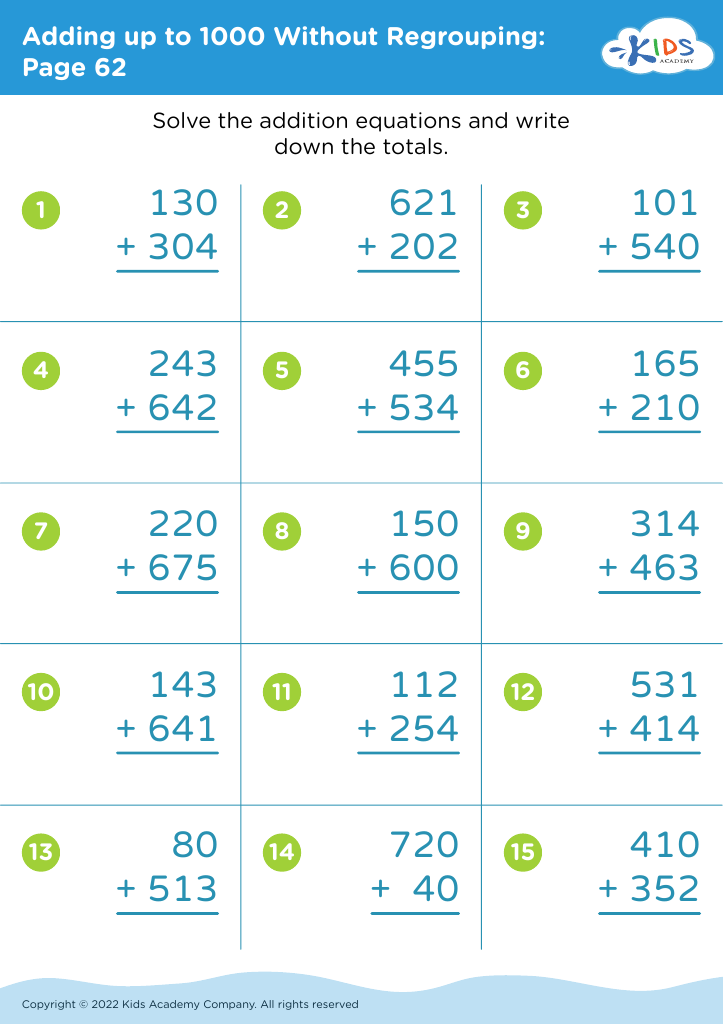
Adding up to 1000 with Regrouping: Page 62
Worksheet
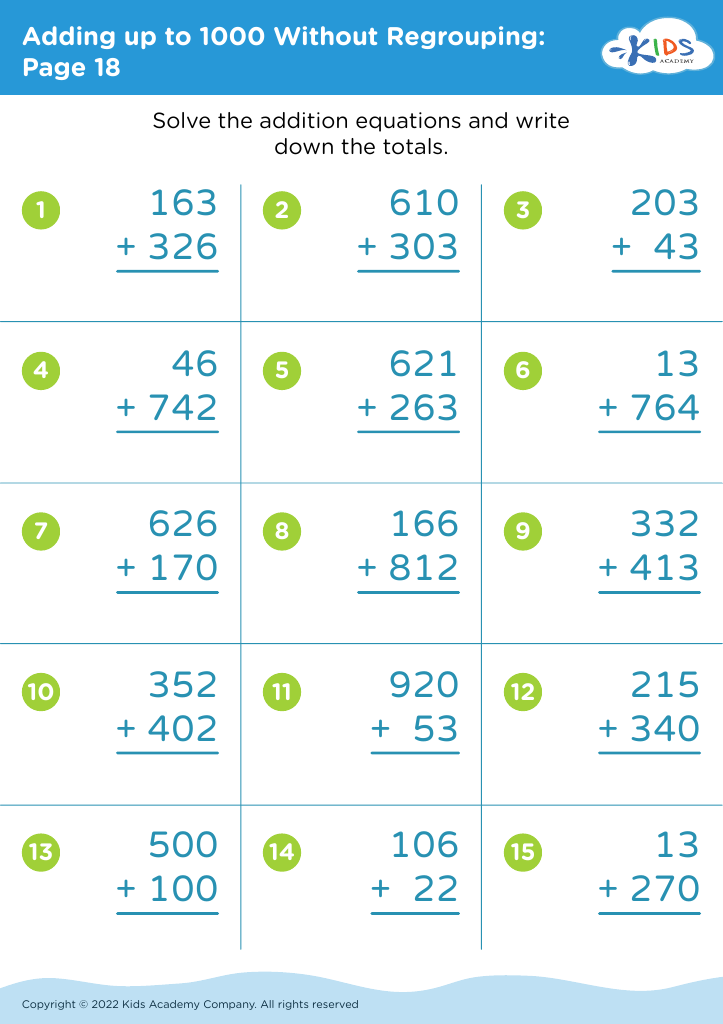
Adding up to 1000 Without Regrouping: Page 18
Worksheet
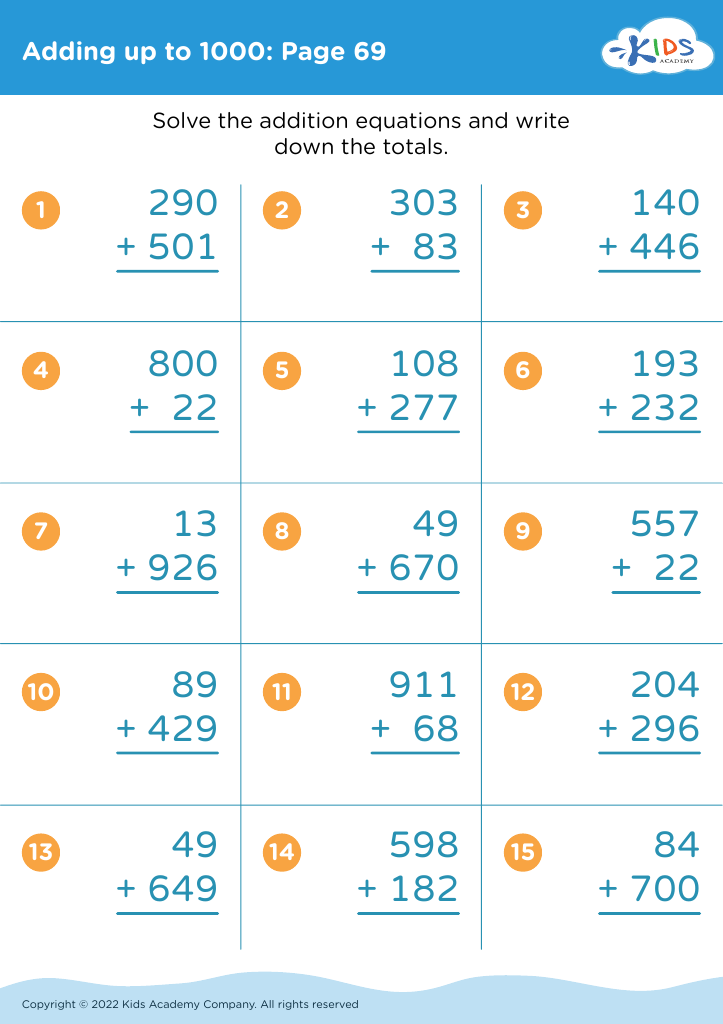
Adding up to 1000: Page 69

Adding up to 1000: Page 69

Adding up to 1000: Page 69
Worksheet
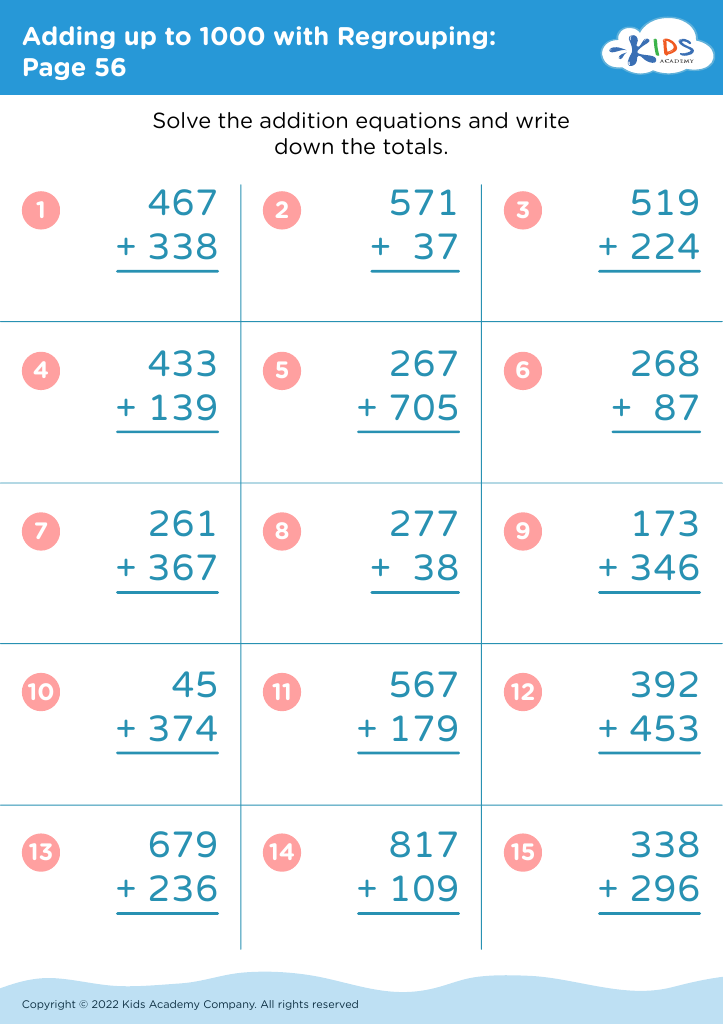
Adding up to 1000 with Regrouping: Page 56
Worksheet
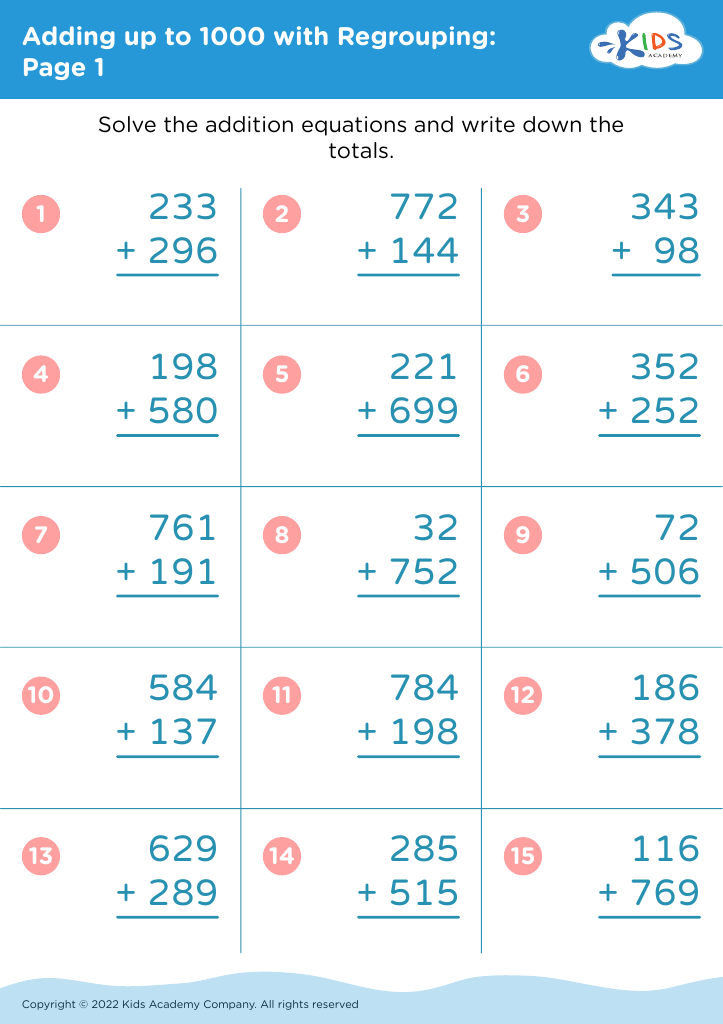
Adding up to 1000 with Regrouping: Page 1
Worksheet
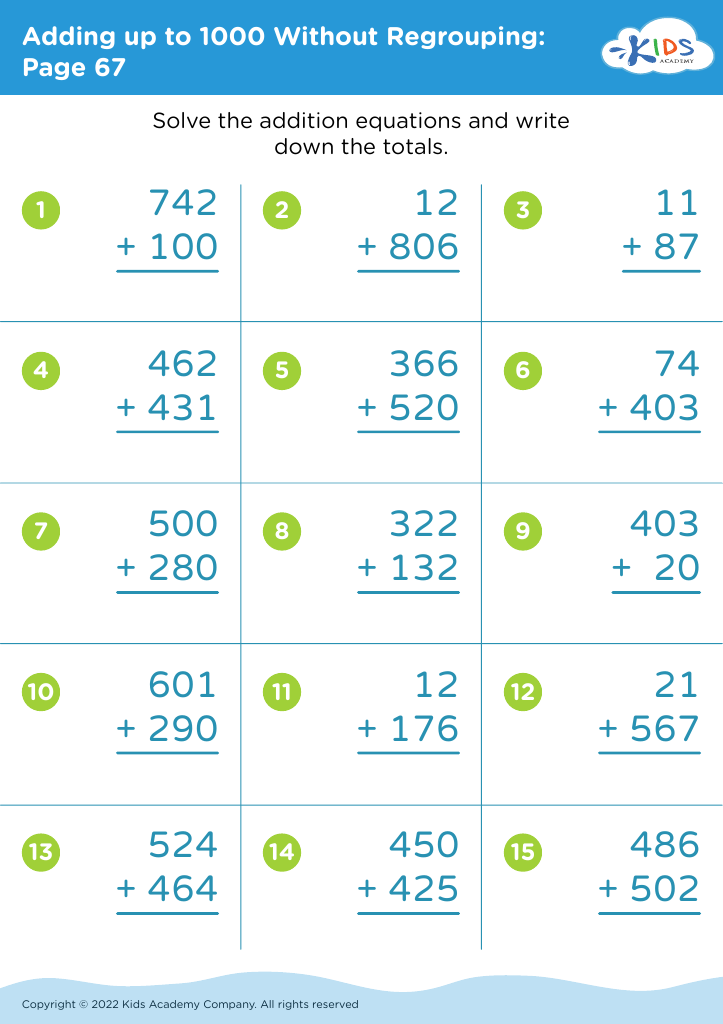
Adding up to 1000 Without Regrouping: Page 67
Worksheet
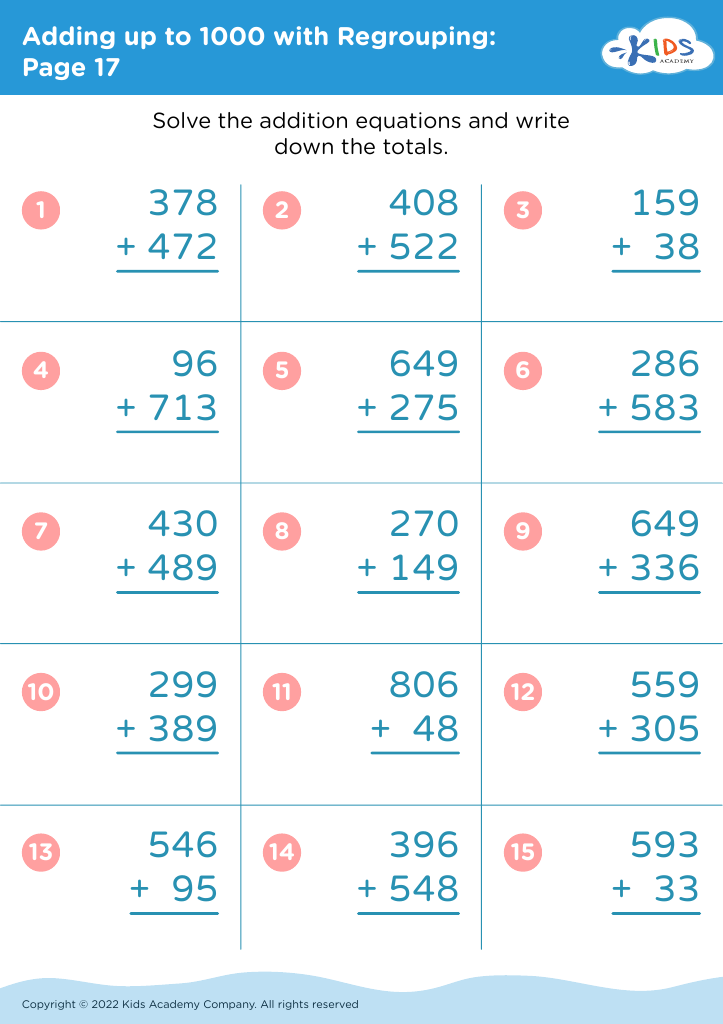
Adding up to 1000 with Regrouping: Page 17
Worksheet
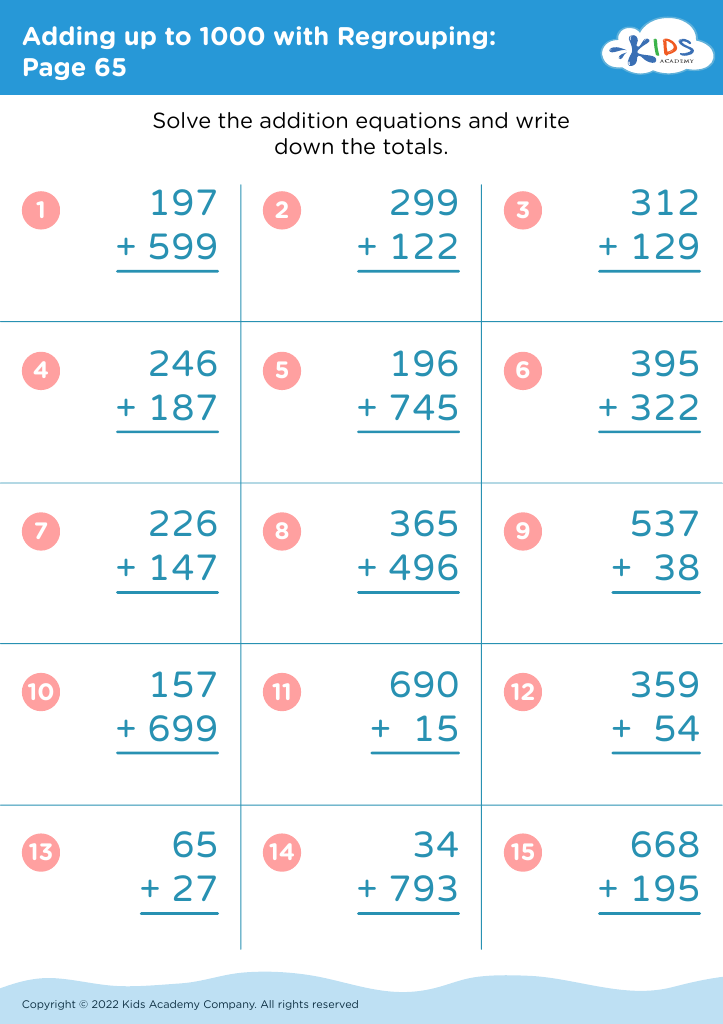
Adding up to 1000 with Regrouping: Page 65
Worksheet
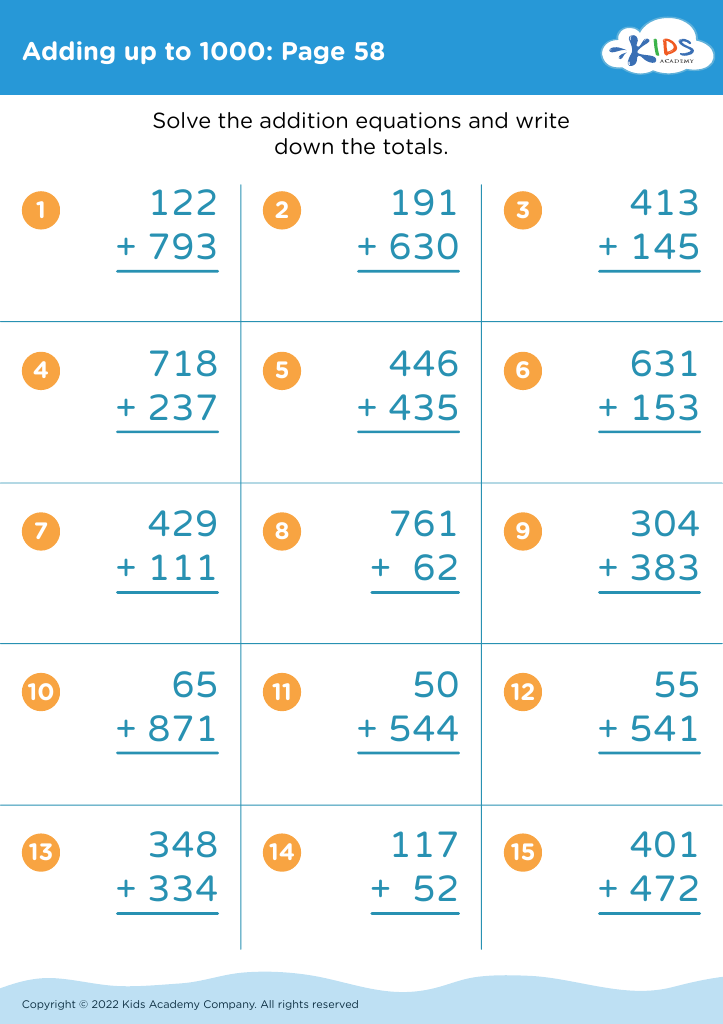
Adding up to 1000: Page 58

Adding up to 1000: Page 58

Adding up to 1000: Page 58
Worksheet
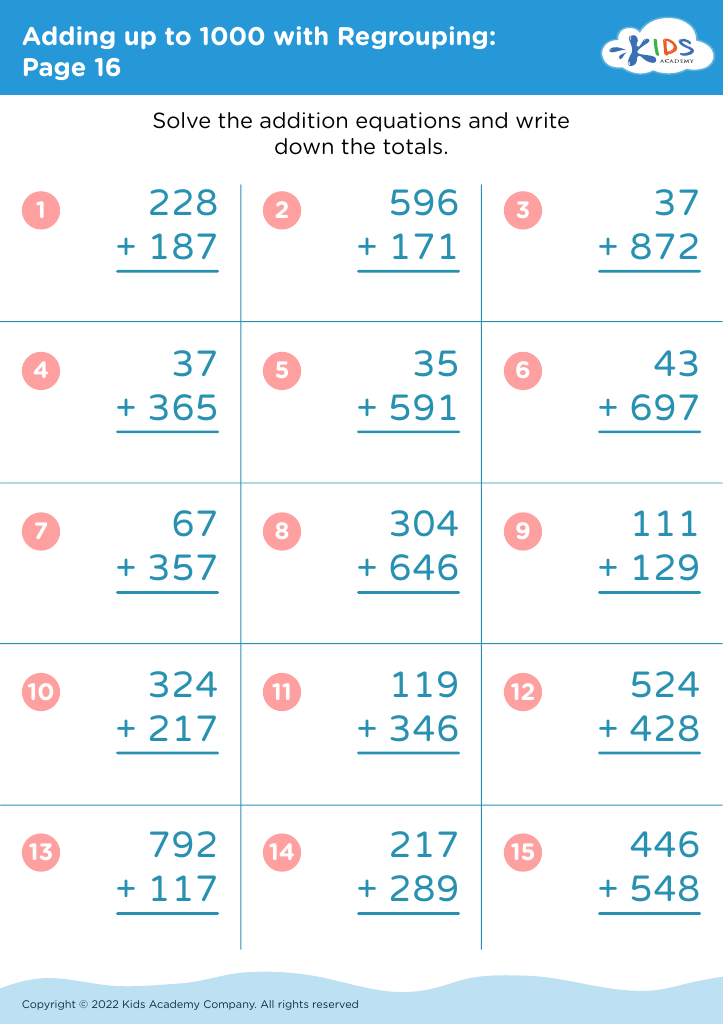
Adding up to 1000 with Regrouping: Page 16
Worksheet
Adding up to 1000 Without Regrouping: Page 62
Worksheet


Parents and teachers should care about teaching 8-year-olds how to compare fractions adding up to 1000 because it builds foundational math skills essential for future learning. Understanding fractions is a core component of mathematics that appears in various subjects such as science, everyday life, and even advanced math topics. By mastering these skills early, children develop critical thinking and problem-solving abilities.

First, comparing fractions enhances number sense — an intuitive understanding of numbers and their relationships. This helps children grasp the concept of proportionality and equivalency, necessary for higher-level math like algebra and geometry.

Second, integrating fractions in practical and relatable contexts, like operating within numbers up to 1000, makes learning meaningful and fun. School and life activities, such as measuring ingredients in a recipe or dividing a pizza among friends, become easier and more intuitive with a strong grasp of fractions.

Lastly, comparing fractions fosters a growth mindset and resilience. Children learn that complex problems can be broken down into manageable steps and foster perseverance as they conquer challenging problems. This mindset not only benefits academic pursuits but also cultivates lifelong skills for approaching various challenges.

Hence, prioritizing fraction education in young children sets a robust foundation for their academic and personal growth.