Fraction Addition Adding up to 1000 Worksheets for 8-Year-Olds
5 filtered results
-
From - To
Enhance your child's math skills with our "Fraction Addition: Adding Up to 1000" worksheets designed specifically for 8-year-olds. These engaging and interactive worksheets provide a fun way for young learners to practice adding fractions, reinforcing their understanding of key mathematical concepts. With a variety of problems tailored to their level, kids can develop confidence and competency in fraction addition, paving the way for more advanced math topics. Our worksheets are beautifully crafted, ensuring that students stay engaged while learning. Help your child build a strong mathematical foundation with these accessible and effective resources! Ideal for use in classrooms or at home.
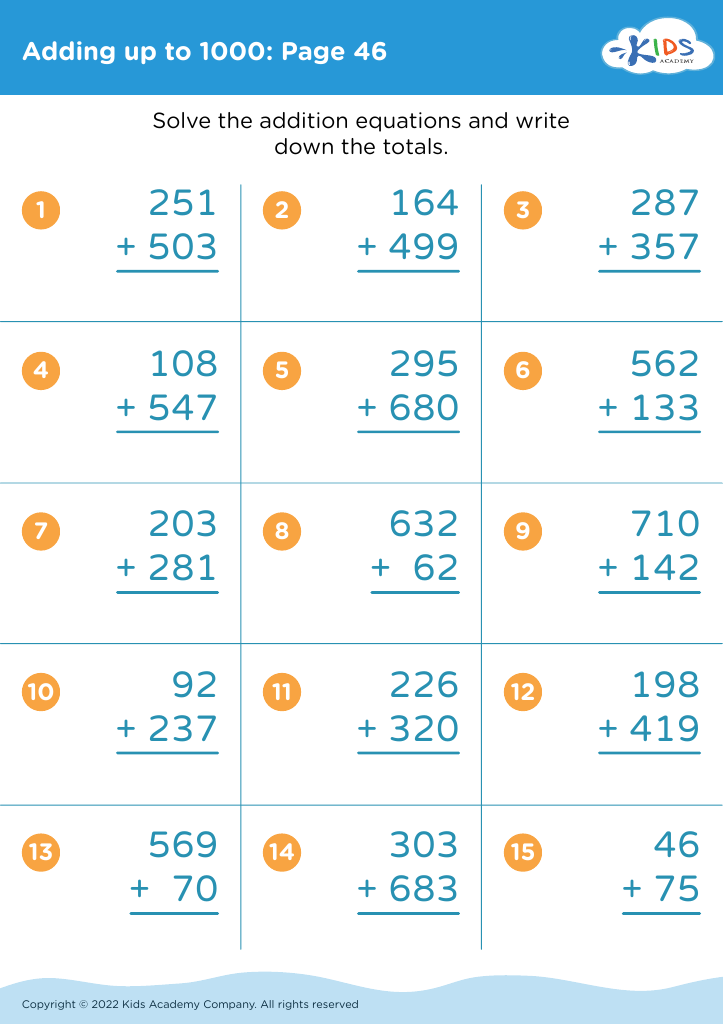
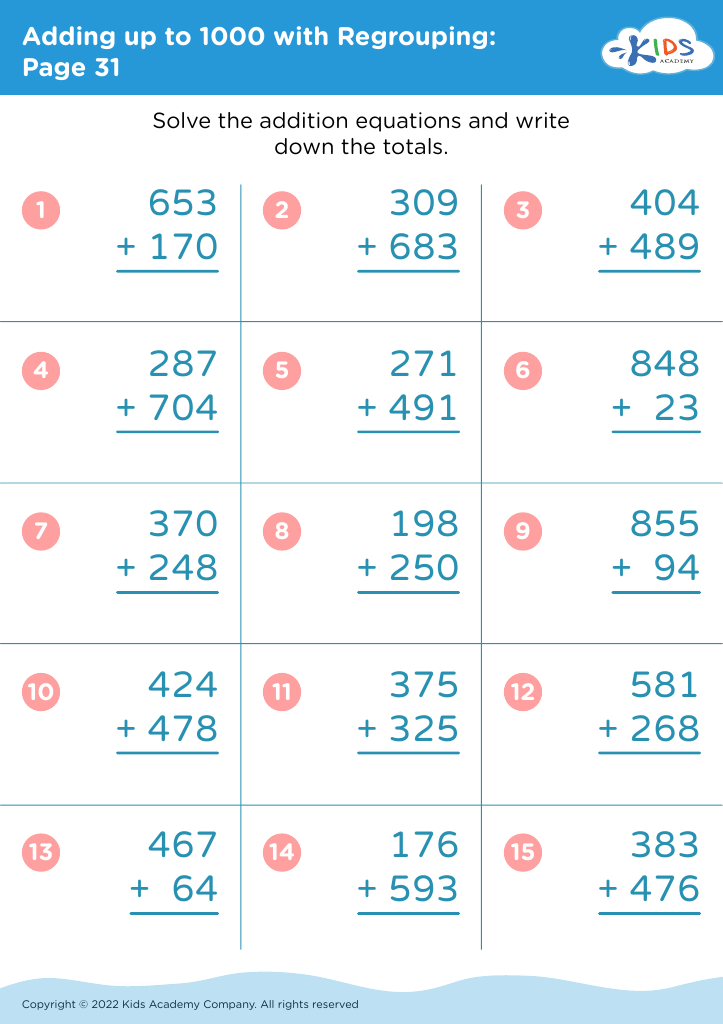
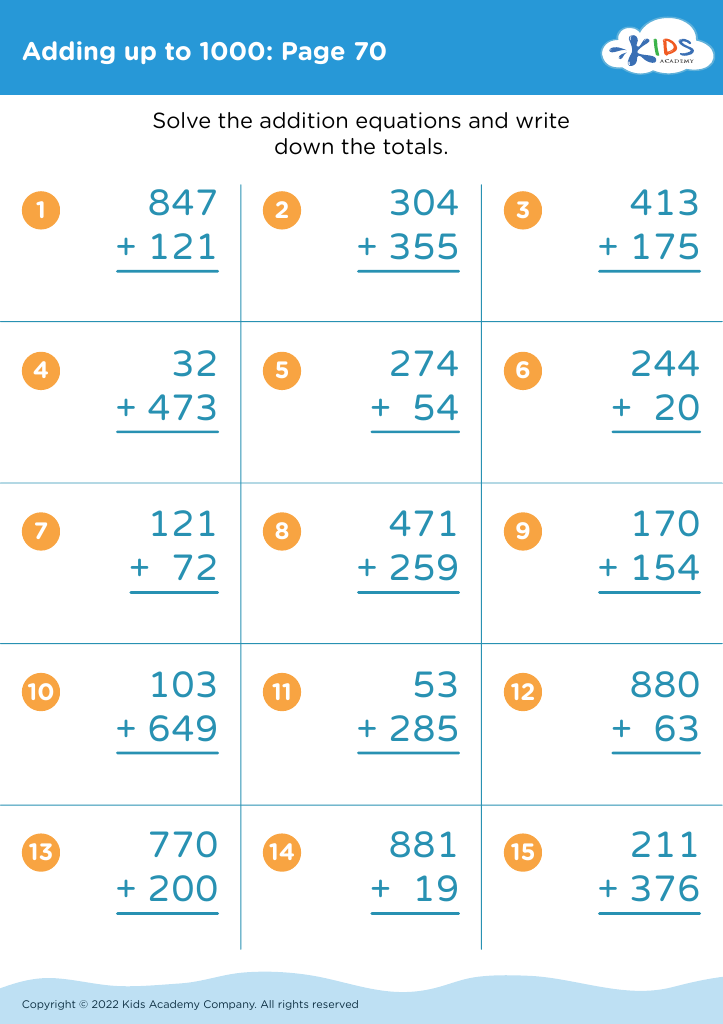
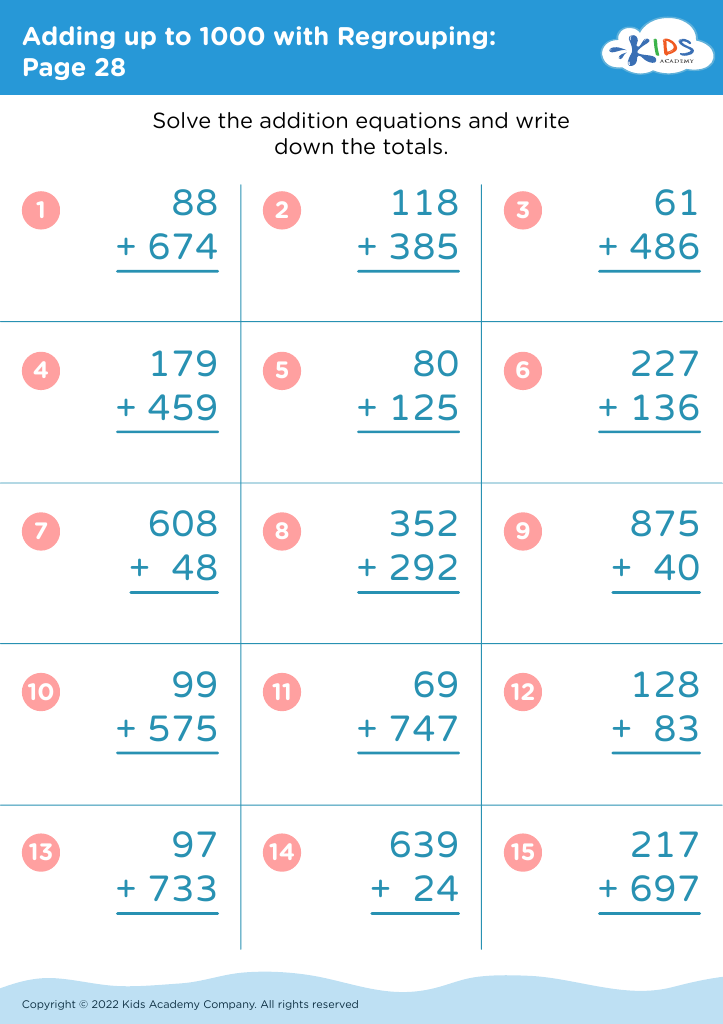
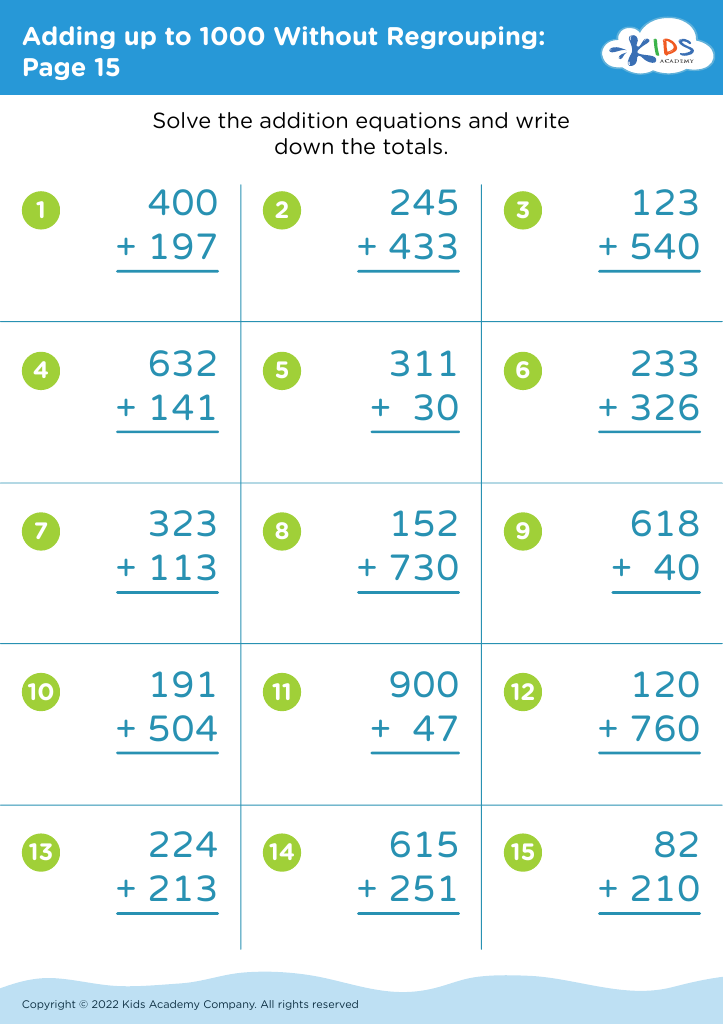



Understanding fraction addition, especially for young learners like 8-year-olds, is critical for their mathematical development. As children grasp the concept of adding fractions, they are not only enhancing their arithmetic skills but also building a foundation for more complex mathematical concepts in the future. Adding fractions—particularly those that total 1000—introduces students to real-world scenarios where they might encounter parts of a whole, thereby enriching their understanding of numbers as they relate to everyday life.
Parents and teachers should be invested in this learning stage because mastering fractions fosters problem-solving and critical-thinking skills. These skills are essential for academic success across subjects. When children learn to manipulate fractions effectively, they develop the confidence needed to tackle challenges, which can positively influence their overall attitude toward learning.
Furthermore, understanding fractions supports the development of proportional reasoning, which is fundamental in subjects like science, economics, and cooking. Encouraging practice and exploration in this area nurtures perseverance and initiative, qualities that benefit children in all walks of life. By caring about fraction addition, adults play a significant role in their children’s journey to becoming competent and confident learners in mathematics and beyond.








