Identify shapes Adding up to 1000 Worksheets for 8-Year-Olds
4 filtered results
-
From - To
Welcome to our "Identify Shapes Adding Up to 1000 Worksheets" designed specifically for 8-year-olds! These engaging worksheets combine essential math skills with shape recognition, making learning fun and interactive. As children explore shapes like circles, squares, and triangles while practicing addition up to 1000, they'll enhance their problem-solving abilities and spatial awareness. Each worksheet aims to strengthen both mathematical understanding and artistic creativity, encouraging students to draw and identify shapes in various contexts. With bright visuals and clear instructions, these worksheets are perfect for classroom use or home learning, providing an effective way to reinforce these critical skills. Start the shape journey today!
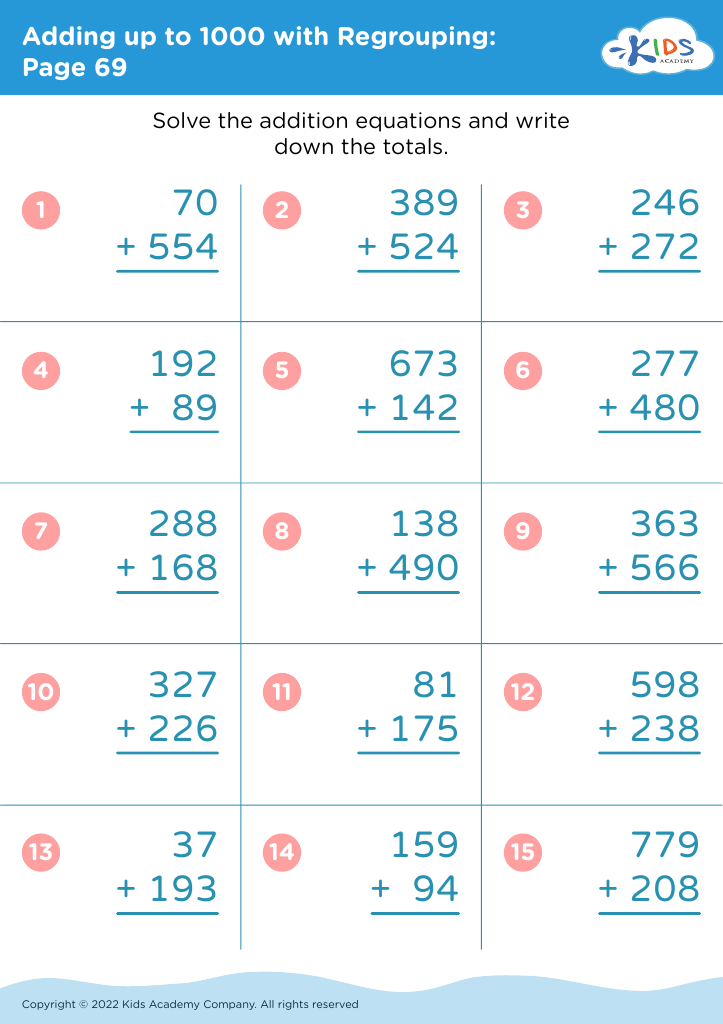
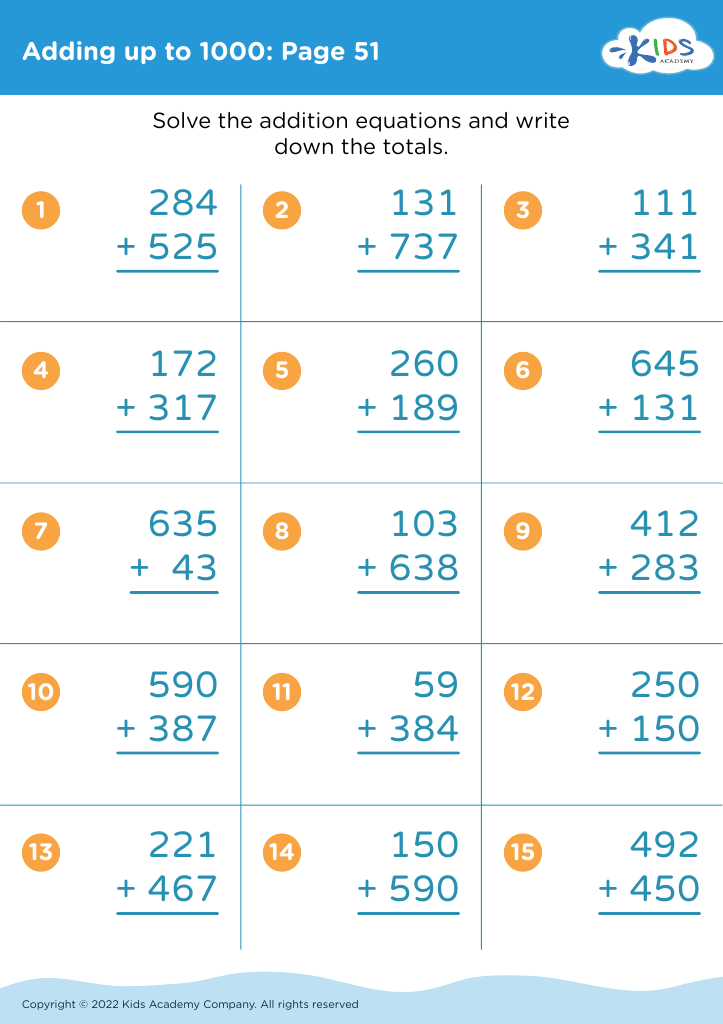
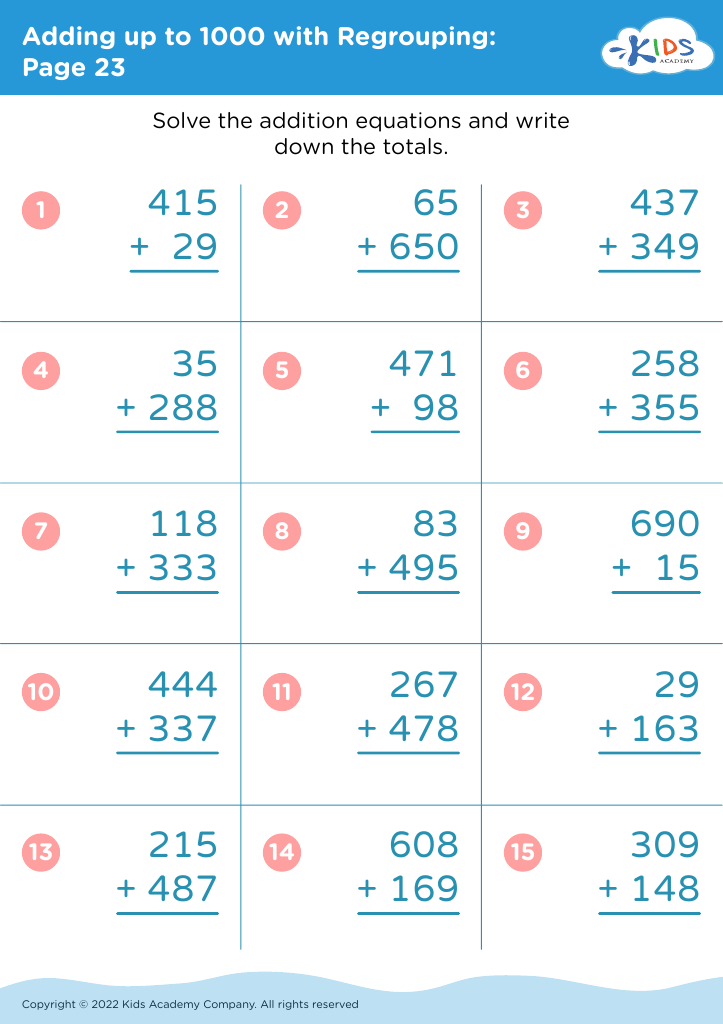
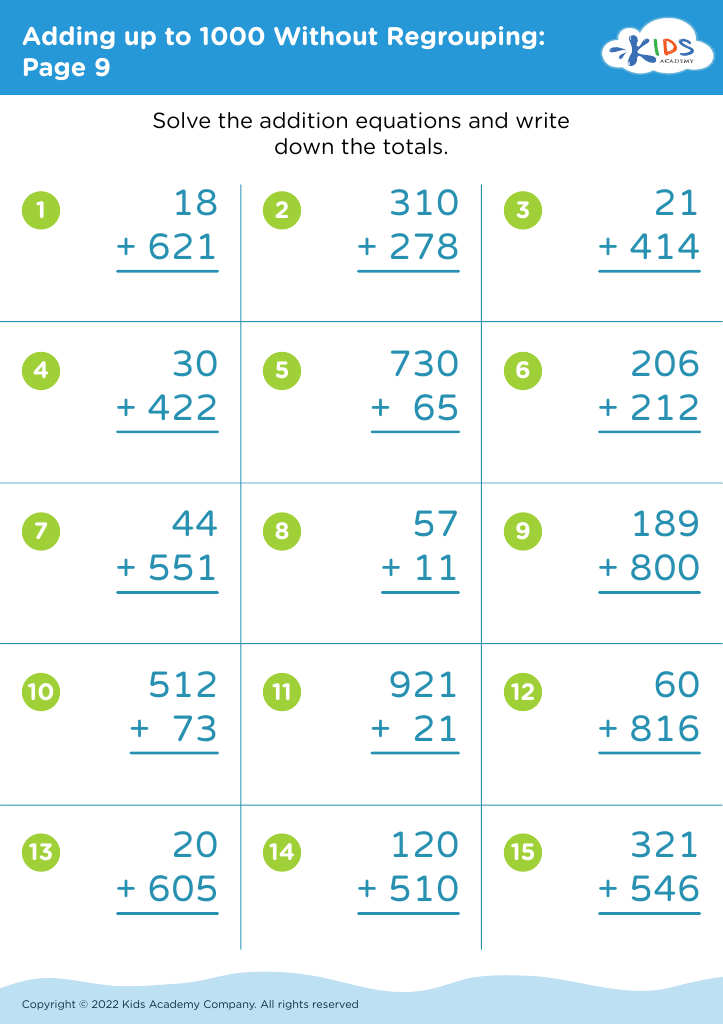



Identifying shapes and understanding numbers that add up to 1000 are crucial skills for 8-year-olds. Firstly, shape recognition fosters spatial awareness and enhances a child's ability to visualize and interact with their environment. This skill contributes to daily activities such as problem-solving, design, and even sports, laying a foundation for future learning in geometry and three-dimensional thinking.
Secondly, the concept of addition, particularly with larger numbers like those up to 1000, develops strong mathematical fluency. At this age, children begin to grasp more complex mathematical concepts, including place value, grouping, and regrouping. Mastering these skills not only helps in basic arithmetic but also prepares them for advanced subjects.
Furthermore, helping children recognize that shapes and numbers are interconnected fosters critical thinking. For instance, understanding the geometric shapes involved in problem-solving can make math more engaging and relevant.
In summary, investing time in teaching shape identification and addition up to 1000 empowers children with essential cognitive skills, promotes confidence in their abilities, and builds a solid foundation for future academic success. Parents and teachers play an influential role in guiding their learning journey, making these skills essential areas of focus.








