Improving counting skills Adding up to 1000 Worksheets for 8-Year-Olds
4 filtered results
-
From - To
Unlock your child's mathematical potential with our "Improving Counting Skills: Adding Up to 1000 Worksheets" designed specifically for 8-year-olds! These engaging worksheets help reinforce important counting and addition skills while making learning fun. Through a variety of exercises, including number lines, word problems, and interactive challenges, children will improve their ability to count and add numbers up to 1000 confidently. Our resources foster independent learning and are perfect for use at home or in the classroom. Support your child's academic journey with these thoughtfully-crafted worksheets and watch their counting skills soar! Explore today for a brighter numerical future!
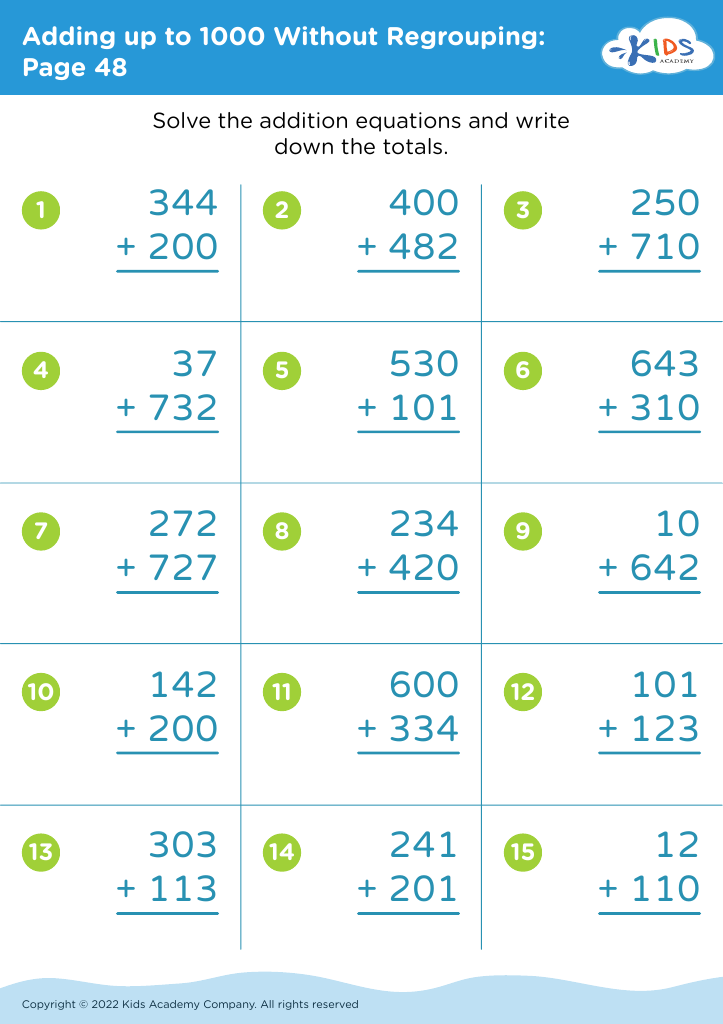
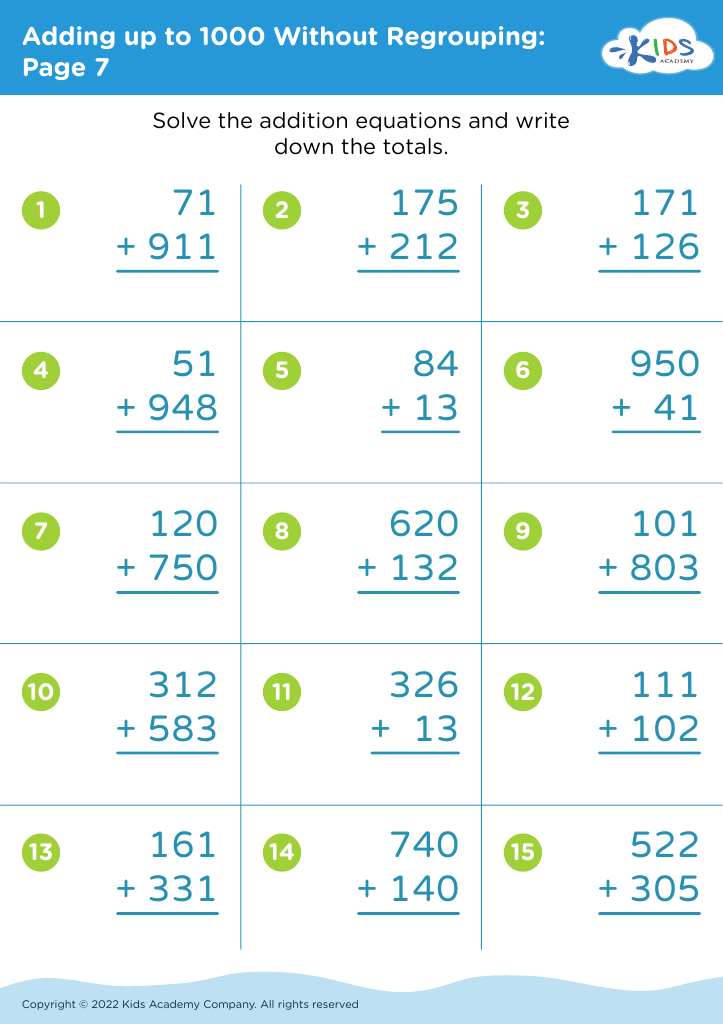
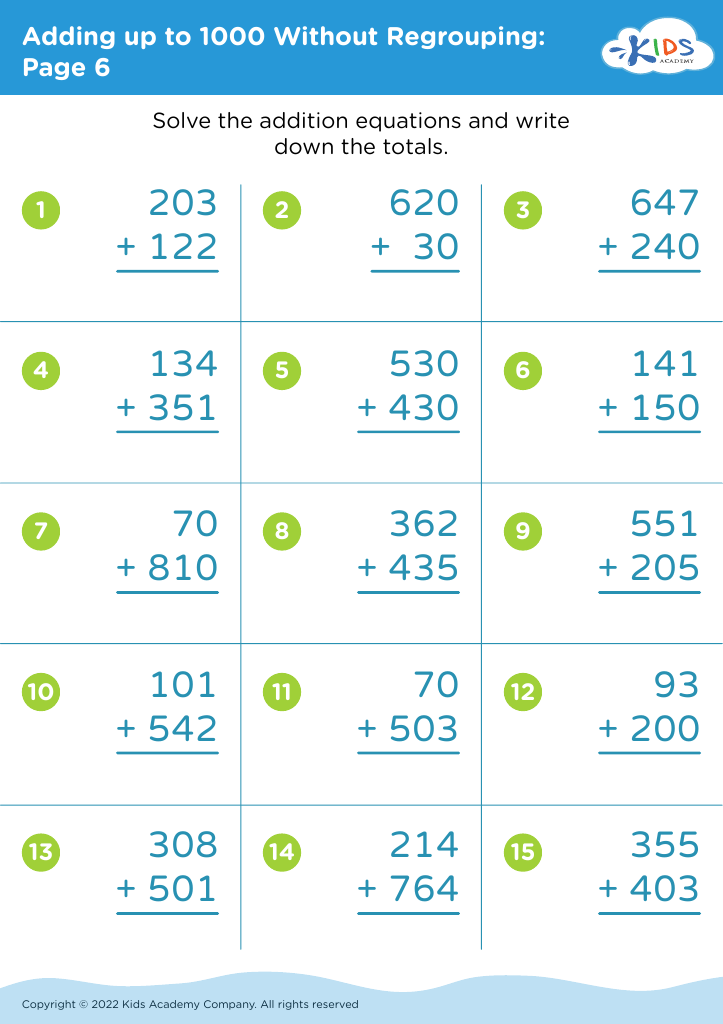
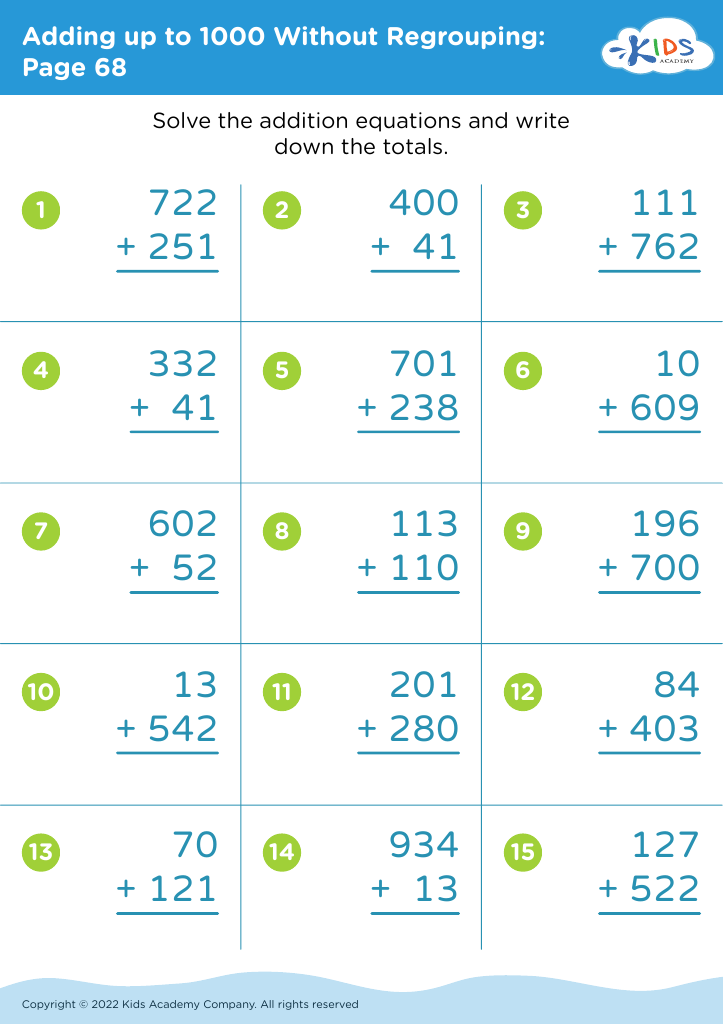



Improving counting skills that add up to 1000 for 8-year-olds is crucial for several reasons. First, foundational math skills are essential for children as they form the basis for more complex mathematical concepts later on. Mastery in counting and basic arithmetic enables students to tackle problems such as addition, subtraction, and even early multiplication. This contributes to their overall mathematical fluency, allowing them to perform well in school and fostering a positive attitude towards math.
Second, strong counting skills enhance critical thinking and problem-solving abilities. When children learn to count up to 1000, they not only practice numerical literacy but also develop logical reasoning as they engage with different ways of reaching the same number. This skill translates well beyond math, aiding students in fields requiring analytical skills.
Finally, counting plays a role in real-life applications, such as budgeting, understanding time, and measuring, which are vital as children grow. Encouraging parents and teachers to focus on improving these skills can have a significant impact on a child's confidence and independence, equipping them with essential tools to navigate everyday situations and succeed in future academic endeavors. Investing in these skills now sets a strong foundation for lifelong learning.








