Number Recognition Adding up to 1000 Worksheets for 8-Year-Olds - Page 2
31 filtered results
-
From - To
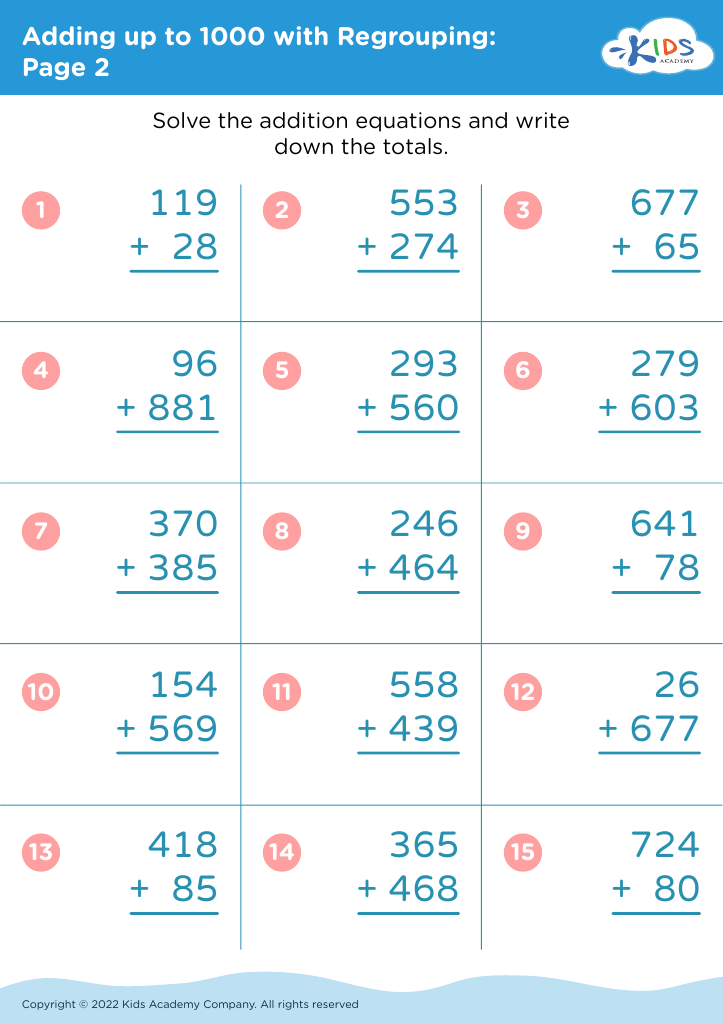
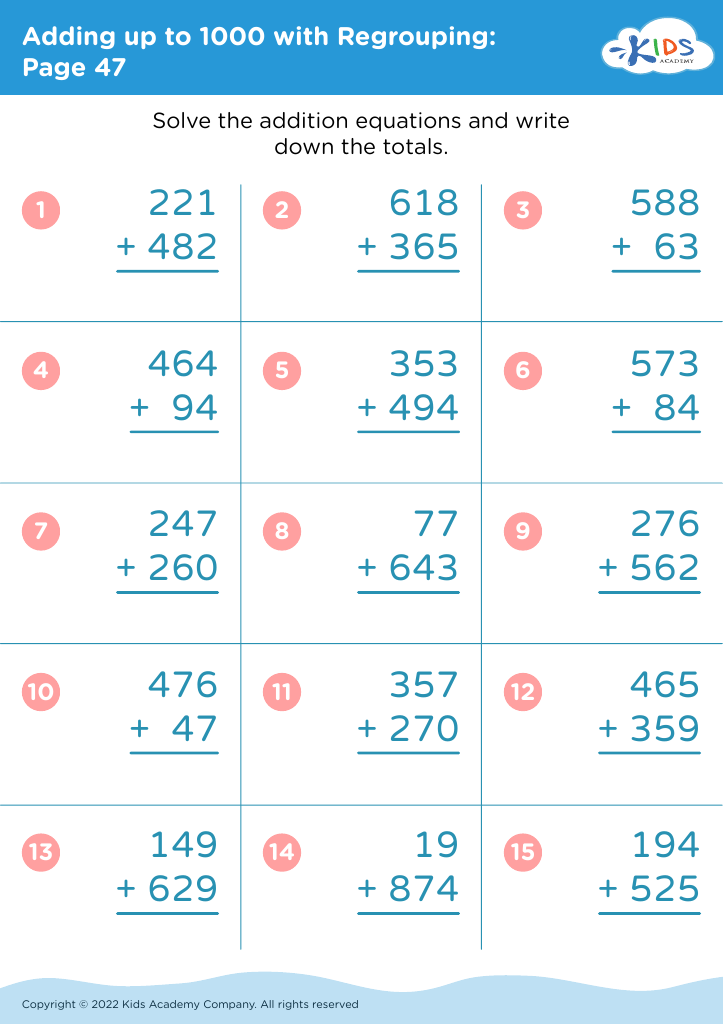
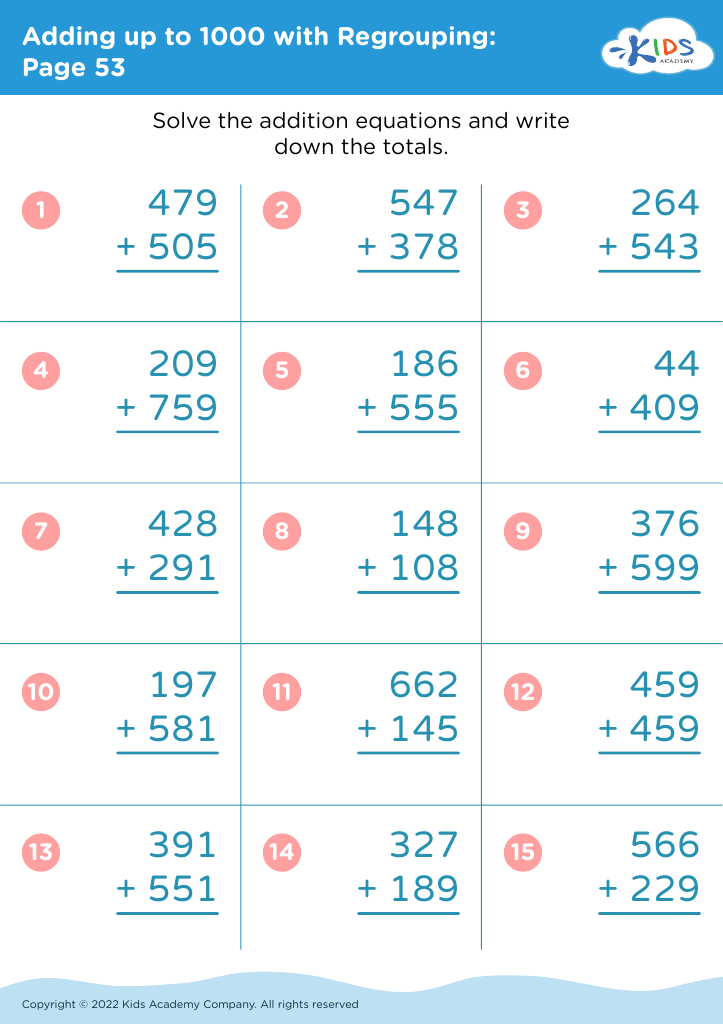
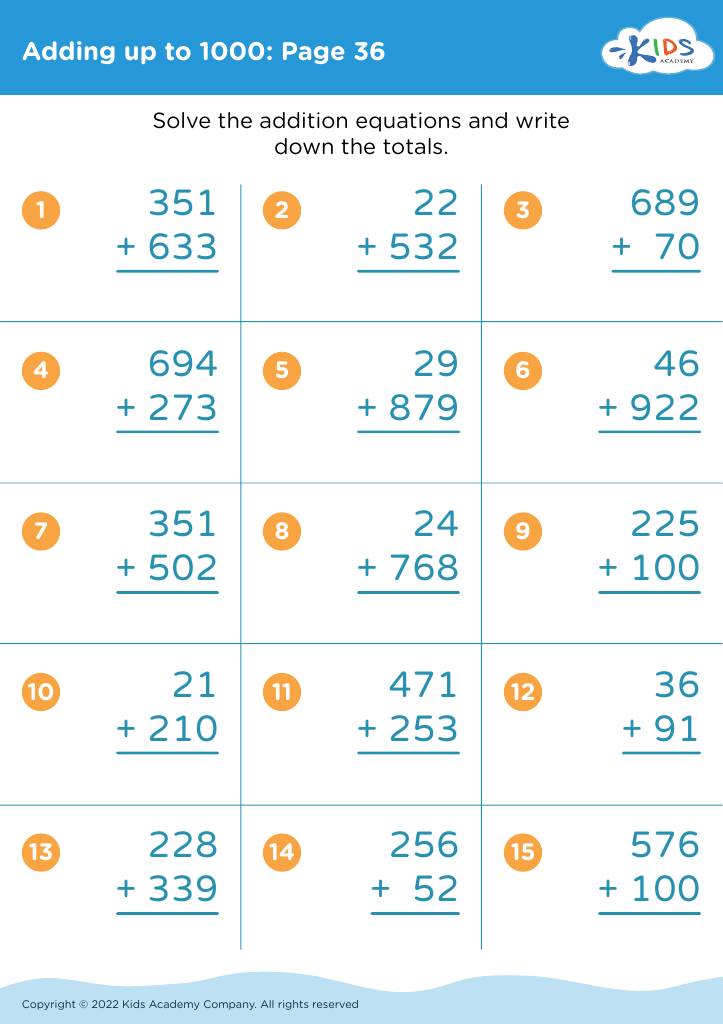
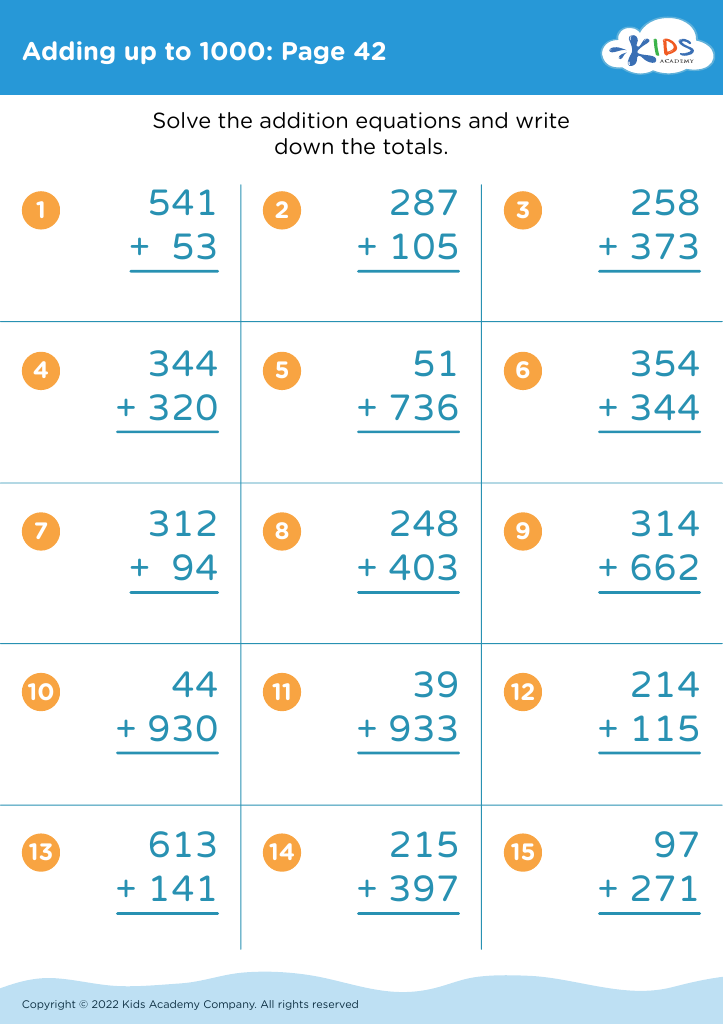
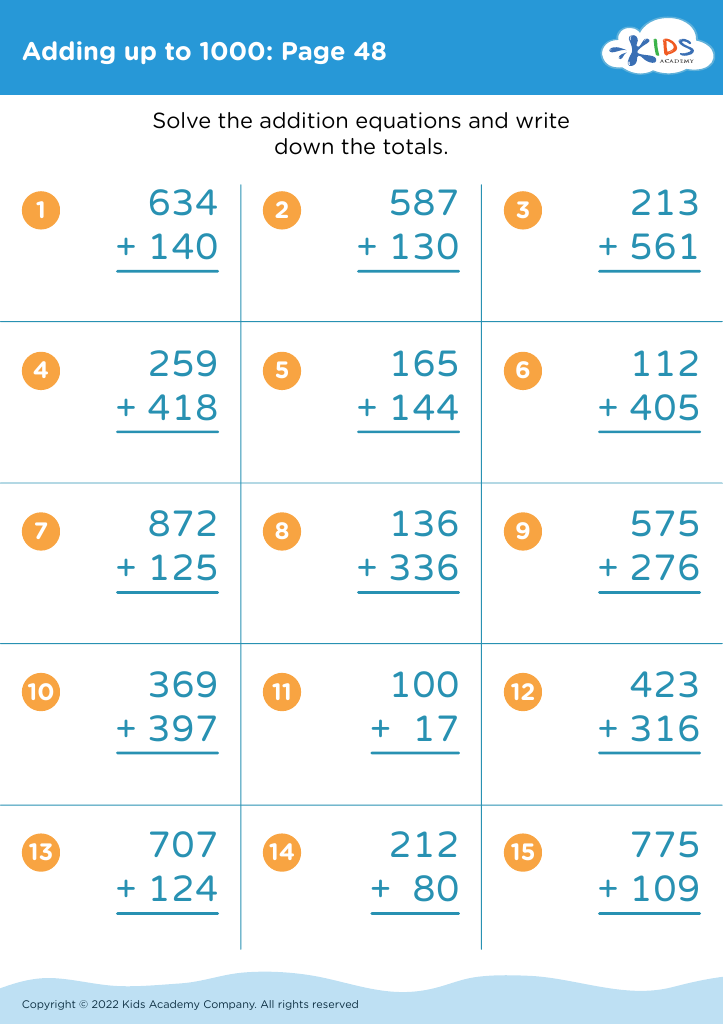
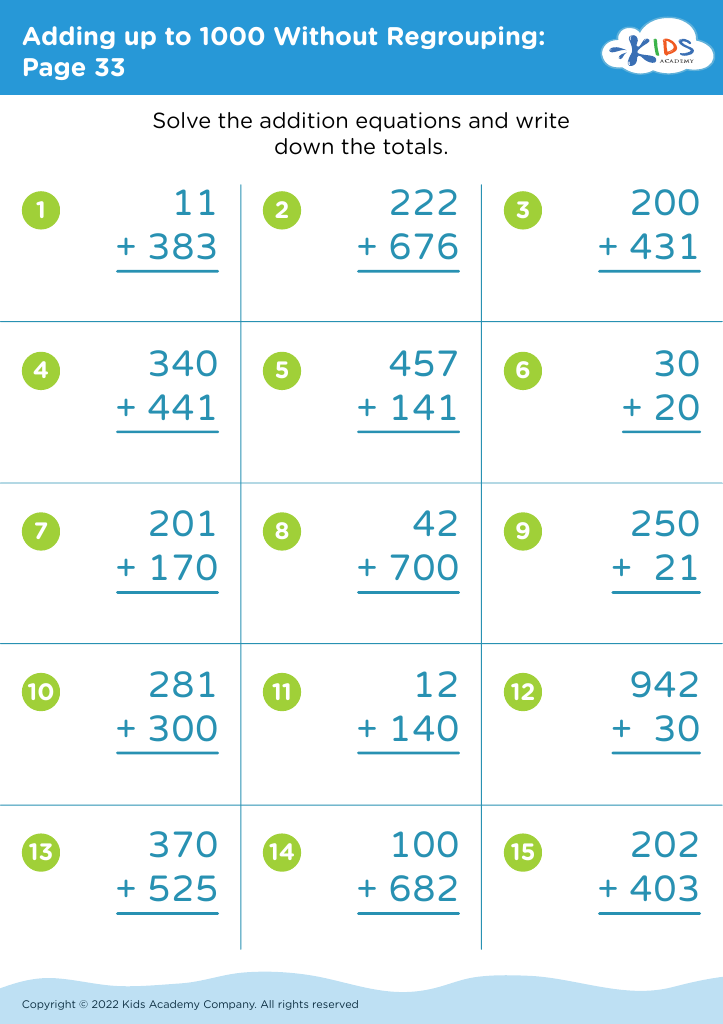




Number recognition is a crucial foundational skill for 8-year-olds, as it significantly impacts their overall mathematical understanding and future academic success. By mastering number recognition, children develop the ability to identify, compare, and manipulate numbers up to 1000, which enhances their confidence in math. At this age, pupils are transitioning from basic arithmetic operations to more complex mathematical concepts, such as addition, subtraction, and even introductory data analysis.
For parents and teachers, fostering strong number recognition skills encourages children to engage with numbers actively, reducing math anxiety and building a positive classroom environment. Number recognition also lays the groundwork for more advanced topics like multiplication and division, geometry, and problem-solving, which are essential for success in higher grades.
Additionally, mastering number recognition helps children understand the world around them, as they encounter numbers in everyday situations — from measuring ingredients while cooking to recognizing prices while shopping. By investing time and resources into enhancing number recognition, parents and teachers can create effective learning experiences that nurture a child's curiosity and critical thinking skills, ultimately preparing them for future mathematical challenges. This foundation is essential not just for academic achievement but for lifelong learning and real-world application.








