Problem Solving Adding up to 1000 Worksheets for 8-Year-Olds
3 filtered results
-
From - To
Enhance your 8-year-old's math skills with our engaging "Problem Solving Adding up to 1000 Worksheets." Designed to foster critical thinking and proficiency, these worksheets offer a variety of challenging and fun problems that will help your child master addition and develop their problem-solving abilities. Each worksheet encourages independent thinking and reinforces essential skills in a supportive format, making math enjoyable. Perfect for home or classroom use, these resources provide invaluable practice that prepares children for higher-level math concepts. Dive into interactive learning and watch your child's confidence soar as they tackle addition problems up to 1000 with ease!
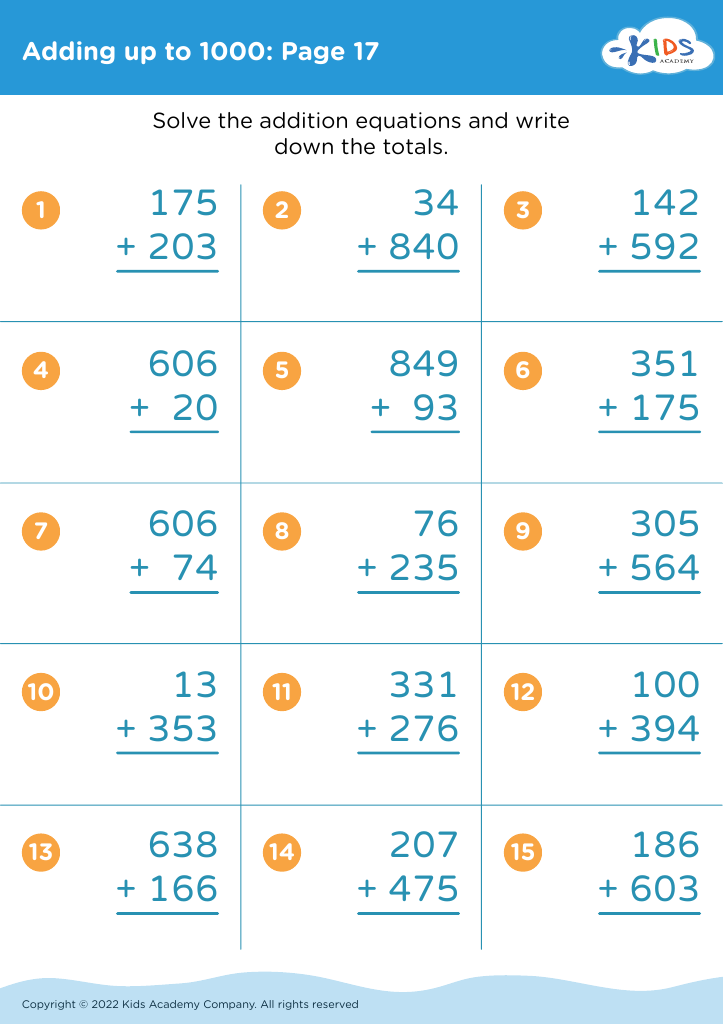
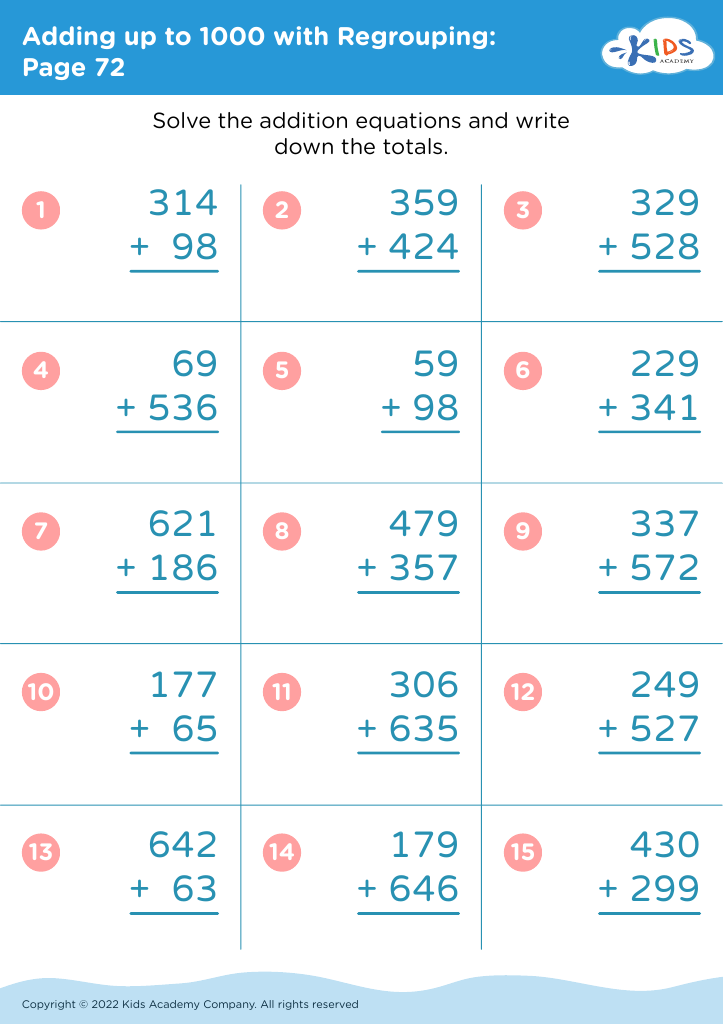
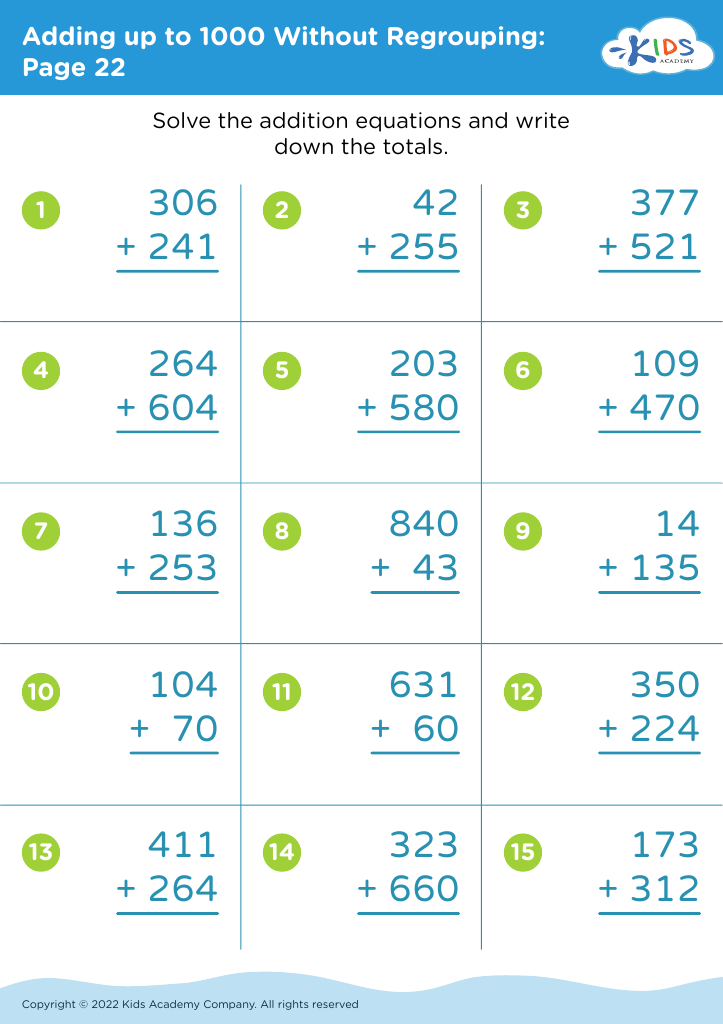



Parents and teachers should prioritize problem-solving skills in children, especially when it comes to adding up to 1000, for several key reasons. Firstly, mastering basic addition is foundational for future mathematical concepts. Understanding how to combine numbers cohesively prepares children for more advanced operations like subtraction, multiplication, and division.
Moreover, engaging in problem-solving activities encourages critical thinking and analytical skills. When children learn to approach problems thoughtfully, they develop persistence—a crucial trait that benefits them beyond math into other academic areas and everyday life challenges.
Additionally, fostering skills in working with numbers up to 1000 cultivates confidence. When children successfully navigate these mathematical challenges, they gain a sense of accomplishment that motivates them to tackle more complex problems. This positive emotional connection to math helps dispel the anxiety that often surrounds the subject.
Furthermore, cultivating problem-solving skills aligns with important educational standards, empowering teachers to create a rich learning environment that nurtures curiosity. Collaboration between parents and teachers can enhance these skills, as they work together to guide children through both structured learning and practical applications at home. Ultimately, strong problem-solving abilities will serve children well in their academic journeys and future careers.








