Problem-solving abilities Adding up to 1000 Worksheets for 8-Year-Olds
5 filtered results
-
From - To
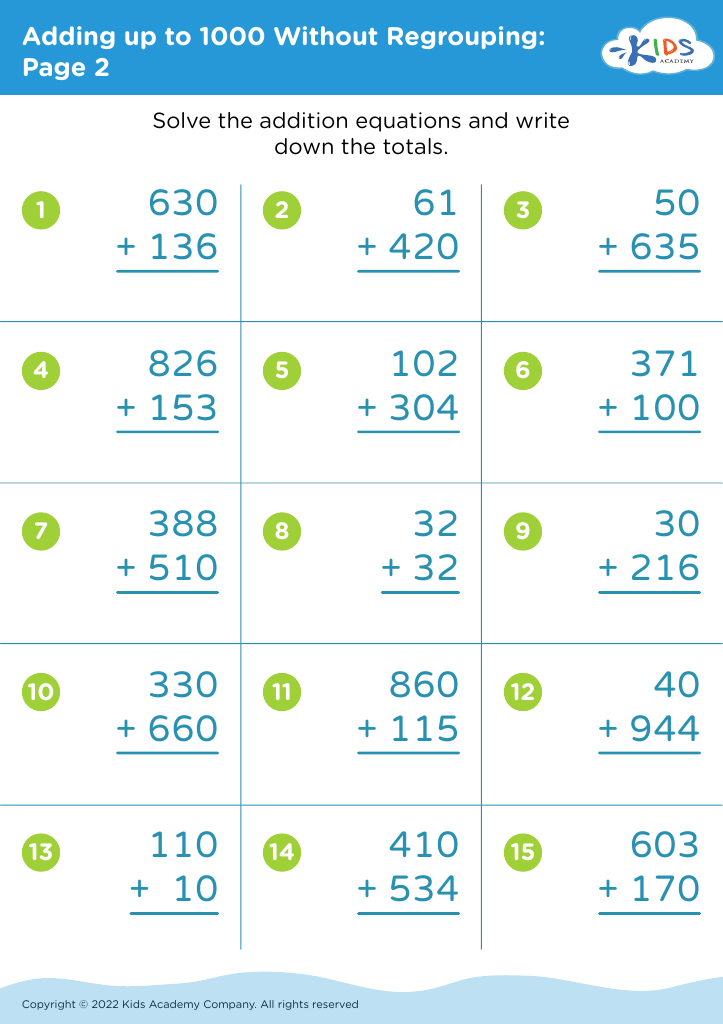
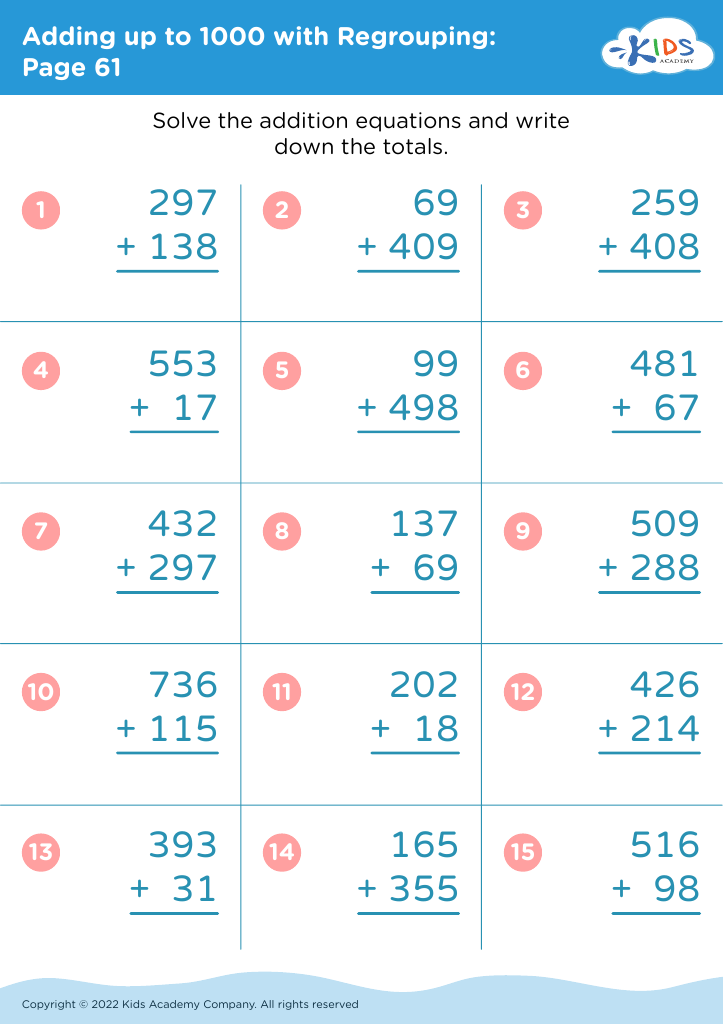
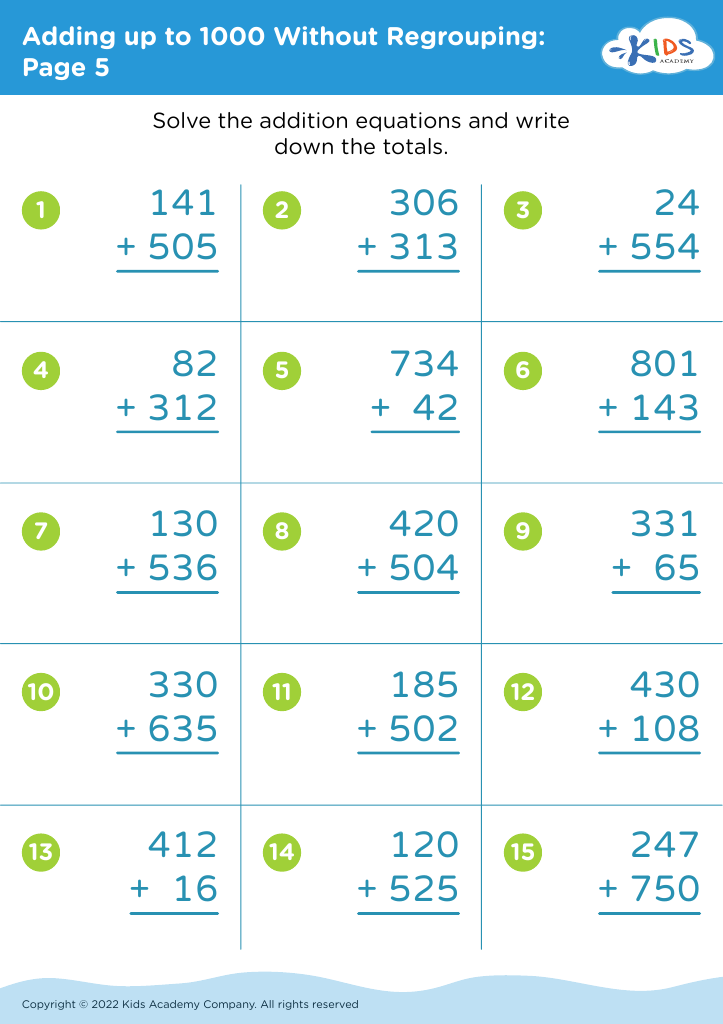
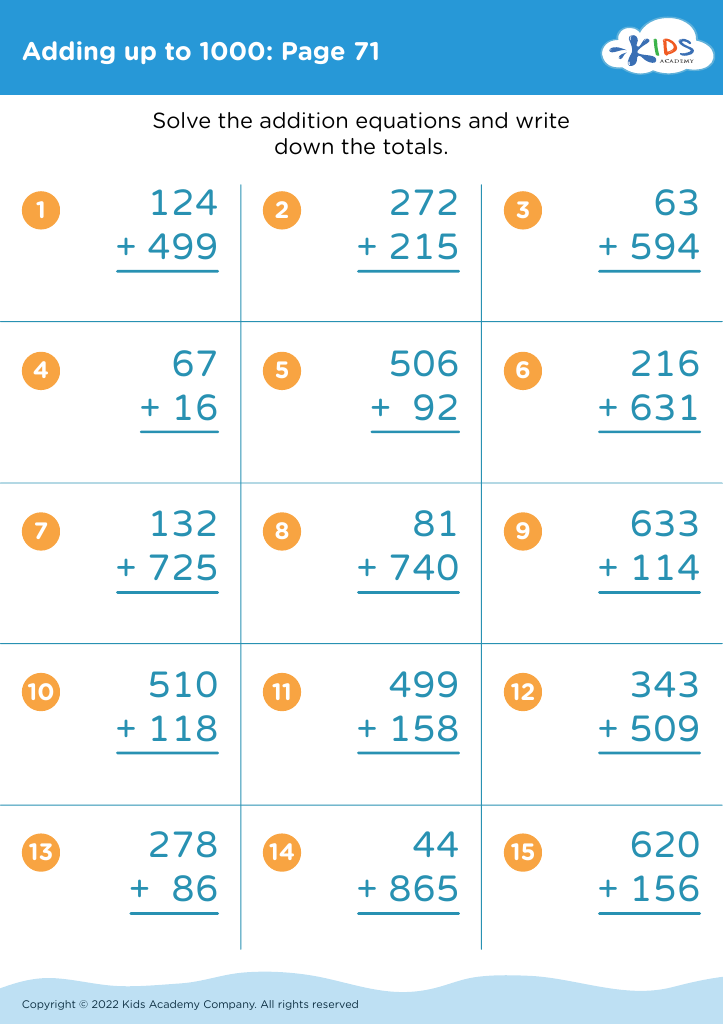
Boost your child's math skills with our "Problem-solving Abilities Adding up to 1000 Worksheets for 8-Year-Olds". These engaging and educational worksheets focus on enhancing problem-solving abilities while strengthening addition skills within 1000. Perfect for second graders, each worksheet presents varied scenarios encouraging critical thinking and logical reasoning. Designed to align with curriculum standards, these printable resources help children build confidence, improve accuracy, and foster a love for math. Whether used in the classroom or at home, our worksheets provide a fun and effective way to develop proficiency in solving addition problems. Start exploring today and unlock your child's potential!
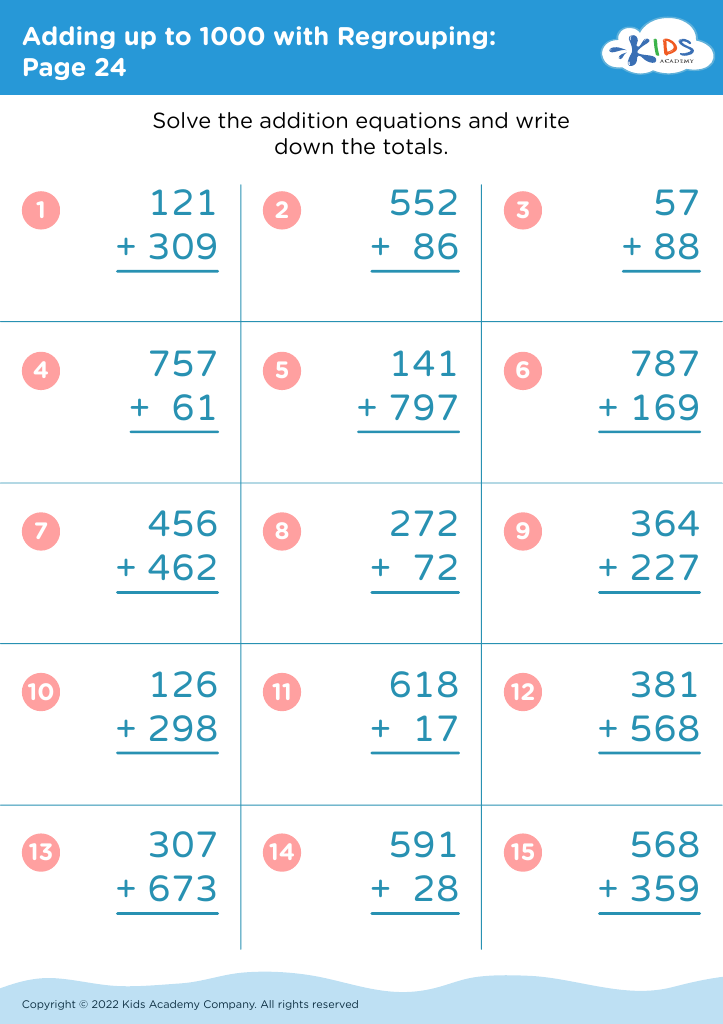



Parents and teachers should prioritize fostering problem-solving abilities that involve adding numbers up to 1000 for 8-year-olds because these skills build the foundational components of mathematical literacy and cognitive development. At this age, children's brains are highly receptive to learning, and engaging in complex arithmetic enhances their understanding of numerical concepts, thereby improving their overall mental agility.
Developing the capability to solve larger addition problems instills confidence in young learners, empowering them to tackle more advanced mathematical challenges in the future. It also reinforces critical thinking and logical reasoning, as they learn to carry over numbers and manage multi-digit operations. These abilities don't just apply to mathematics but also improve their performance across various academic subjects that require analytical and reasoning skills.
Moreover, acquiring proficiency in addition up to 1000 aids in everyday life, from managing allowances to understanding basic financial transactions. Early mastery of these skills sets the stage for academic success and practical competence, which are essential for their long-term personal and educational growth. By emphasizing problem-solving with larger numbers, parents and teachers provide children with valuable tools that will serve them well beyond the classroom, fostering independent thinking and resilience in facing complex tasks.








