Understand patterns Adding up to 1000 Worksheets for 8-Year-Olds
3 filtered results
-
From - To
Explore our "Understand Patterns Adding up to 1000 Worksheets" designed specifically for 8-year-olds! These engaging and interactive worksheets are perfect for helping young learners grasp the concept of patterns in addition. Your child will practice identifying and completing patterns while reinforcing their skills in adding numbers up to 1000. Our resources make learning mathematics fun, enhancing critical thinking and problem-solving abilities. The worksheets are suitable for home or classroom use, making them an excellent educational tool. Encourage your child's love for math as they develop confidence in their ability to recognize and utilize patterns in addition! Get started today!
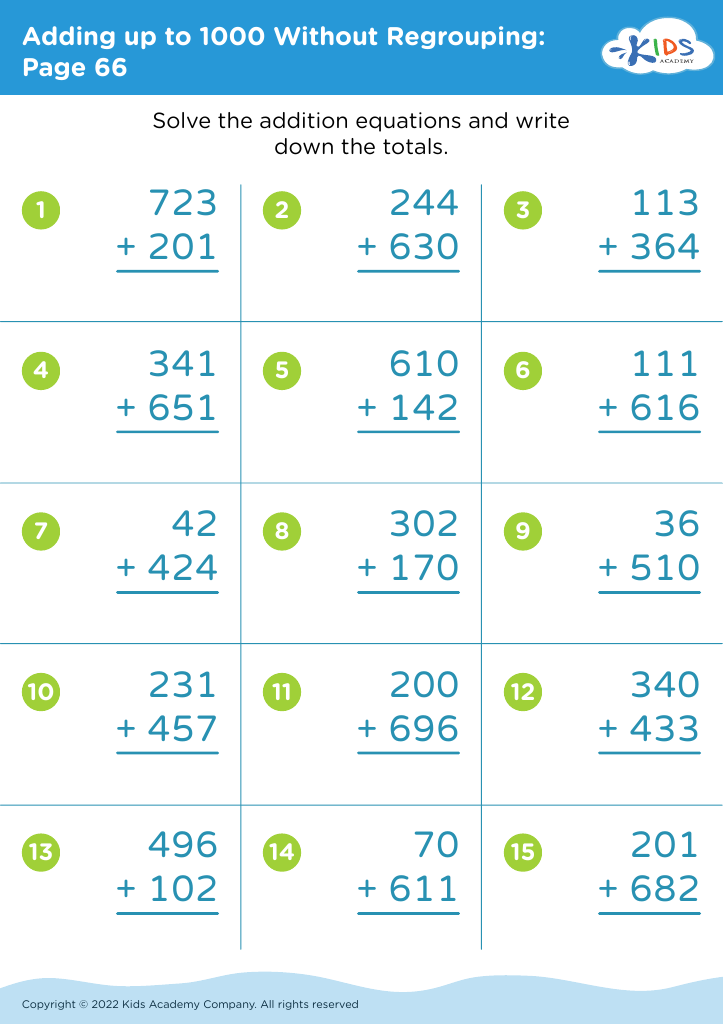
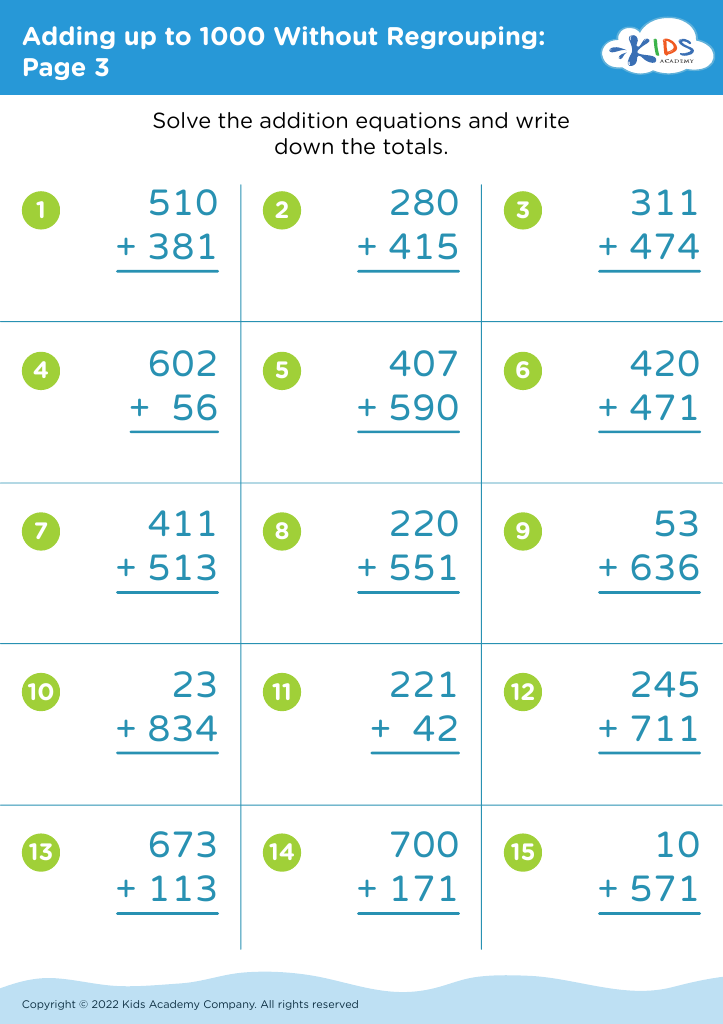
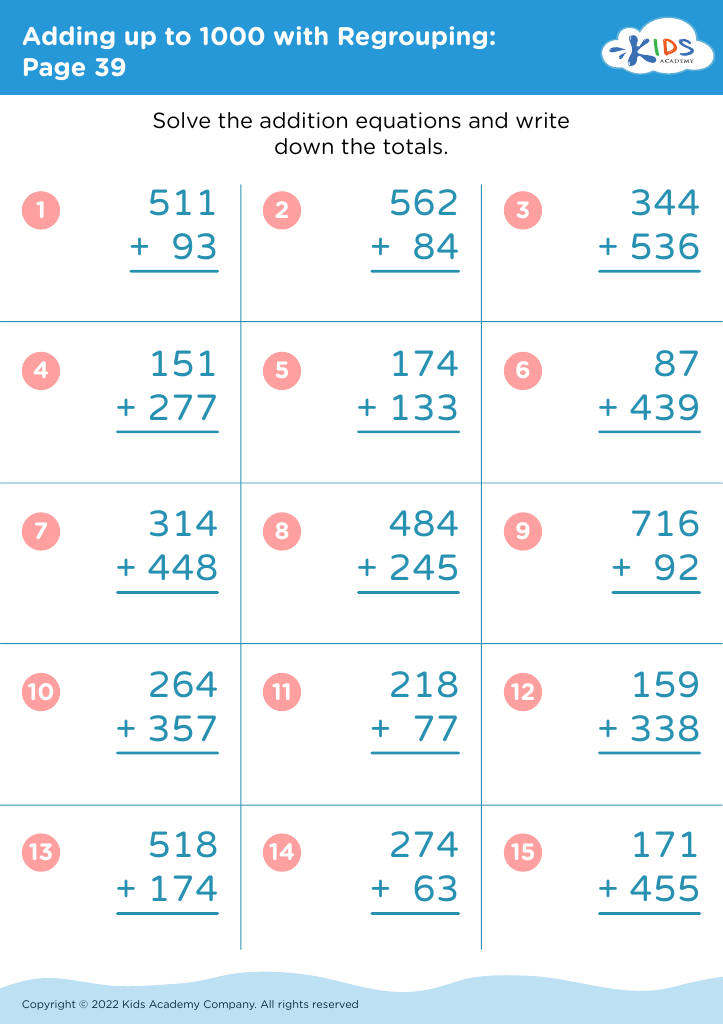



Understanding patterns and adding up to 1000 is a crucial concept for 8-year-olds as it forms the foundation for advanced mathematical skills. First, recognizing patterns helps children see relationships between numbers, fostering critical thinking and problem-solving abilities. When children learn to identify sequences, they become more adept at predicting outcomes and deciphering complex problems later on.
Moreover, mastering addition up to 1000 enhances numerical fluency, which is essential for everyday tasks and future academic success. This skill not only equips children with the ability to tackle larger numbers confidently but also cultivates a sense of accomplishment and boosts self-esteem.
Additionally, understanding these concepts aligns with the curriculum benchmarks, ensuring that students are on track for their grade level. This knowledge prepares them for more complex operations, such as subtraction, multiplication, and division, which they will encounter in upper grades.
Furthermore, when teachers and parents prioritize this learning, they encourage a supportive environment that aims for proficiency in mathematics. This involvement is key to nurturing a lifelong appreciation for the subject, making complex ideas seem more approachable, and laying the groundwork for future academic and professional pursuits.








