Understanding patterns Adding up to 1000 Worksheets for 8-Year-Olds
5 filtered results
-
From - To
Explore our "Understanding Patterns Adding Up to 1000 Worksheets for 8-Year-Olds" to elevate your child's math skills! These engaging worksheets help children recognize and extend number patterns, as well as improve their addition abilities up to 1000. Designed specifically for 8-year-olds, our resources offer fun activities that bolster problem-solving skills, cognitive development, and mathematical reasoning. Whether used at home or in the classroom, these worksheets promote vibrant learning experiences and build a strong foundation for future math success. Visit our web page and unlock your child’s potential with our comprehensive math worksheets today!
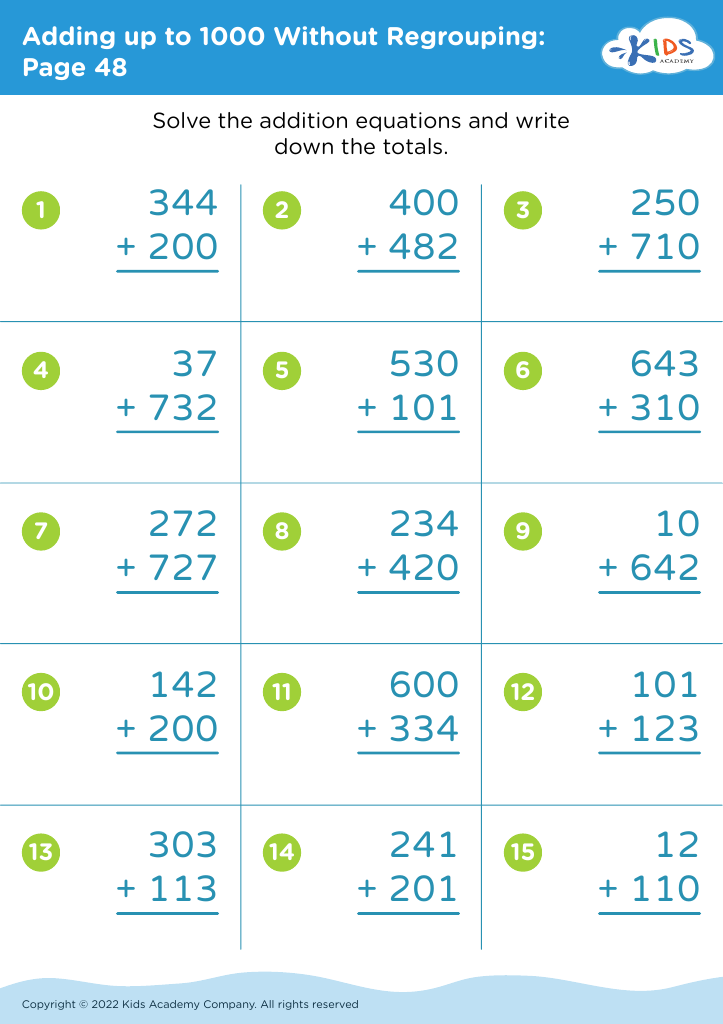
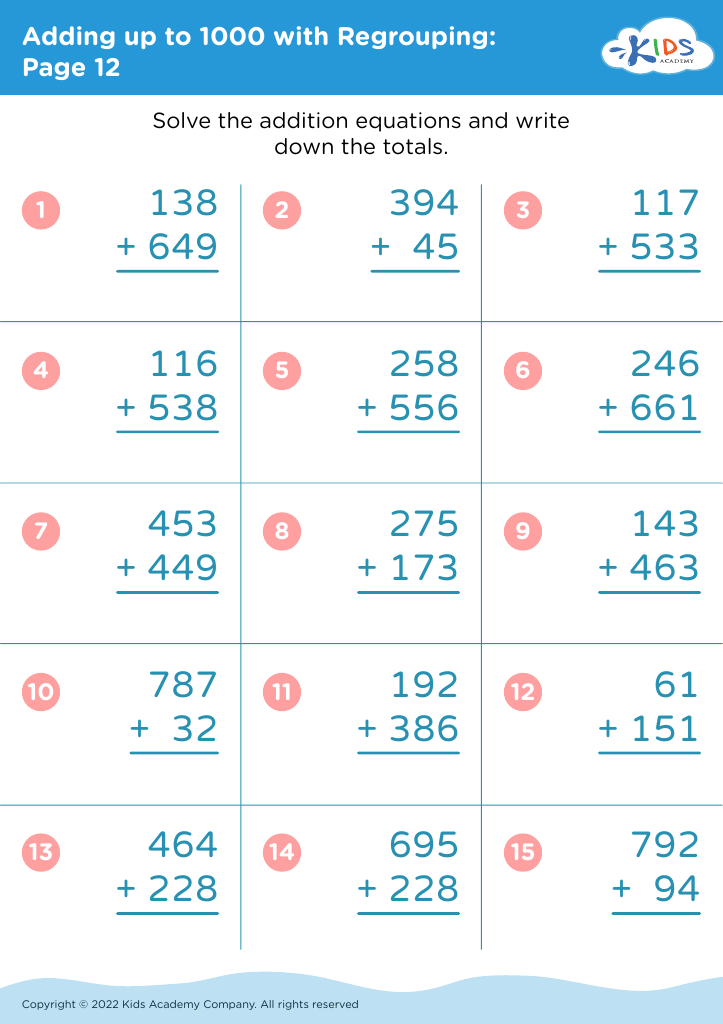
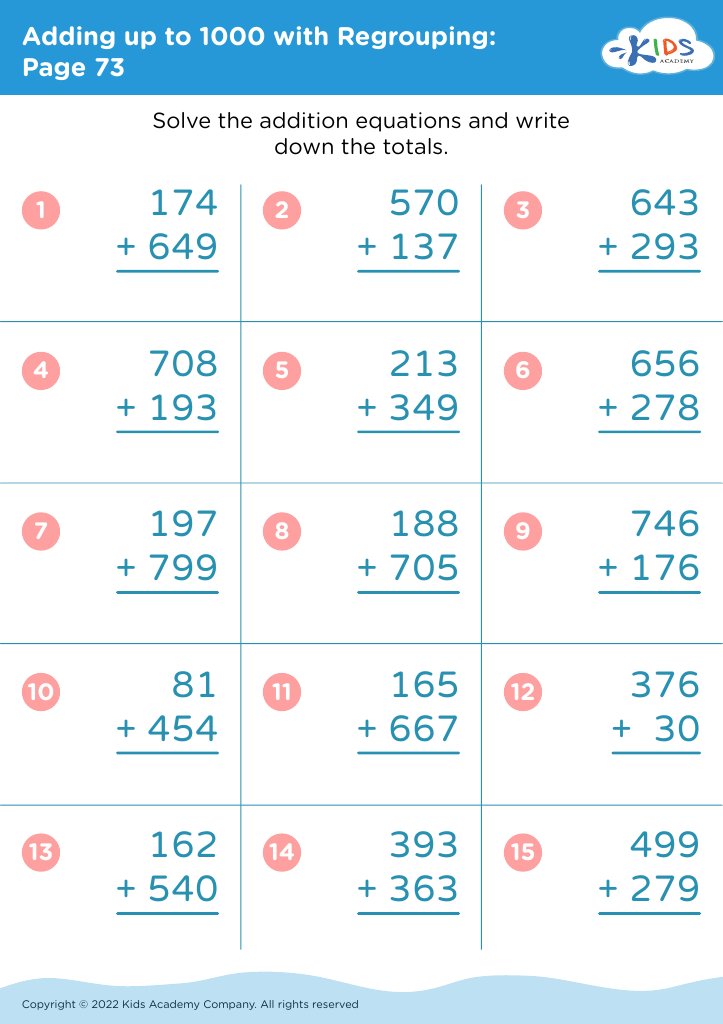
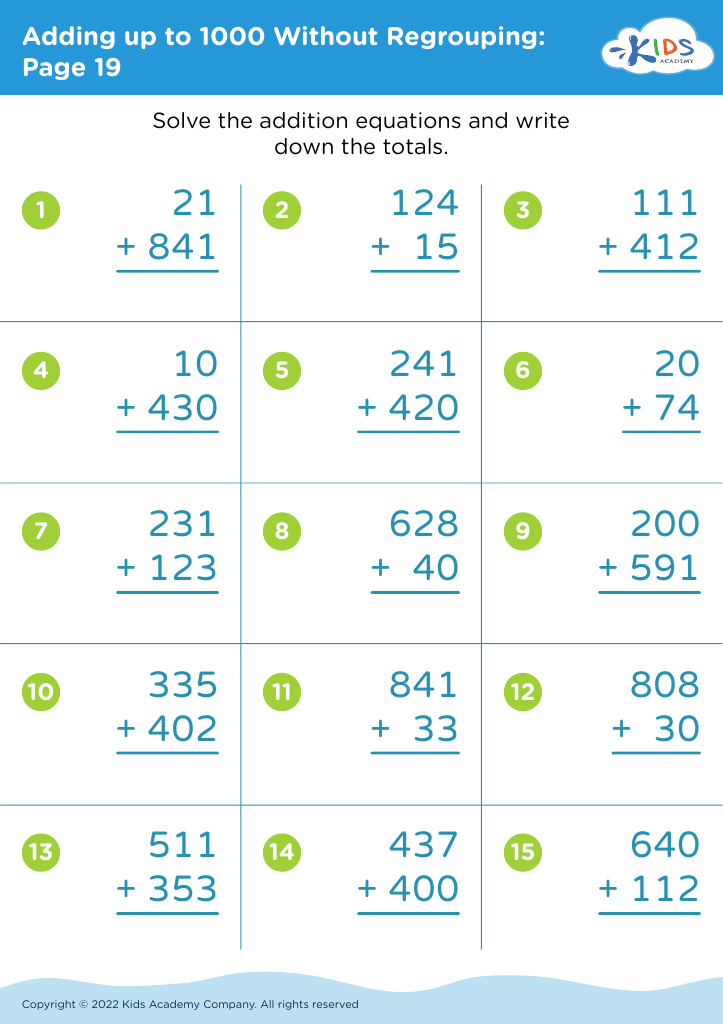
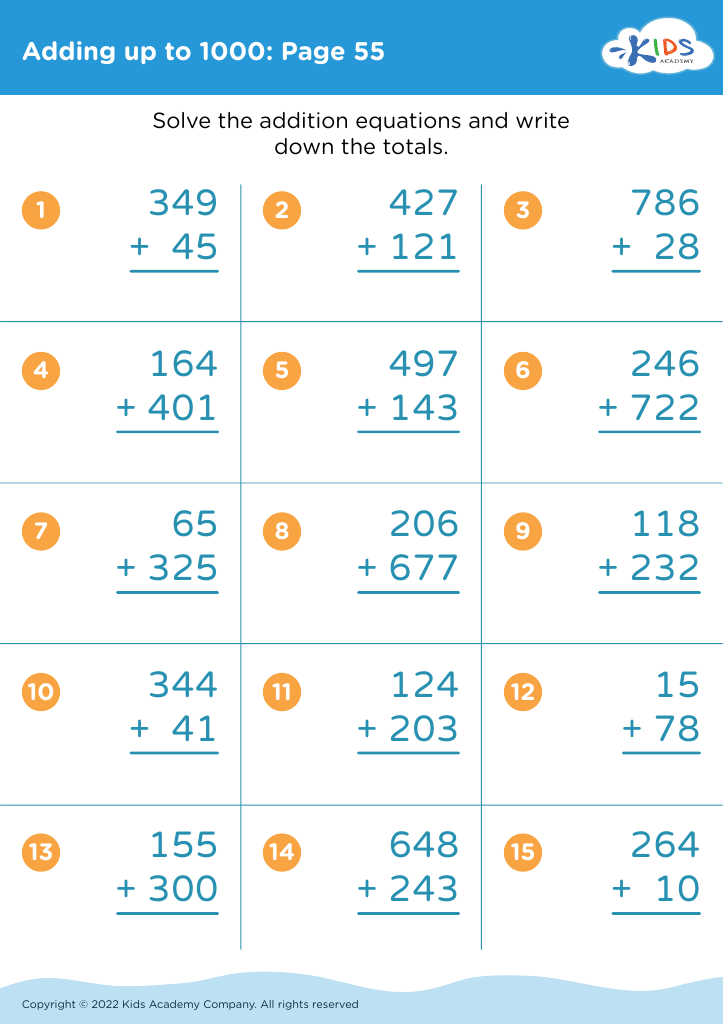



Understanding patterns and adding up to 1000 are crucial skills for 8-year-olds, laying the foundation for their future learning in mathematics and beyond. First, recognizing patterns helps children develop critical thinking and problem-solving skills. These abilities are fundamental not just in math, but in everyday situations where they must identify trends, make predictions, and solve puzzles.
Numerical patterns, specifically, aid in grasping concepts like addition, subtraction, multiplication, and division. When children understand how numbers develop in sequences, they are better equipped to tackle more complex equations and mathematical operations with confidence. This leverage reduces anxiety and fosters a positive attitude toward math.
Counting and adding up to 1000 also strengthens number sense. It helps students become more comfortable and efficient in their calculations, which is important for higher-level math as well as daily tasks like handling money, telling time, and measuring ingredients in recipes. Practical applications make abstract concepts more tangible.
Ultimately, an early strong grasp of patterns and large numbers equips children with the necessary tools to succeed not just academically but also in functional, real-world settings, ensuring they are well-prepared for the future challenges both in school and life. Encouraging these skills supports well-rounded cognitive development and builds a solid educational foundation.








