Understanding sequencing Adding up to 1000 Worksheets for 8-Year-Olds
3 filtered results
-
From - To
Welcome to our "Understanding Sequencing: Adding Up to 1000 Worksheets" designed specifically for 8-year-olds! These engaging worksheets focus on enhancing math skills through sequencing and addition tasks that involve numbers up to 1000. Ideal for young learners, our resources promote critical thinking and problem-solving in a fun way. Students will practice arranging numbers in sequence, learning to identify patterns and develop a strong foundation for future math concepts. With colorful visuals and clear instructions, these worksheets make learning enjoyable and effective. Perfect for classroom or home use, they encourage students to explore the fascinating world of math sequencing!
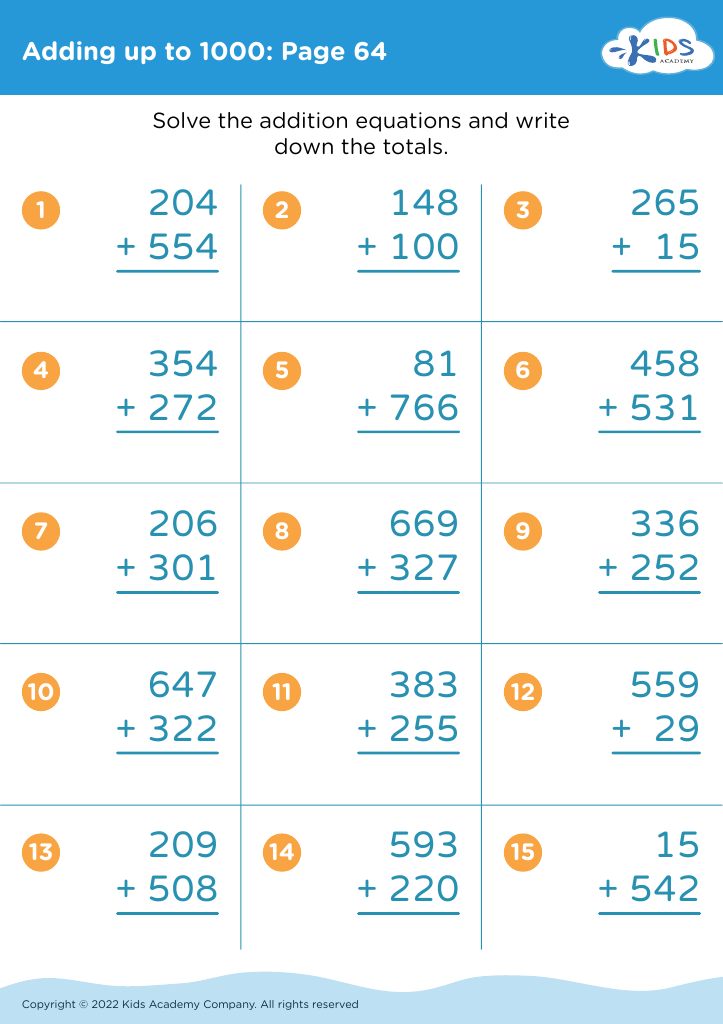
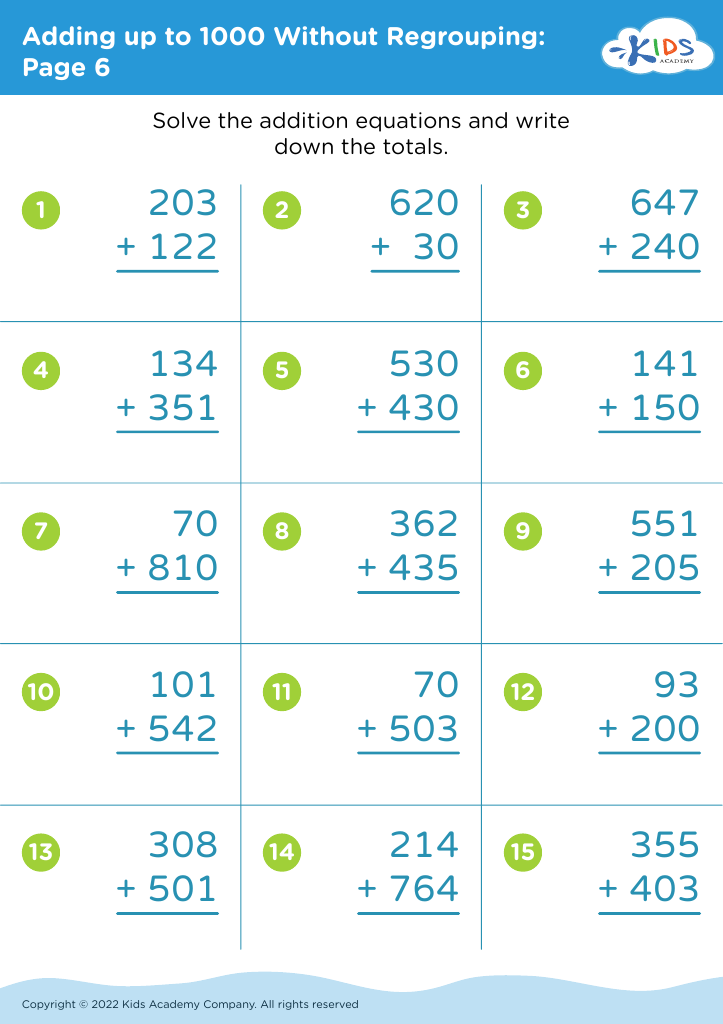
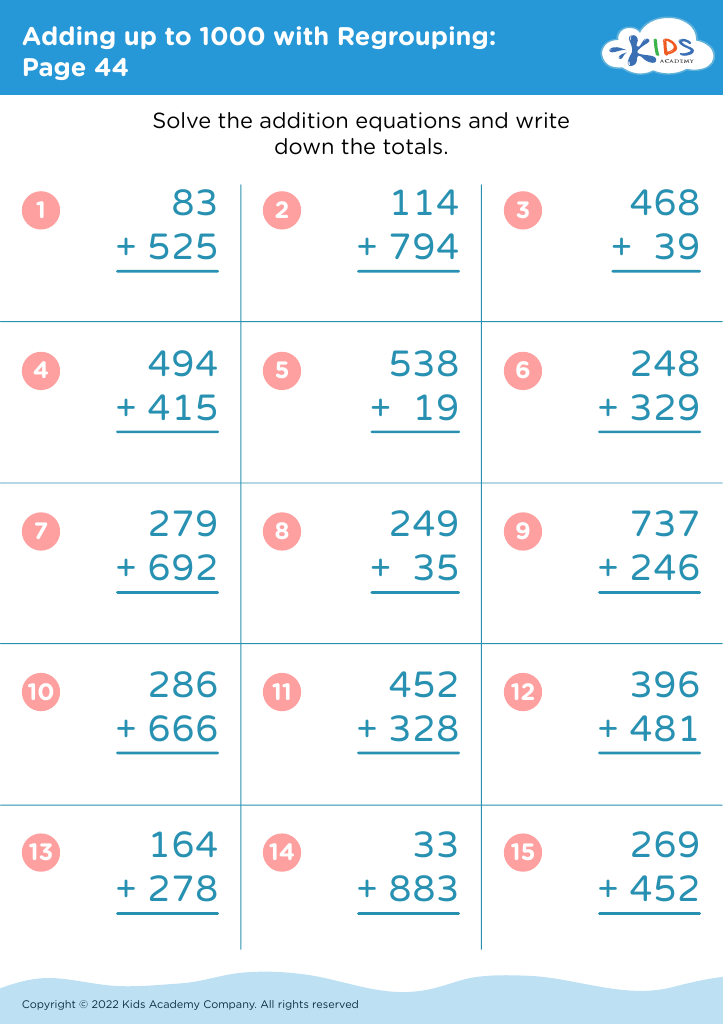



Understanding sequencing and mastering addition up to 1000 are crucial skills for 8-year-olds that lie at the heart of mathematical literacy. Firstly, sequencing fosters logical thinking. Children learn to arrange numbers in order, identify patterns, and predict outcomes, all essential for problem-solving both in math and daily life. When children grasp the concept of sequencing, they enhance their ability to tackle more complex math topics in the future, such as subtraction, multiplication, and division.
Moreover, adding up to 1000 establishes a strong foundation in arithmetic. Mastery of this skill allows children to perform calculations effectively and develop a sense of number fluency. This is not only critical for academic success but also for real-world applications, like budgeting and understanding measurements in daily tasks. By becoming confident in these areas, kids are equipped with essential tools for future educational challenges, fostering a positive attitude towards math.
Additionally, when parents and teachers actively engage with children in these areas, they build a supportive learning environment that nurtures curiosity and resilience. Emphasizing the importance of sequencing and addition up to 1000 helps prepare children for wider mathematical challenges and encourages lifelong learning, setting them up for success in school and beyond.








