Understanding symmetry Adding up to 1000 Worksheets for 8-Year-Olds
4 filtered results
-
From - To
Welcome to our "Understanding Symmetry: Adding Up to 1000 Worksheets" for 8-year-olds! This engaging resource combines foundational math skills with the concept of symmetry, enhancing your child’s understanding of these crucial topics. Through a variety of fun and interactive worksheets, children will practice addition up to 1000 while exploring symmetrical shapes, patterns, and designs. Each printable activity is designed to reinforce mathematical concepts and promote critical thinking. By blending math with art, we inspire creativity and encourage children to recognize the beauty of symmetry in everyday life. Perfect for home or classroom use, these worksheets make learning both enjoyable and effective!
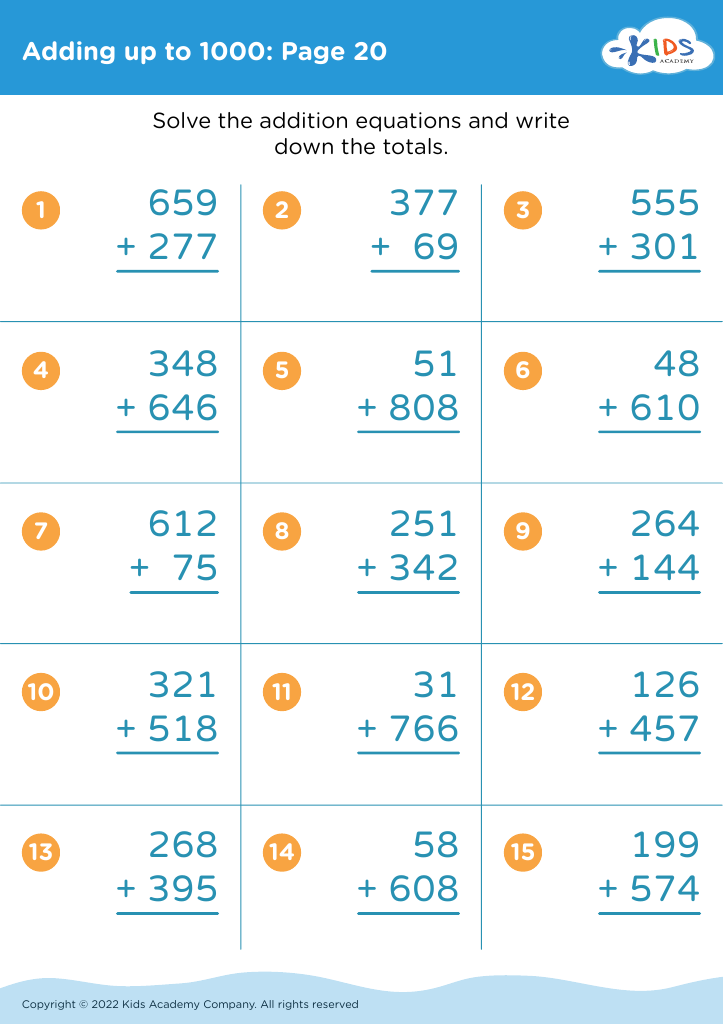
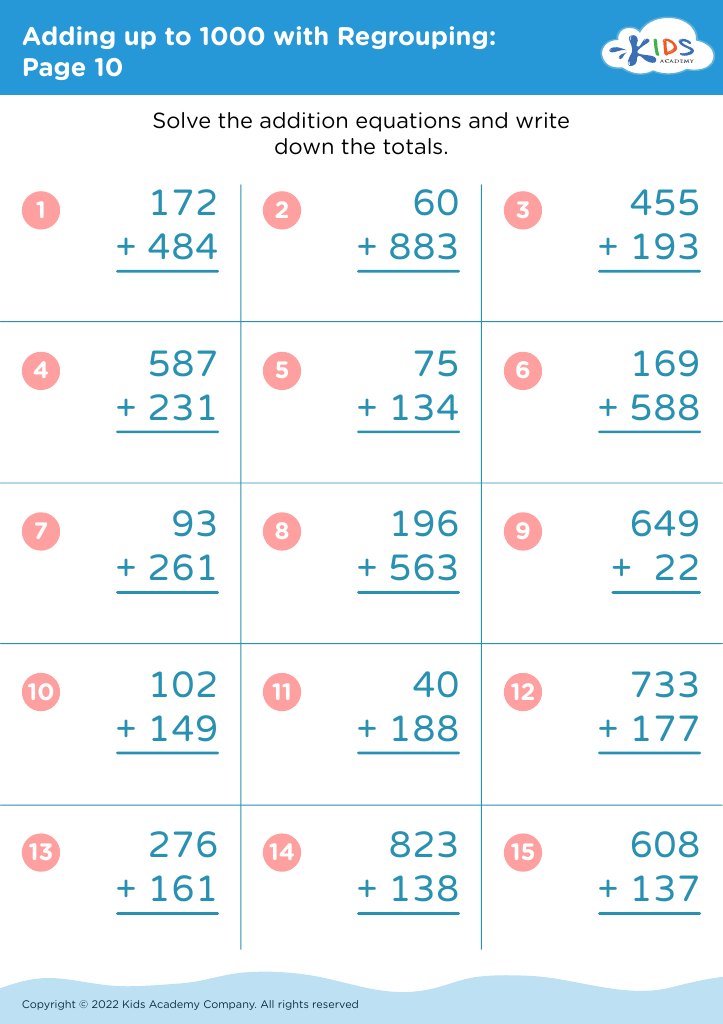
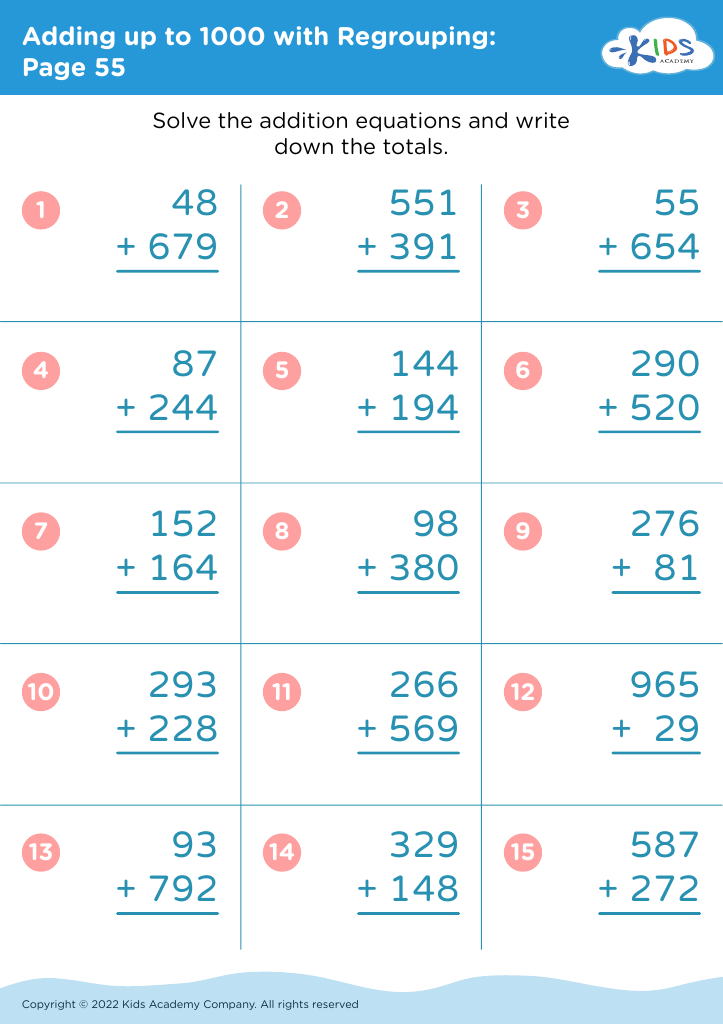
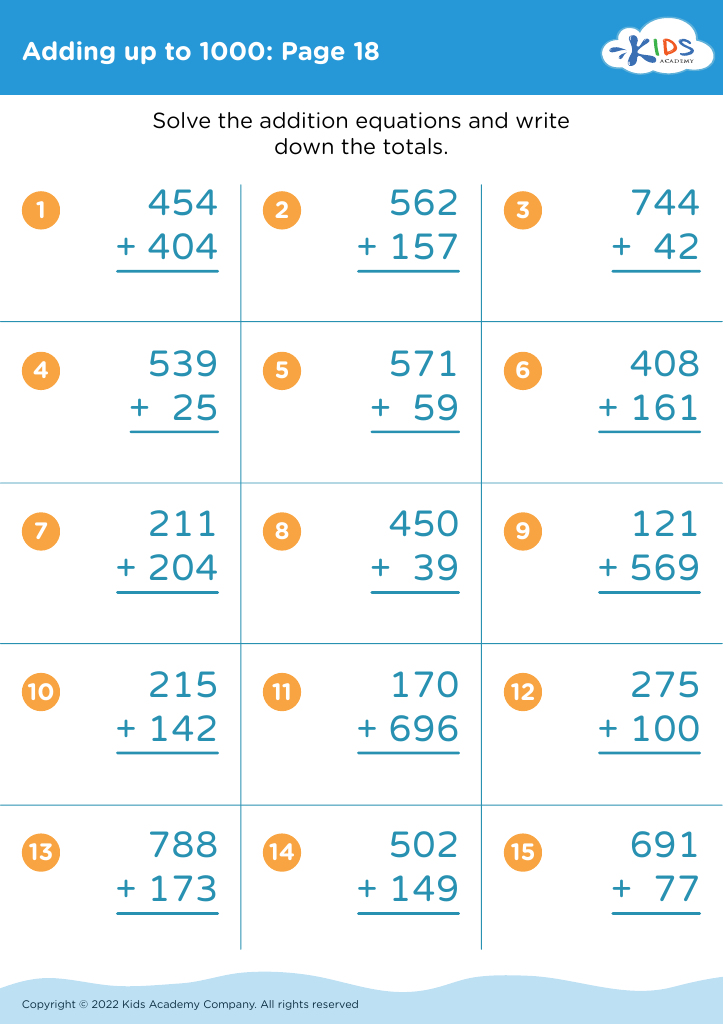



Understanding symmetry and the concept of adding up to 1000 are foundational skills in mathematics for 8-year-olds, crucial for their cognitive development and problem-solving abilities.
Symmetry introduces children to important concepts in both math and art, helping them recognize patterns and shapes in their environment. This ability to see symmetry boosts their spatial reasoning, paving the way for understanding more complex geometric concepts later on. Engaging with symmetry also enhances critical thinking, as children learn to identify and create symmetrical shapes, fostering creativity and logical reasoning.
On the other hand, learning to add up to 1000 builds a strong numerical foundation. It helps children master the concept of place value and reinforces their addition and subtraction skills. Familiarity with large numbers and the process of breaking them down builds confidence in their mathematical abilities. It also teaches them to approach complex problems systematically, which is essential for their academic growth.
Ultimately, both symmetry and adding up to 1000 equip children with essential skills that promote logical reasoning, creativity, and mathematical fluency—tools they will carry into more advanced studies and everyday life. Parents and teachers should emphasize these concepts to ensure a well-rounded, robust mathematical literacy in their children.








