Fraction comparison Adding up to 50 Misc Worksheets for 8-Year-Olds
4 filtered results
-
From - To
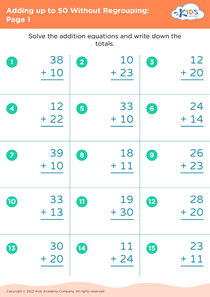
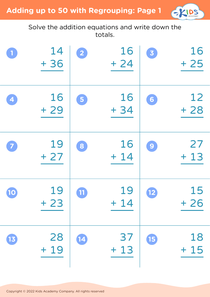
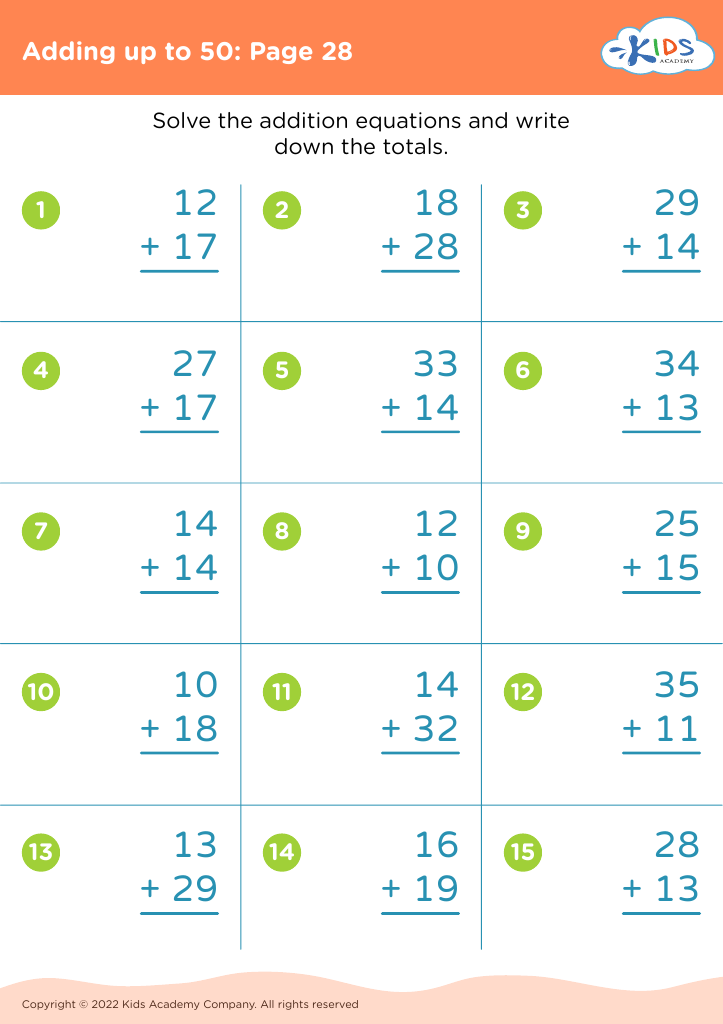
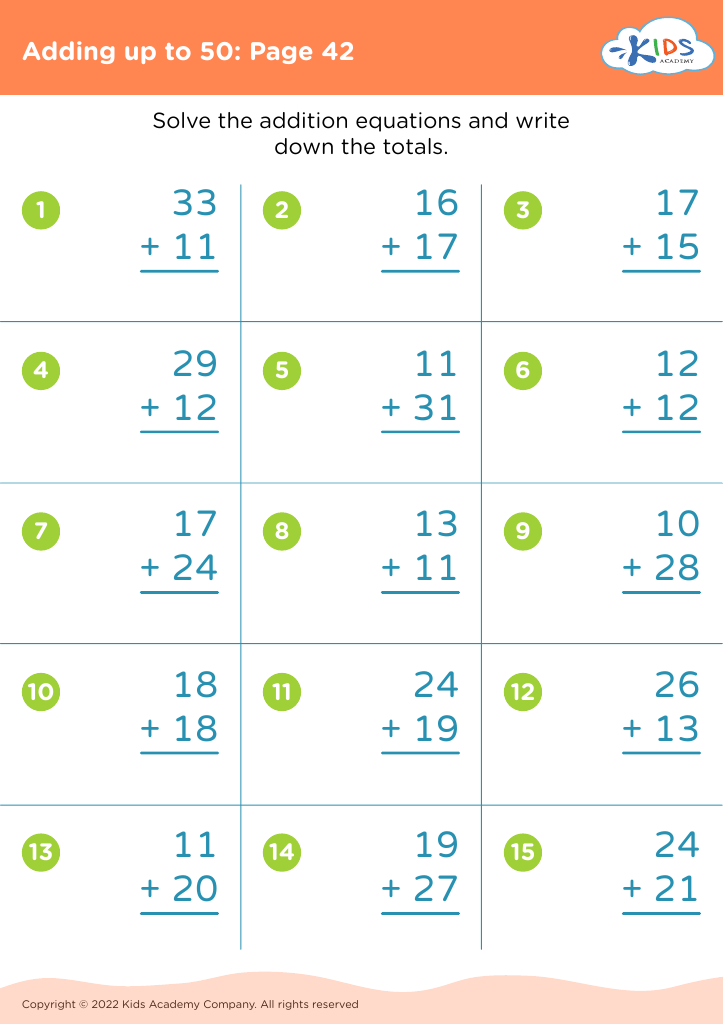
Explore our fun and educational Fraction Comparison Adding up to 50 Misc Worksheets designed for 8-year-olds! These worksheets aim to enhance your child's understanding of fractions and their ability to compare them in a visual and intuitive way. With engaging activities and step-by-step instructions, your child will master the basics of adding numbers up to 50 while improving their skills in recognizing and comparing different fractions. Perfect for supplementing school work or extra practice at home, these worksheets provide an enjoyable learning experience to build a strong foundation in math. Download and print now for endless educational fun!
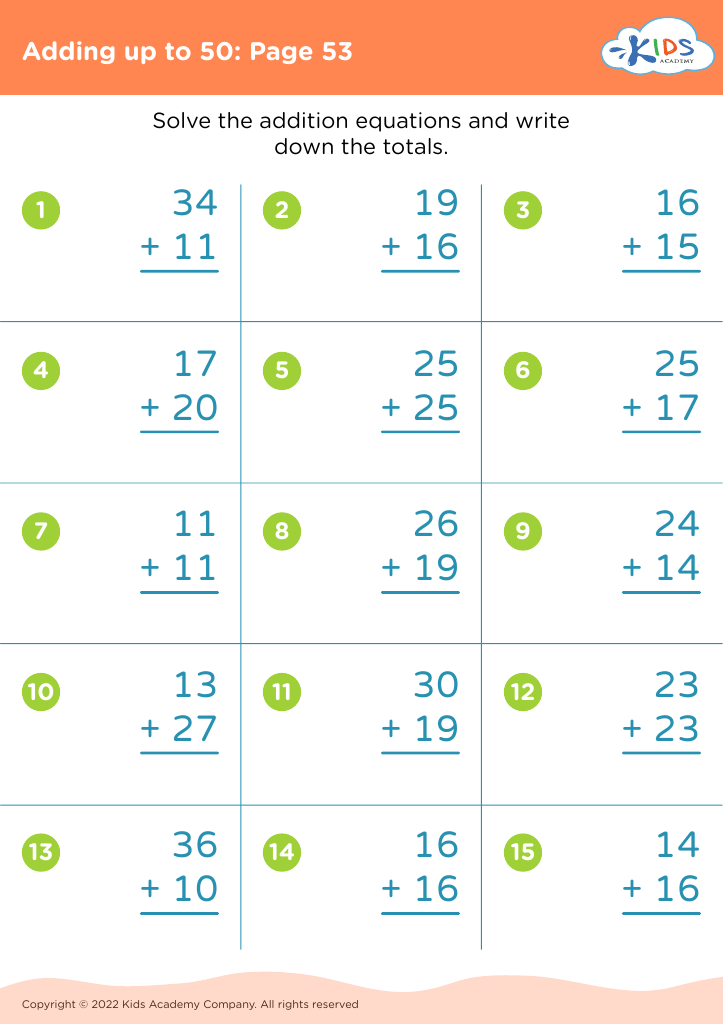
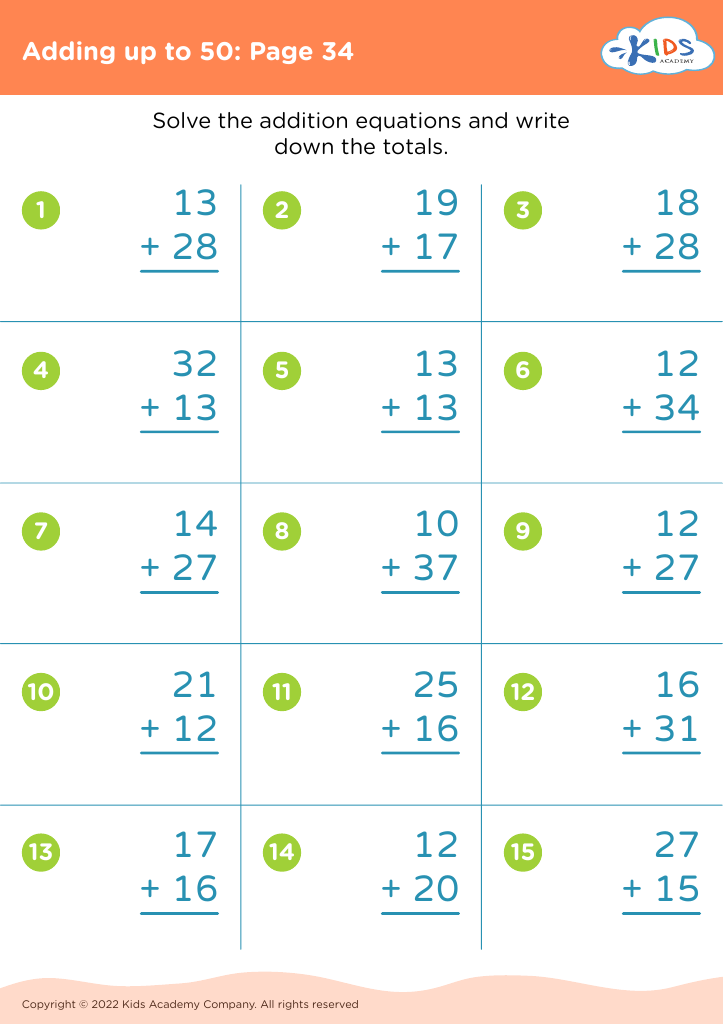


Parents and teachers should care deeply about fraction comparison, adding up to 50, and other miscellaneous topics for 8-year-olds because these foundational math skills are critical for their academic development and everyday life proficiency. Understanding fractions helps young children grasp the concept of parts and wholes, a crucial skill for both mathematical reasoning and real-world situations, such as dividing a pizza or sharing equally. Comparing fractions enables kids to develop logical thinking and problem-solving abilities, laying the groundwork for more complex math like algebra and geometry in later years.
Adding up to 50 may seem basic, but it garners fluency in arithmetic, which underpins all future math learning. Fluent addition skills reduce cognitive load, so children can focus on solving more complex problems without getting bogged down by basic calculations. Practicing this helps enhance memory, concentration, and prepares them for multi-step math problems.
Miscellaneous topics broaden their understanding of math beyond basic operations, fostering a well-rounded skill set. Real-world word problems, time calculations, and money matters, for example, make learning relevant, showing how math applies to daily life. Cultivating these skills early prepares children for standardized testing, boosts their confidence, and nurtures a positive attitude towards continued learning in mathematics and sciences. Being invested in these areas promotes academic success, critical thinking, and long-term educational achievement.