Fraction simplification Adding up to 50 Misc Worksheets for 8-Year-Olds
5 filtered results
-
From - To
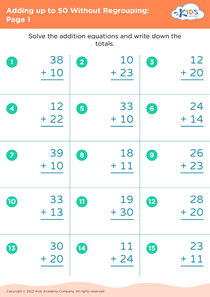
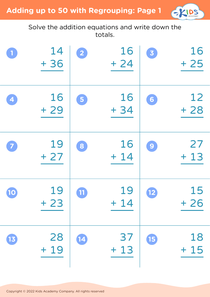
Our "Fraction Simplification: Adding up to 50 Misc Worksheets" are perfect for 8-year-olds to master math skills while having fun! Each worksheet is designed to help young learners simplify fractions and perform addition up to 50, reinforcing vital math concepts. Engaging visuals and varied exercises ensure children stay motivated and challenged. With clear instructions and incremental difficulty, our worksheets support both home and classroom learning. Watch as your child builds confidence and achieves academic success by simplifying fractions with ease. Visit Kids Academy to download these exciting resources and turn fraction challenges into triumphs!
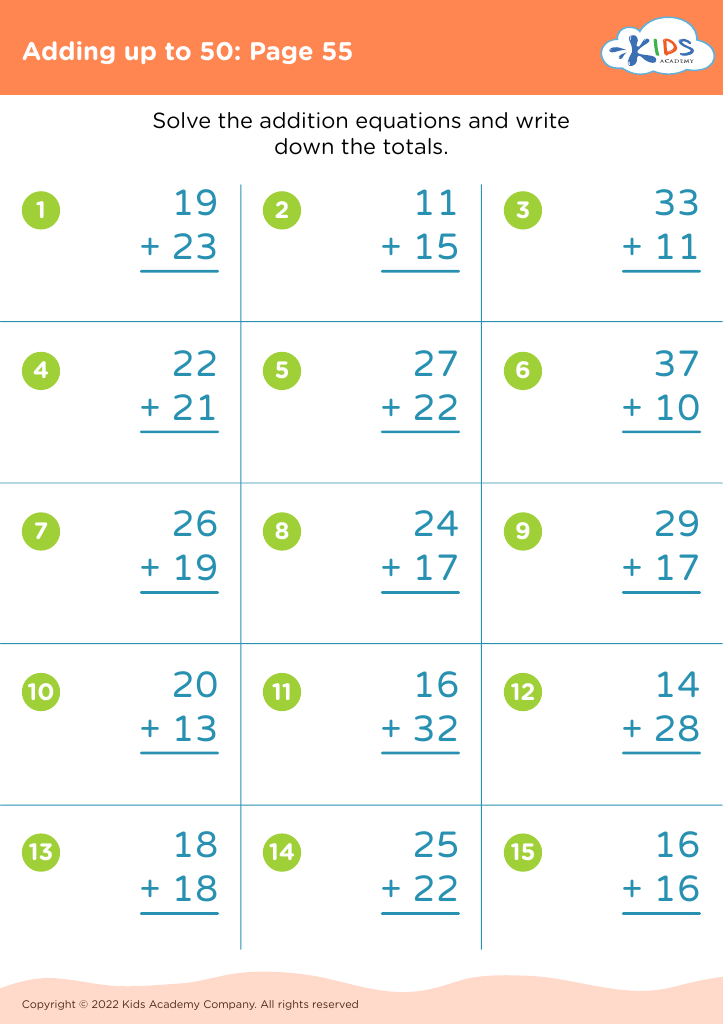
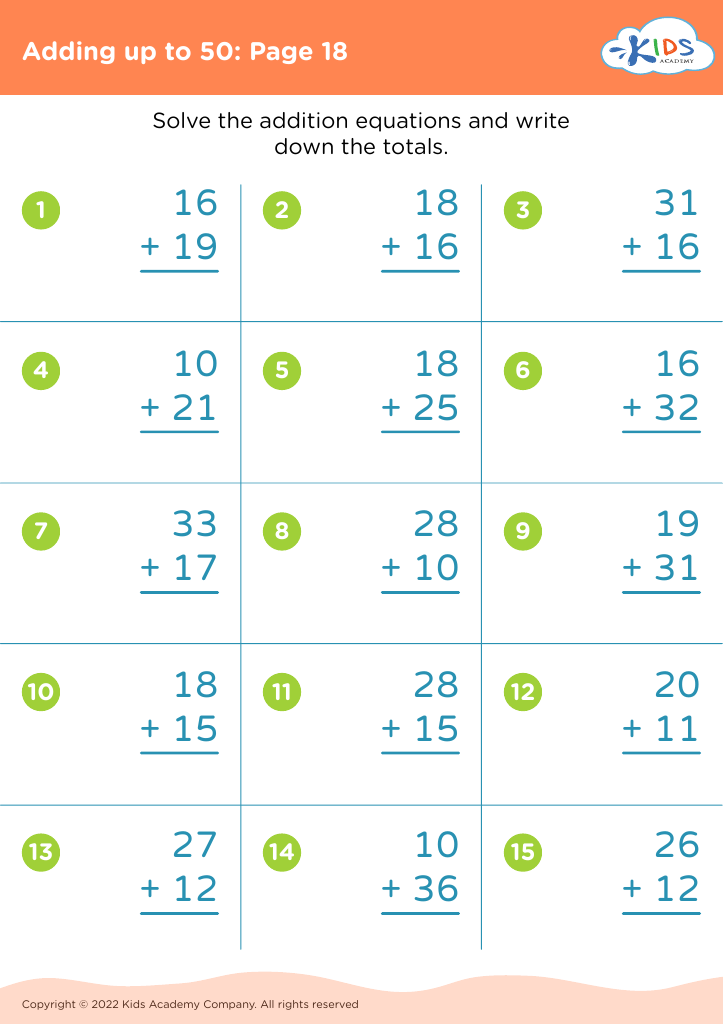
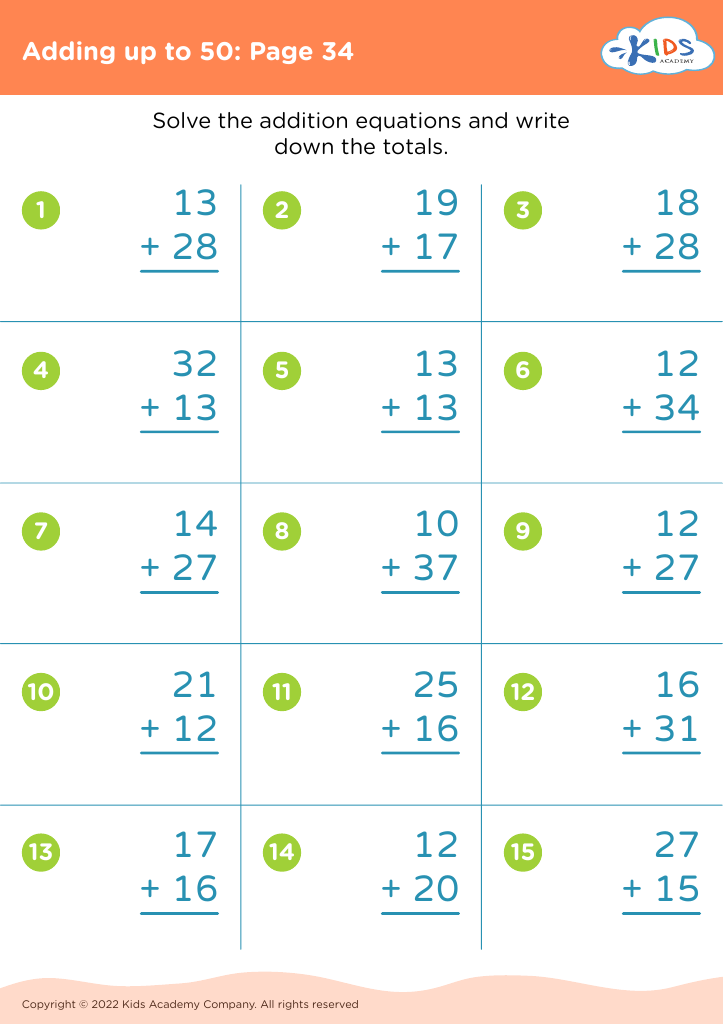


Fraction simplification, adding up to 50, and miscellaneous numerical exercises play a crucial role in the foundational mathematical development of 8-year-olds. Firstly, understanding how to simplify fractions not only strengthens a child’s grasp of proportions but also lays the groundwork for more advanced math concepts. Simplification helps children realize that different fractions can represent the same quantity, teaching them to identify patterns and efficiency in problem-solving.
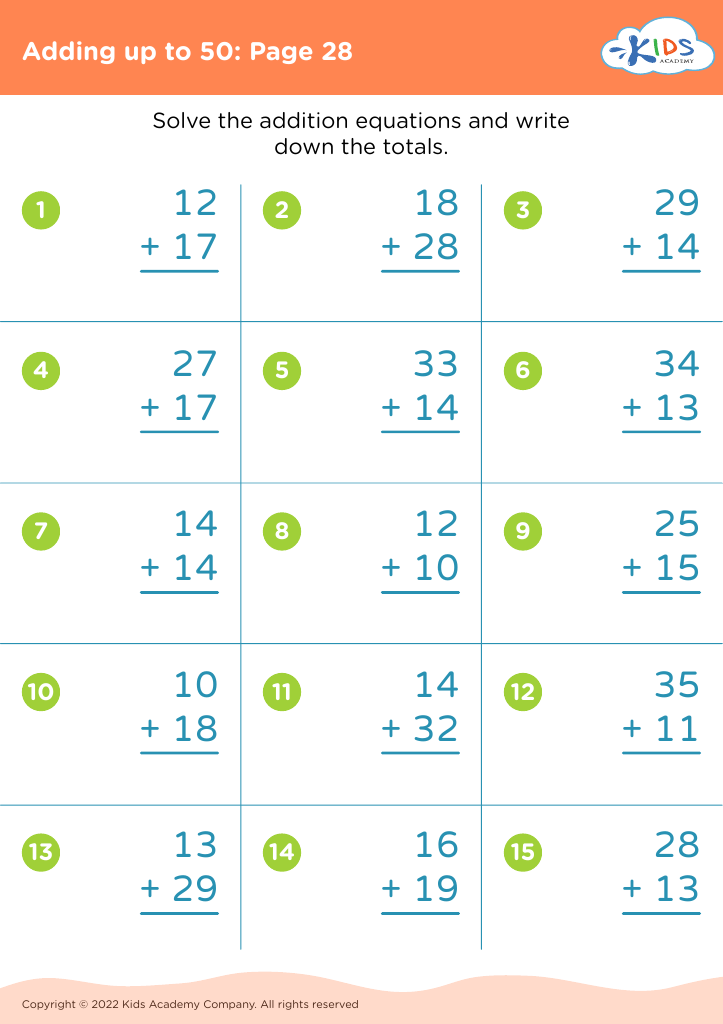
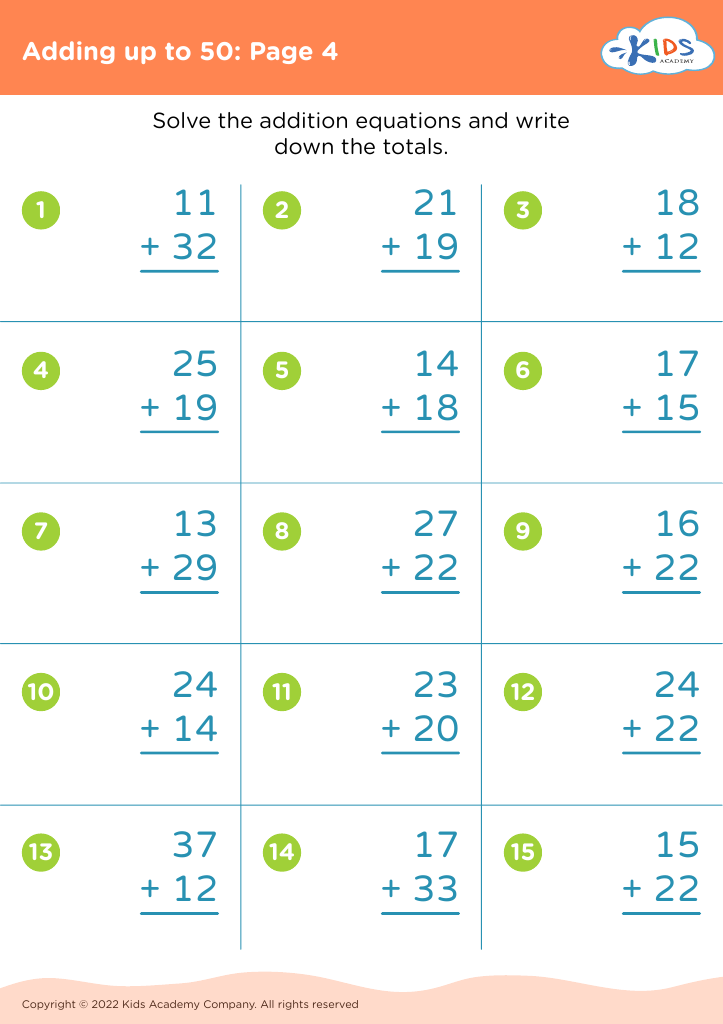
Adding numbers up to 50 builds mental arithmetic skills, enhancing speed and accuracy. Mastery of basic addition is essential, as it underpins almost every aspect of higher math, from multiplication to division and beyond. Practicing addition within this range provides manageable yet challenging exercises that fit their developmental level.
The inclusion of miscellaneous math activities broadens children’s numerical understanding, keeps their mind engaged through varied challenges, and encourages flexible thinking. Activities might encompass subtraction, patterns, and even introductory concepts to geometry. By diversifying their practice, children avoid rote memorization and instead develop a more rounded comprehension of math.
Together, these skills equip children with the numeracy confidence needed for future academic endeavors. Parents and teachers who engage children in these exercises are facilitating critical-thinking abilities and laying a robust foundation in mathematics, contributing significantly to their overall cognitive development.