Reading comprehension Adding up to 50 Misc Worksheets for 8-Year-Olds
4 filtered results
-
From - To
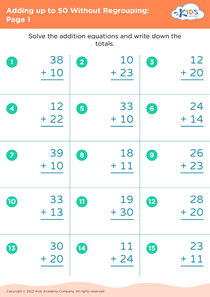
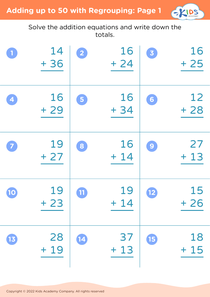
Boost your child’s reading and math skills with our Reading Comprehension Adding up to 50 Misc Worksheets designed for 8-year-olds. These engaging worksheets expertly blend fun math problems with reading exercises that enhance comprehension abilities. Perfect for both classroom and home use, each worksheet challenges students to add up to 50 while answering questions that test their understanding of the texts. By making learning interactive and enjoyable, these worksheets support cognitive development and academic growth. Help your child build a strong foundation in math and reading with our expertly crafted resources. Explore more and download today for endless learning fun!
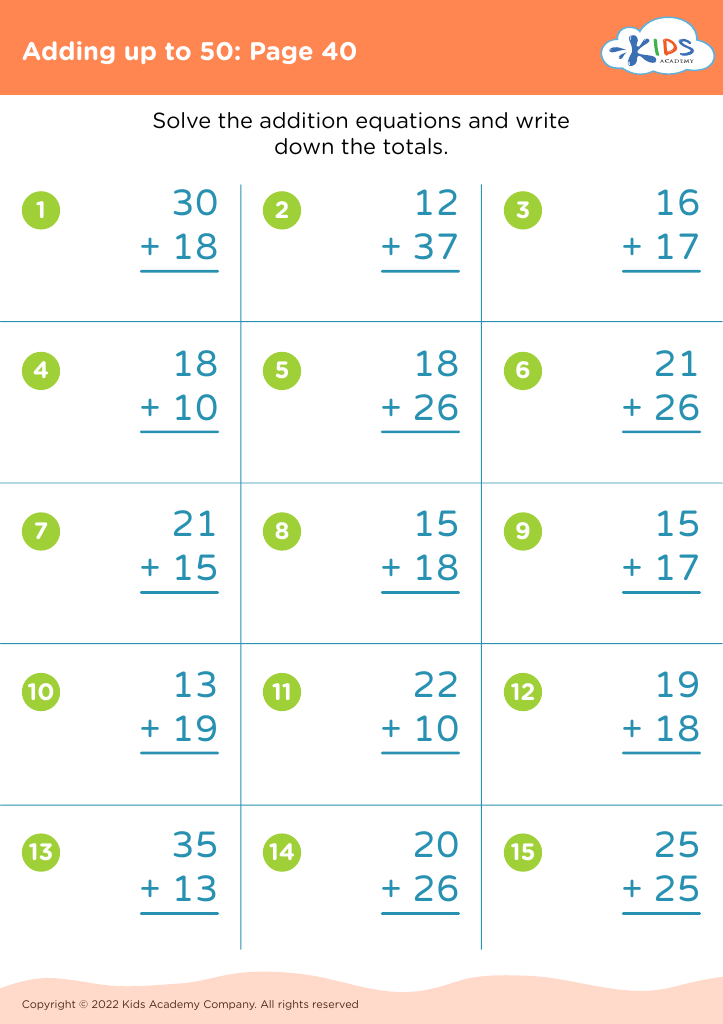
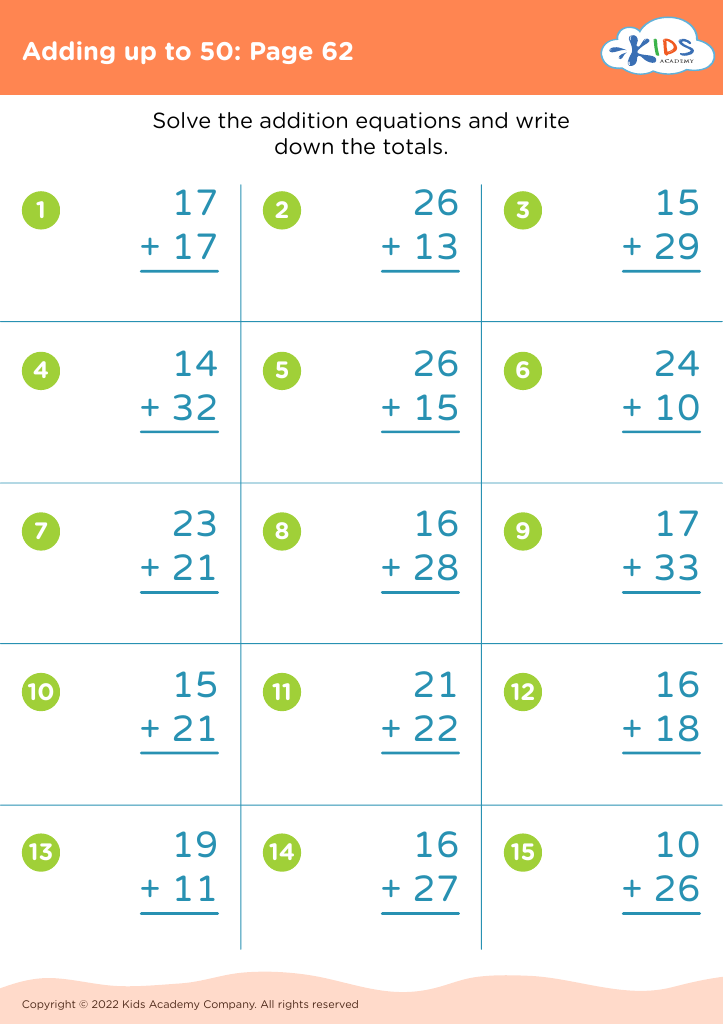
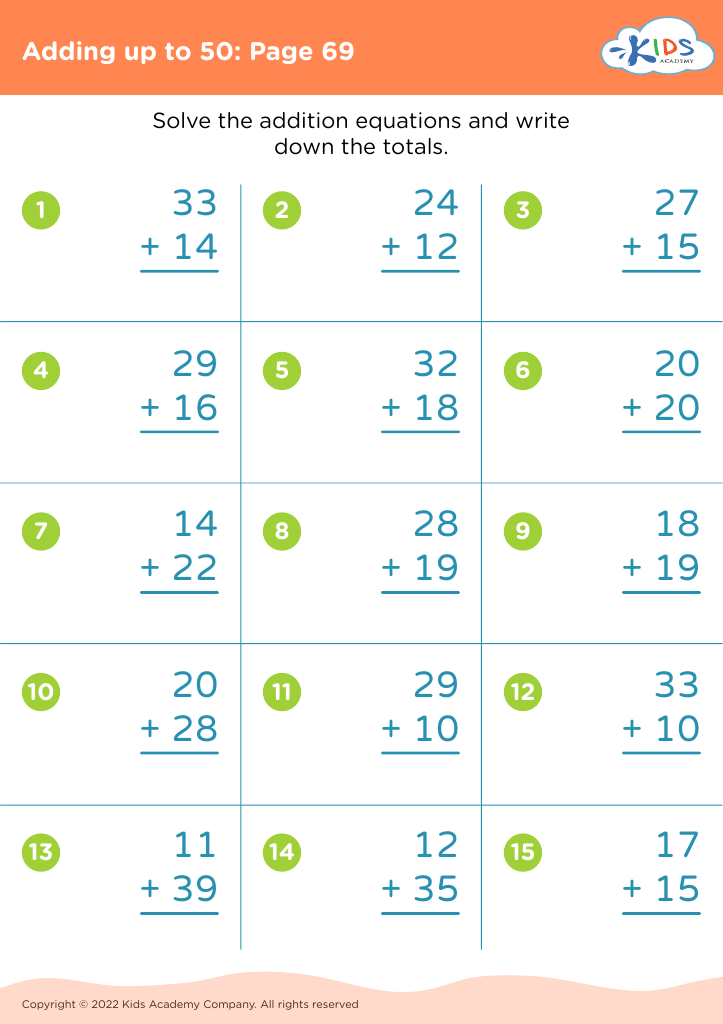
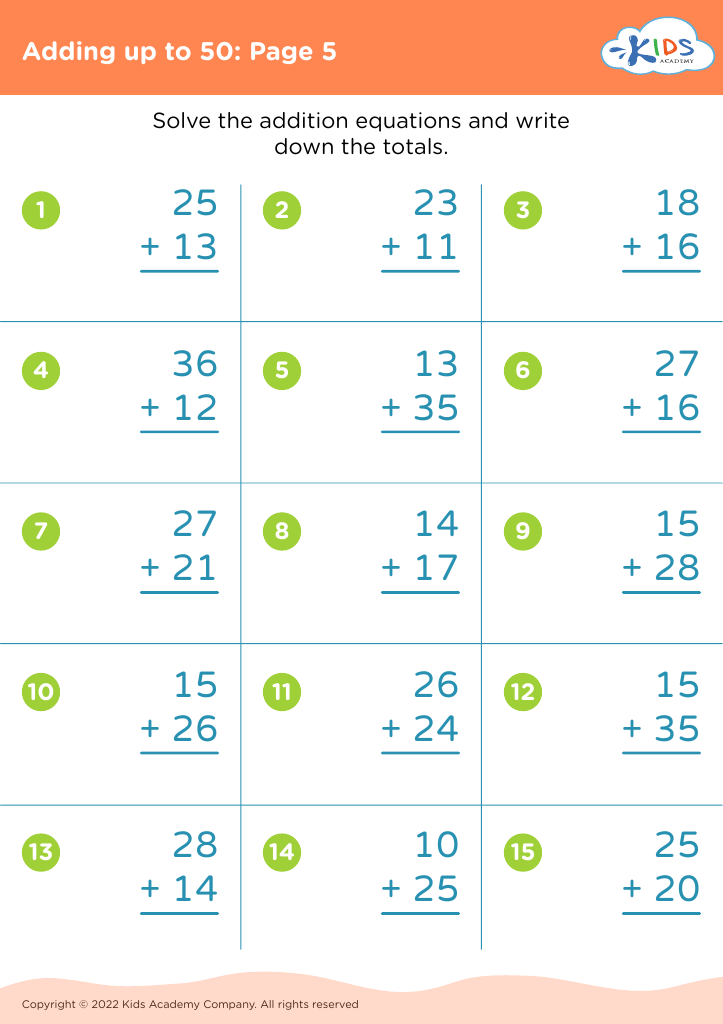


Reading comprehension and math skills, such as adding up to 50, are foundational elements of a child's overall cognitive development, crucial for academic and life success. At around eight years old, children are in a critical phase where they transition from learning to read to reading to learn, making reading comprehension not just a subject but a necessary tool for understanding every other subject. It enhances vocabulary, critical thinking, and the ability to follow complex instructions and stories, which are important skills for lifelong learning and problem-solving.
Likewise, fundamental math skills, beginning with concepts like addition up to 50, help in developing logical thinking and problem-solving capacity. These skills are essential for daily life activities, such as understanding time, money, and quantities. Early mastery of basic math caters to confidence building, paving the way for more complex mathematical understanding in later grades.
Together, prioritizing reading comprehension and basic math in early education equips children with the basic tools they need for future scholastic achievements and real-world functioning. Therefore, parents and teachers should focus on developing these core skills, using supportive and engaging techniques to ensure children grasp and enjoy the learning process. This holistic approach fosters not just academic growth, but all-rounded development.