Simplifying Fractions Adding up to 50 Misc Worksheets for 8-Year-Olds
4 filtered results
-
From - To
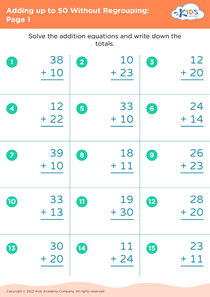
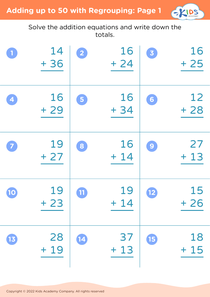
Looking for engaging ways to teach your 8-year-olds how to simplify fractions? Our "Simplifying Fractions Adding Up to 50" worksheets are perfect for young learners! Designed to make math fun and effective, these worksheets help kids grasp the concept of fractions while focusing on mastering ultimate addition principles that sum up to 50. With clear instructions and colorful visuals, your students will enjoy tackling these exercises and enhancing their problem-solving skills. Ideal for classroom use or homeschooling, our printable resources encourage critical thinking and build a strong mathematical foundation. Explore our collection today and watch your child's confidence soar!
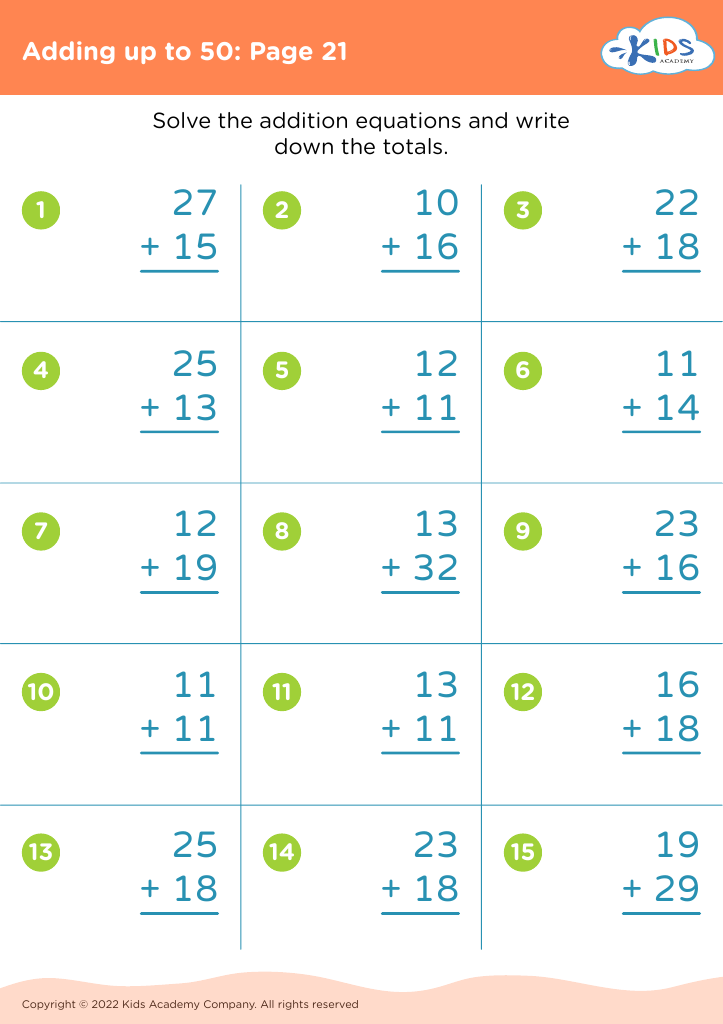
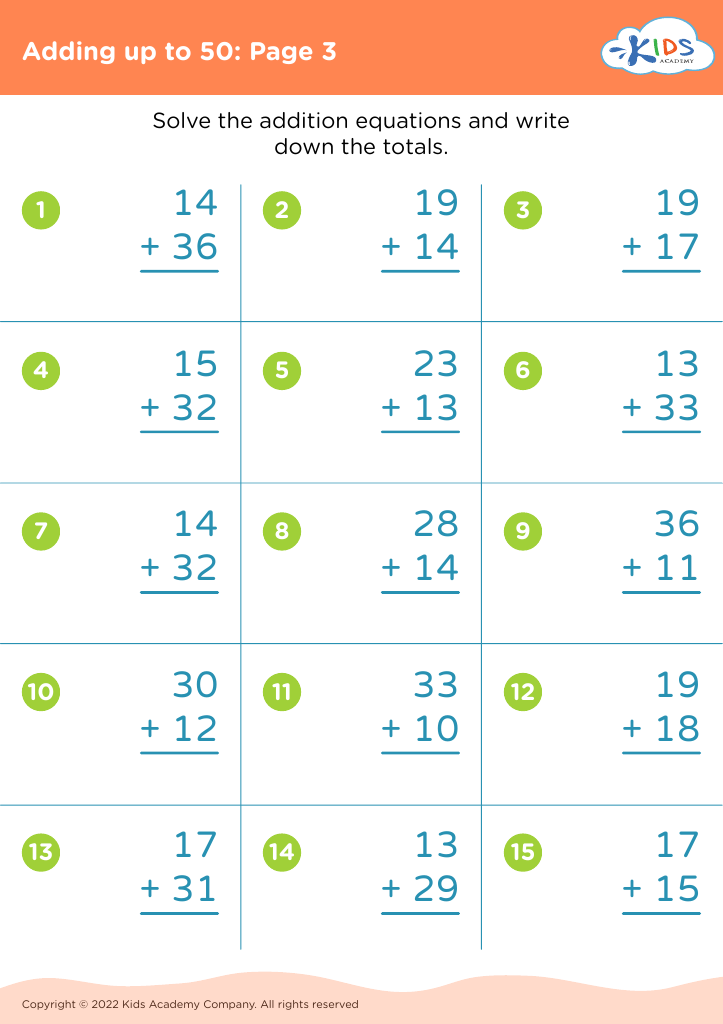
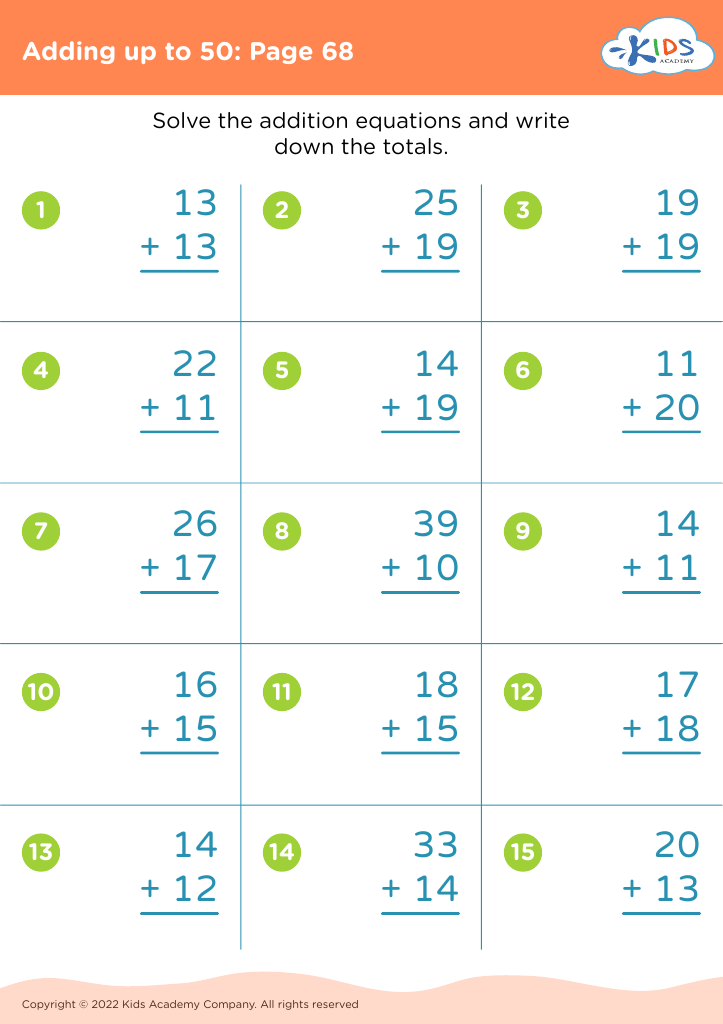
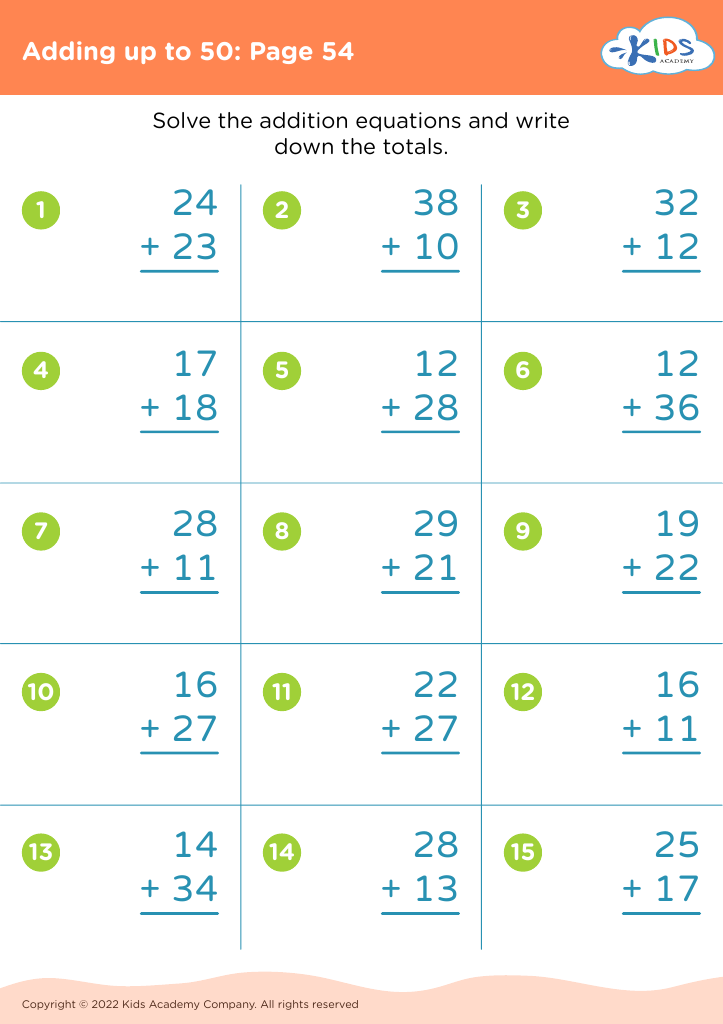


Understanding concepts like simplifying fractions and performing arithmetic – such as adding numbers that total up to 50 – is crucial for 8-year-olds. These fundamental math skills not only nurture children's numerical fluency but also foster critical thinking.
Simplifying fractions is essential for developing a child's ability to recognize and manipulate numbers in various forms. It lays the groundwork for more advanced math concepts they will encounter in the future. When children simplify fractions, they learn to look for common factors, enhancing their problem-solving skills and boosting their confidence in handling fractions.
Meanwhile, exercises like adding numbers up to 50 help strengthen their arithmetic skills in a practical context. Mastering addition prepares children for problem-solving situations they will face in daily life. It nurtures their ability to engage in mental math, which is vital for quick-thinking in various scenarios, from shopping to sharing.
By focusing on these skills, parents and teachers provide a solid foundation for their children’s academic success. Investing time in these concepts ensures that they are not only proficient in math but also equipped with critical cognitive tools that will serve them in more complex subjects as they continue their educational journey.