Understanding adjectives Adding up to 50 Misc Worksheets for 8-Year-Olds
4 filtered results
-
From - To
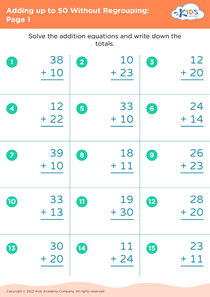
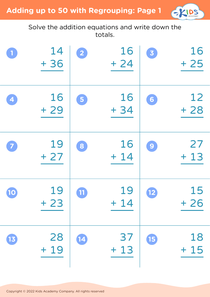
Explore our comprehensive "Understanding Adjectives + Adding up to 50" miscellaneous worksheets, specially designed for 8-year-olds. These engaging activities blend math and language skills, offering fun, varied exercises to help children master adding numbers up to 50 while enhancing their understanding of adjectives. Perfect for both classroom and at-home learning, our worksheets aim to build a strong foundation in arithmetic and vocabulary. Through practice, kids can solidify their math strategies and grammar knowledge, boosting confidence and academic progress. Visit Kids Academy to access these high-quality resources and support your child's educational journey today!
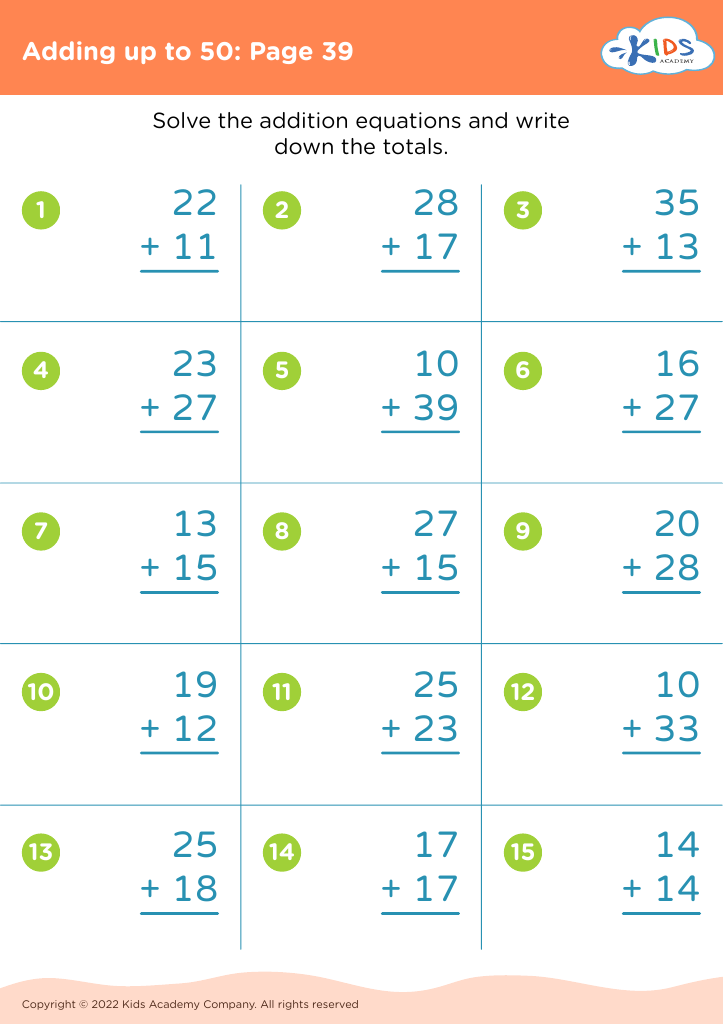
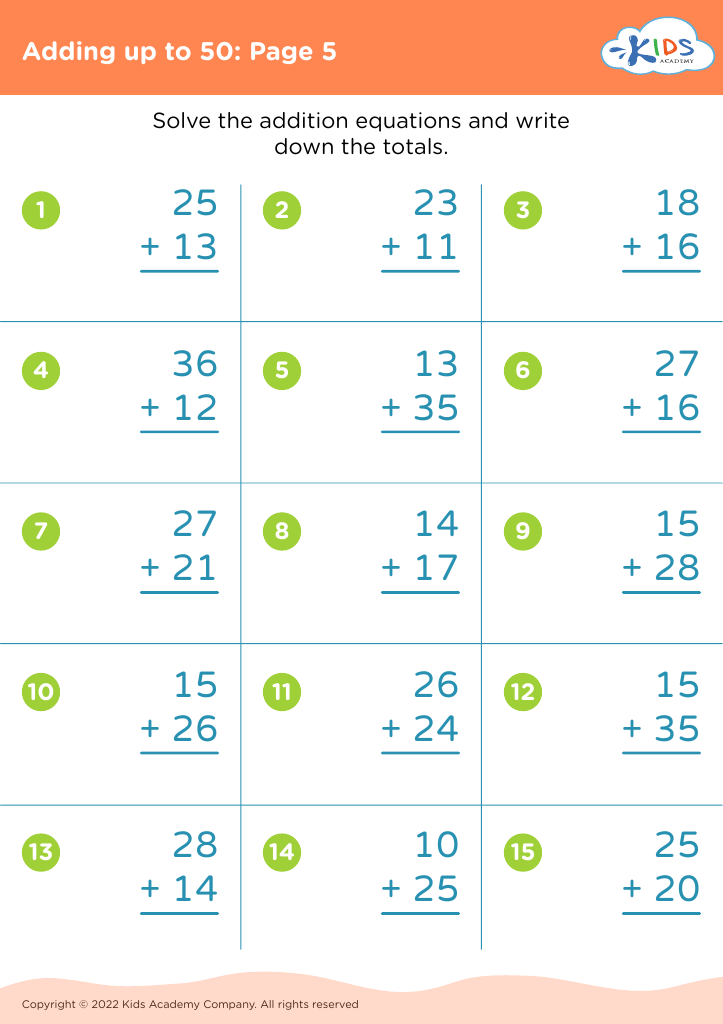


Parents and teachers should care about helping 8-year-olds understand adjectives, learn to add up to 50, and grasp various miscellaneous concepts because these foundational skills are crucial to their overall academic development. Understanding adjectives enriches their vocabulary and enhances their ability to describe the world around them. It aids in developing their creative and formal writing skills by allowing them to be more expressive and precise in their descriptions, which is fundamental in both language arts and effective communication.
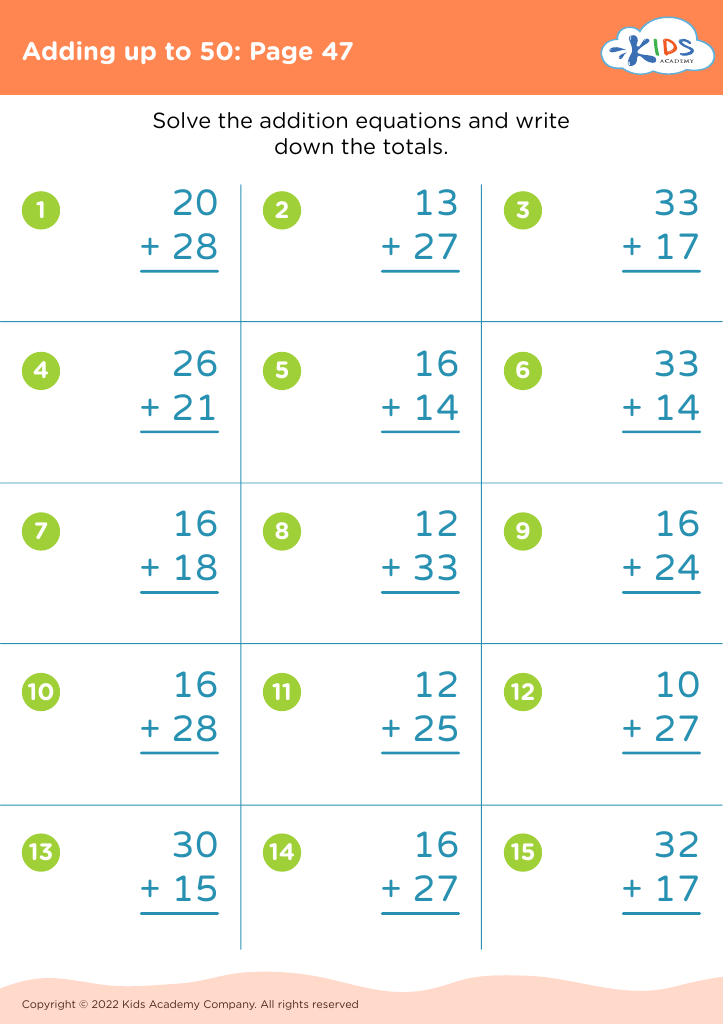
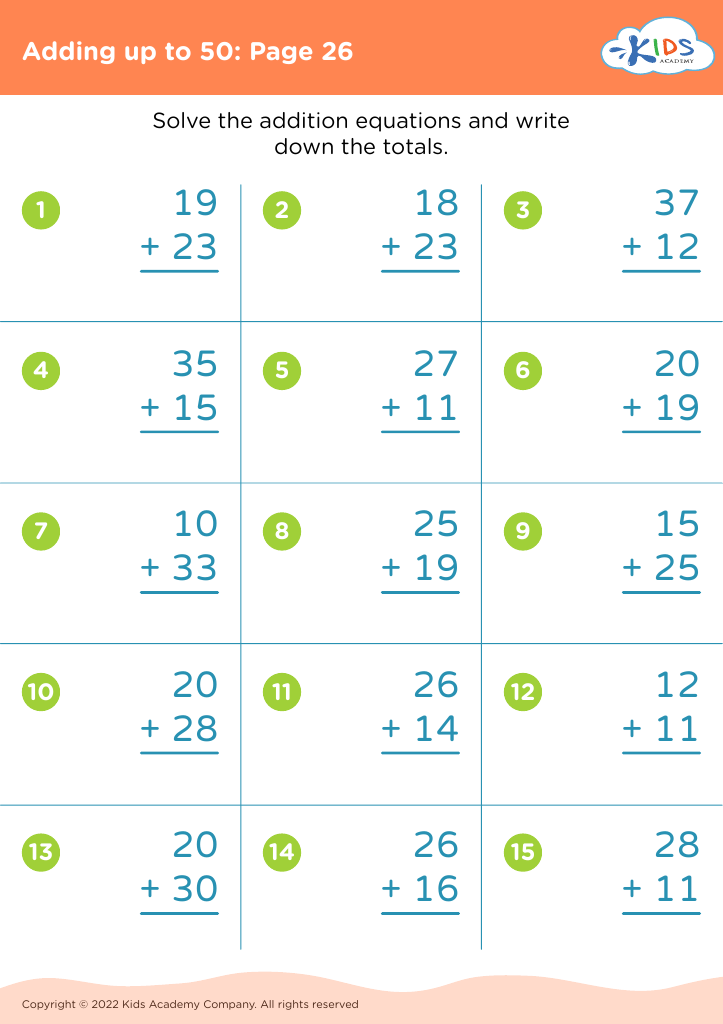
Learning to add up to 50 is a stepping stone in mathematical proficiency. It increases children's confidence in handling numbers, setting the stage for more advanced arithmetic operations such as multiplication, division, and understanding patterns. To build a sturdy mathematical foundation early on prevents potential future struggles and makes learning more complex math smoother.
Furthermore, mastering a range of miscellaneous skills relevant to their age, such as following instructions, improving their listening skills, and enhancing their ability to focus and stay organized, is essential. These skills help in various aspects of learning across different subjects and in personal development. Together, these skills contribute to a well-rounded and successful educational experience, setting children up for academic success and practical everyday aptitude.