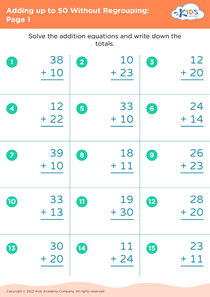
Basic Math Skills Adding up to 50 with Regrouping Worksheets for 8-Year-Olds
5 filtered results
-
From - To
Enhance your child's math skills with our “Adding Up to 50 with Regrouping” worksheets designed specifically for 8-year-olds. These engaging resources focus on essential math concepts, helping children master the art of addition by incorporating regrouping techniques. Through a variety of fun exercises and interactive problems, students will develop their problem-solving abilities and boost their confidence in handling two-digit addition. Perfect for reinforcing classroom learning or practicing at home, our worksheets provide clear instructions and colorful illustrations to keep kids motivated. Equip your child with the foundational skills they need to excel in math while enjoying the learning process!
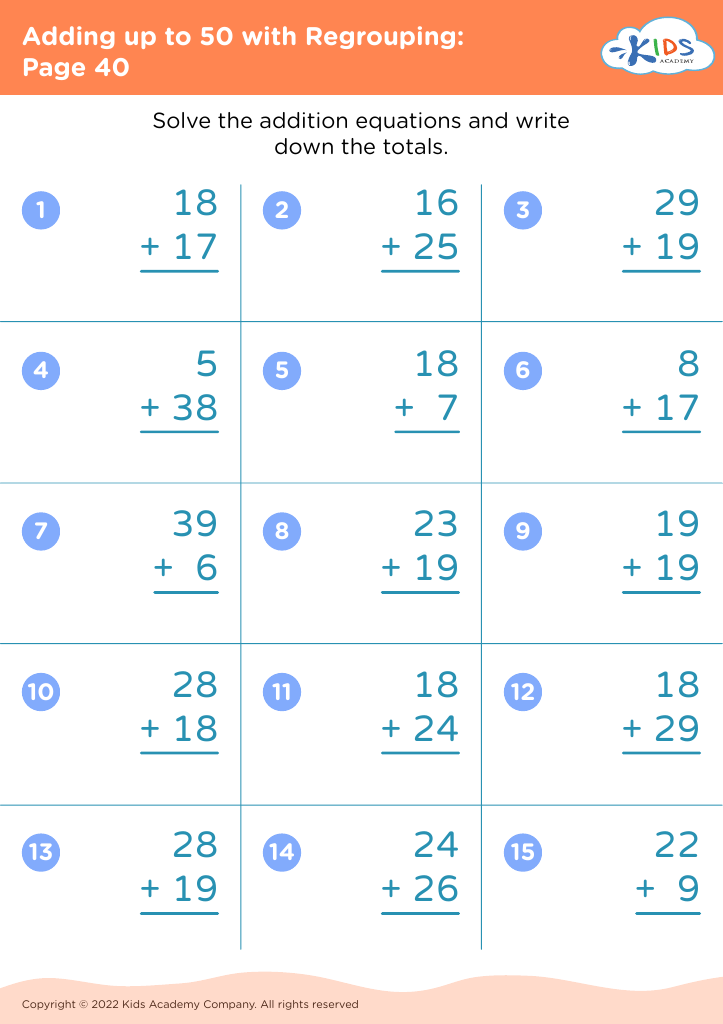
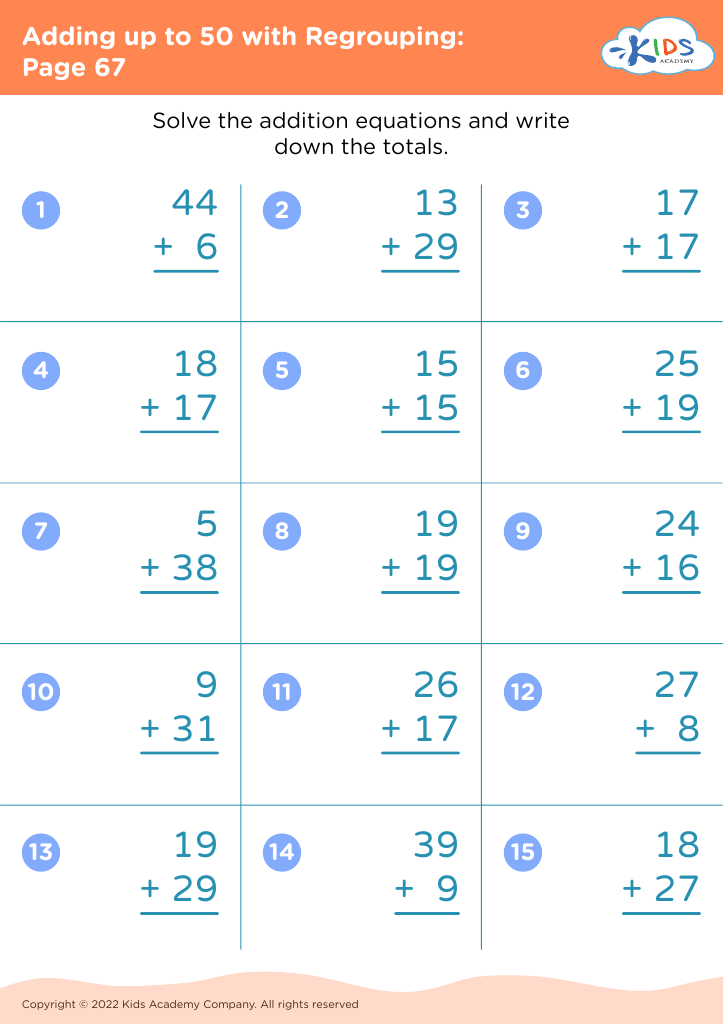
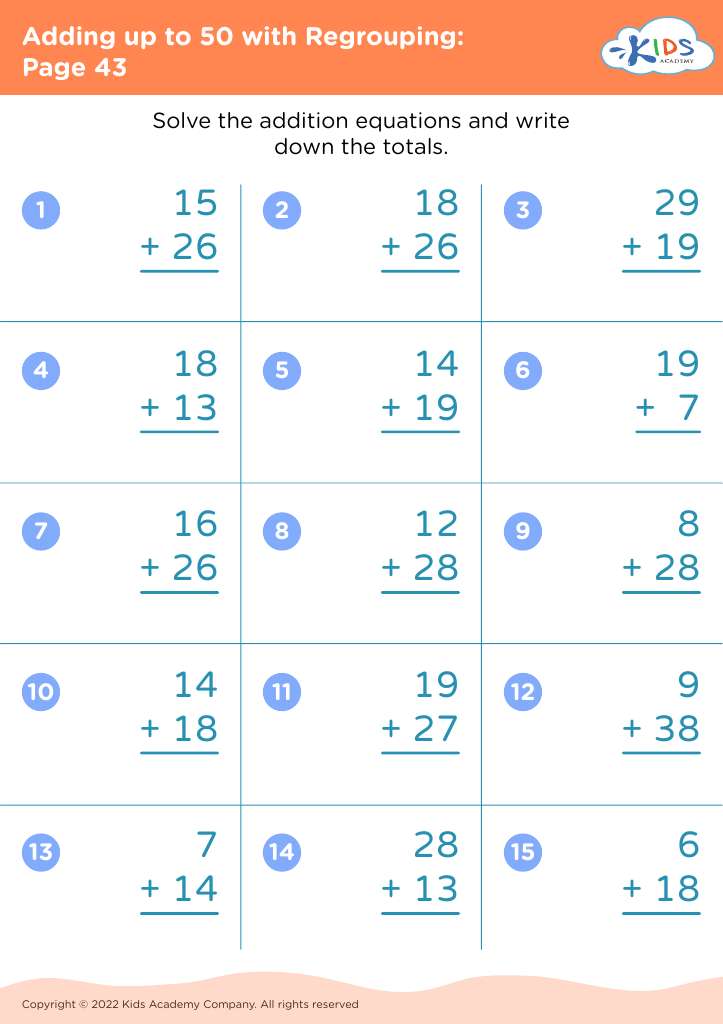
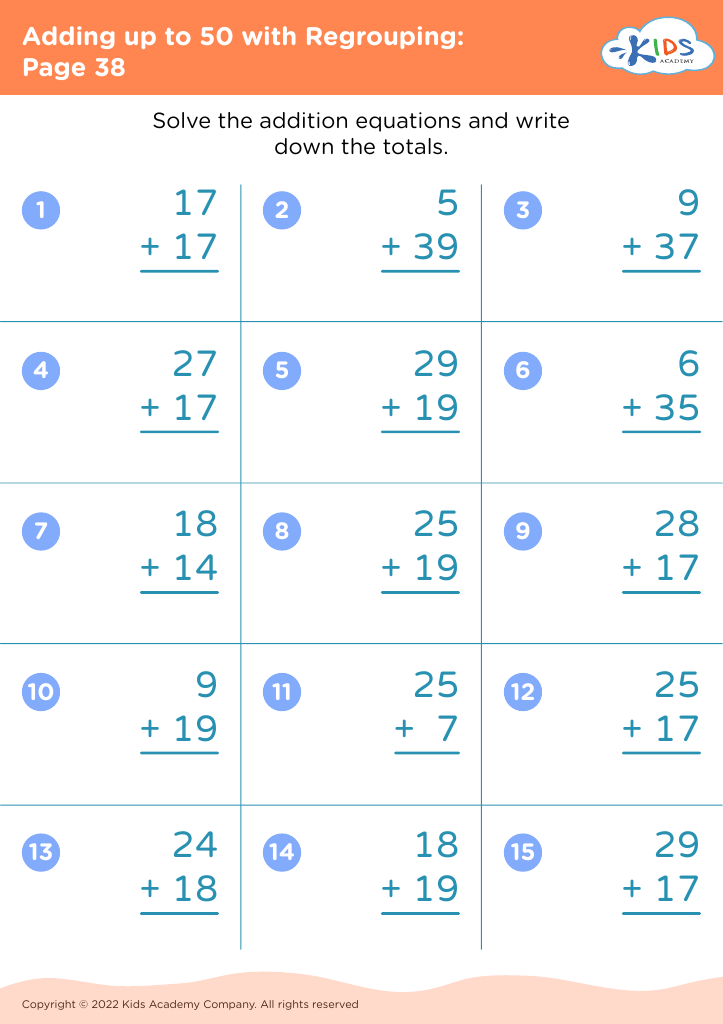
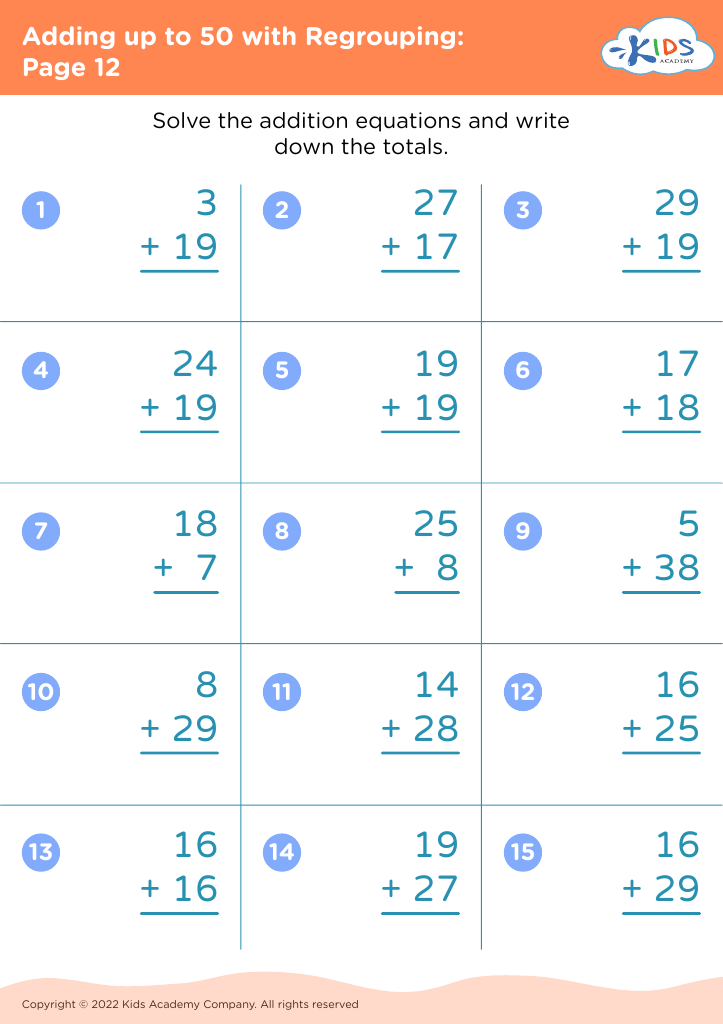


Basic math skills, especially adding up to 50 with regrouping, are foundational for an 8-year-old's academic development and future learning. At this age, children are transitioning from simple addition to more complex mathematical concepts, making it crucial that they master regrouping, also known as carrying. This skill not only helps them perform calculations involving larger numbers but also ingrains logical thinking and problem-solving abilities.
Understanding regrouping aids in building confidence, as students become adept at handling multi-digit numbers. This competence lays a strong foundation for future math concepts such as subtraction, multiplication, and division. Moreover, strong arithmetic skills enhance overall literacy, as students often encounter mathematical terms and word problems throughout their education.
Engaging parents in this learning process helps create a supportive home environment that fosters curiosity and a positive attitude toward learning. Encouraging practice at home can help reinforce concepts taught at school. When children see the real-world applications of math, such as budgeting allowance or measuring ingredients for cooking, it contextualizes their learning. Thus, prioritizing basic math skills ensures students are well-prepared for higher-level math and critical thinking challenges, resonating in their academic success and self-esteem.