Fraction comparison Adding up to 50 with Regrouping Worksheets for 8-Year-Olds
3 filtered results
-
From - To
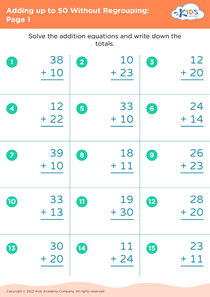
Enhance your child's math skills with our Fraction Comparison Worksheets designed for 8-year-olds! These engaging and interactive worksheets focus on adding up to 50 with regrouping while helping children develop a solid understanding of fractions. Students will practice comparing fractions, reinforcing essential concepts in a fun and educational way. By working through our thoughtfully crafted exercises, children will boost their confidence and improve their problem-solving abilities. Ideal for classroom use or at-home practice, these worksheets cater to various learning styles, making math enjoyable and approachable. Explore new mathematical concepts while supporting your child's learning journey today!
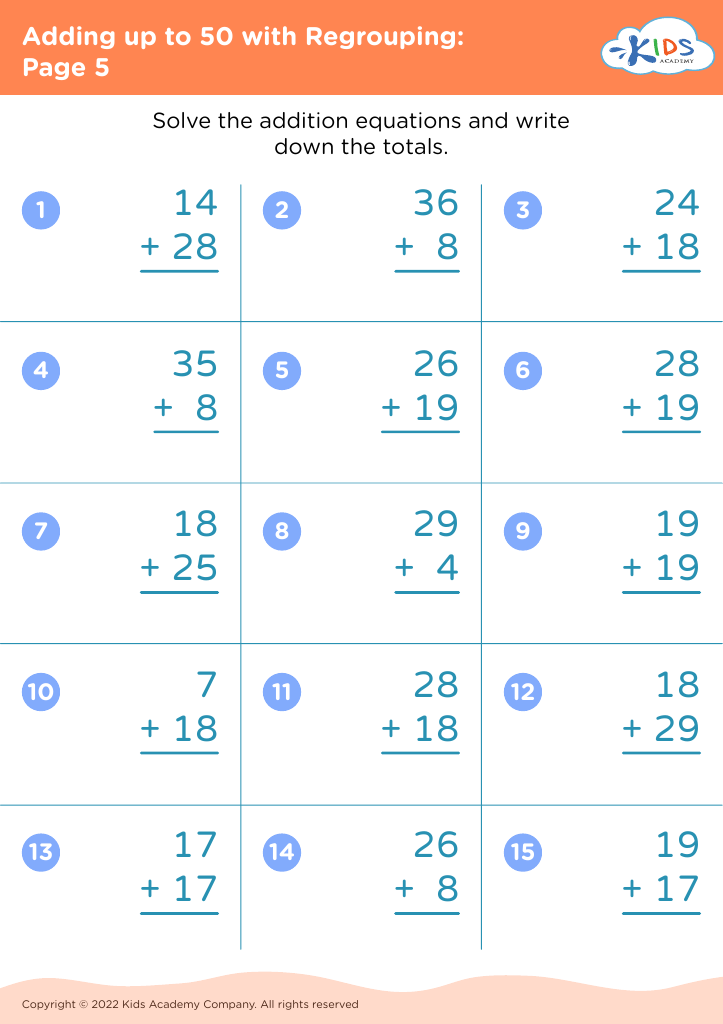
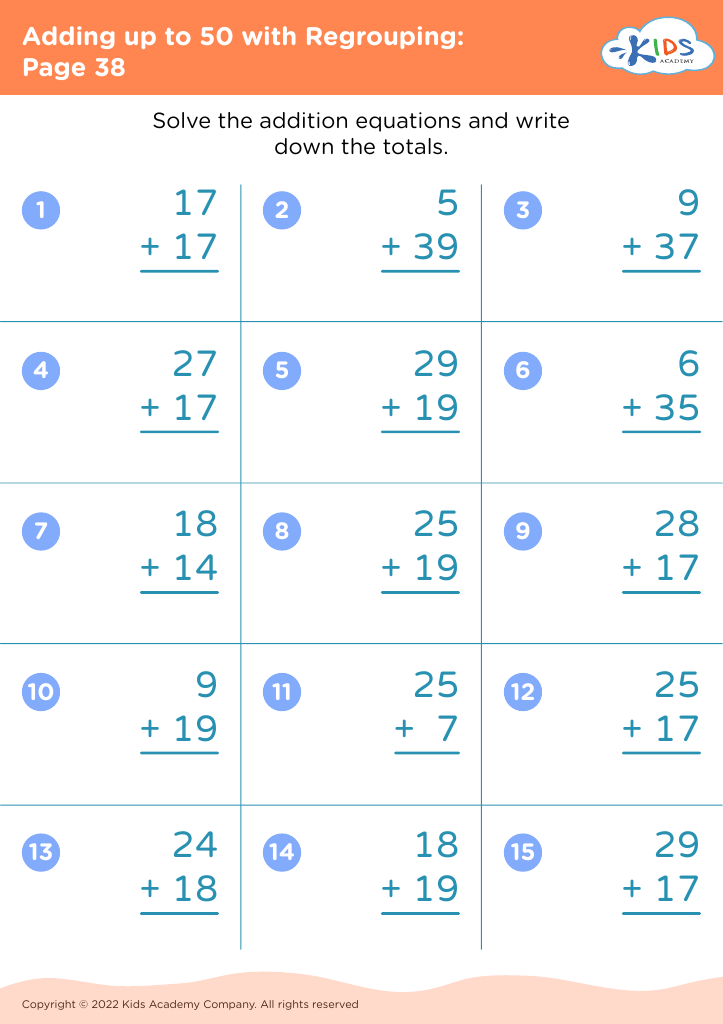
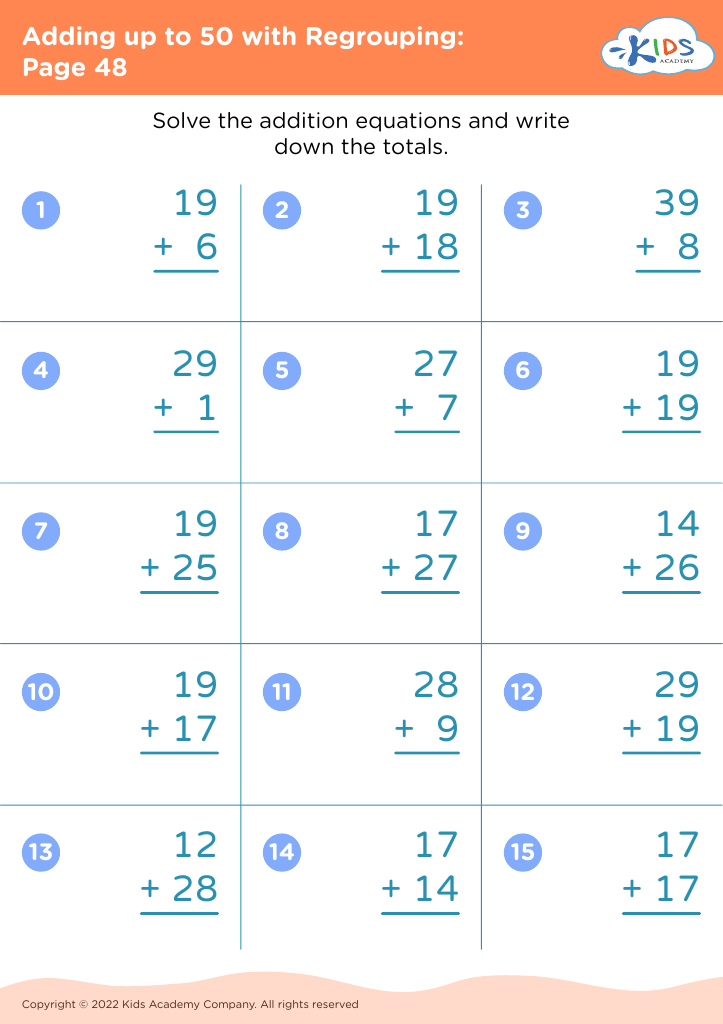


Understanding how to compare fractions and add numbers up to 50 with regrouping is crucial for 8-year-olds as it builds a strong foundation for future math skills. Parents and teachers should care about these concepts because they enhance students' critical thinking and problem-solving abilities. Fractions, in particular, are a vital part of everyday life, evident in cooking, budgeting, and measurements. By mastering fraction comparisons, children learn to assess the relationships between parts and wholes, which is essential for more advanced math topics like decimals and percentages.
Moreover, regrouping in addition is a fundamental skill that prepares students for more complicated computations. It fosters numerical fluency, improves their confidence, and helps them cultivate a deeper understanding of the base ten system. By engaging in these mathematical concepts early on, children not only develop essential arithmetic skills but also enhance their capacity to tackle challenges methodically.
Furthermore, these skills are interconnected; for instance, recognizing that 1/2 is greater than 1/4 can aid in making sound decisions in everyday scenarios. When parents and teachers emphasize understanding these mathematical fundamentals, they empower students to be successful learners and adaptable individuals in a world that increasingly relies on quantitative reasoning.