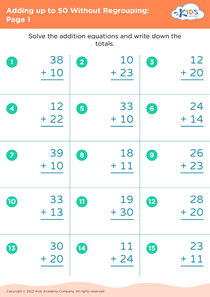
Shape Recognition Adding up to 50 with Regrouping Worksheets for 8-Year-Olds
6 filtered results
-
From - To
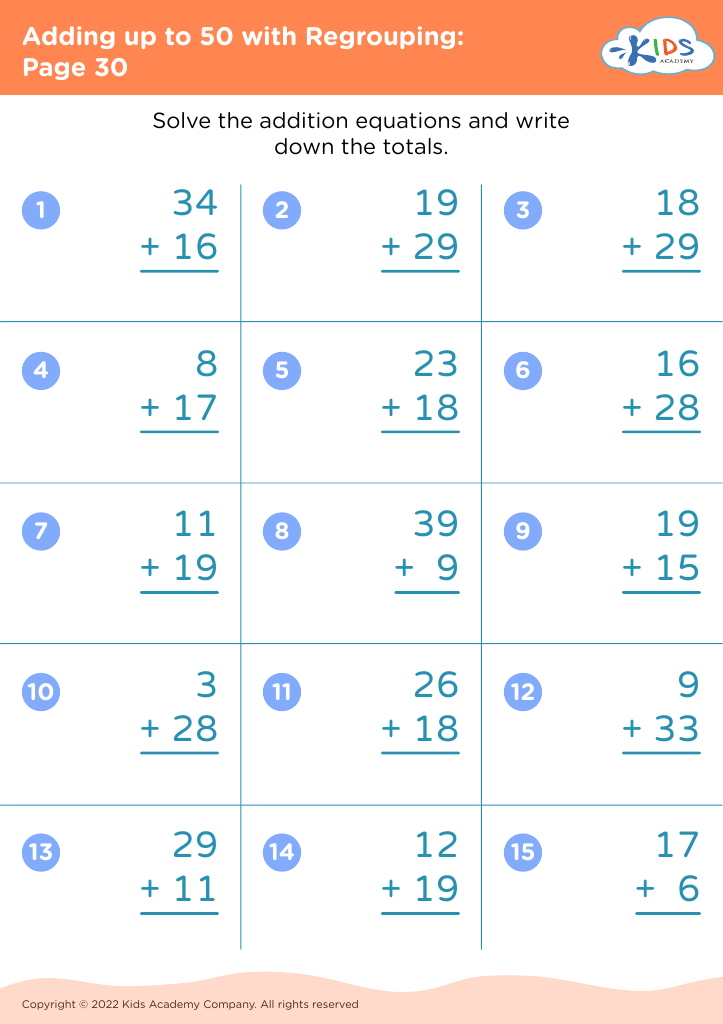
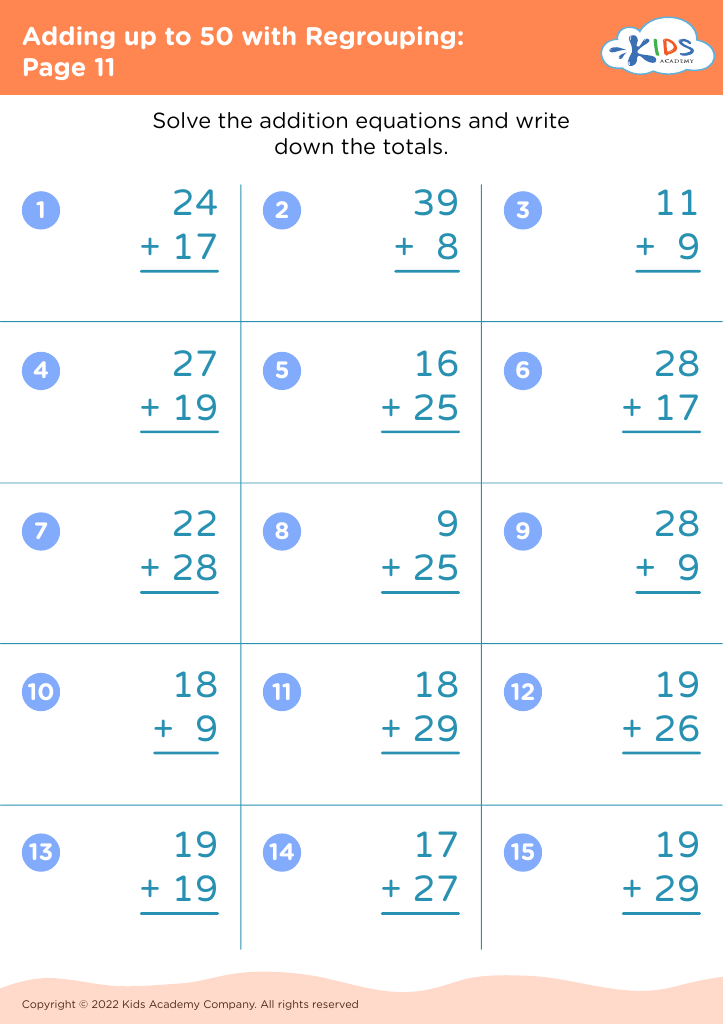
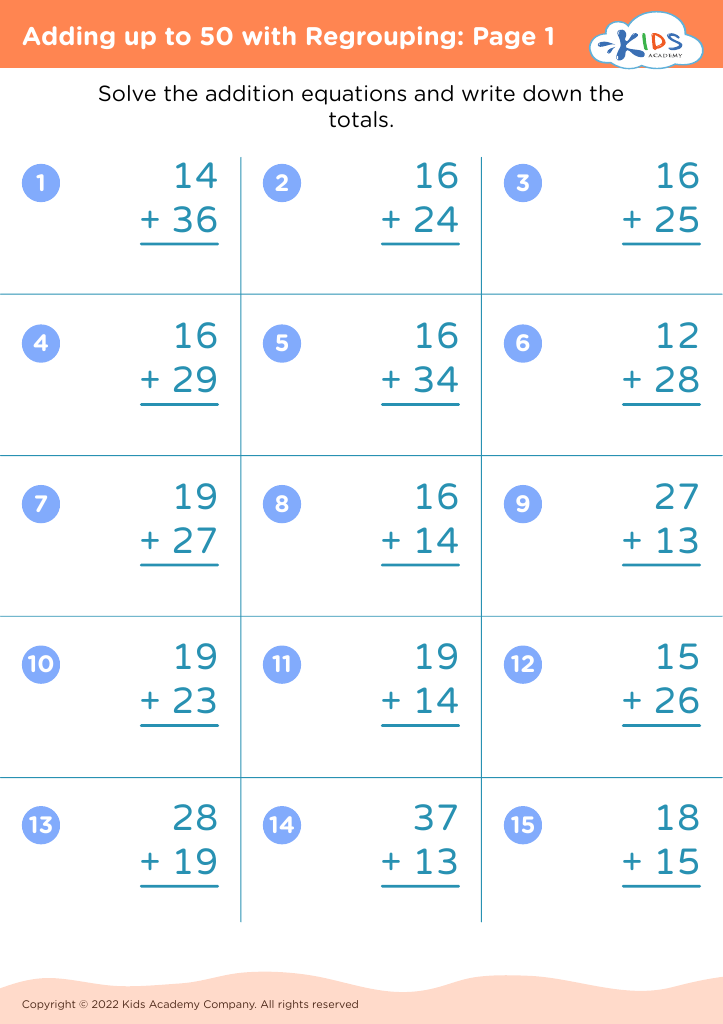
Enhance your child's math skills with our engaging "Shape Recognition Adding up to 50 with Regrouping Worksheets" designed for 8-year-olds! These worksheets not only reinforce addition strategies involving regrouping but also incorporate shape recognition, making learning fun and interactive. Children will practice identifying geometric shapes while solving addition problems that total up to 50. This integrated approach helps solidify both math concepts and spatial awareness, fostering critical thinking and problem-solving skills. Perfect for parents and educators looking to provide comprehensive math practice, these worksheets will keep your young learner motivated and excited about mathematics. Download now and watch their skills soar!
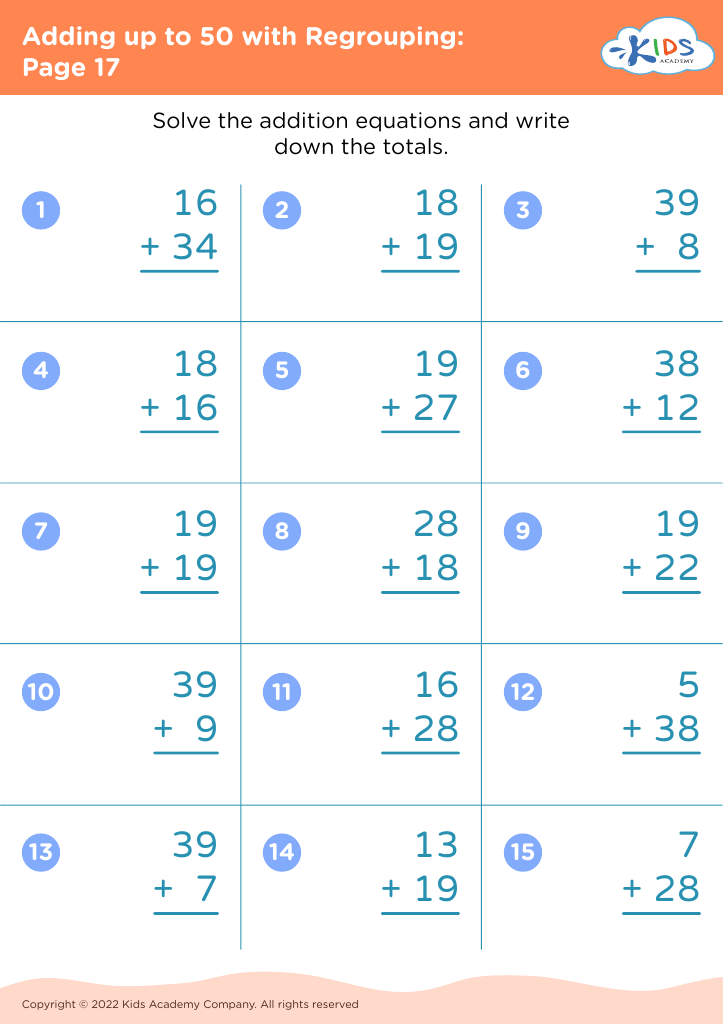
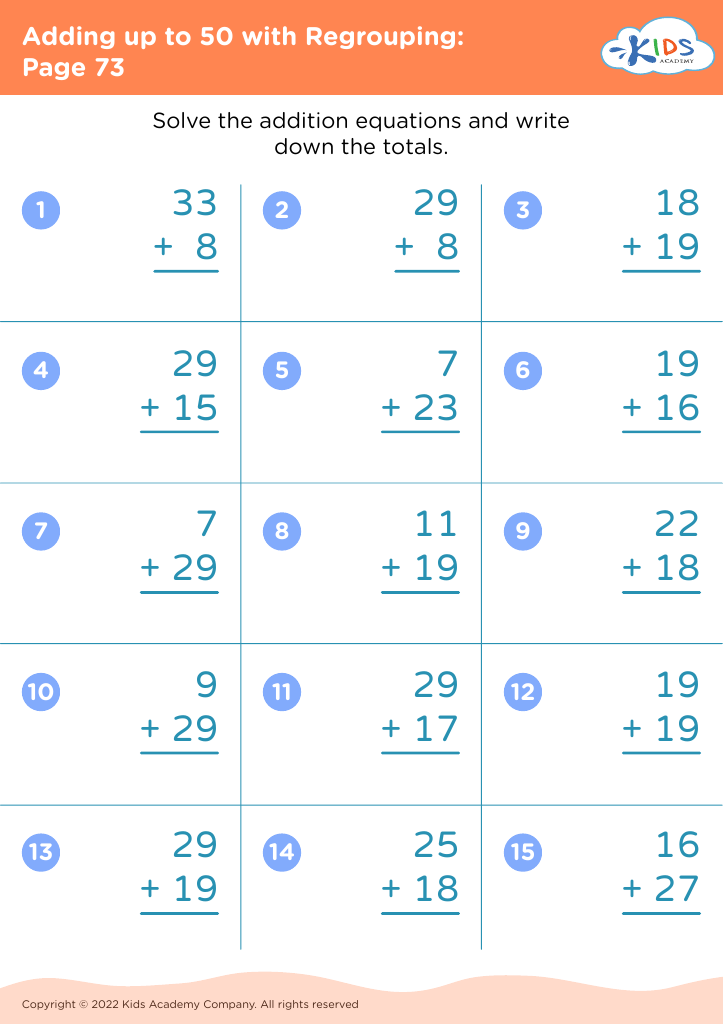
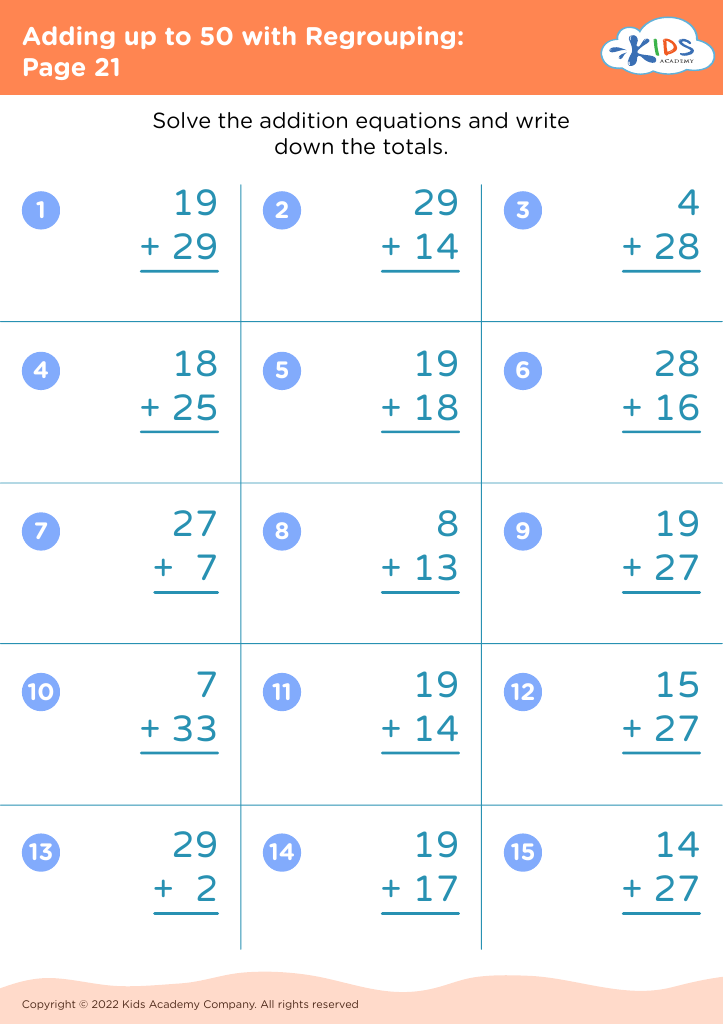


Shape recognition and adding up to 50 with regrouping are essential skills for 8-year-olds that parents and teachers should prioritize. First, shape recognition lays the groundwork for deeper mathematical understanding. It cultivates spatial awareness, helping children recognize geometric figures and understand their properties. This foundational skill is crucial in subjects like science, engineering, and design, where visual-spatial skills play a significant role.
Similarly, adding up to 50 with regrouping enhances children's numerical fluency. As they learn to regroup numbers, they develop problem-solving strategies that enable them to tackle more complex mathematical concepts later on, such as addition with larger numbers or basic algebra. This skill encourages critical thinking and persistence, qualities vital for success in academic endeavors.
Moreover, combining these two areas nurtures a comprehensive understanding of math. When children can visualize shapes and perform calculations simultaneously, they enhance their cognitive abilities and creativity. Ultimately, mastering shape recognition and regrouping not only fosters a love for math but also prepares children for real-world applications, such as budgeting, crafting, and design, reinforcing their confidence in tackling everyday challenges. Thus, parents and teachers must invest in these skills to facilitate holistic development and academic success.