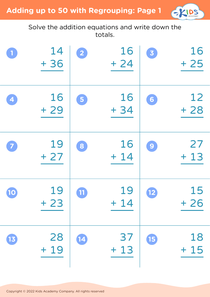
Basic addition practice Adding up to 50 Without Regrouping Worksheets for 8-Year-Olds
3 filtered results
-
From - To
Our "Basic Addition Practice: Adding up to 50 Without Regrouping Worksheets" are designed specifically for 8-year-olds to master fundamental math skills. These engaging, easy-to-follow worksheets help young learners confidently add numbers without the complexity of regrouping. Each sheet is carefully crafted to reinforce basic addition principles, making math enjoyable and accessible. By practicing consistently, children will enhance their numerical fluency, build a solid foundation for advanced math topics, and boost their confidence in solving addition problems. Download these printable worksheets to provide your child with effective, enjoyable practice tailored to their learning needs.
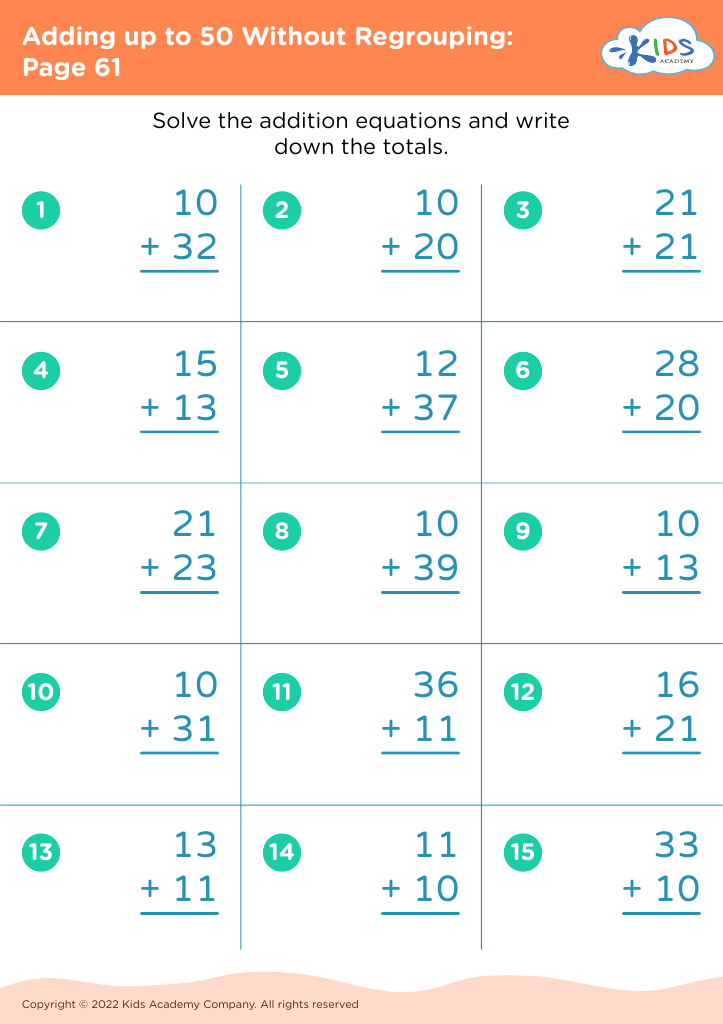
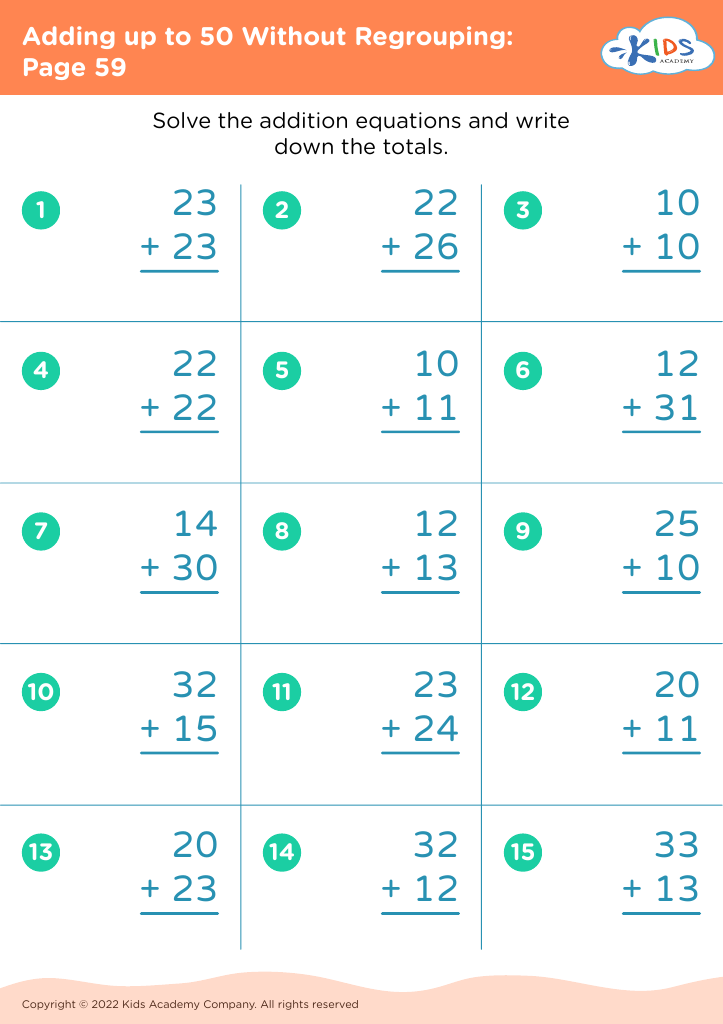
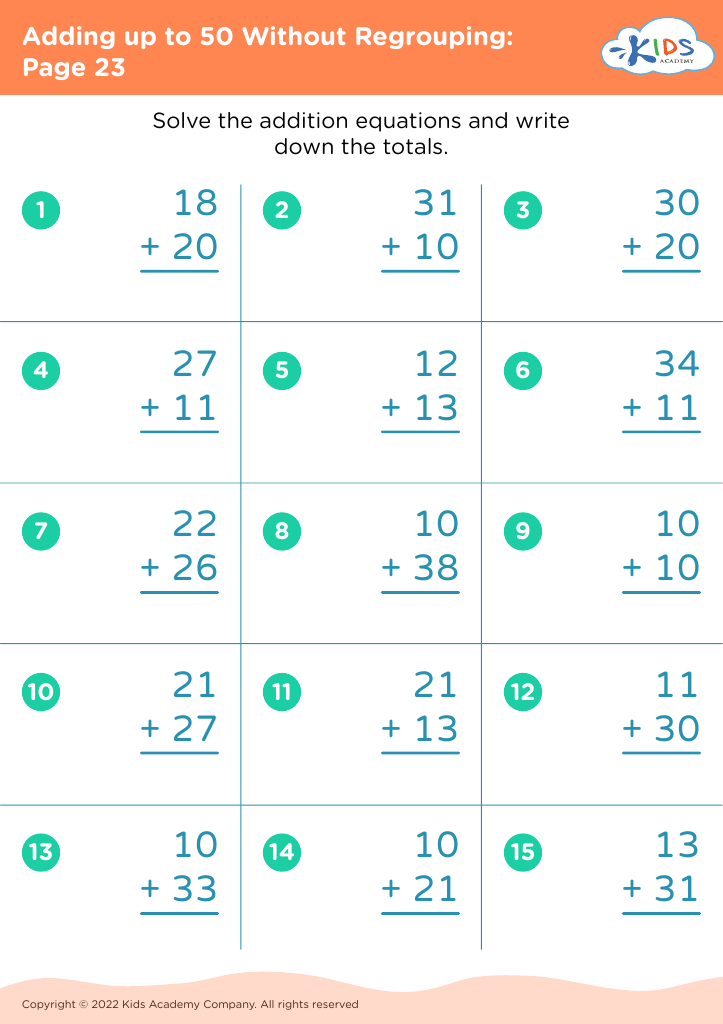


Parents and teachers should prioritize basic addition practice up to 50 without regrouping for 8-year-olds because it's a critical foundation for future math learning. At this age, children's cognitive skills and numerical understanding are rapidly developing. Practicing addition within this range promotes mental math fluency, allowing them to solve simple arithmetic quickly and accurately.
Mastering addition without regrouping is essential before introducing more complex concepts like carrying and borrowing. It instills confidence in handling numbers and establishes a strong baseline for operations involving larger digits and more intricate calculations. Furthermore, consistent practice encourages pattern recognition and numerical relationships, which are indispensable for advanced topics, including multiplication and division.
Aside from academic benefits, early success in math fosters a positive attitude towards the subject. It reduces math anxiety and builds a growth mindset where children view challenges as opportunities to learn rather than obstacles. Engaged and successful math learners are more likely to remain enthusiastic and motivated as they progress in their education.
In summary, ensuring competence in basic addition up to 50 without regrouping prepares 8-year-olds for increasingly complicated mathematical concepts, sustains their confidence, and nurtures a lifelong appreciation for math.