Identifying shapes Adding up to 50 Without Regrouping Worksheets for 8-Year-Olds
6 filtered results
-
From - To
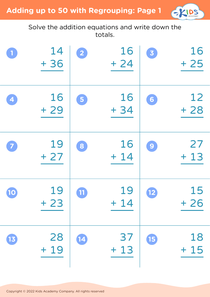
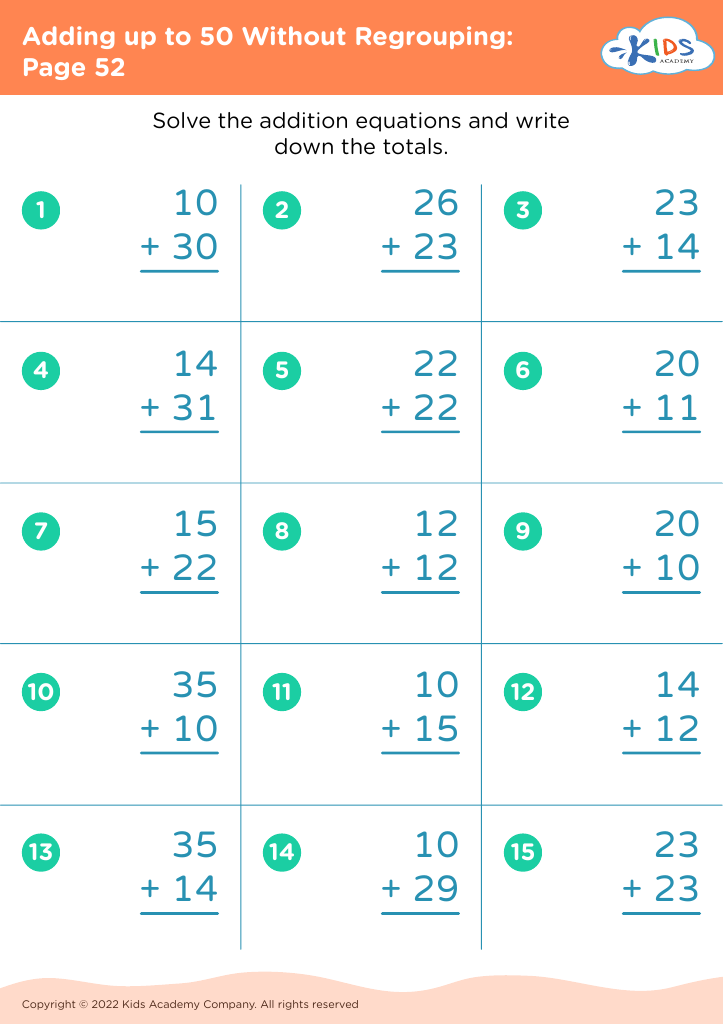
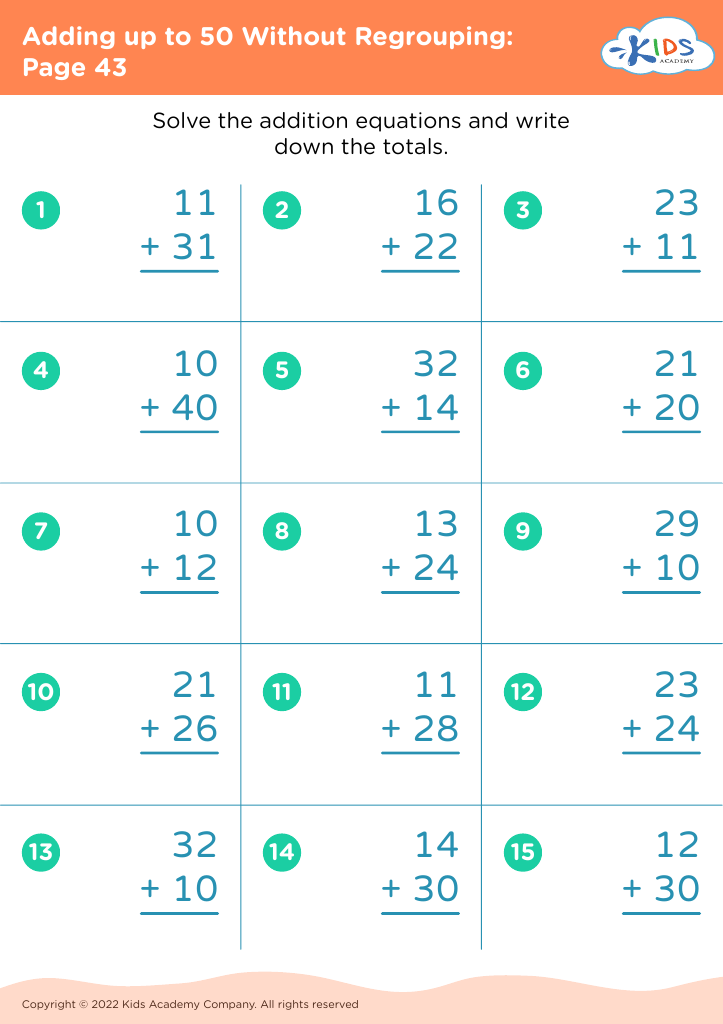
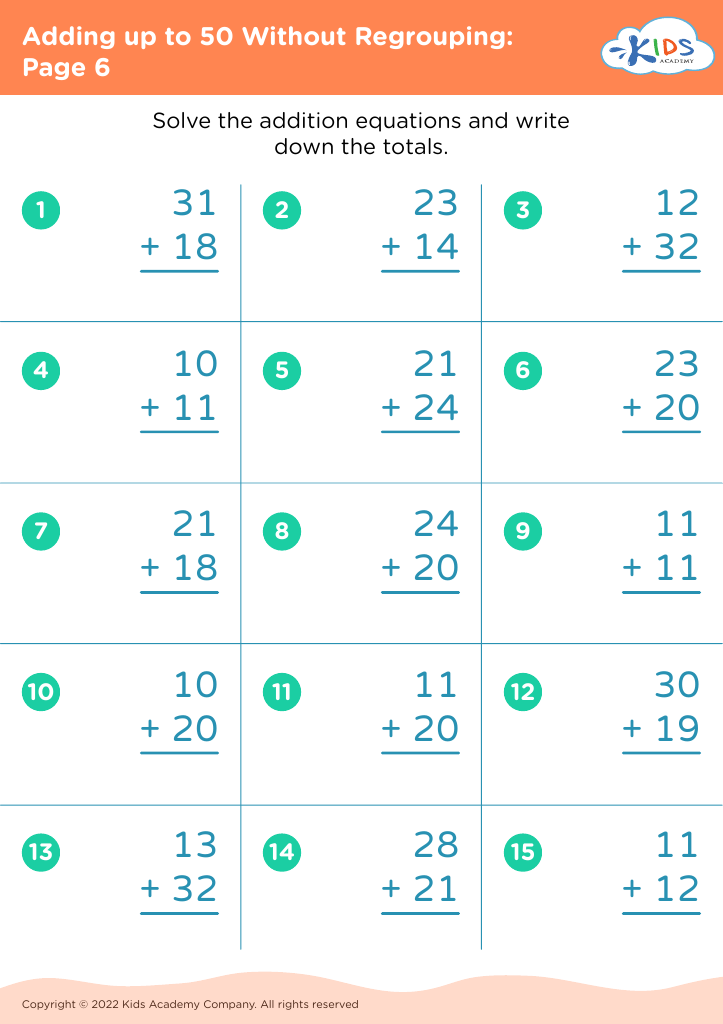
Discover a fun and educational way for 8-year-olds to master math and geometry! Our "Identifying Shapes Adding up to 50 Without Regrouping Worksheets" offer a perfect blend of shape recognition and basic addition within 50. Designed specifically for 8-year-olds, these worksheets provide engaging activities that strengthen both math and spatial skills. Children will enjoy solving problems while identifying common shapes, helping them build a solid foundation in both subjects. Perfect for classroom or home use, our worksheets ensure a productive and enjoyable learning experience. Help your child succeed with interactive and educational printables today!
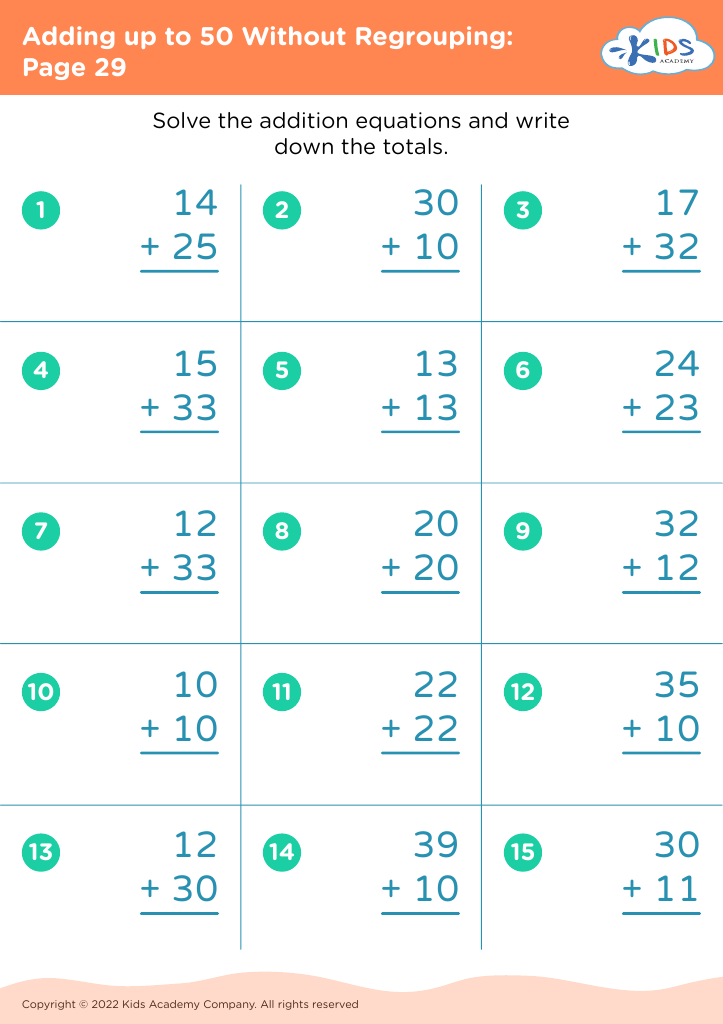
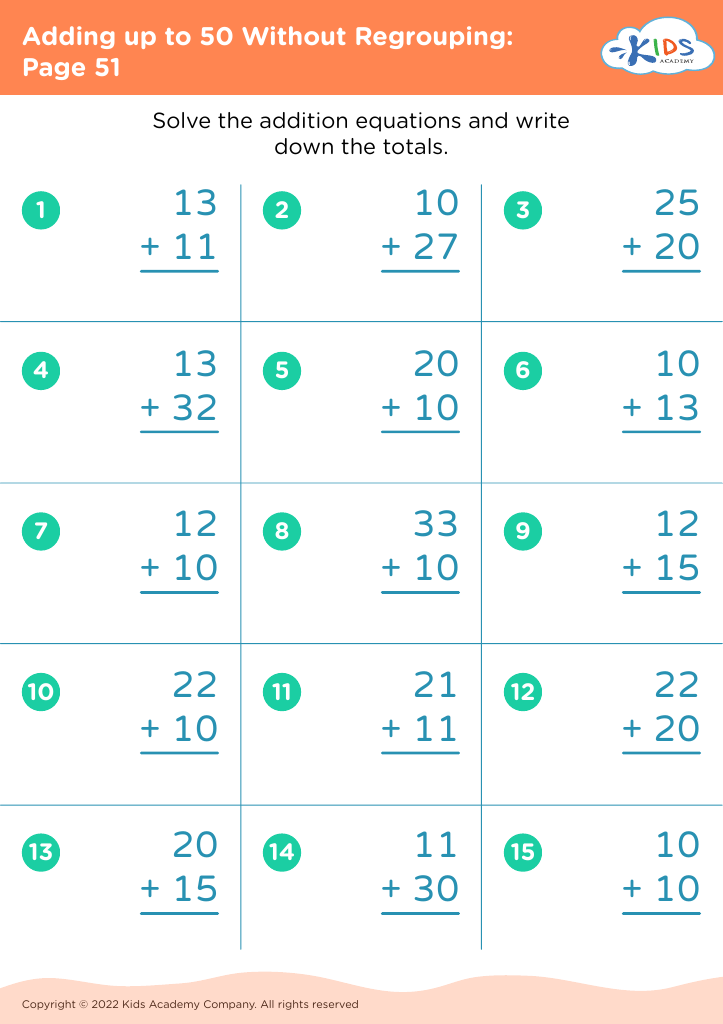
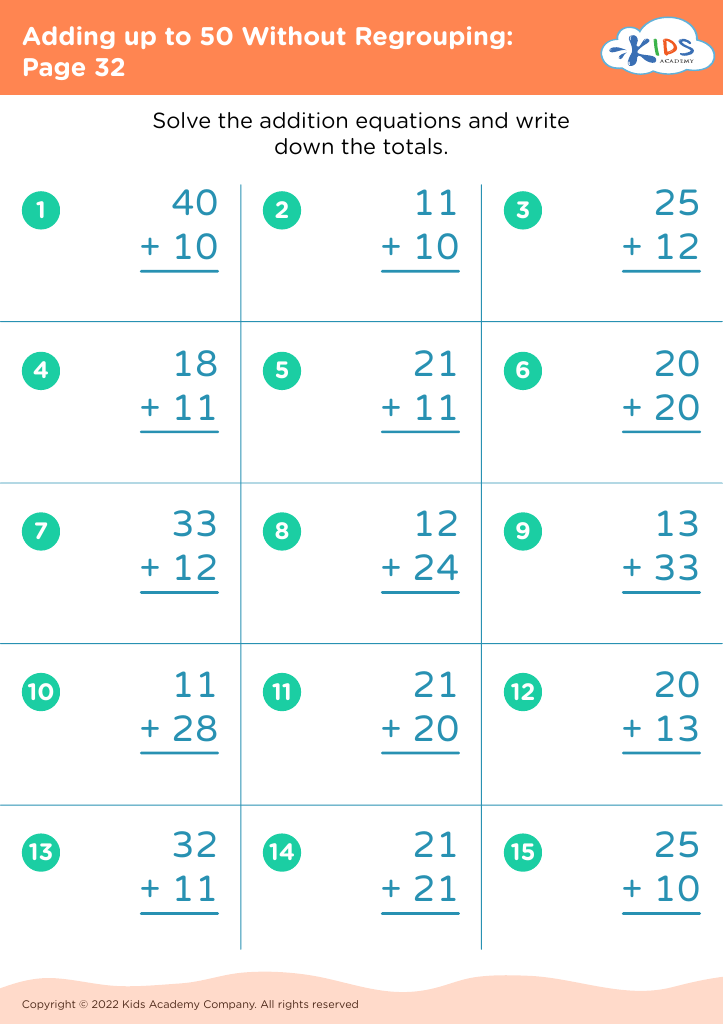


Parents and teachers should prioritize identifying shapes and adding up to 50 without regrouping for 8-year-olds because these foundational skills play a critical role in early cognitive development and academic success. Understanding shapes enhances children's spatial awareness and geometry skills, which are crucial for problem-solving, reading, and writing. Recognizing and naming shapes help kids make sense of the physical world, enabling them to identify patterns, organize objects, and improve their reasoning abilities.
Meanwhile, learning to add up to 50 without regrouping (carrying over) solidifies fundamental arithmetic skills. At this age, grasping basic addition without regrouping boosts confidence in math, paving the way for more advanced mathematical operations later. It fosters a strong number sense, allowing children to understand value and quantity, crucial for everyday tasks such as measuring and shopping. Making these skills second nature helps children avoid math anxiety, promoting a positive attitude toward learning.
Therefore, embedding these skills into daily learning ensures comprehensive development. Parents and teachers play a pivotal role in guiding and reinforcing these concepts, setting a solid foundation for more complex subjects and enhancing overall cognitive growth. Investing in these basic skills early on does not just prepare children academically but equips them with practical tools for life.