Reading comprehension Adding up to 50 Without Regrouping Worksheets for 8-Year-Olds
3 filtered results
-
From - To
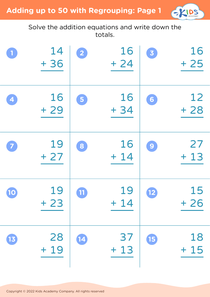
Enhance your child's reading comprehension and math skills with our engaging "Adding Up to 50 Without Regrouping Worksheets" designed specifically for 8-year-olds. These worksheets combine fun reading exercises with straightforward addition problems, allowing kids to practice their math skills while improving their understanding of texts. Each worksheet presents relatable scenarios that challenge students to answer questions and solve equations, reinforcing their ability to extract meaningful information. Ideal for school or at-home learning, these materials promote critical thinking and support educational development. Explore our worksheets today to give your child the tools they need to succeed in both reading and math!
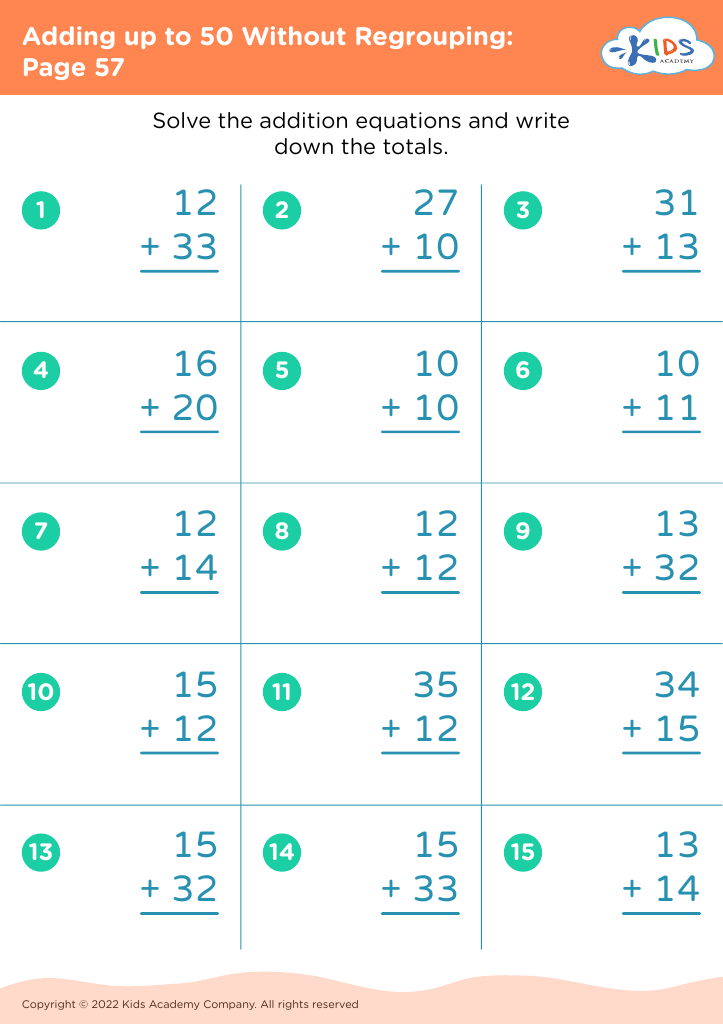
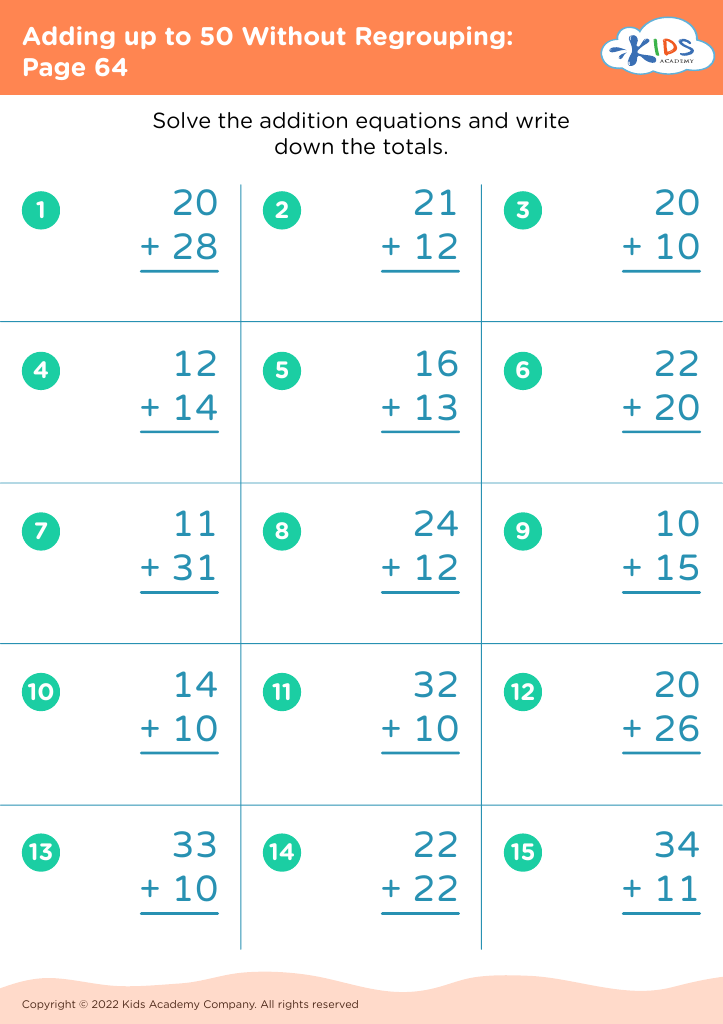
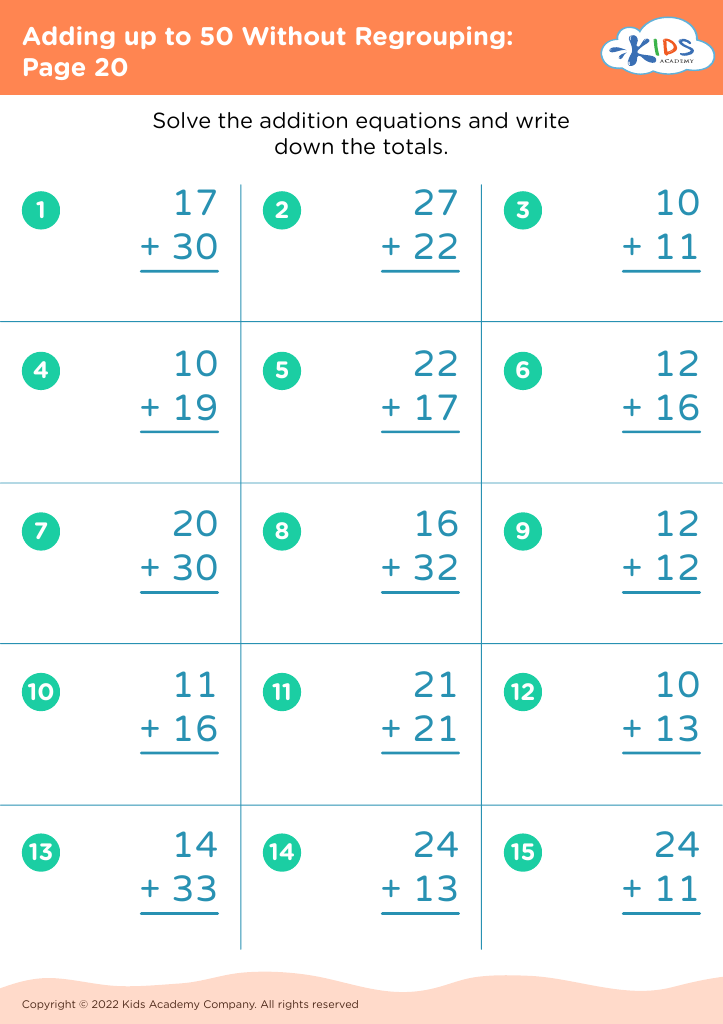


Reading comprehension and addition skills, particularly for concepts like adding up to 50 without regrouping, are crucial for 8-year-olds. Firstly, reading comprehension enables children to understand and engage with texts, fostering a love for reading and improving their vocabulary and critical thinking skills. When children can comprehend what they read, they are better equipped to connect ideas, analyze information, and make informed decisions in both academic and everyday contexts.
Furthermore, mastering addition without regrouping reinforces foundational math skills. At this age, students not only learn to add numbers accurately but also develop problem-solving strategies and mathematical reasoning. The ability to add up to 50 without regrouping lays the groundwork for more complex mathematical operations in the future.
Parents and teachers should prioritize these skills because they intersect directly with a child’s overall academic performance. Proficient reading comprehension enhances a child’s ability to tackle word problems in math, while strong arithmetic skills help in understanding quantitative information in reading materials. Ultimately, this dual focus not only supports academic success but also builds confidence and independence in learning, setting the stage for lifelong educational growth.