Recognizing Patterns Adding up to 50 Without Regrouping Worksheets for 8-Year-Olds
4 filtered results
-
From - To
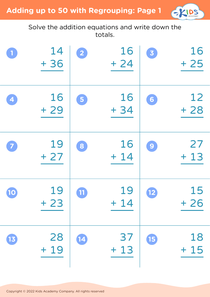
Discover our engaging "Recognizing Patterns Adding Up to 50 Without Regrouping" worksheets designed specifically for 8-year-olds! These interactive resources help young learners identify and understand mathematical patterns, making addition practice fun and effective. By exploring strategies to add numbers without regrouping, children develop strong foundational skills, enhance their problem-solving abilities, and boost their confidence in math. Our worksheets are filled with vibrant illustrations and varied exercises that keep kids motivated while they master essential math concepts. Join us in helping your child become a math whiz by recognizing and applying patterns to reach sums up to 50 seamlessly!
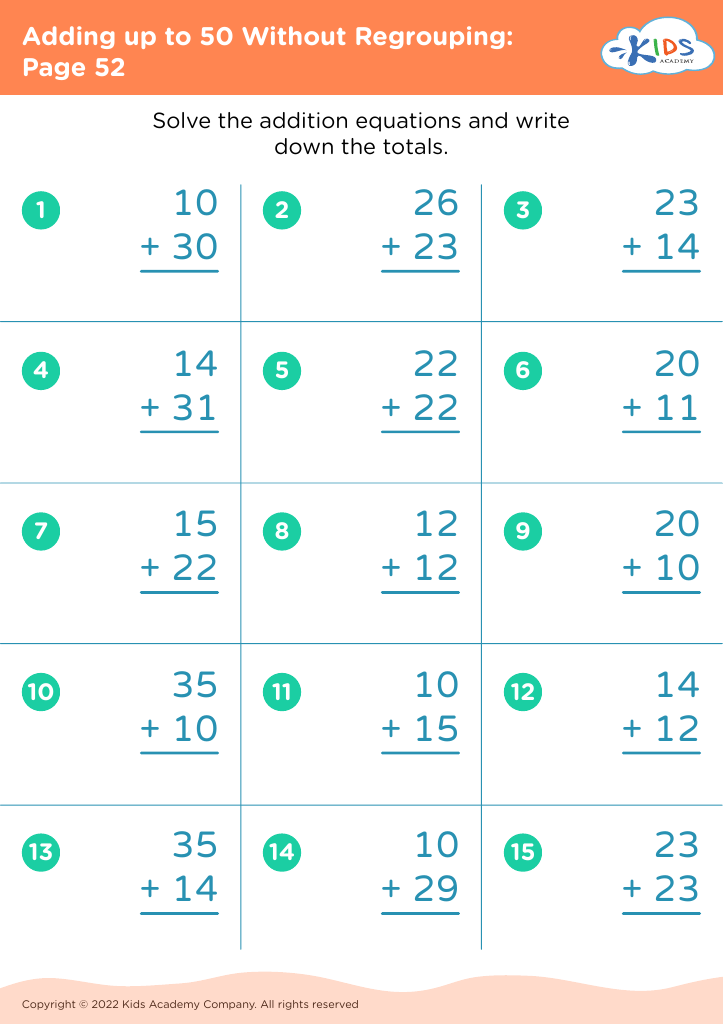
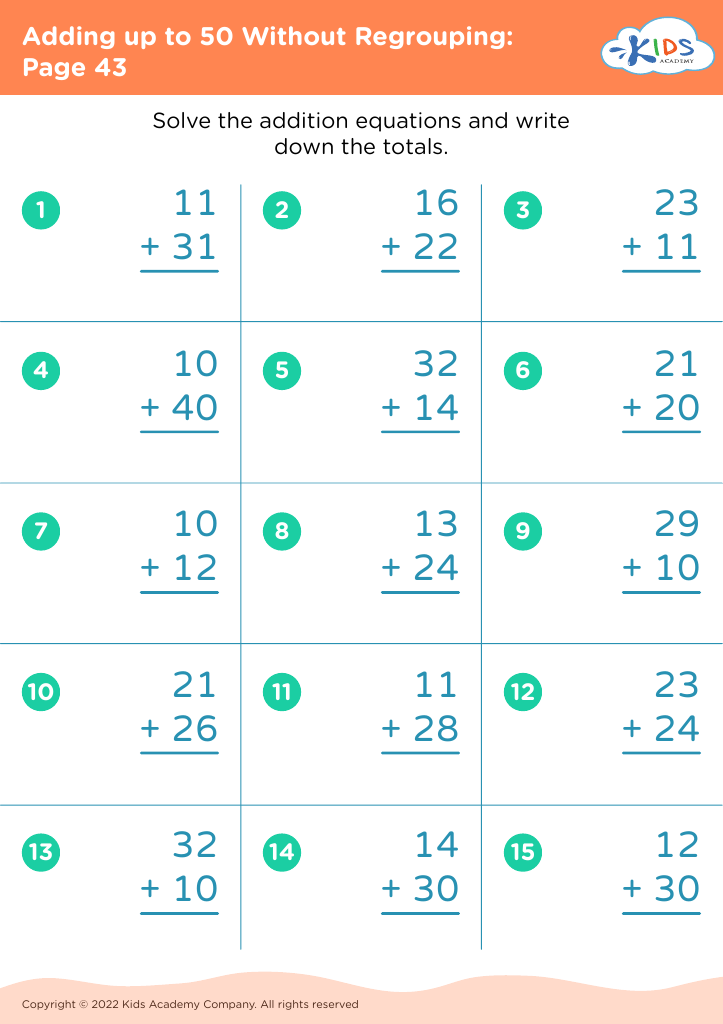
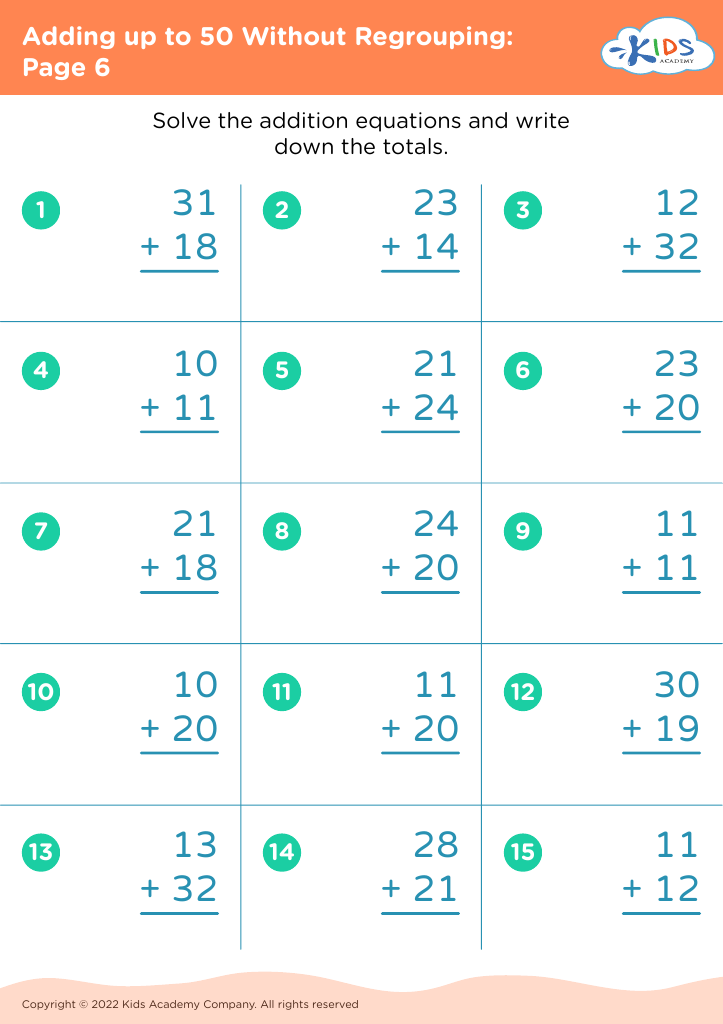
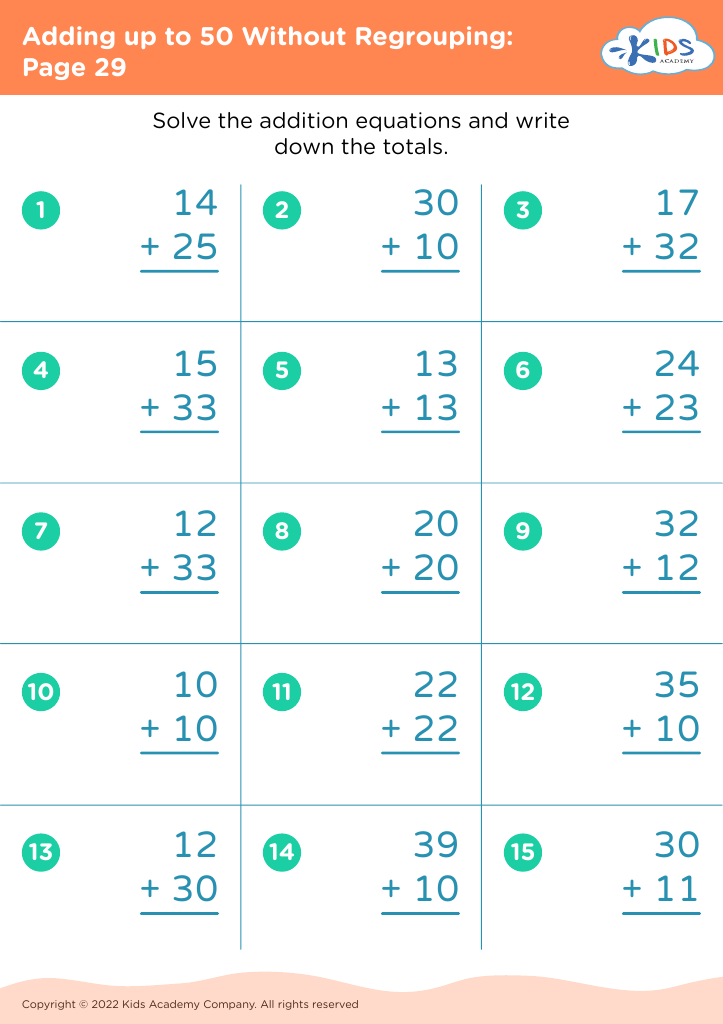


Recognizing patterns and adding numbers up to 50 without regrouping is a critical skill for 8-year-olds that lays the foundation for future math concepts. When parents or teachers emphasize this skill, they help children develop number sense, an essential cognitive ability that aids in understanding mathematics beyond simple computation. This skill enables students to identify and use relationships between numbers, such as pairs that add to 10 or 20, fostering mental math strategies that promote confidence and fluency.
Teaching children to recognize patterns enhances their problem-solving skills and prepares them for multi-digit addition in higher grades. It makes the learning process enjoyable and interactive; for instance, identifying patterns in everyday situations can reinforce these concepts. This skill also encourages precision and logical thinking, encouraging children to reason through problems rather than relying solely on memory.
Additionally, developing these foundational skills supports a child’s ability to tackle more complex concepts, such as algebra, later on. Parents and teachers should care about this because it not only contributes to academic success but also fosters important life skills like critical thinking and perseverance—traits that will serve children throughout their educational journey and beyond.