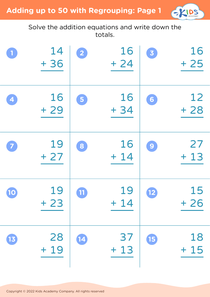
Understanding fractions Adding up to 50 Without Regrouping Worksheets for 8-Year-Olds
13 filtered results
-
From - To
Explore our engaging "Understanding Fractions: Adding Up to 50 Without Regrouping" worksheets, designed specifically for 8-year-olds. These user-friendly resources aim to strengthen young learners' mathematical skills by focusing on fraction concepts while mastering addition up to 50. Students will develop a solid foundational understanding necessary for more advanced math topics, all while enjoying a variety of fun and interactive exercises. Tailored to enhance critical thinking and problem-solving abilities, our worksheets encourage independent learning and classroom collaboration. Download and watch as your child gains confidence in their mathematical abilities, setting them on the path to academic success!
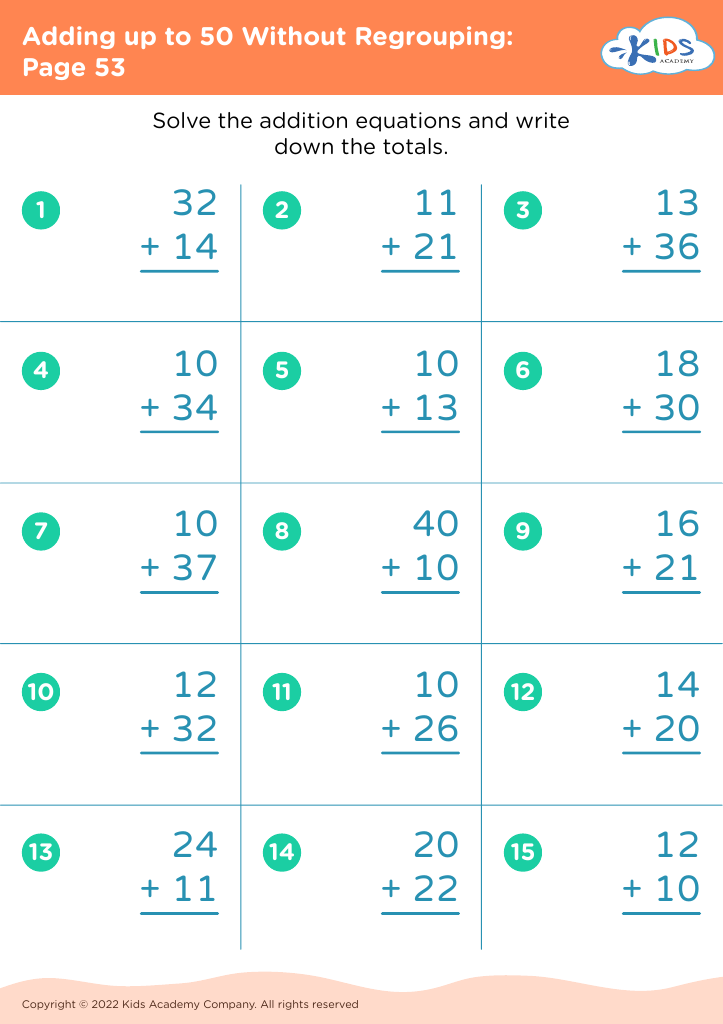
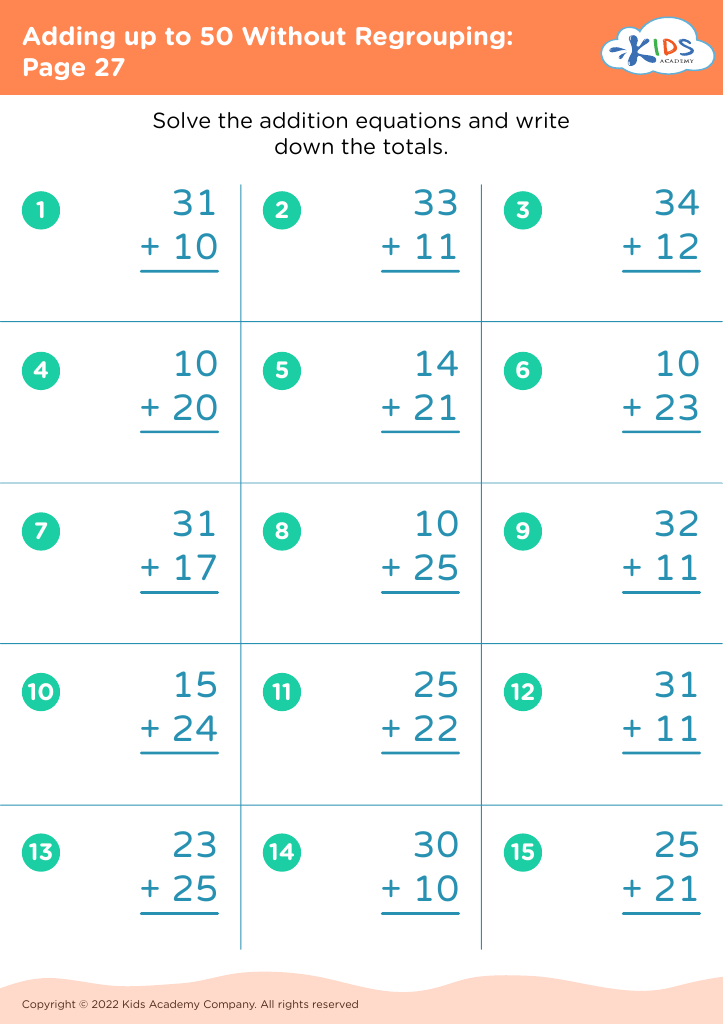
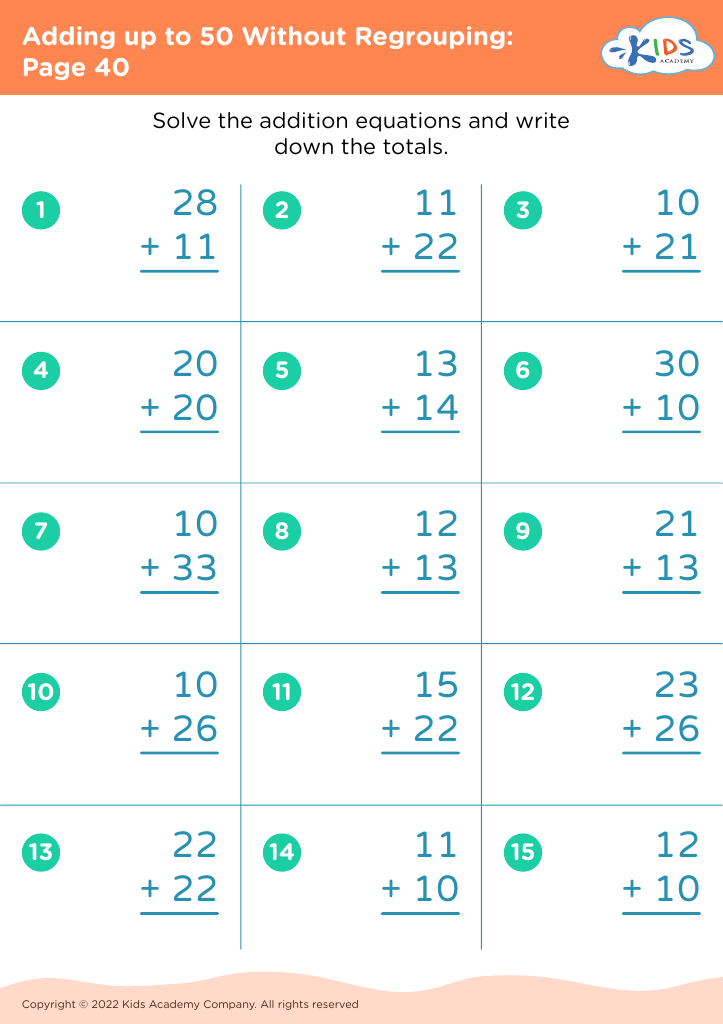
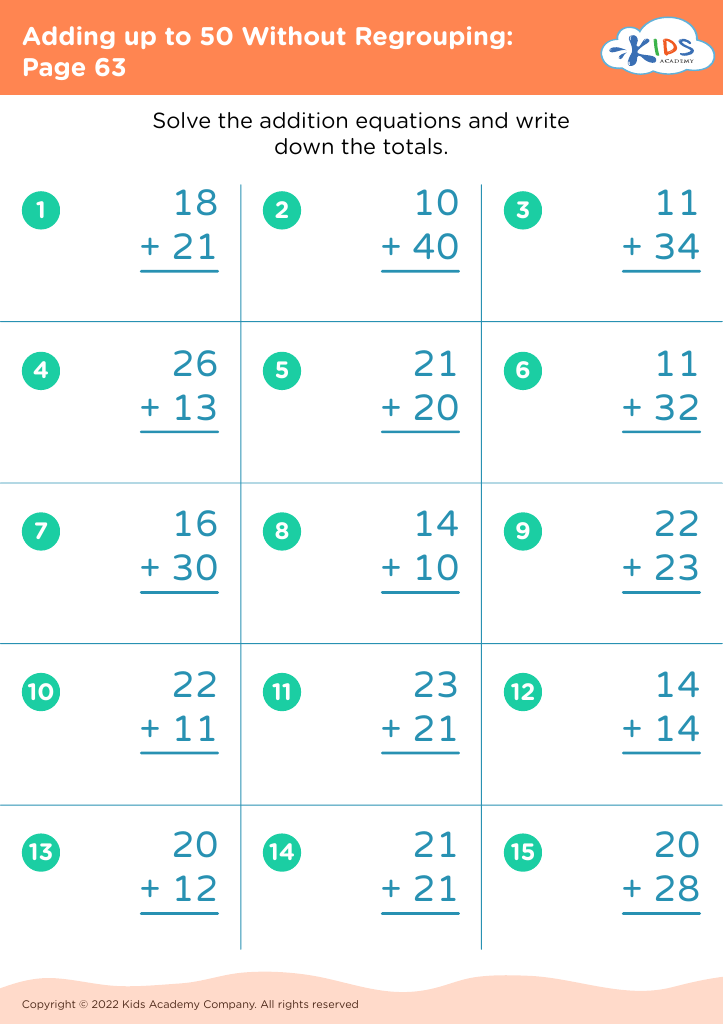
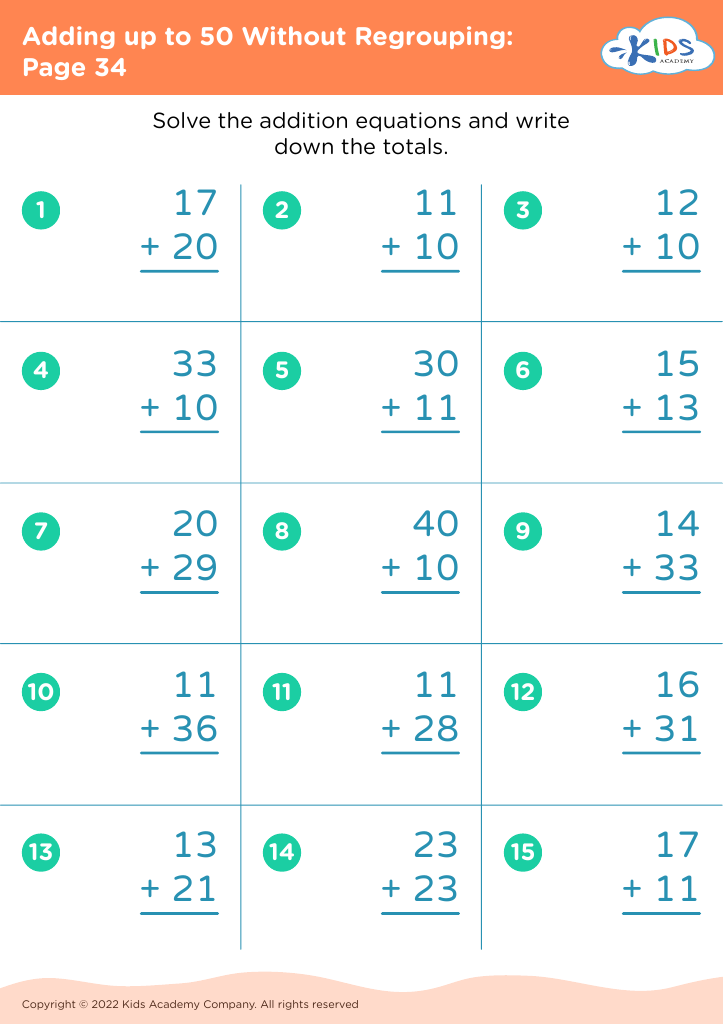
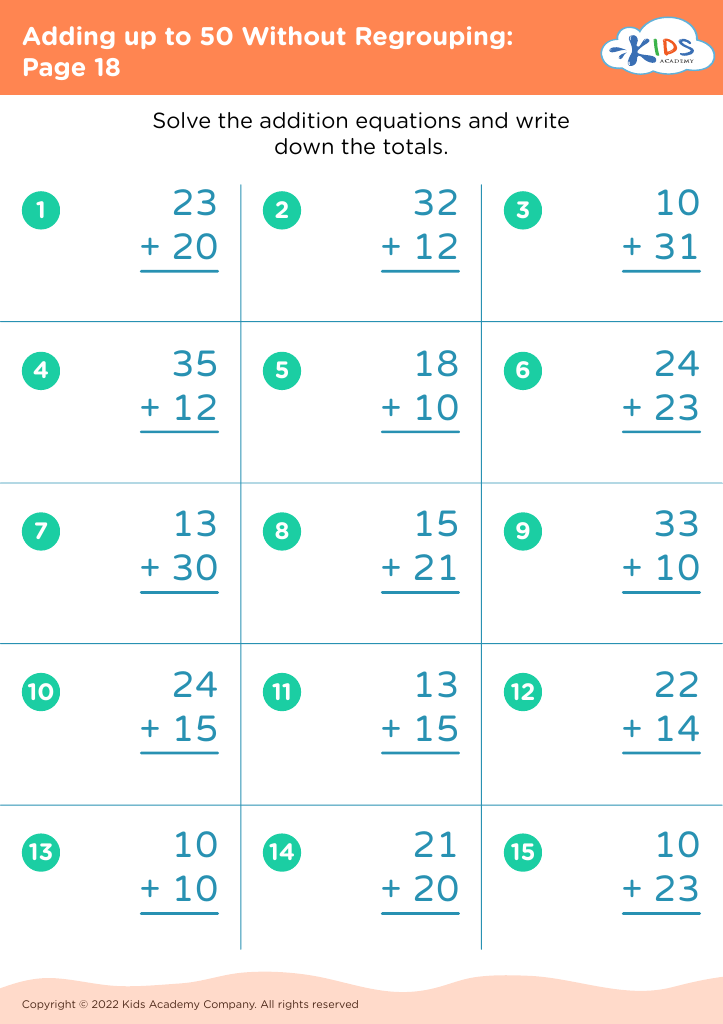
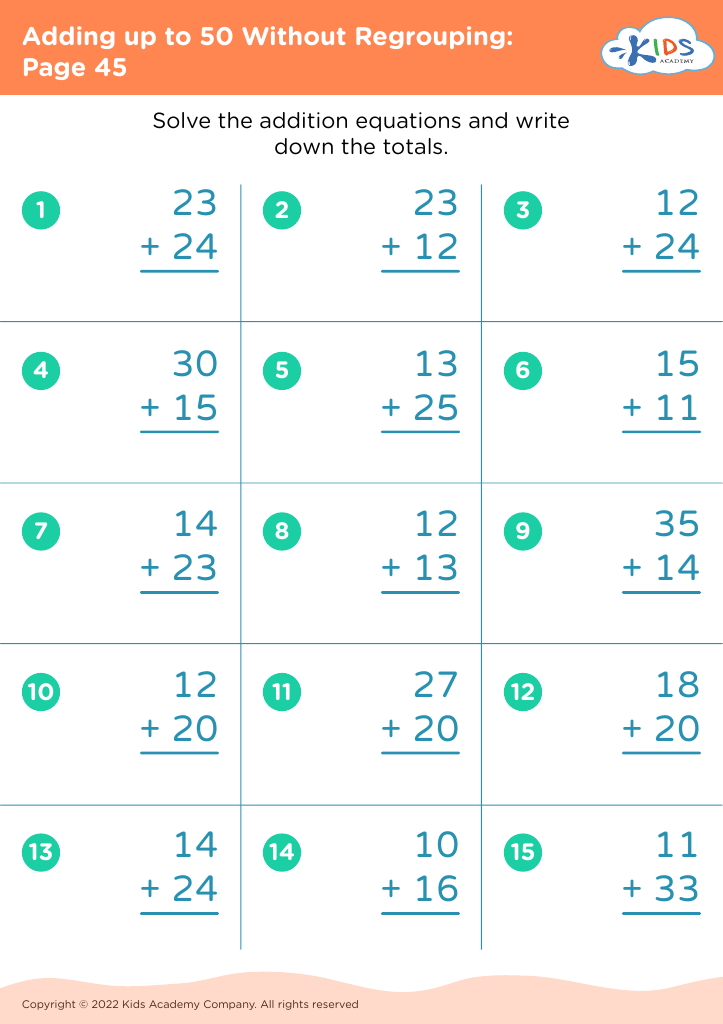
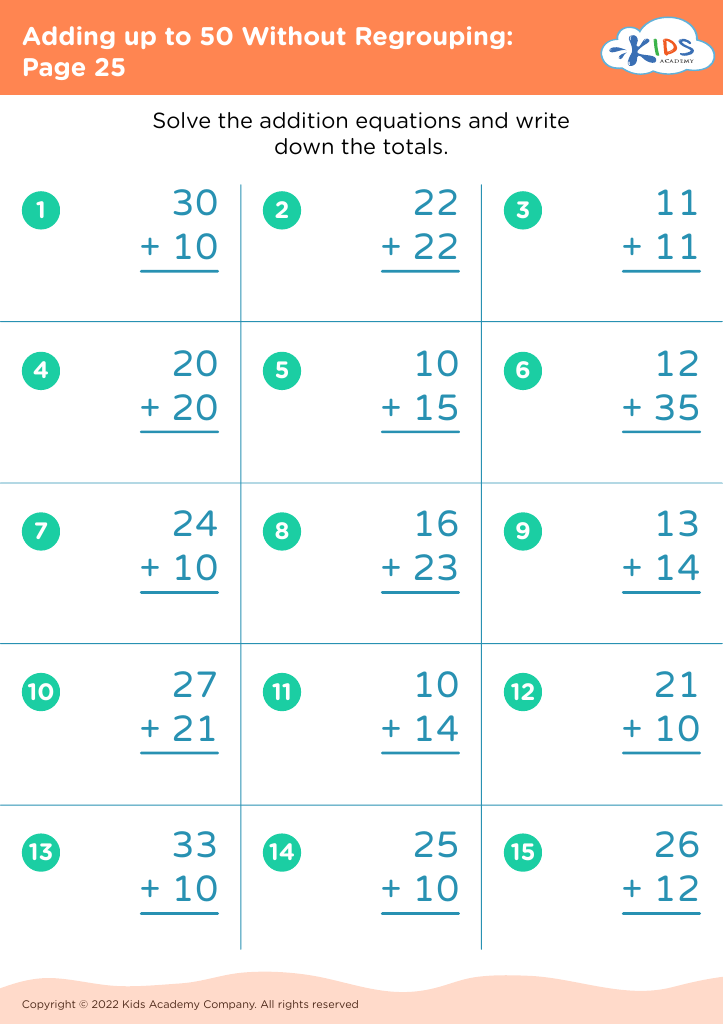
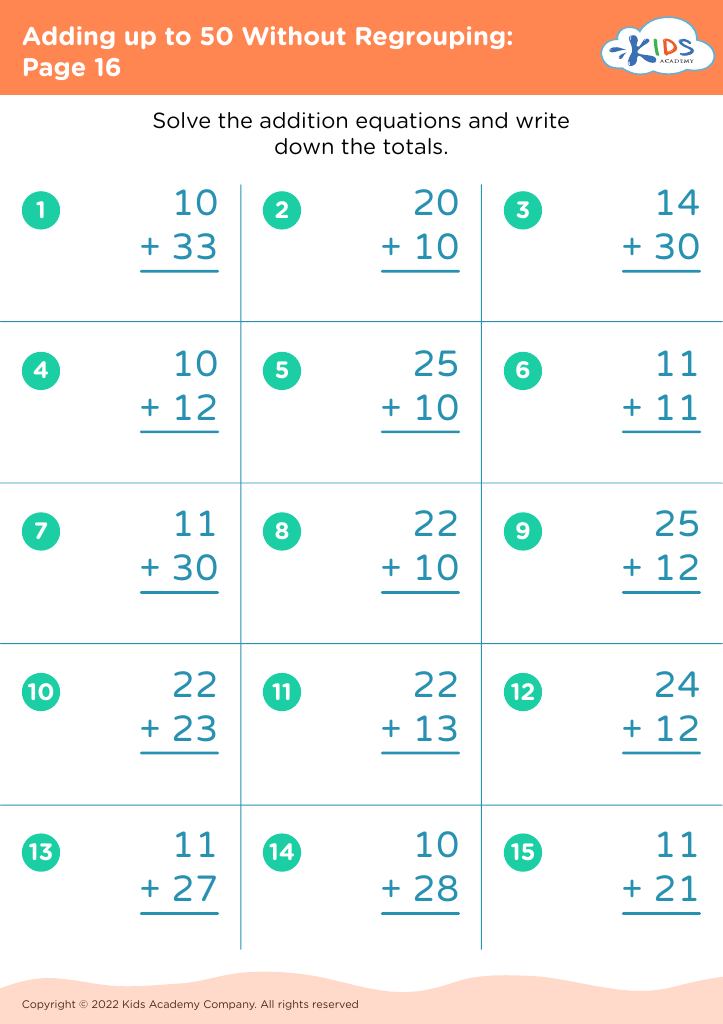
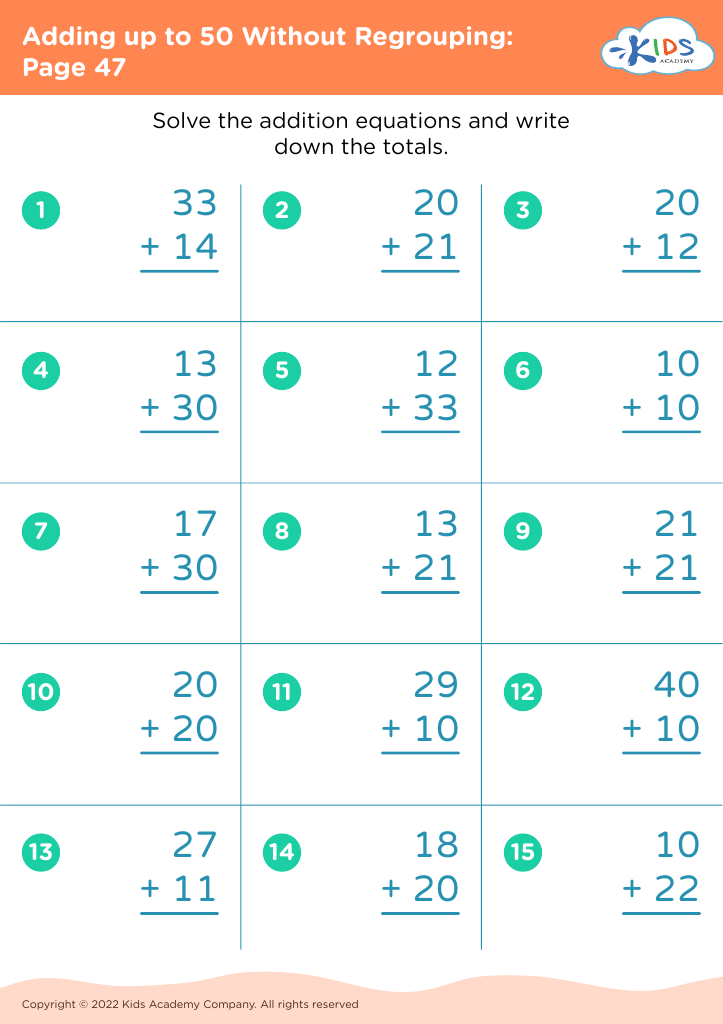
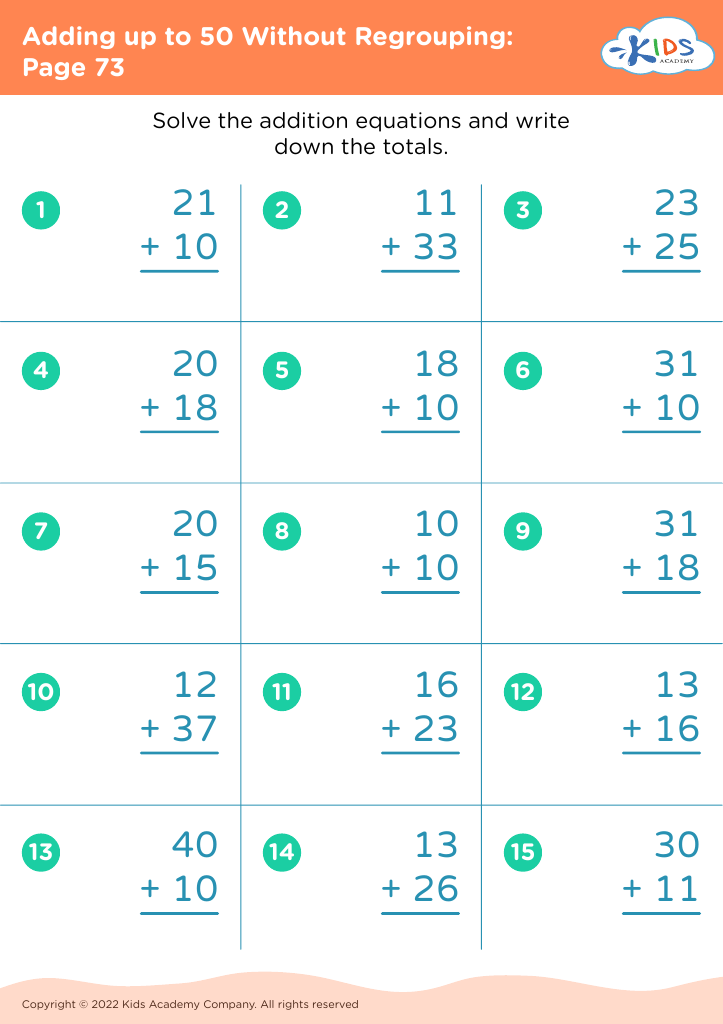
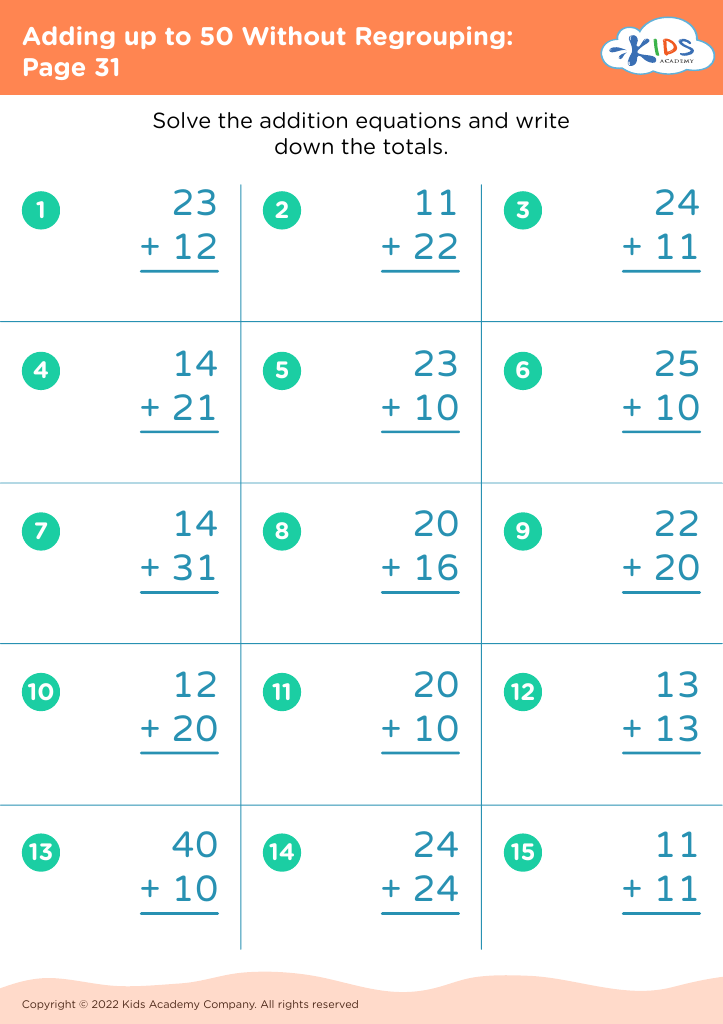
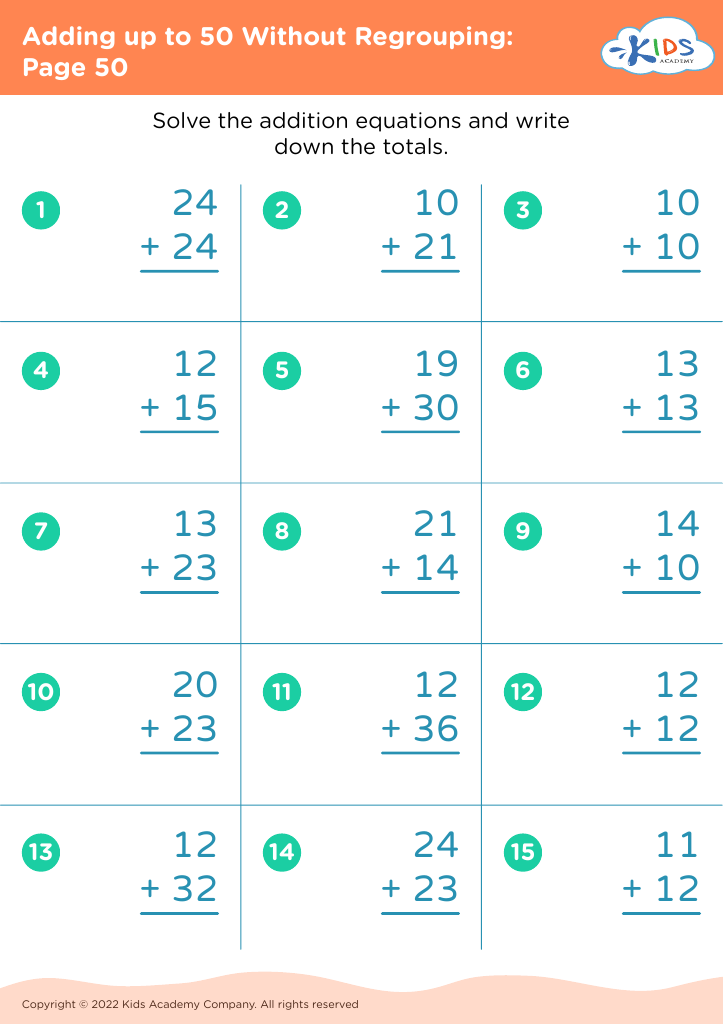


Understanding fractions, particularly when it comes to adding them up to 50 without regrouping, is crucial for 8-year-olds as it lays a strong foundation for future mathematical learning. At this age, children are developing their problem-solving skills and critical thinking abilities. Mastering fractions helps students comprehend part-to-whole relationships, which are fundamental in various real-life applications, such as cooking, shopping, and budgeting.
Parents and teachers should care because grasping fractions enhances confidence in mathematics, a subject that can often intimidate students. By ensuring children understand adding fractions without regrouping, educators can help them build fluency in arithmetic. This skill is important as it paves the way for more complex concepts, like converting and comparing fractions and understanding mixed numbers, which will be encountered in higher grades.
Moreover, when children successfully learn and practice this skill, it promotes a growth mindset, encouraging a belief in their ability to tackle tough problems. Parents and teachers play a critical role in guidance and support, making it essential to foster an environment where this foundational knowledge is appreciated and nurtured, ultimately setting children up for long-term academic success in mathematics.