Understanding patterns Adding up to 50 Without Regrouping Worksheets for 8-Year-Olds
5 filtered results
-
From - To
Introduce your 8-year-old to the fascinating world of math with our "Understanding patterns Adding Up to 50 Without Regrouping Worksheets!" Designed specifically to enhance understanding of number patterns and addition, these engaging worksheets provide young learners with the practice needed to master adding numbers up to 50. Featuring fun and educational exercises, children will strengthen their math skills and gain confidence in their abilities without the complexity of regrouping. With an emphasis on pattern recognition, these worksheets make learning both effective and enjoyable. Ideal for classroom or at-home learning, boost your child's math proficiency today!
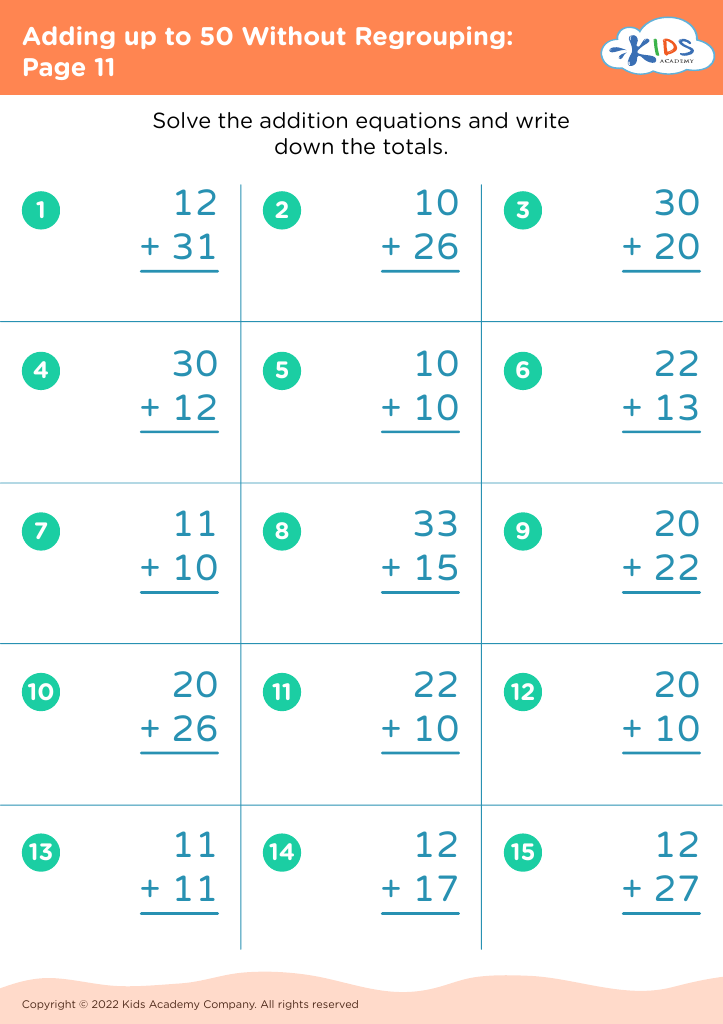
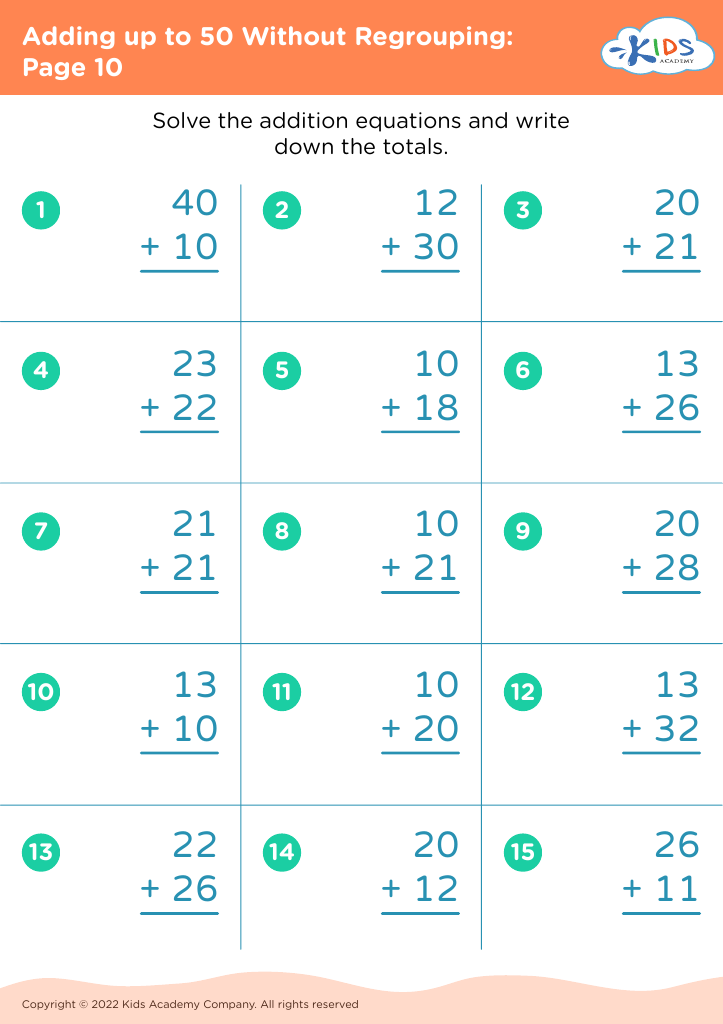
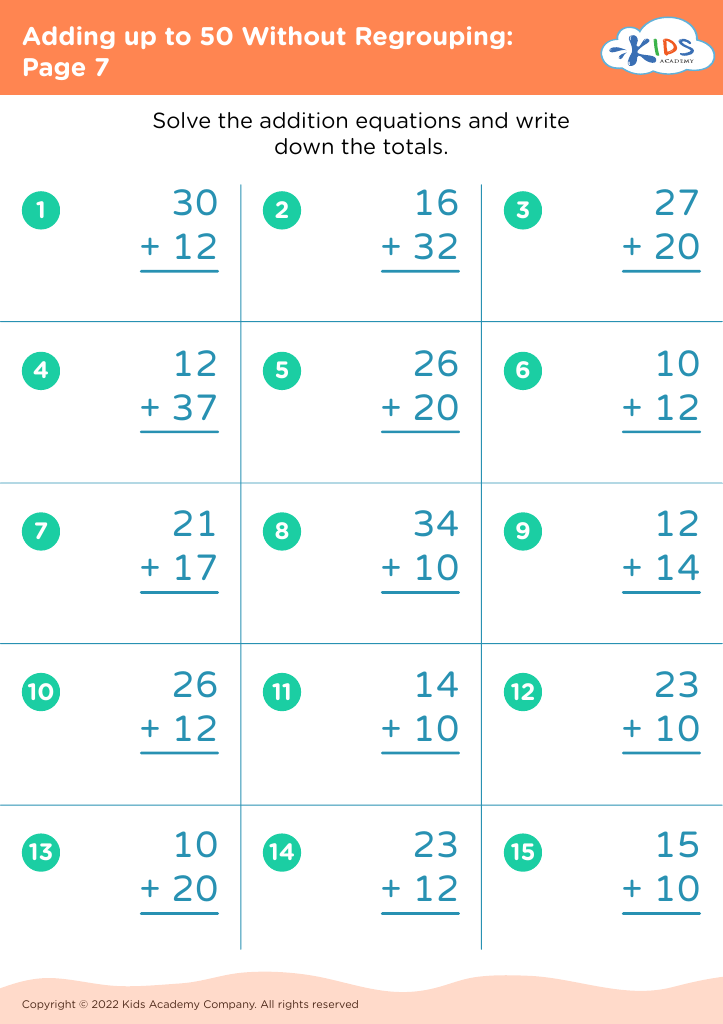
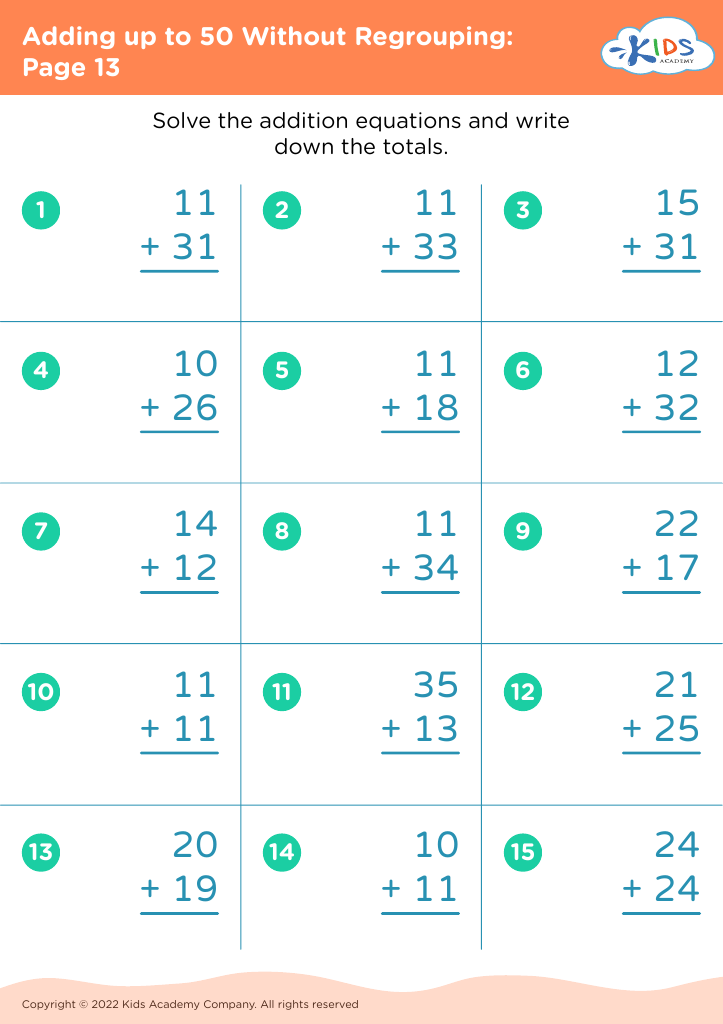
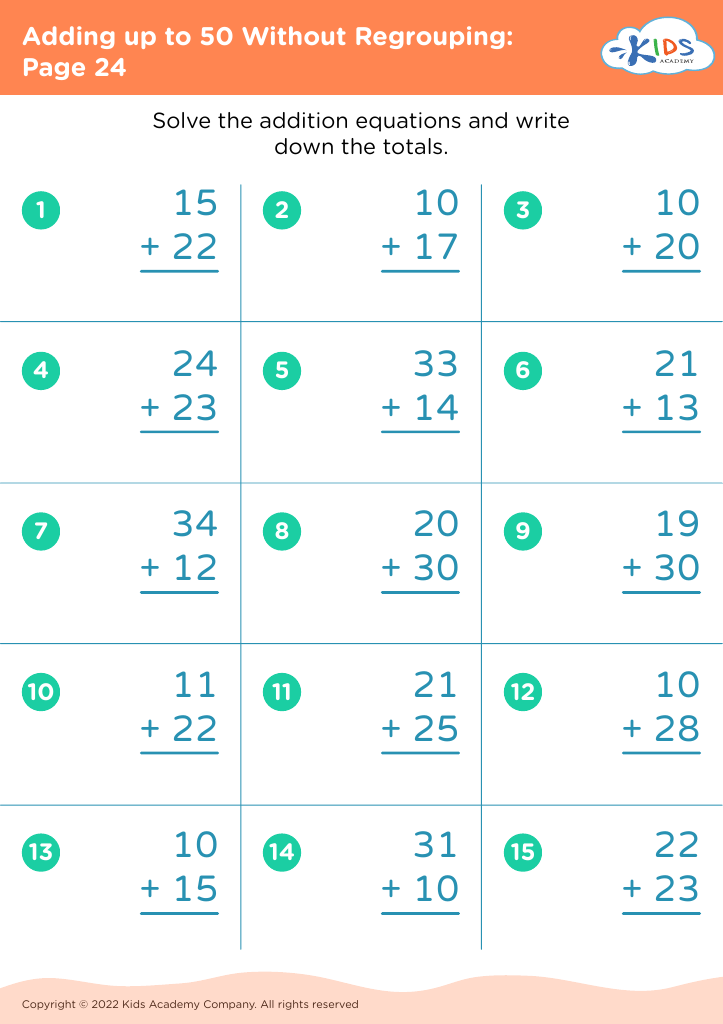


Understanding patterns in addition up to 50 without regrouping is essential for 8-year-olds as it forms a foundational block for future math skills. For parents and teachers, nurturing this understanding is crucial because it enhances number sense and facilitates a smoother transition to more complex arithmetic operations. When children grasp simple addition patterns, it builds their confidence, enabling them to tackle larger numbers and more intricate calculations with ease.
-
Cognitive Development: Recognizing patterns aids cognitive development by improving logical thinking and problem-solving skills. This forms an integral part of their mathematical reasoning and analytical abilities.
-
Confidence Boost: Mastery in basic addition without regrouping boosts a child's confidence, easing their anxiety towards math. This positive attitude lays a solid groundwork for future learning.
-
Numerical Fluency: Quickly adding numbers within 50 without needing to regroup promotes numerical fluency, allowing students to perform mental math more efficiently.
-
Critical Thinking: Encountering and understanding patterns helps in developing essential critical thinking skills. It encourages children to look for relationships between numbers, fostering deeper mathematical insight.
Overall, these skills are not just limited to academic success but also practical life skills, aiding in everyday tasks such as budgeting, shopping, and time management, making mathematical foundations an invaluable part of a child’s education.