
Boost critical thinking Addition & Subtraction Worksheets for 8-Year-Olds
3 filtered results
Difficulty Level
Grade
Age
-
From - To
Subject
Activity
Standards
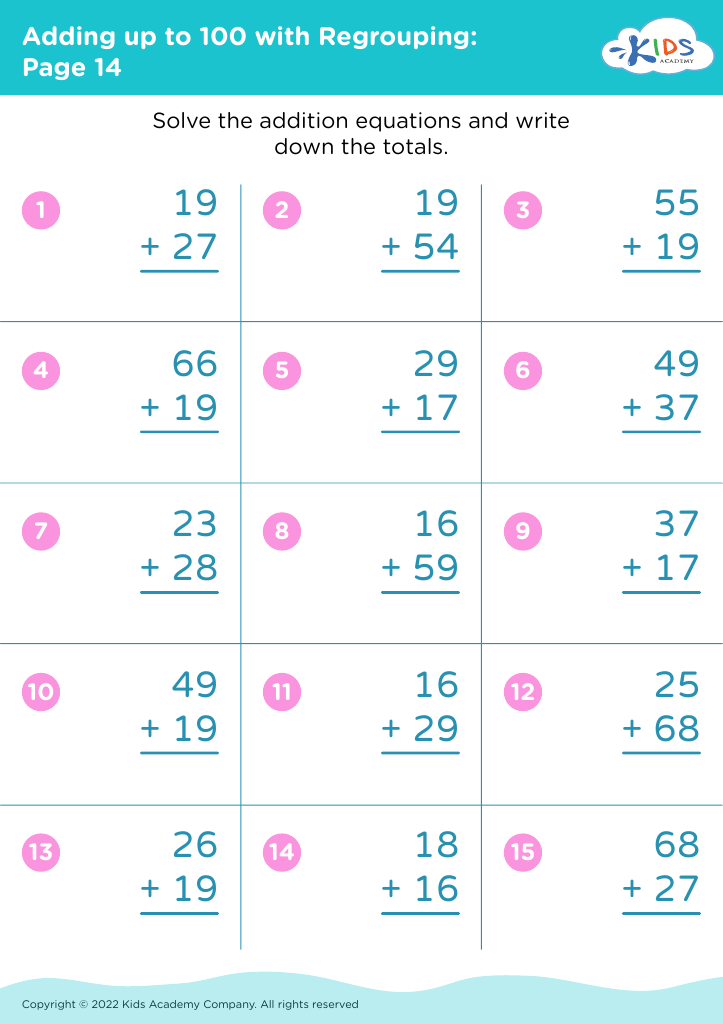
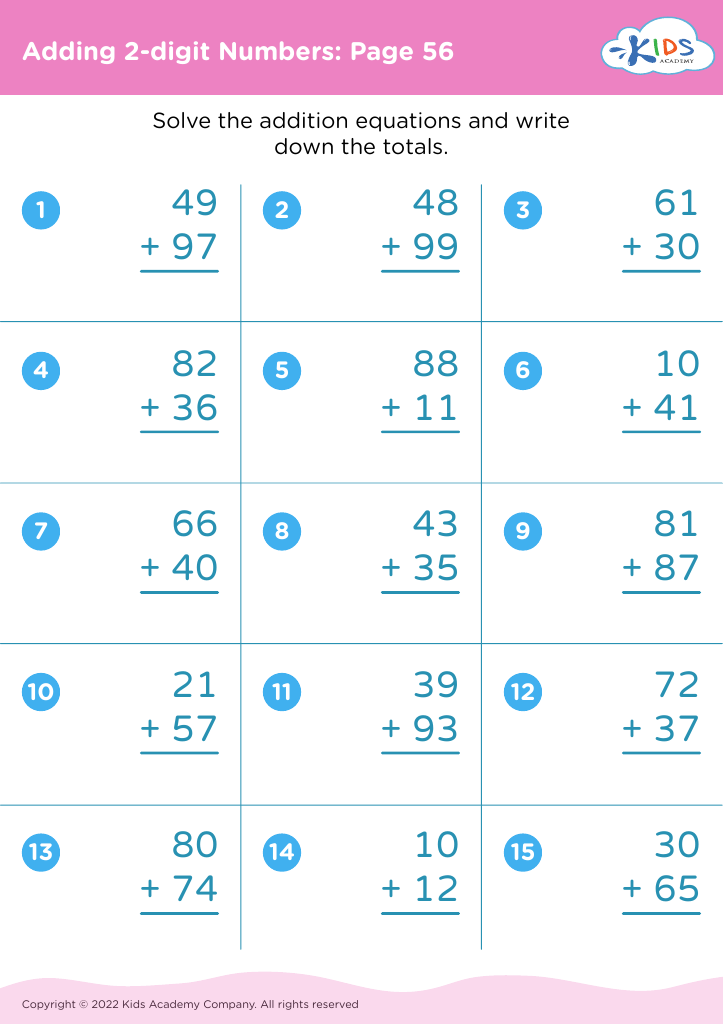
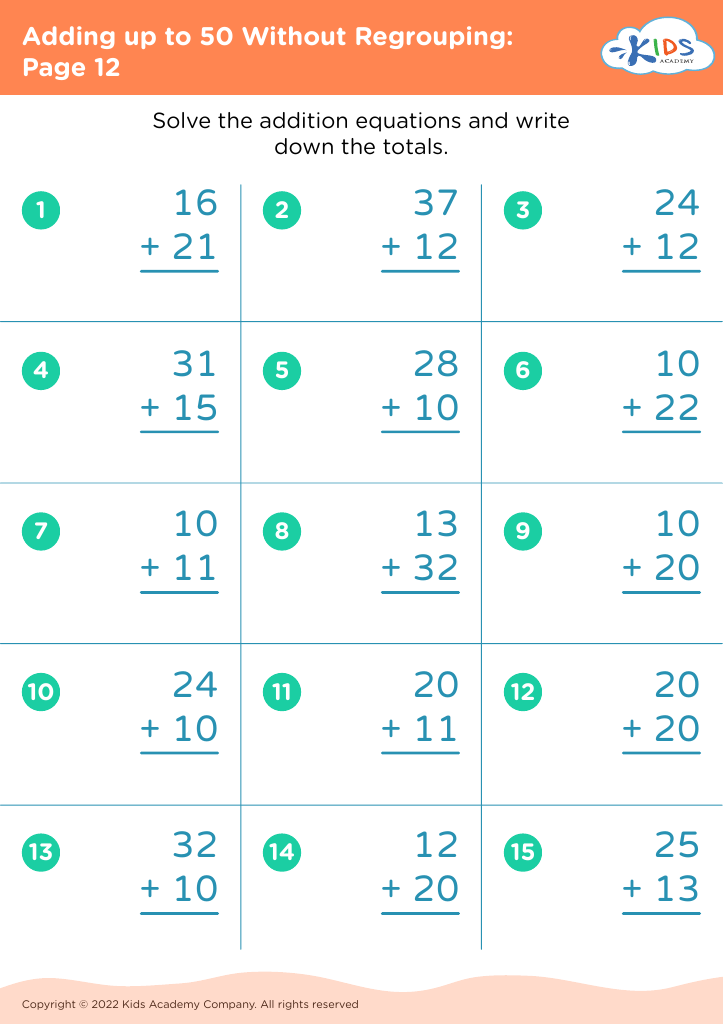
Unlock your child's potential with our "Boost Critical Thinking Addition & Subtraction Worksheets" designed specifically for 8-year-olds! These engaging and interactive worksheets challenge young learners to develop essential problem-solving skills while mastering addition and subtraction concepts. By integrating critical thinking exercises, children enhance their cognitive skills as they tackle real-life math scenarios. Our thoughtfully crafted materials not only make math enjoyable but also foster creativity and analytical thinking. Perfect for the classroom or home, these worksheets provide a balanced mix of fun and education, ensuring your child gains the confidence they need in math. Start boosting critical thinking today!
Favorites
With answer key
Interactive
Join Kids Academy for Free
Who is primarily going to use this learning content?








Parents and teachers play a crucial role in cultivating critical thinking skills in children, particularly in foundational subjects like mathematics. For 8-year-olds, mastering addition and subtraction isn't just about learning to solve basic problems; it lays the groundwork for more complex mathematical concepts.
By fostering critical thinking in these early stages, children learn to approach math not just as a series of procedures, but as a dynamic problem-solving activity. When students engage with addition and subtraction through critical thinking, they begin to understand the relationships between numbers, develop strategies for more efficient problem-solving, and learn to approach challenges creatively. This capability enhances their confidence and motivation in learning, nurturing a positive attitude toward mathematics that can last a lifetime.
Additionally, encouraging critical thinking around these operations allows children to apply their mathematical skills to real-world situations, reinforcing the practicality of what they learn. It also promotes perseverance, as they learn that mistakes can offer valuable insights. Ultimately, by caring about and actively promoting critical thinking in addition and subtraction, parents and teachers equip children with essential life skills that extend beyond the classroom, preparing them for future academic and personal success.








