
Develop counting skills Addition & Subtraction Worksheets for 8-Year-Olds
5 filtered results
Difficulty Level
Grade
Age
-
From - To
Subject
Activity
Standards
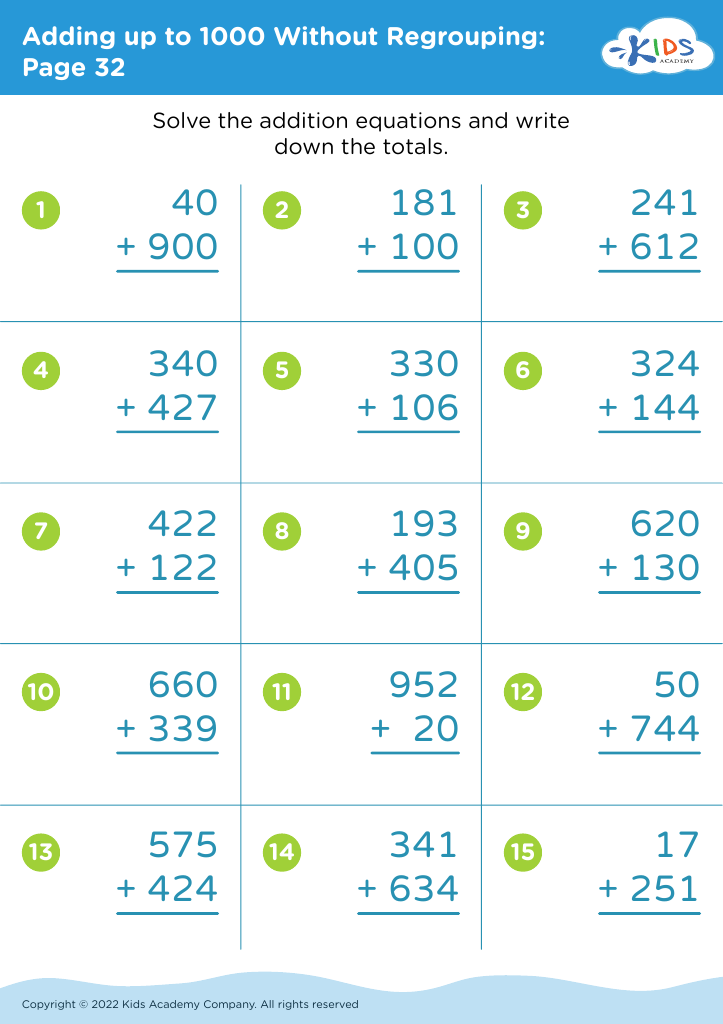
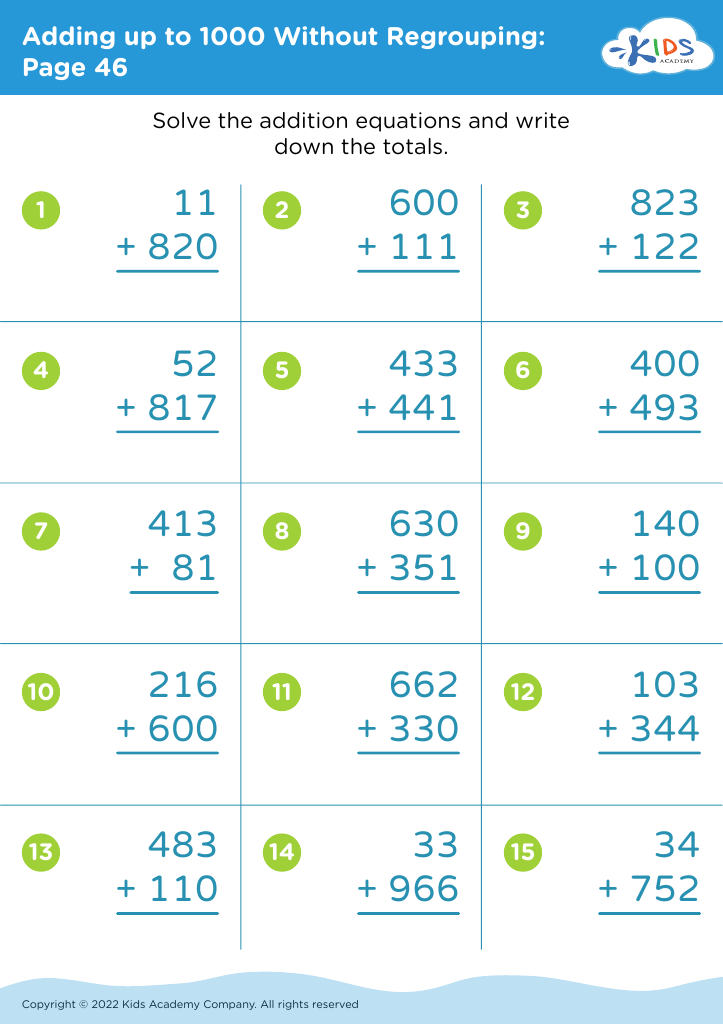
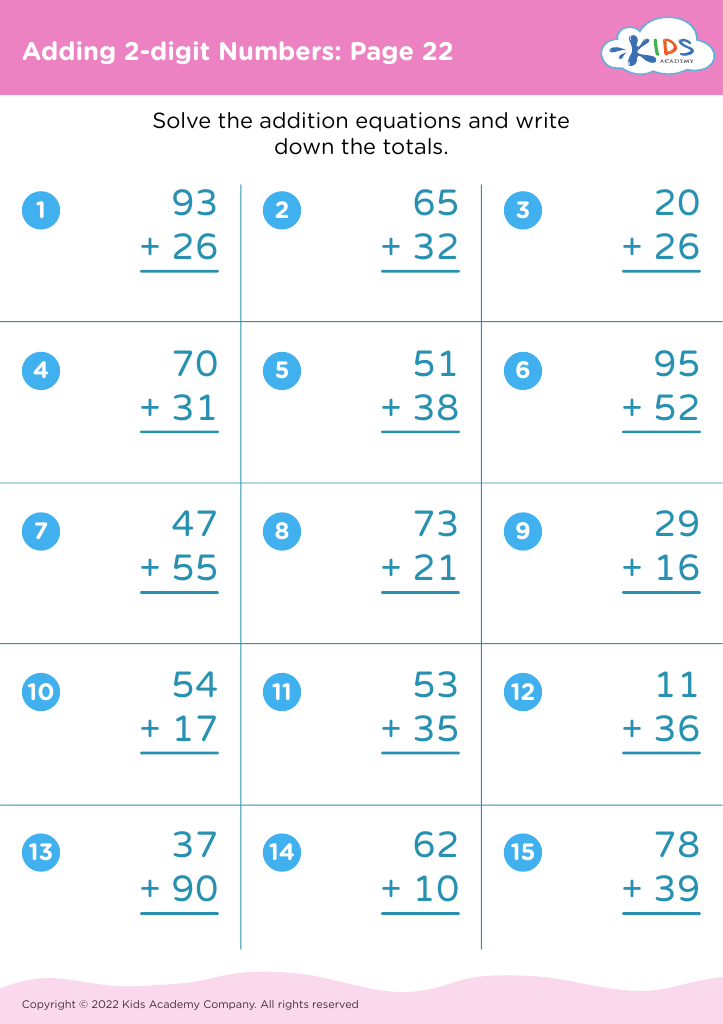
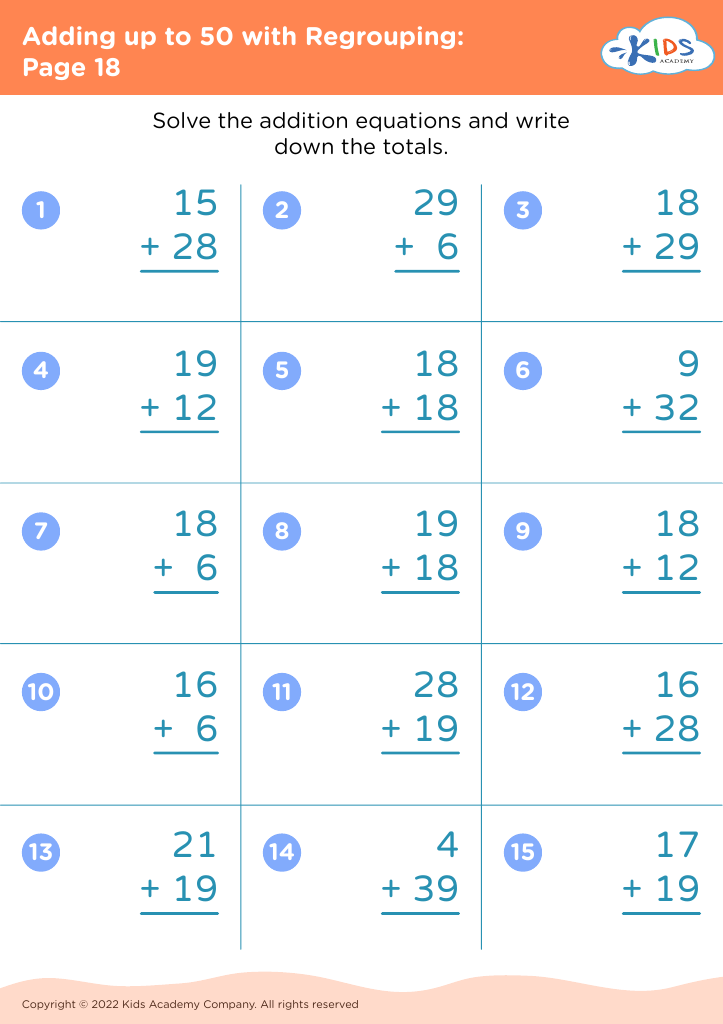
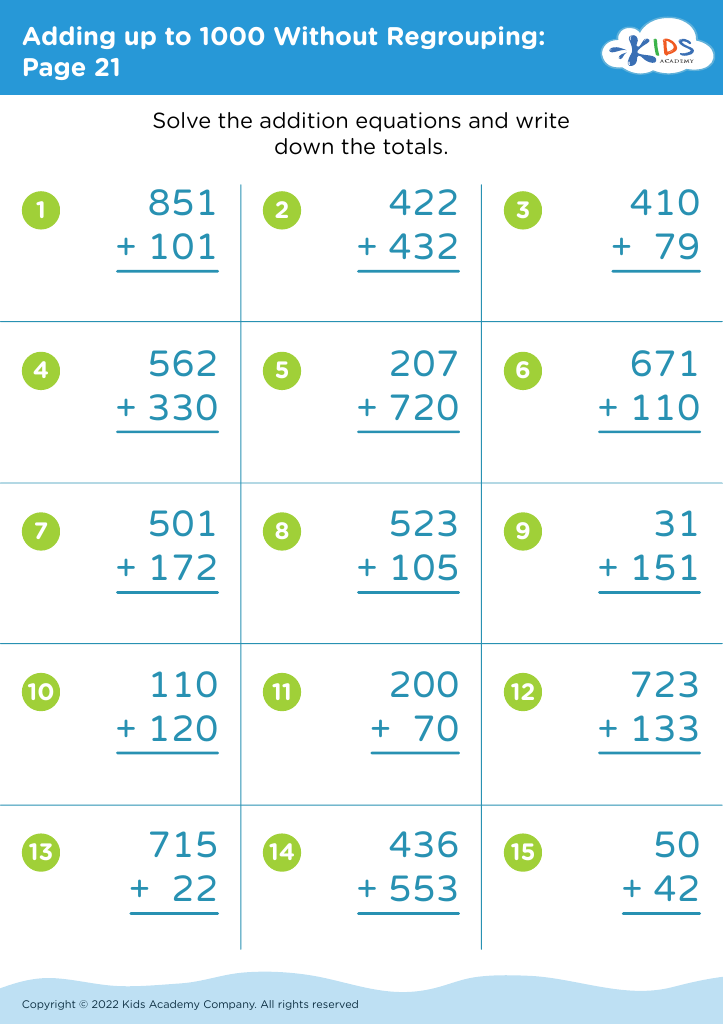
Our "Develop Counting Skills: Addition & Subtraction Worksheets for 8-Year-Olds" are specially designed to enhance your child’s math proficiency in a fun and engaging way. Created by educational experts, these worksheets provide a variety of exercises that focus on fundamental addition and subtraction skills, essential for this age group. From simple problems to more complex challenges, our worksheets cater to varying levels of understanding, ensuring your child gains confidence and improves their mathematical competence. Ideal for home or classroom use, these worksheets are a perfect resource to support your child’s learning journey and foster a love for math.
Favorites
With answer key
Interactive
Join Kids Academy for Free
Who is primarily going to use this learning content?








Developing counting skills and a strong foundation in addition and subtraction is essential for 8-year-olds for several reasons. Firstly, these basic arithmetic skills are fundamental building blocks for all future math learning. Having a solid grasp on counting, addition, and subtraction helps children understand more complex concepts like multiplication, division, and fractions, which they will encounter later in their education.
Secondly, these skills enhance children's problem-solving abilities. When children can comfortably perform basic calculations, they are more likely to approach problem-solving with confidence and improve their critical thinking skills. This competence contributes not only to their academic success but also to their general cognitive development.
Thirdly, math skills are crucial for everyday functioning. From counting money and telling time to understanding measurements for cooking or playing games, math is woven into daily life. By developing these skills early, children learn to navigate and understand the world around them better.
Finally, fostering proficiency in math can boost a child's self-esteem. Achieving small successes in counting, and basic calculations can be incredibly rewarding, providing a sense of accomplishment and encouraging a positive attitude towards learning. By caring about these foundational math skills, parents and teachers invest in the child's academic and personal development.








