Improving subtraction skills Addition & Subtraction Worksheets for 8-Year-Olds
3 filtered results
-
From - To
Enhance your child's subtraction abilities with our engaging Addition & Subtraction Worksheets designed specifically for 8-year-olds. These interactive resources provide a variety of exercises that foster understanding and mastery of subtraction concepts, making math fun and effective! Tailored to meet the educational needs of young learners, our worksheets include practice problems, visual aids, and real-life scenarios that promote cognitive skills. By incorporating these materials into your child's study routine, you'll help build their confidence and fluency in subtraction. Discover the joy of learning and watch your child excel in math with our user-friendly worksheets today!
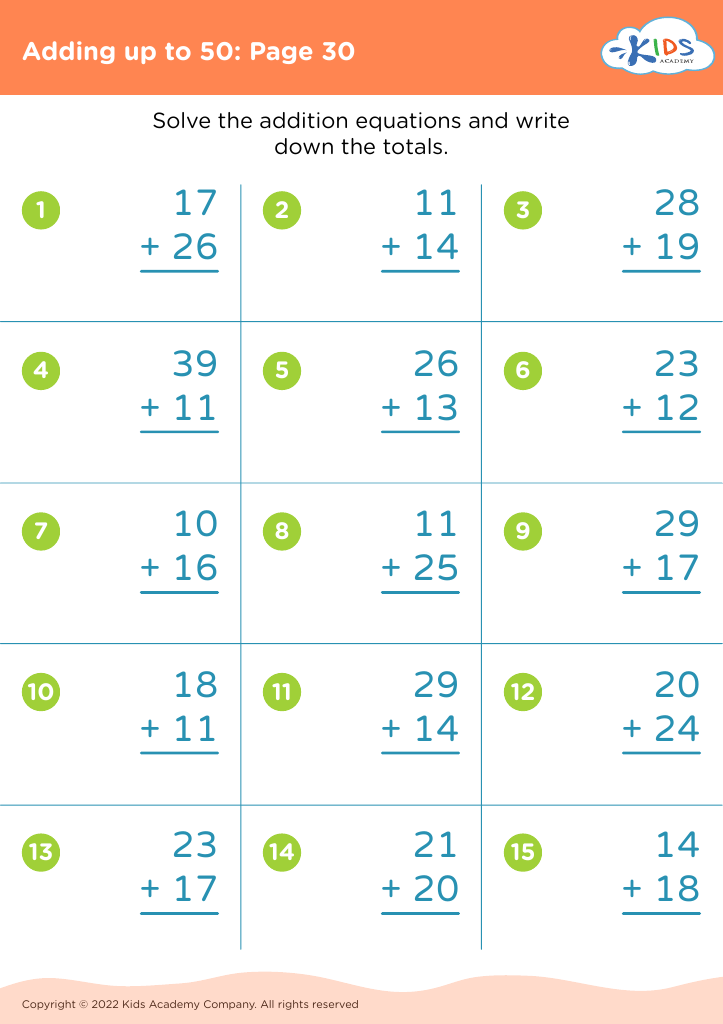
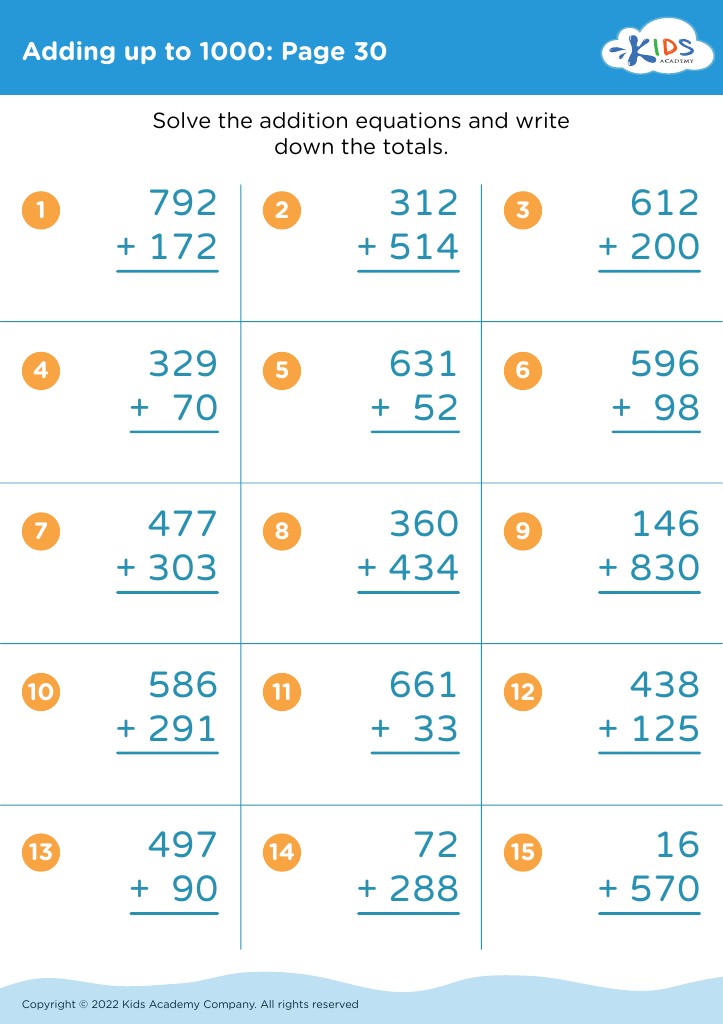
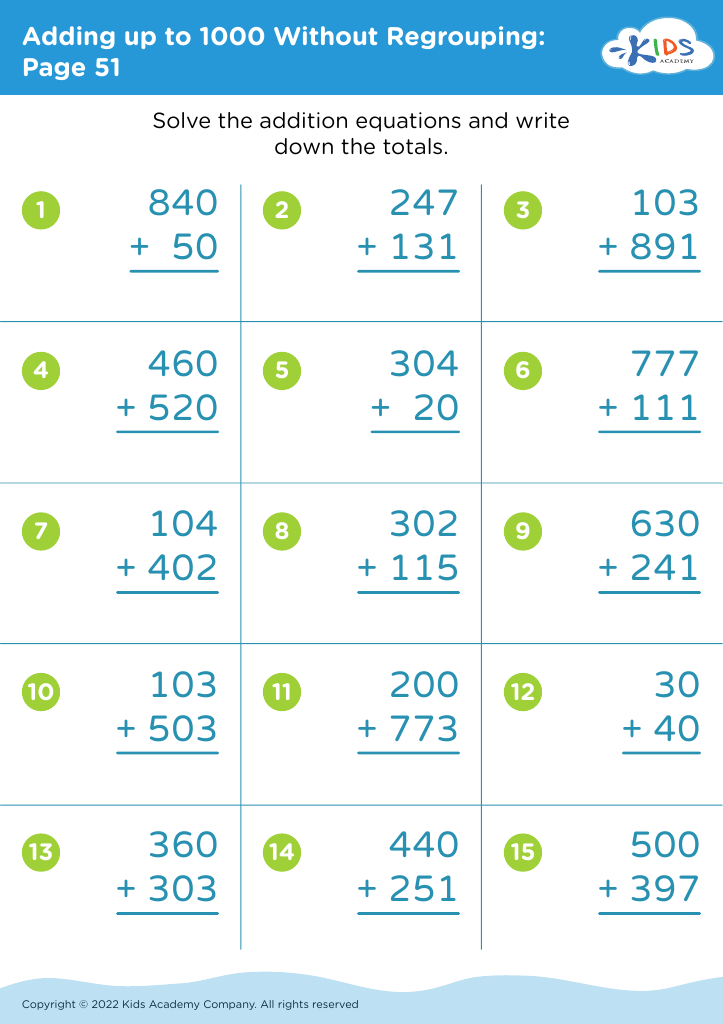








Improving subtraction skills for 8-year-olds is crucial for several reasons. At this formative stage, children are not just learning calculations but are building a strong foundation for their mathematical understanding. Mastery of subtraction allows children to develop problem-solving skills that are essential for everyday life, such as budgeting and time management.
Moreover, strong subtraction skills enhance children’s confidence in math, reducing anxiety around the subject. This confidence translates into a greater willingness to tackle more complex mathematical concepts in the future, such as multiplication and division, which in turn supports their overall academic success.
For parents and teachers, focusing on subtraction can facilitate better communication about numbers and improve a child's overall engagement with learning. It encourages a supportive environment where mistakes become learning opportunities. Additionally, it ties in with various educational standards that stress the importance of arithmetic fluency.
In summary, by prioritizing subtraction skills for 8-year-olds, parents and teachers not only foster mathematical competencies, but they also nurture a positive attitude towards learning, setting the stage for continued academic achievements.








