Learn subtraction Addition & Subtraction Worksheets for 8-Year-Olds
4 filtered results
-
From - To
Enhance your child's mathematical skills with our engaging Addition and Subtraction Worksheets designed specifically for 8-Year-Olds! These interactive worksheets make learning subtraction fun and effective, helping children strengthen their understanding of key mathematical concepts. Our carefully crafted exercises encourage problem-solving, critical thinking, and boost confidence in math. Whether your child is practicing basic subtraction or tackling more complex problems, our resources provide a diverse range of activities to cater to various learning styles. Foster a love for math while providing essential practice to lead them towards academic success! Explore our collection today and watch your child thrive in their subtraction skills!
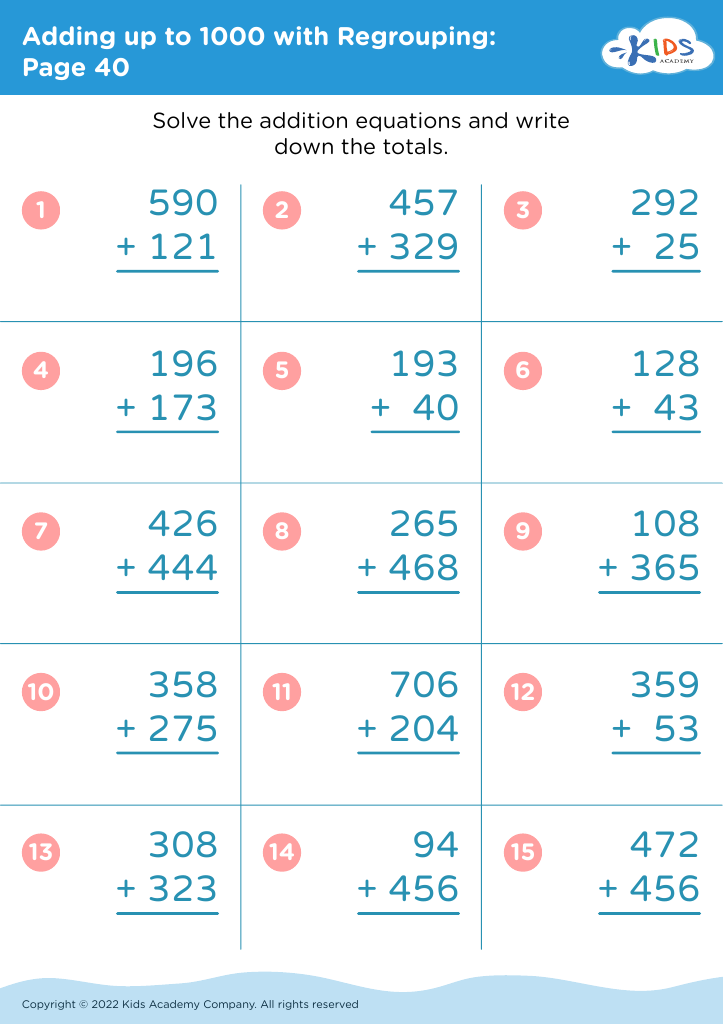
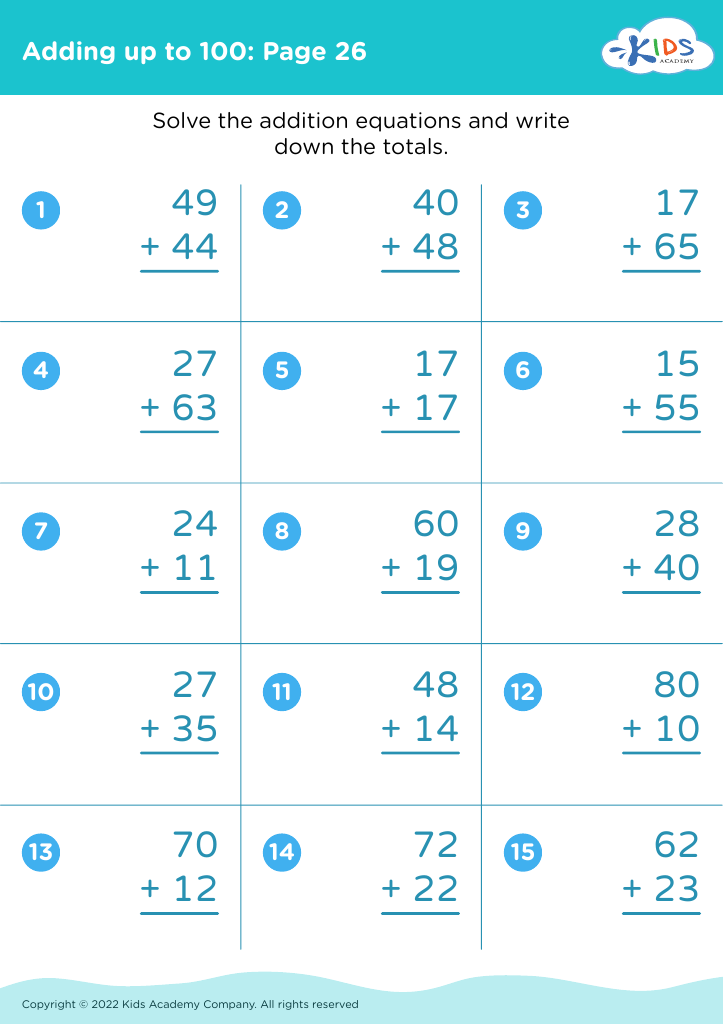
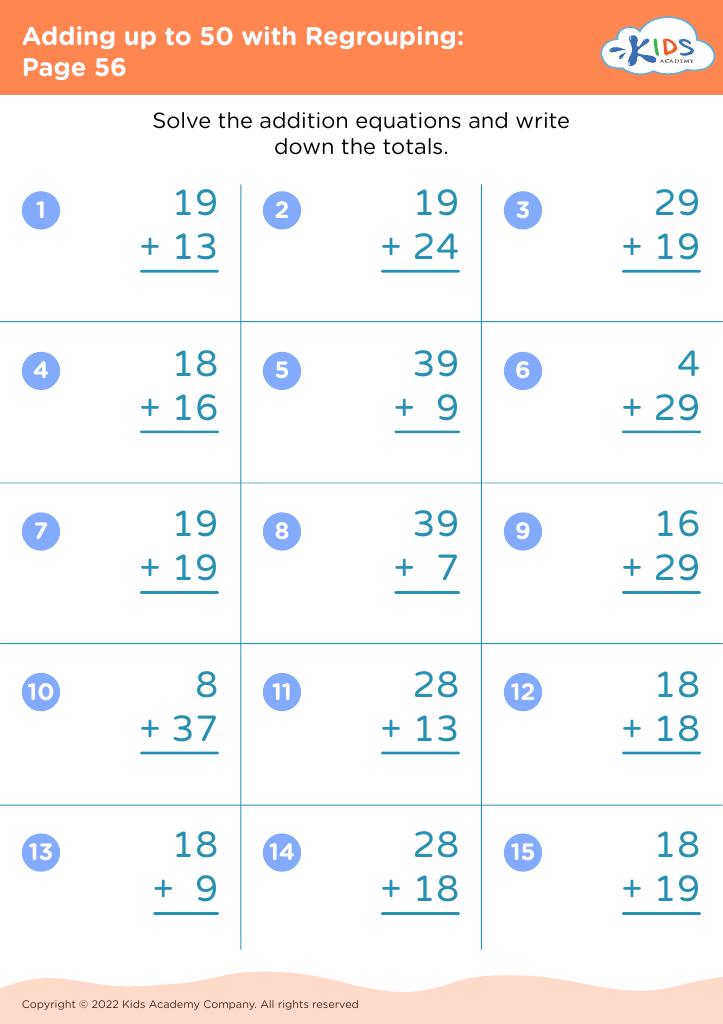
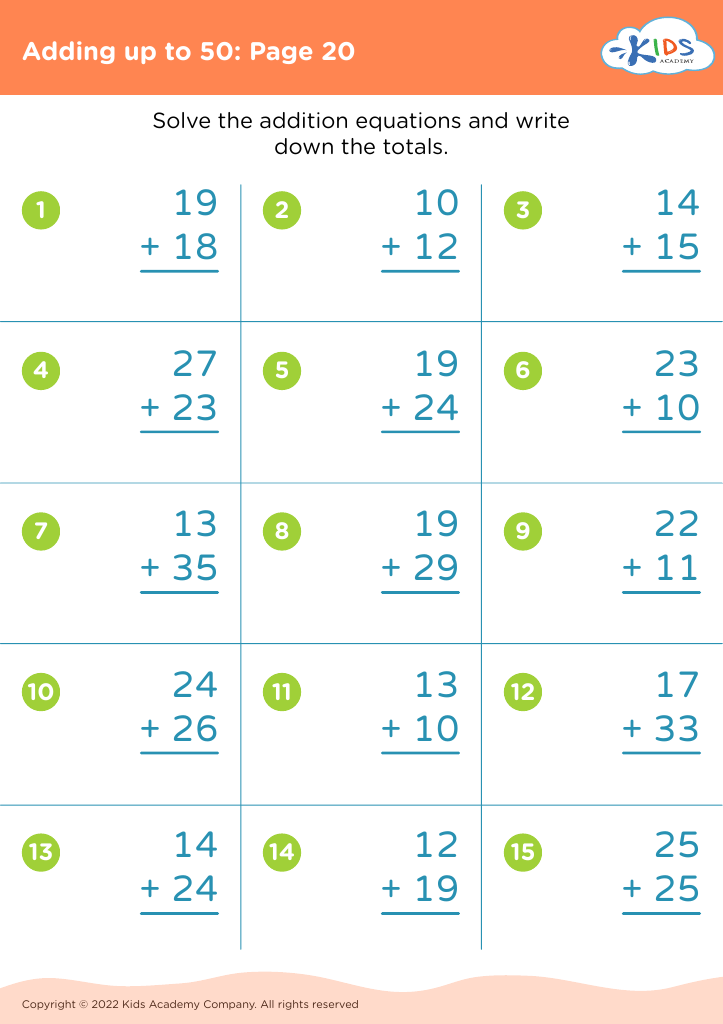








Parents and teachers should prioritize teaching addition and subtraction to 8-year-olds for several compelling reasons. Firstly, mastery of these foundational math skills is crucial for children's overall academic success. At this age, students are transitioning from simple arithmetic to more complex concepts, making it essential for them to have a strong grasp of addition and subtraction.
Engaging with addition and subtraction also enhances critical thinking skills. As children learn to solve problems and work with numbers, they develop logical reasoning, enabling them to tackle challenges both in math and in daily life. Furthermore, these skills lay the groundwork for future mathematical concepts, such as multiplication, division, and fractions.
Moreover, early proficiency in addition and subtraction boosts children's confidence. When they can tackle math problems independently, they feel empowered and open to embracing other academic challenges. It's also essential for real-world applications—these basic skills are necessary for managing money, measuring, and understanding time.
In addition, fostering a positive attitude towards math during these formative years encourages a lifelong appreciation for the subject, reducing the risk of math anxiety. Thus, both teachers and parents have a vital role in supporting these essential skills for the holistic development of children.








