Motor skills development Addition & Subtraction Worksheets for 8-Year-Olds
4 filtered results
-
From - To
Enhance your 8-year-old's learning with our engaging Motor Skills Development Addition and Subtraction Worksheets! Designed to support both math proficiency and fine motor skills, these worksheets promote hand-eye coordination while reinforcing foundational arithmetic concepts. Featuring fun activities that require tracing, coloring, and writing, children will develop essential motor skills alongside their ability to solve addition and subtraction problems. Ideal for parents and educators looking to create a well-rounded learning experience, our printable worksheets are perfect for at-home practice or classroom use. Spark your child's curiosity and confidence in math through enjoyable, hands-on learning! Explore the worksheets today.
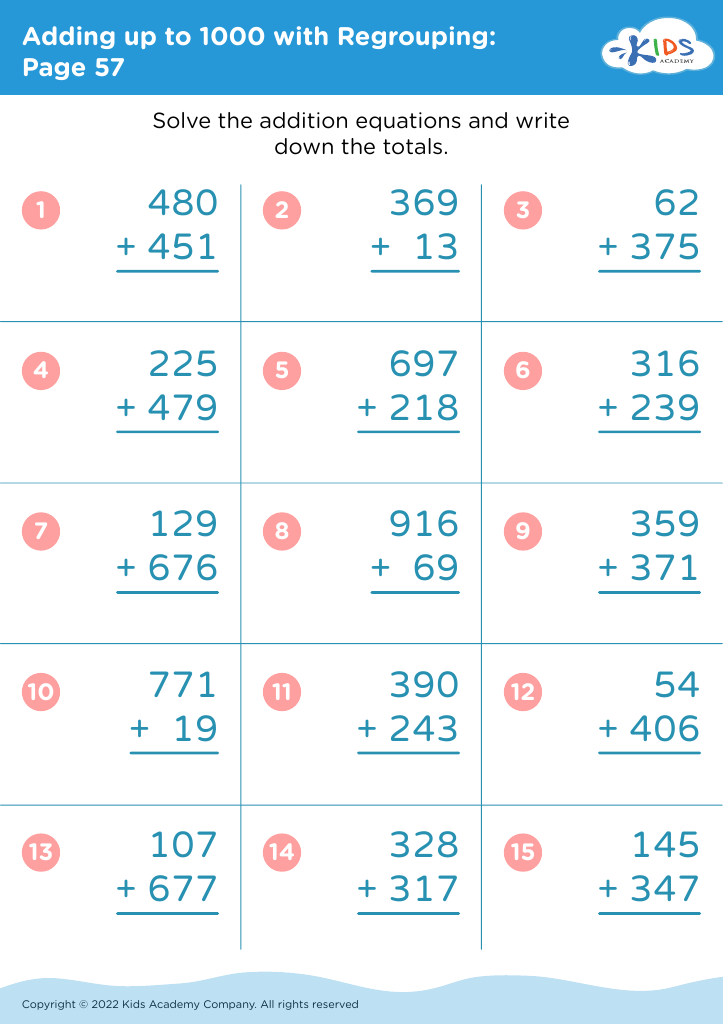
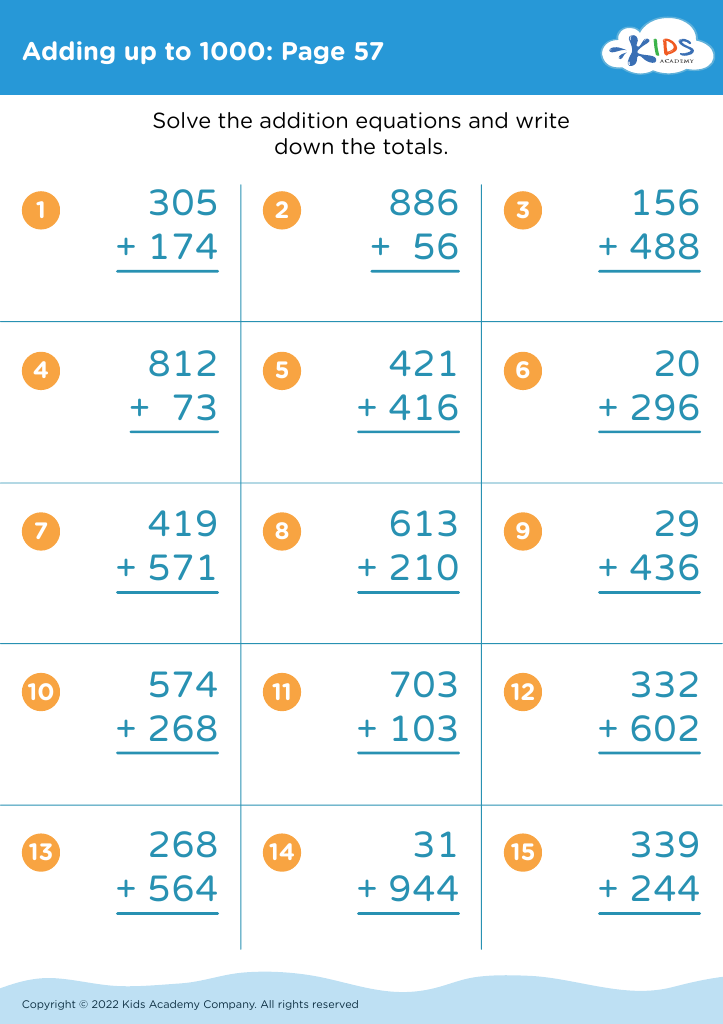
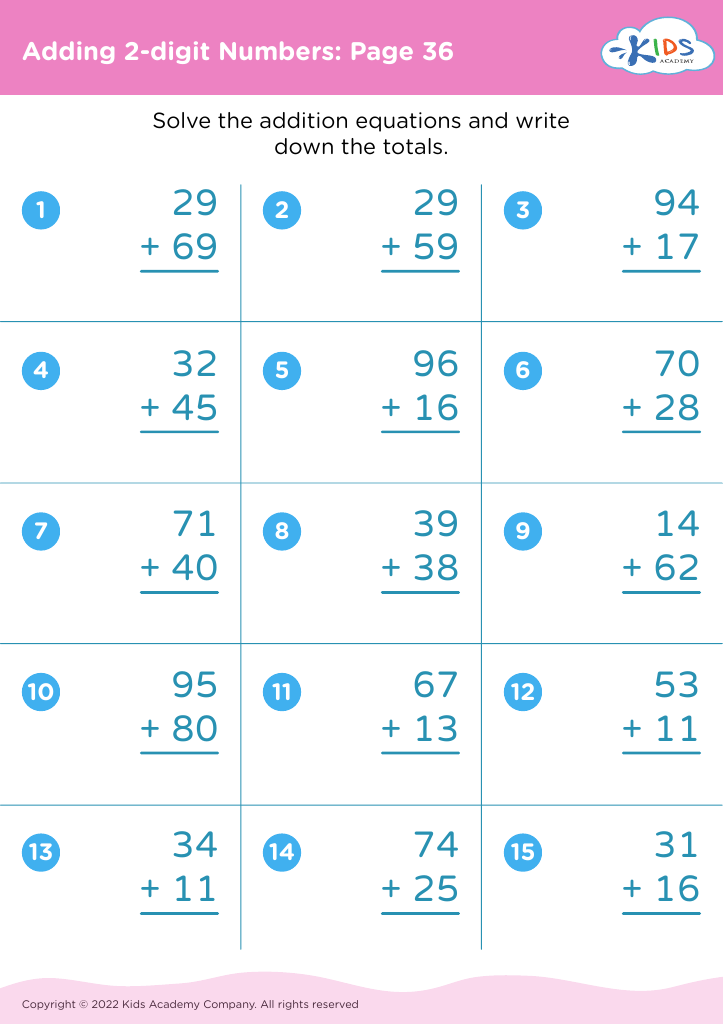
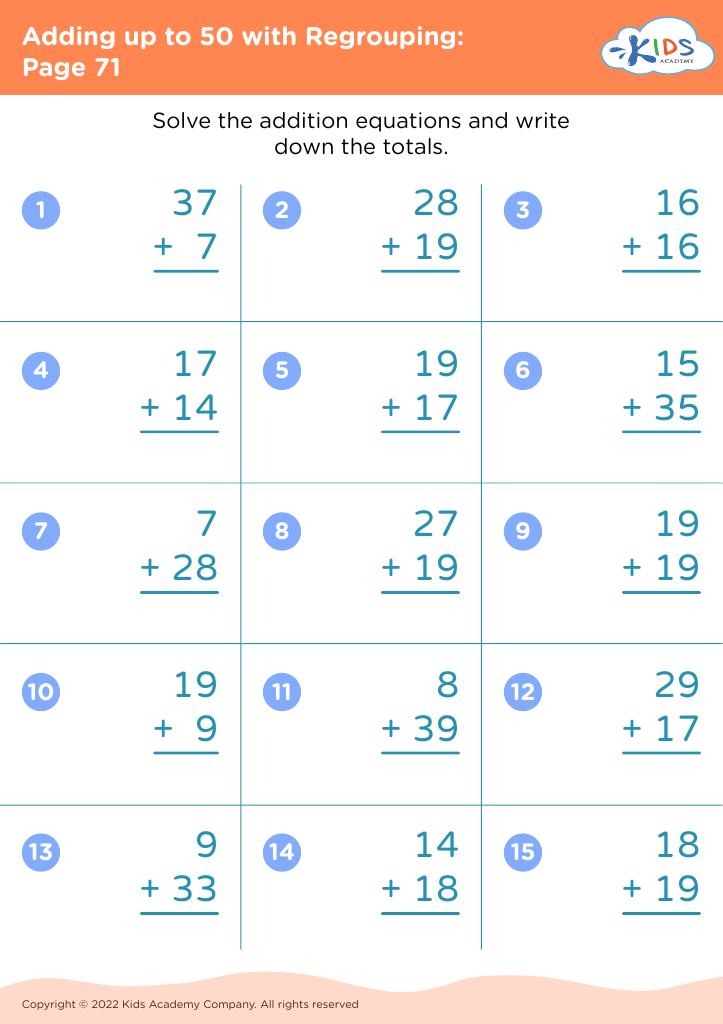








Motor skills development, particularly for 8-year-olds, directly influences a child's academic success, including their ability to grasp mathematical concepts like addition and subtraction. By this age, children are expected to perform more complex tasks that require both fine motor skills—like writing numbers and manipulating math manipulatives—and gross motor skills, crucial for overall coordination and focus.
When parents and teachers prioritize motor skills development, they provide a strong foundation for learning. Proficient fine motor skills enable children to write numbers neatly, reducing frustration in both math exercises and assessments. Additionally, these skills foster confidence when engaging in math tasks, allowing children to concentrate on the problem-solving process rather than struggling with physical tasks.
Moreover, playful activities that enhance motor skills—such as drawing, crafting, or engaging in action games—can be integrated into math practice. This not only makes learning more enjoyable but also helps children understand mathematical concepts through tactile experiences. Teachers and parents should therefore recognize that promoting motor skills is not just ancillary but integral to effective learning, ensuring that children develop both the confidence and capability to excel in addition and subtraction as they move forward in their education.








