Basic Arithmetic Addition Worksheets for 8-Year-Olds
4 filtered results
-
From - To
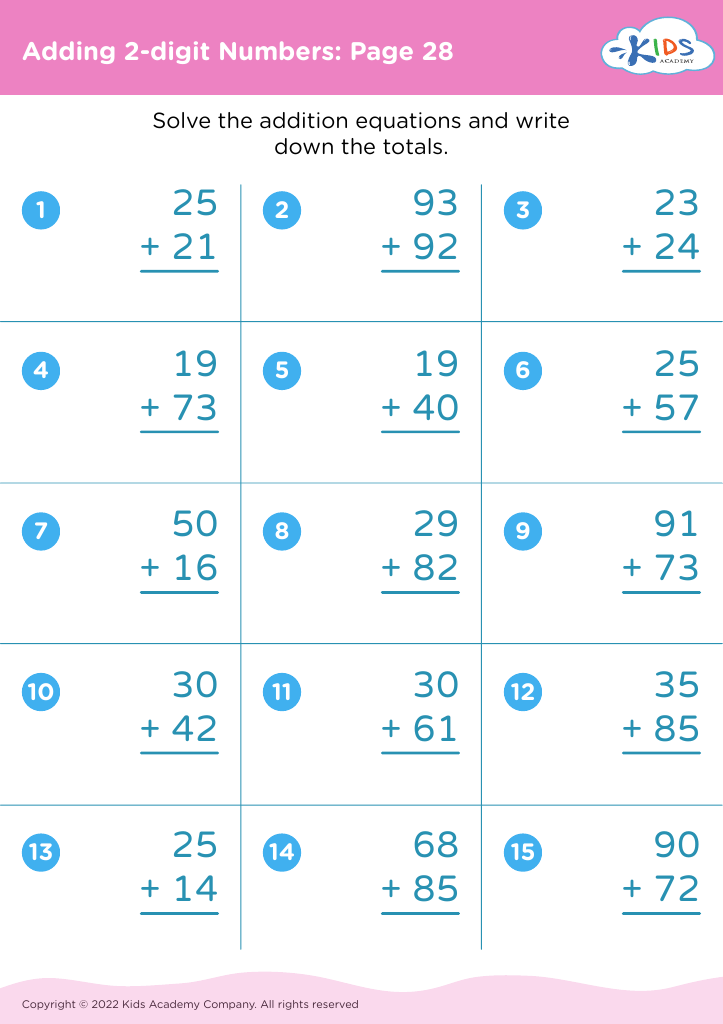
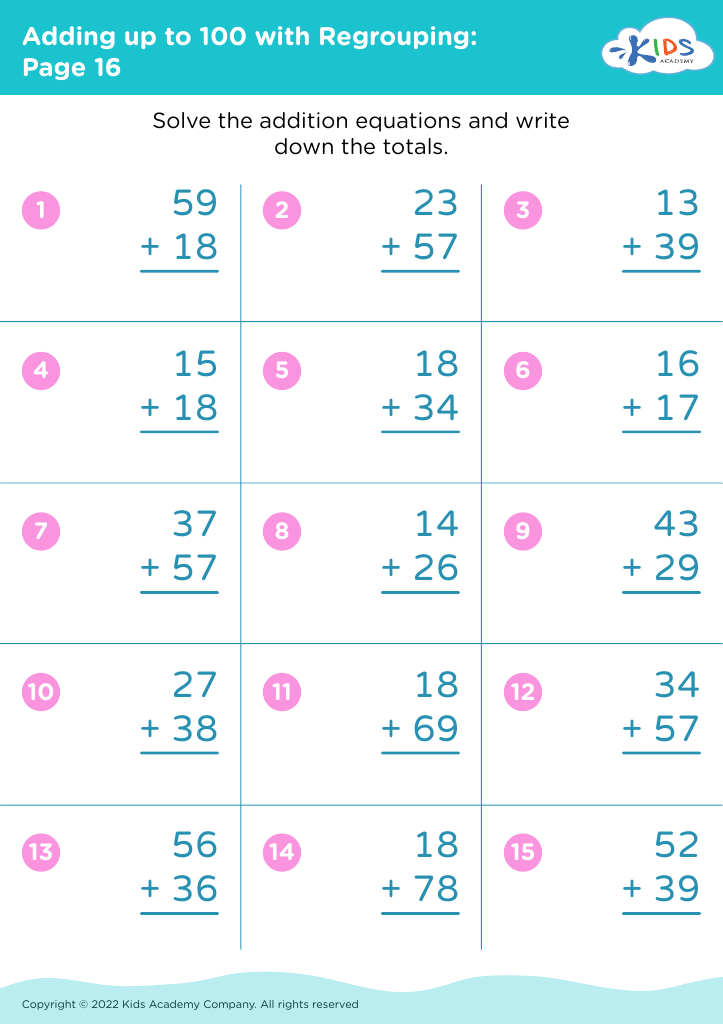
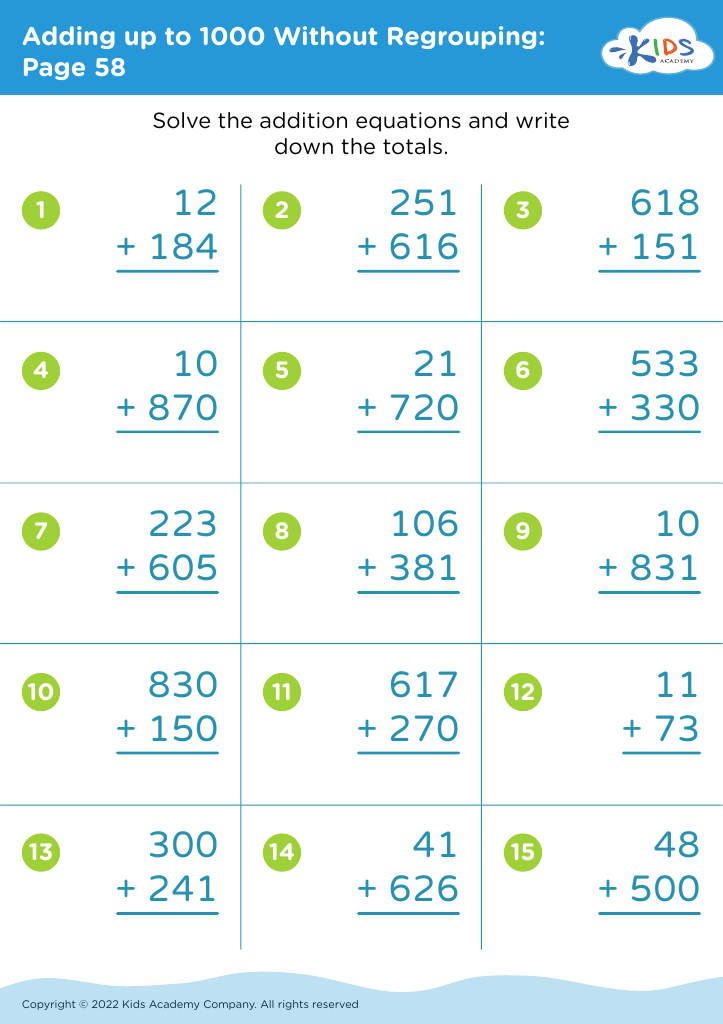
Discover our engaging Basic Arithmetic Addition Worksheets designed specifically for 8-year-olds! These worksheets focus on enhancing essential math skills through fun and interactive activities. Covering a variety of topics, including single-digit and multi-digit additions, our resources help reinforce foundational concepts while making learning enjoyable. Ideal for homeschooling, classroom use, or extra practice at home, these worksheets promote confidence and proficiency in addition. Children will develop problem-solving skills and improve their speed, ensuring a strong understanding of arithmetic. Download our printable worksheets now and support your child's math journey with exciting learning tools that encourage independent practice and creativity!
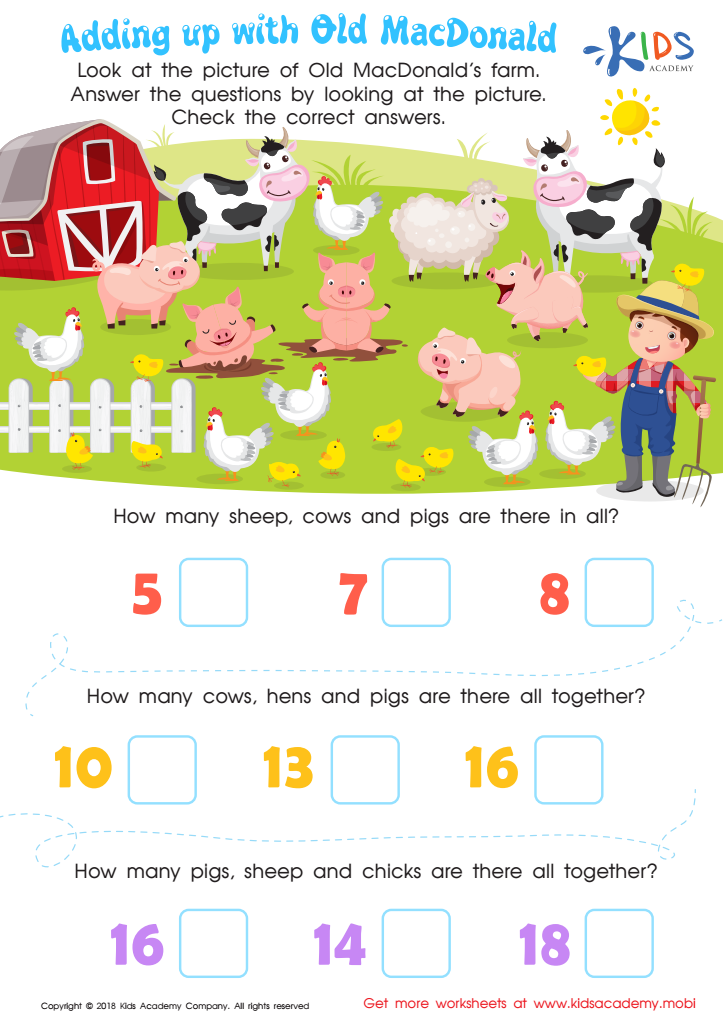
Adding Up with Old MacDonald Worksheet
 Assign to My Students








Parents and teachers should prioritize basic arithmetic addition for 8-year-olds as it lays the foundation for all future mathematical learning. Mastering addition enhances critical thinking and problem-solving abilities that young learners will apply throughout their academic and everyday lives. At this age, children are typically transitioning from learning simple to more complex operations, making it essential to ensure their grasp of addition is solid.
Moreover, confidence in basic arithmetic can significantly boost a child's self-esteem. When children feel competent in math, they are more likely to participate in classroom activities and engage with more challenging concepts. Learning addition also introduces children to patterns and strategies, thereby nurturing a love for math at an early age.
Additionally, everyday situations, such as counting money or measuring ingredients in cooking, require addition skills. Thus, understanding addition has practical applications that extend beyond the classroom. Parents and teachers can support this learning through fun, interactive activities that make math enjoyable, reinforcing its relevance in daily life. By fostering strong addition skills, we prepare children for future successes in math and beyond, equipping them for the challenges of higher levels of education and real-world problem-solving.








