Develop analytical thinking Addition Worksheets for 8-Year-Olds
3 filtered results
-
From - To
Boost your child's analytical thinking skills with our engaging addition worksheets designed specifically for 8-year-olds! These printable resources encourage critical problem-solving and logical reasoning through fun and interactive math exercises. Tailored to align with grade-level learning objectives, our worksheets present a variety of challenging scenarios, helping kids grasp addition concepts while enhancing their analytical capabilities. As they engage with puzzles and real-world applications, students will build confidence in their math skills and learn to approach problems from different angles. Discover how our addition worksheets can transform learning into an exciting adventure that nurtures young minds and fosters a love for mathematics!
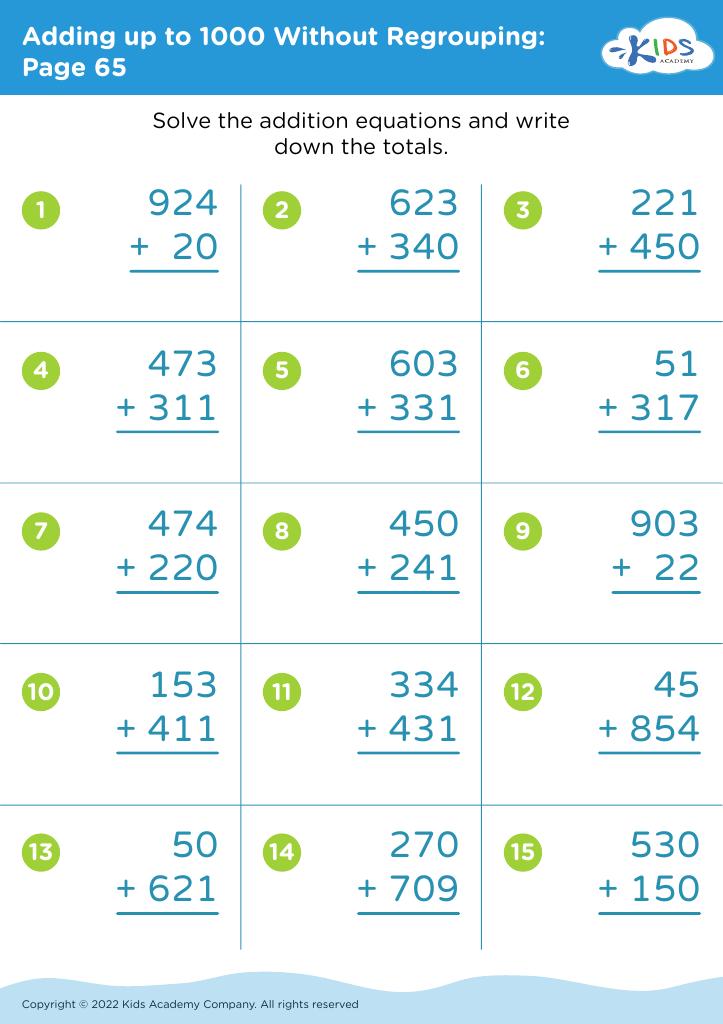
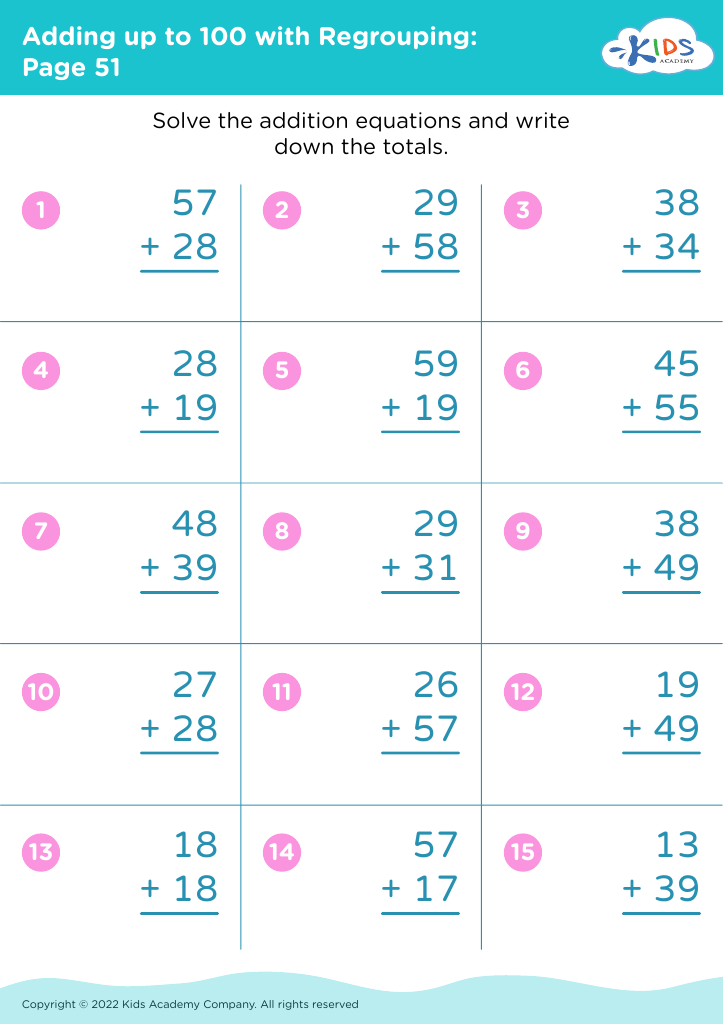
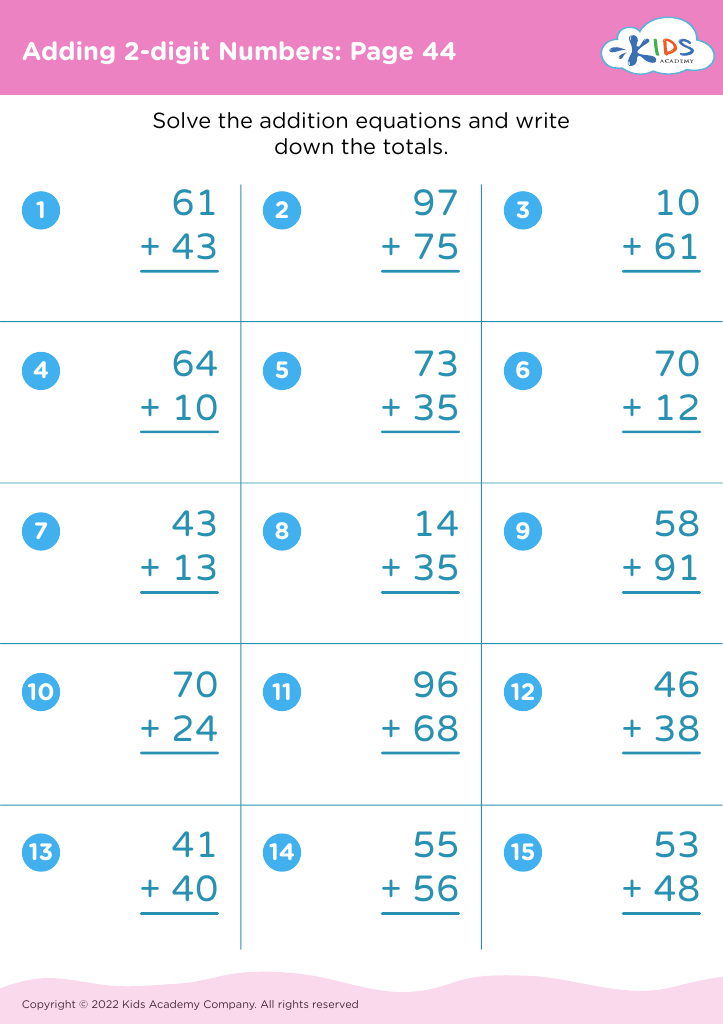








Developing analytical thinking skills in eight-year-olds, particularly in the context of addition, is crucial for their overall cognitive development and future academic success. At this age, children are beginning to transition from concrete operational thought to more abstract reasoning, making it an opportune time to foster analytical skills.
When parents and teachers encourage students to think critically about addition—not just memorizing facts but also understanding concepts such as regrouping or the relationships between numbers—they lay the foundation for higher-level problem-solving. Analytical thinking empowers children to break down complex problems into manageable parts, evaluate multiple strategies, and arrive at solutions independently.
Furthermore, strong analytical skills enhance children's confidence in their mathematical abilities, encouraging a positive attitude toward learning. These skills also translate beyond math; they are essential in any subject area and in real-life situations, where logical reasoning and decision-making are necessary.
Ultimately, focusing on developing these skills in young learners prepares them to tackle academic challenges with resilience, creativity, and thoughtfulness, equipping them for future studies in STEM fields and fostering lifelong learning habits. Therefore, nurturing analytical thinking in addition is an investment in children's intellectual and emotional growth.








