Identifying fractions Addition Worksheets for 8-Year-Olds
4 filtered results
-
From - To
Explore our "Identifying Fractions Addition Worksheets for 8-Year-Olds," designed to enhance your child's understanding of fractions through engaging and interactive activities. These worksheets focus on recognizing and adding fractions, providing a solid foundation in mathematical concepts. With colorful illustrations and varied exercises, children will enjoy practicing addition with fractions in a fun and creative way. Each worksheet is tailored to suit different learning styles, ensuring that your child remains motivated and eager to learn. Help your child build confidence in math while developing essential skills for their educational journey. Visit our site to access these valuable resources today!
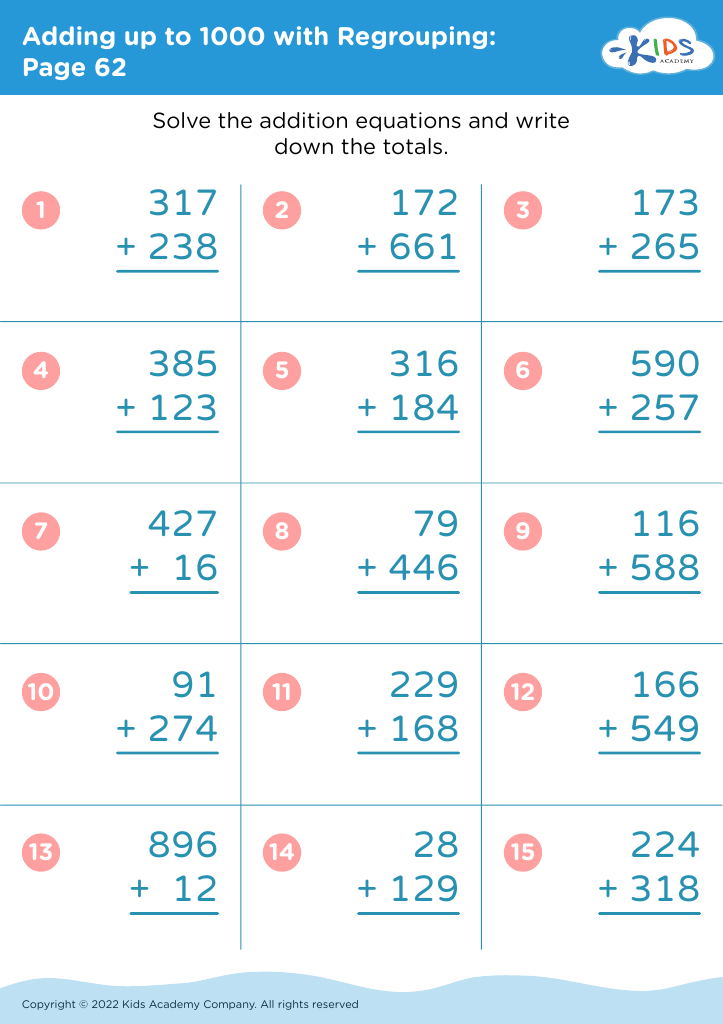
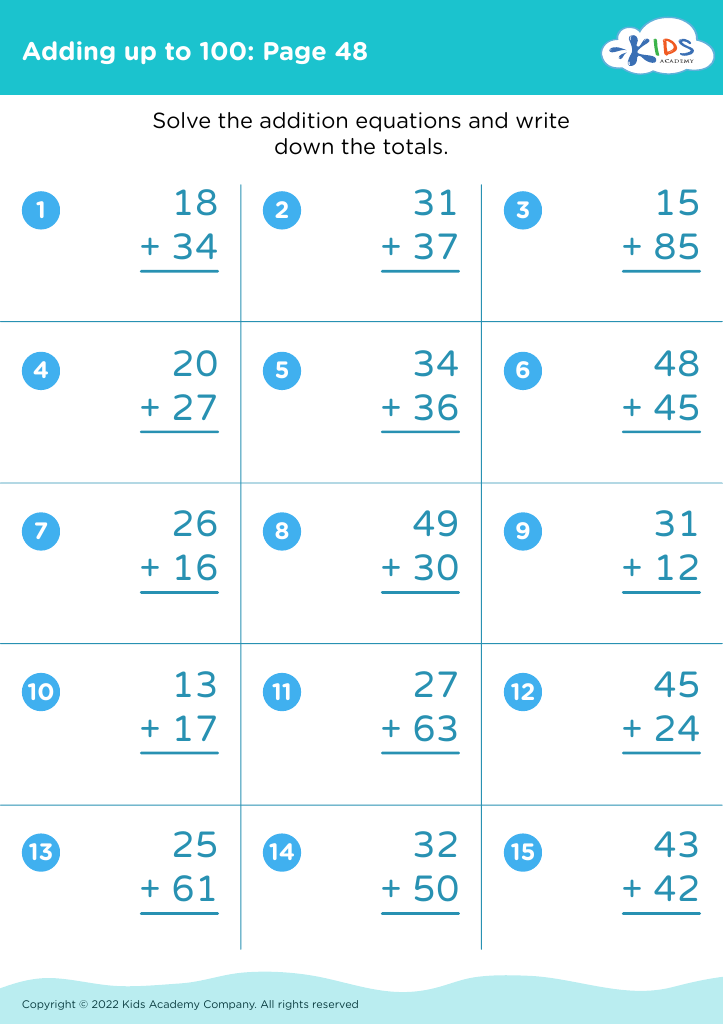
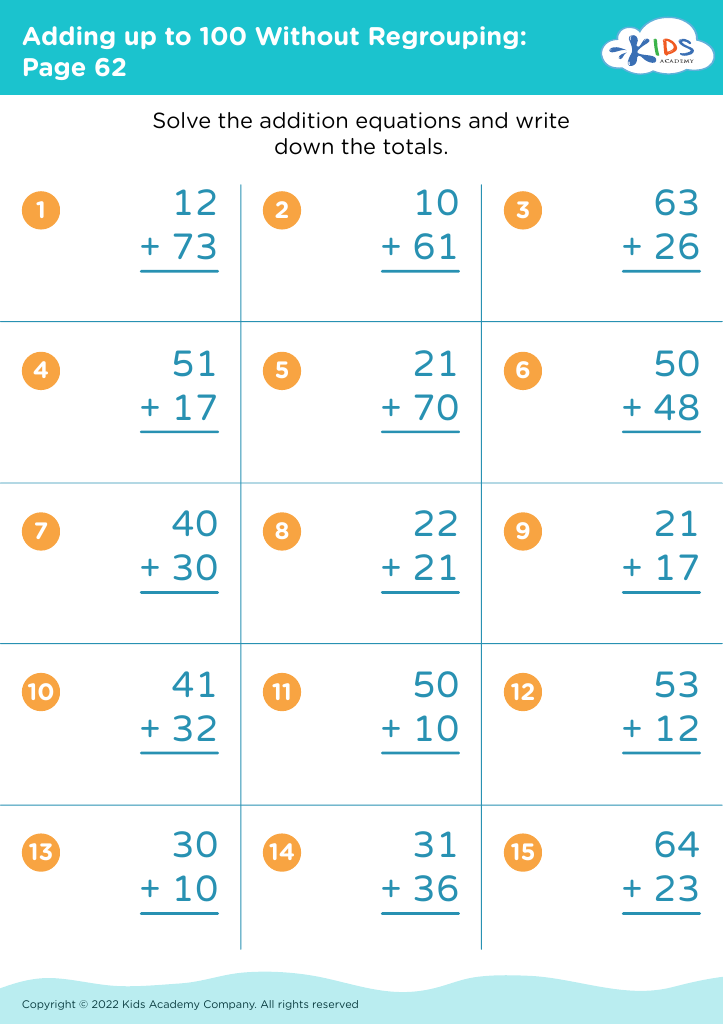
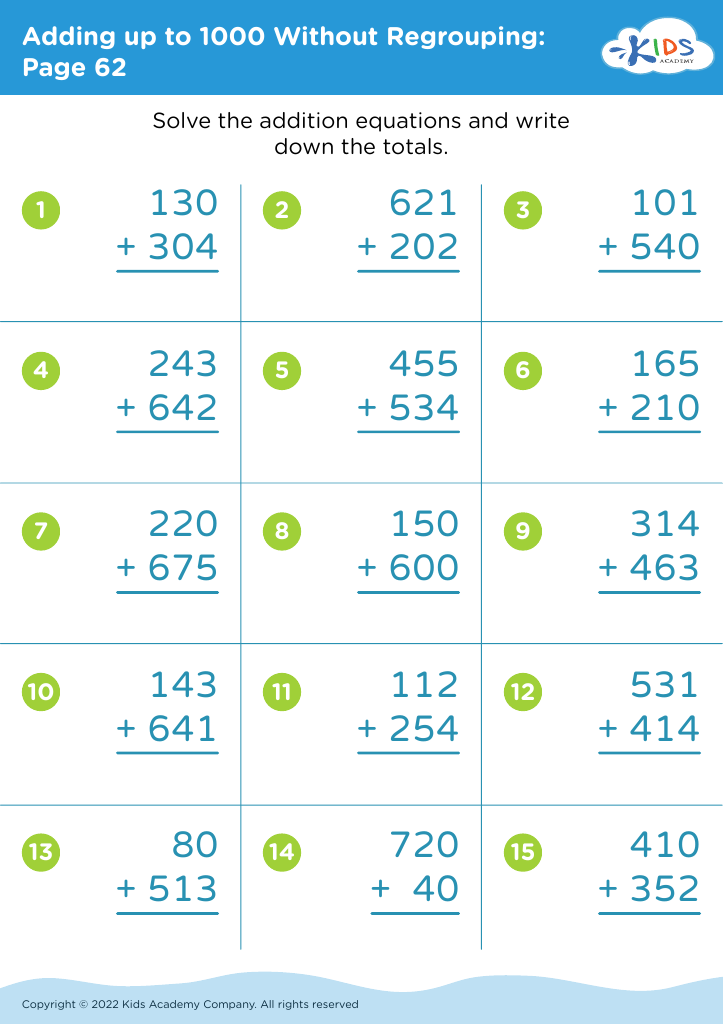




.jpg)


.jpg)
Identifying fractions and mastering addition with them is crucial for 8-year-olds as they lay the groundwork for more advanced mathematical concepts. At this age, children begin to encounter fractions beyond simple visual representations, such as splitting objects or shapes. Understanding how to identify and add fractions helps develop their number sense and critical thinking skills, essential for future math challenges.
For parents and teachers, promoting fraction addition fosters a sense of accomplishment in children, boosting their confidence in math. It also equips them to relate mathematical concepts to real-life situations, like sharing food or dividing resources, making math more tangible and engaging. Additionally, early success in fractions can prevent future learning gaps, promoting a smoother transition into more complex mathematics, such as equivalent fractions and algebraic thinking.
Moreover, understanding fractions supports skills in areas like cooking, budgeting, and basic engineering concepts. It encourages collaborative problem-solving as students often work in groups to tackle fraction-related issues. By emphasizing the importance of identifying and adding fractions, parents and teachers empower children to become adept learners who appreciate the relevance of math in their everyday lives. Investing time in these foundational skills ultimately leads to more proficient and enthusiastic mathematicians.








