Identifying patterns Addition Worksheets for 8-Year-Olds
3 filtered results
-
From - To
At Kids Academy, our Identifying Patterns Addition Worksheets for 8-Year-Olds make learning math fun and engaging. Tailored to develop critical thinking and reinforce basic addition skills, these worksheets help kids recognize and understand numeric patterns. By following sequences and adding numbers, children can enhance their problem-solving abilities in an enjoyable way. Perfectly suited for at-home practice or classroom enrichment, our worksheets cover a variety of patterning exercises designed to boost mathematical fluency. Nurture your child's love for learning with these effective and interactive addition resources, ensuring they build a strong foundation in mathematics.
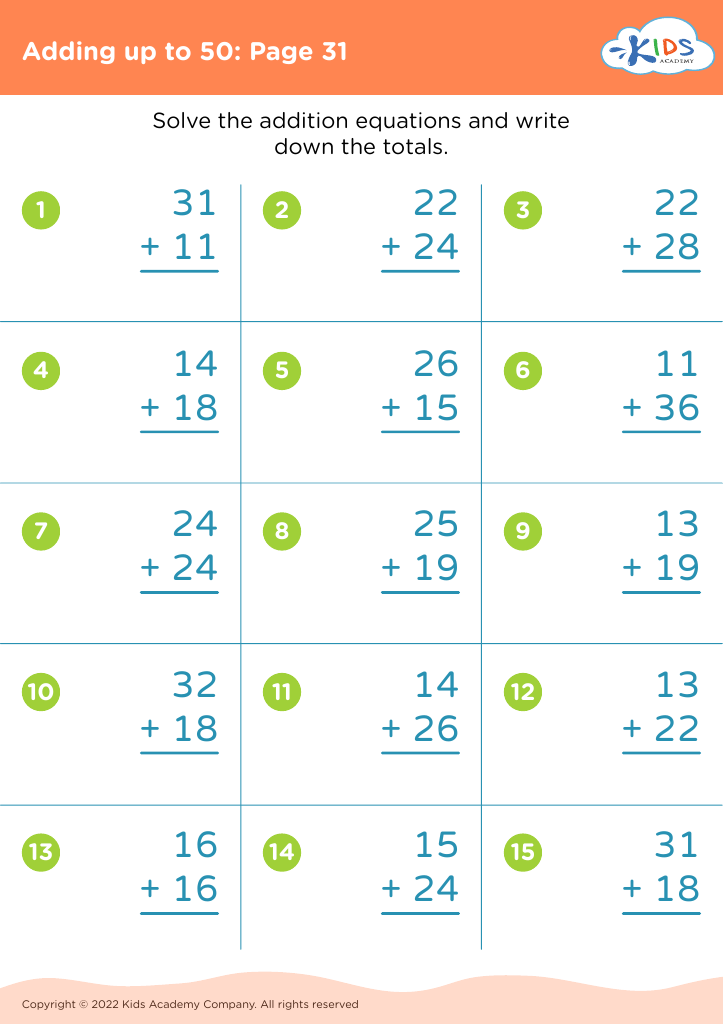
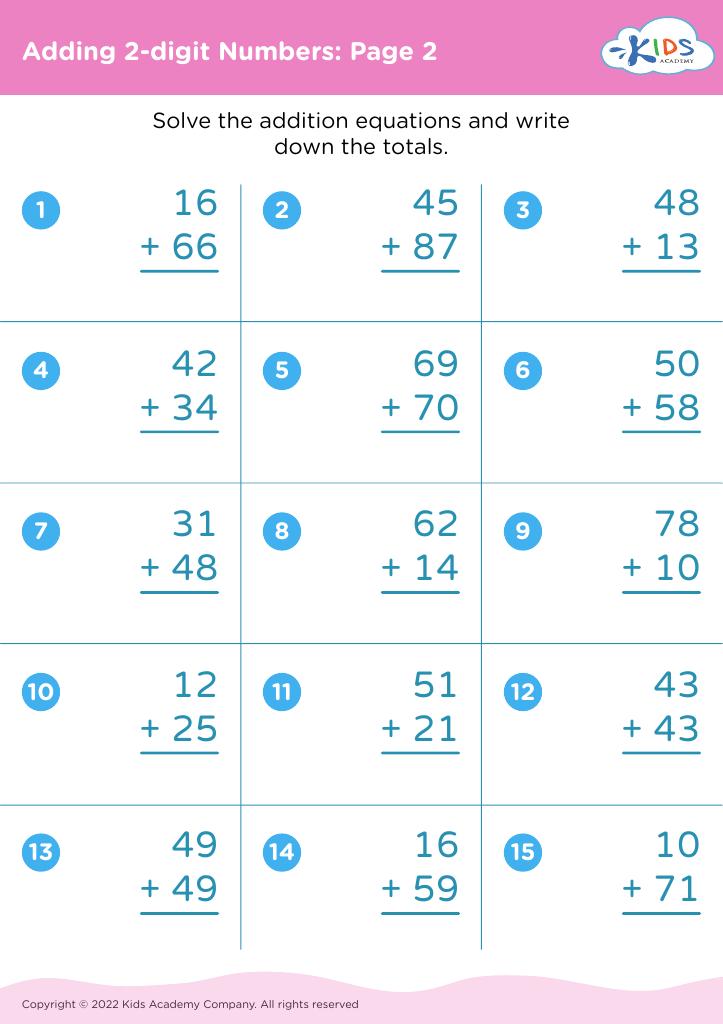
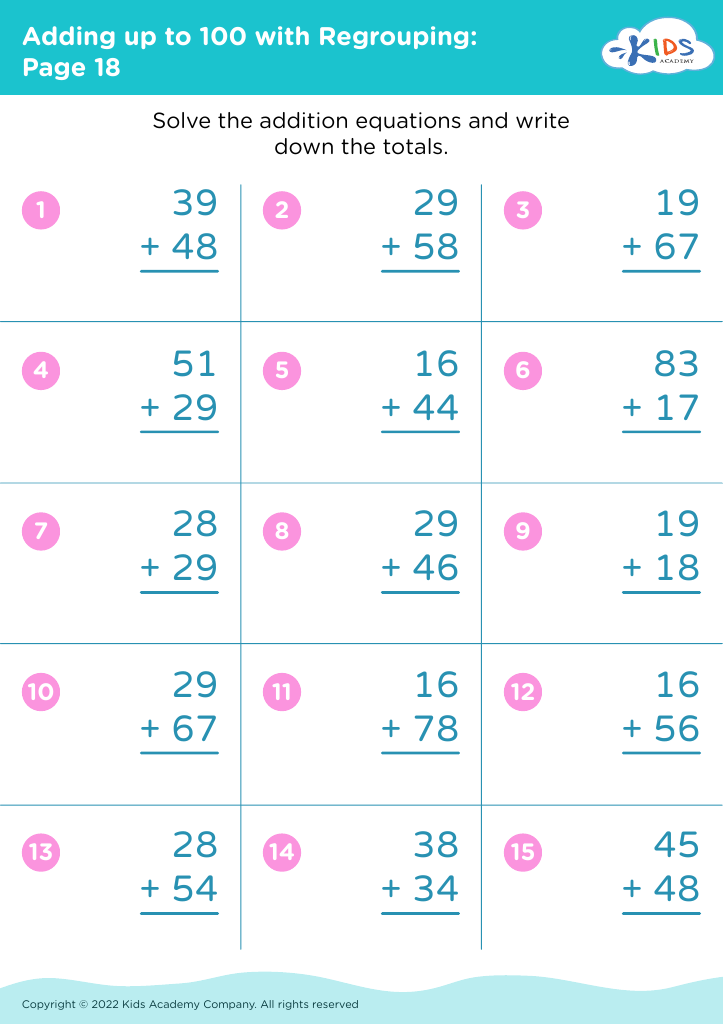








Identifying patterns in addition is crucial for 8-year-old children as it lays a strong foundation for mathematical thinking and problem-solving skills. At this developmental stage, children are beginning to transition from concrete to more abstract thinking, and recognizing patterns helps them make connections and see relationships between numbers.
Patterns in addition, such as adding in sequences (e.g., 2, 4, 6, 8) or recognizing number bonds (e.g., combinations that add up to ten), help children understand the properties of numbers, enhancing their mental math abilities. This skill not only aids in performing arithmetic quickly and accurately but also builds confidence in their mathematical abilities.
Moreover, pattern recognition in addition is a stepping stone to more complex mathematical concepts, such as algebra and geometry. It encourages logical thinking and enhances cognitive development by enabling children to predict outcomes and solve problems systematically.
For teachers and parents, fostering these skills in an engaging and supportive environment encourages a positive attitude toward mathematics. Early success in identifying patterns can spark a lifelong interest in the subject, equipping children with critical thinking skills that are valuable in both academic pursuits and everyday life tasks. Therefore, investing time and effort in teaching this fundamental skill is highly beneficial for a child's overall educational journey.








