Practice counting Addition Worksheets for 8-Year-Olds
6 filtered results
-
From - To
Enhance your 8-year-old's math skills with our engaging Practice Counting Addition Worksheets! Designed to make learning fun and effective, these worksheets provide a variety of exercises that encourage kids to explore addition through counting. With colorful visuals and age-appropriate challenges, children develop their understanding of basic math concepts while boosting their confidence. Whether in the classroom or at home, these printables are perfect for reinforcing addition skills and preparing for more advanced math topics. Help your child thrive in math with our user-friendly resources. Start counting and adding fun today! Access our collection for a brighter math future.
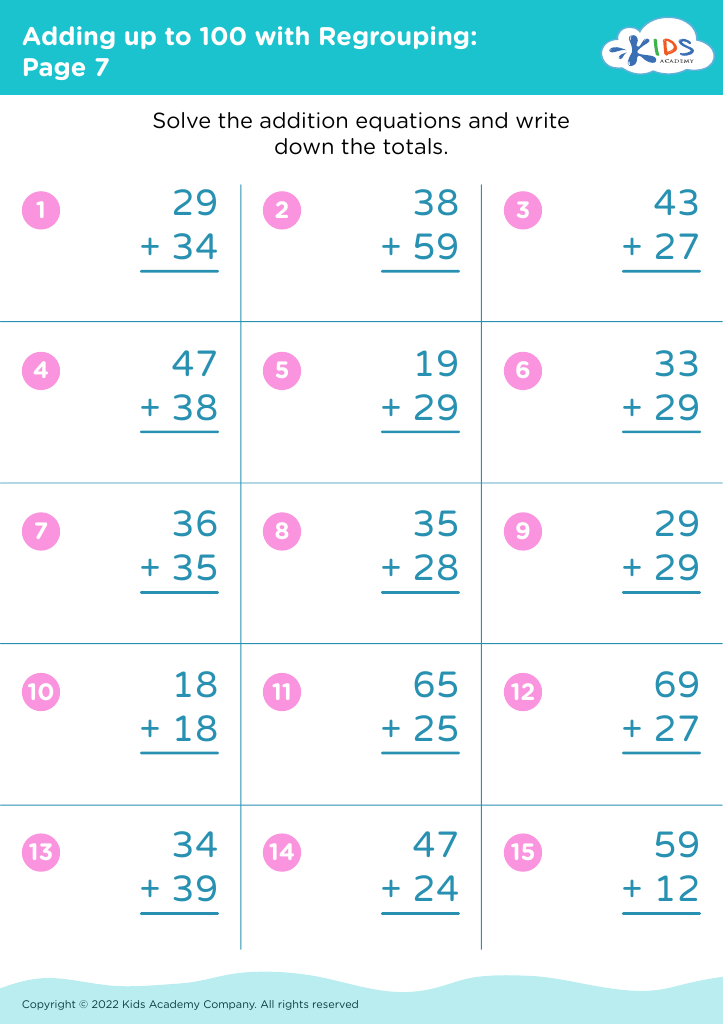
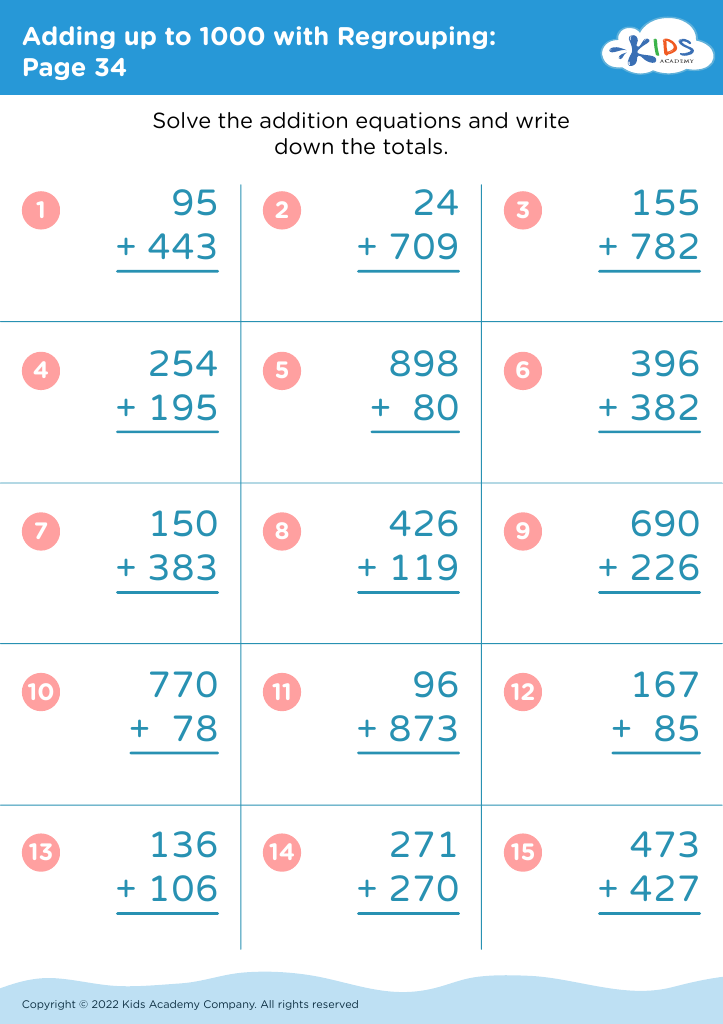
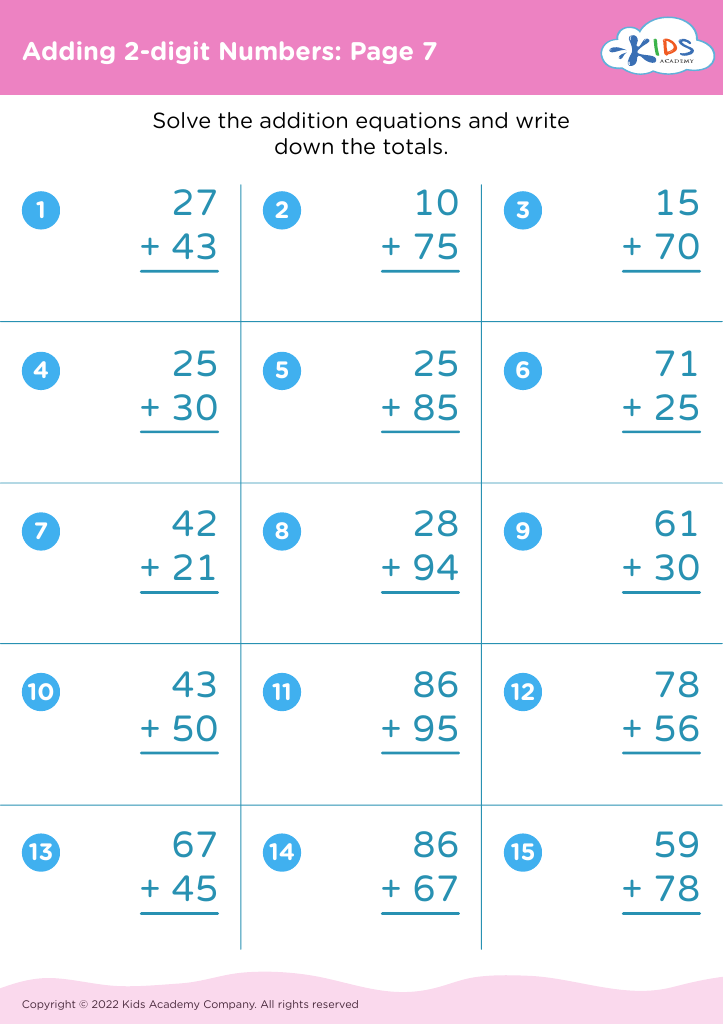
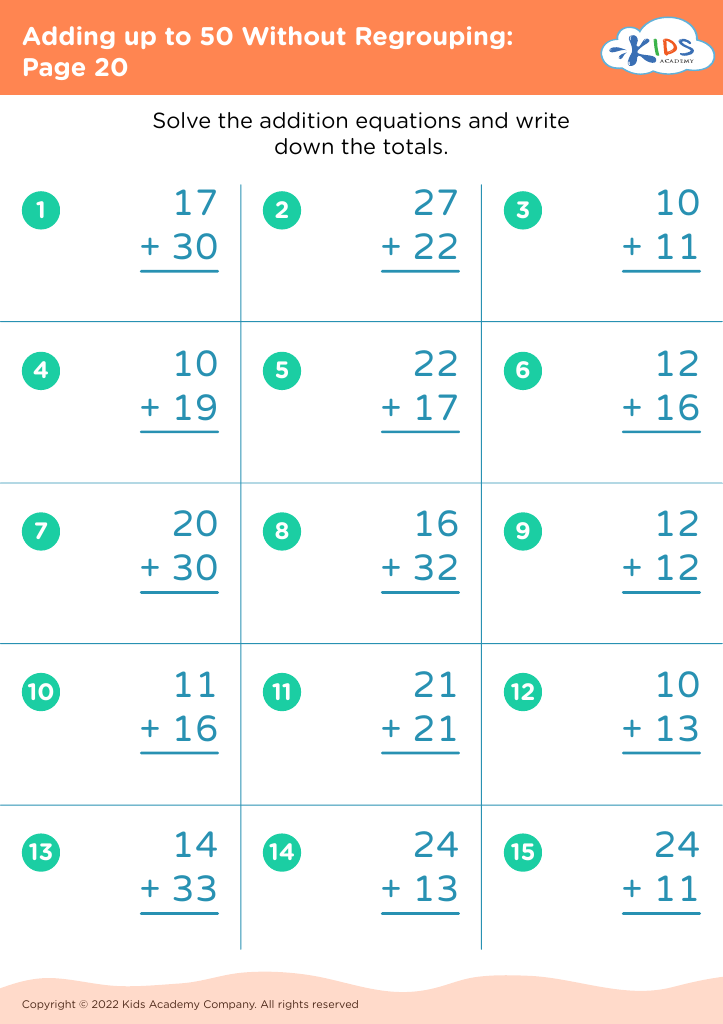
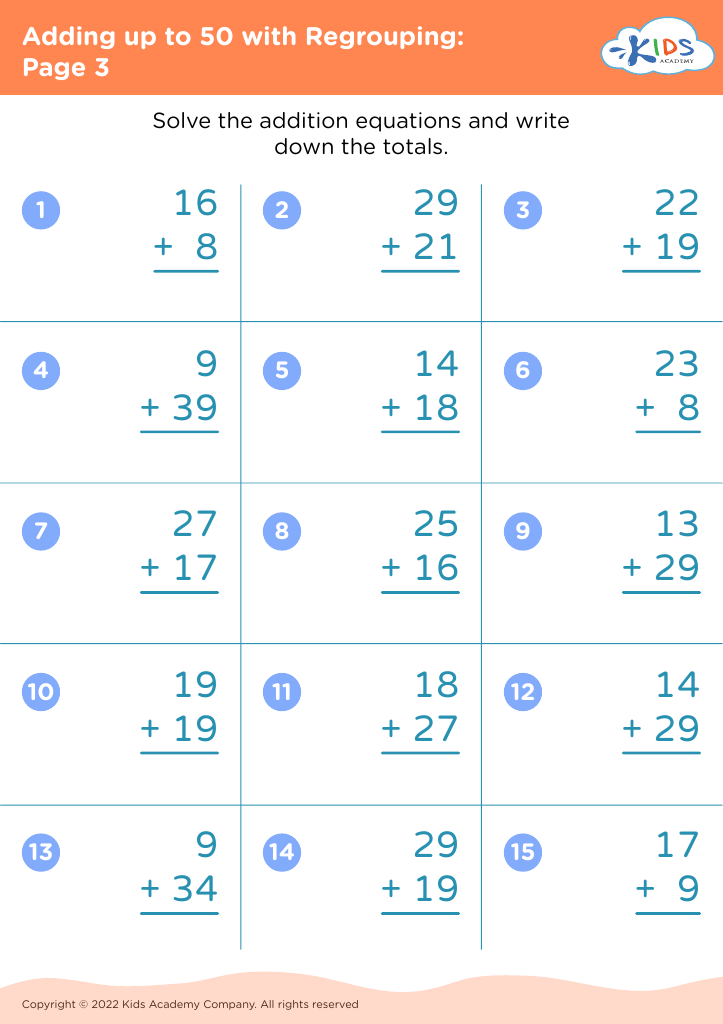
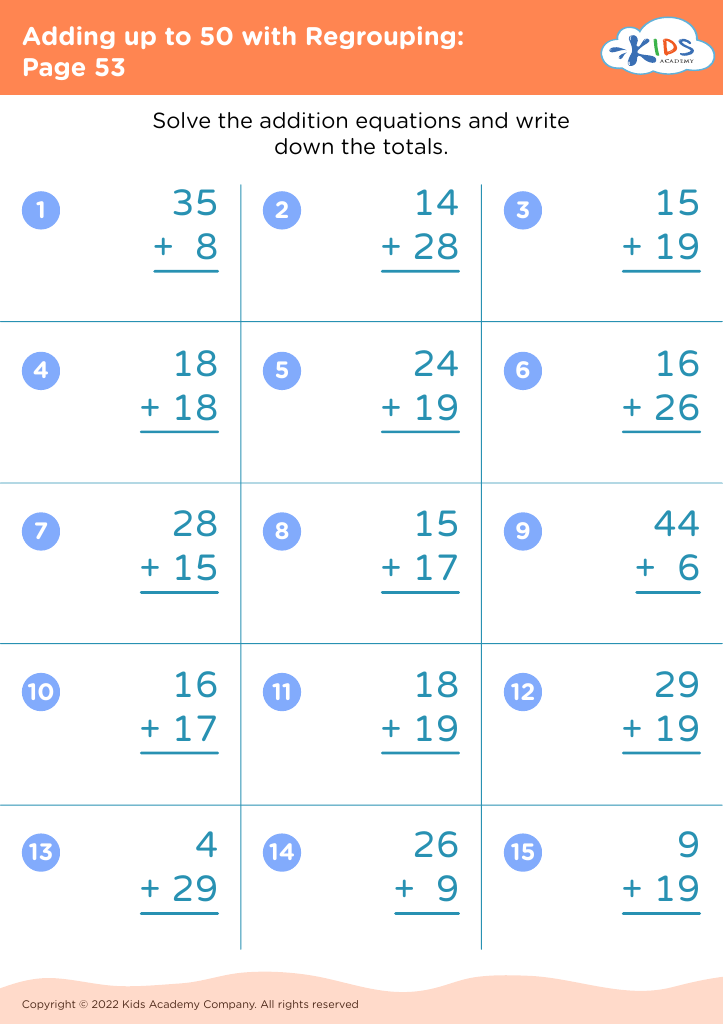



.jpg)




Parents and teachers should care about practicing counting addition for 8-year-olds because this foundational skill is crucial for future mathematical understanding. At this age, children transition from simple arithmetic to more complex concepts including subtraction, multiplication, and division. Mastery of addition helps improve their computational fluency, which forms the backbone for tackling word problems and real-life math scenarios.
Practicing addition also strengthens problem-solving skills and enhances critical thinking. Encouraging students to count and add in various contexts, such as using physical objects or engaging in games, makes learning more tangible and enjoyable. This active participation helps cement their numerical understanding and boosts confidence.
Moreover, frequent practice lays the groundwork for more advanced math topics, such as fractions and algebra. Without a solid grasp of addition, students may struggle with these later concepts, leading to frustration and decreased motivation.
Additionally, early math skills are strongly linked to academic achievement. Students who excel in math often experience broader educational success. By prioritizing practice in counting addition, parents and teachers can promote not only basic math skills but also a lifelong appreciation for mathematics, critical for students’ success in school and beyond.








