Practice inference skills Addition Worksheets for 8-Year-Olds
3 filtered results
-
From - To
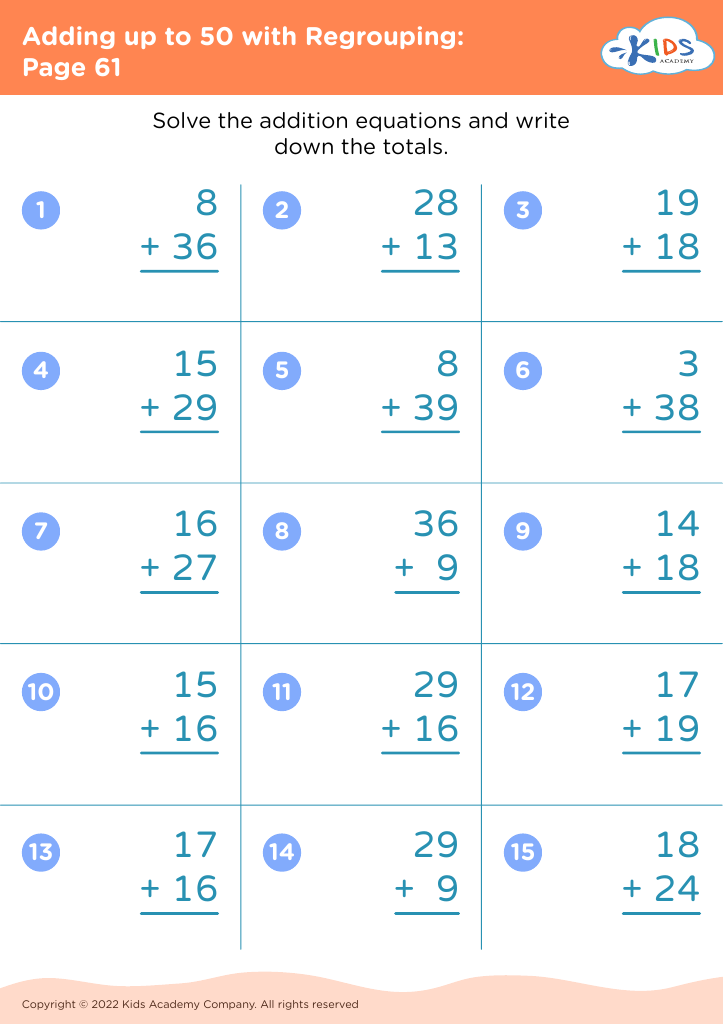
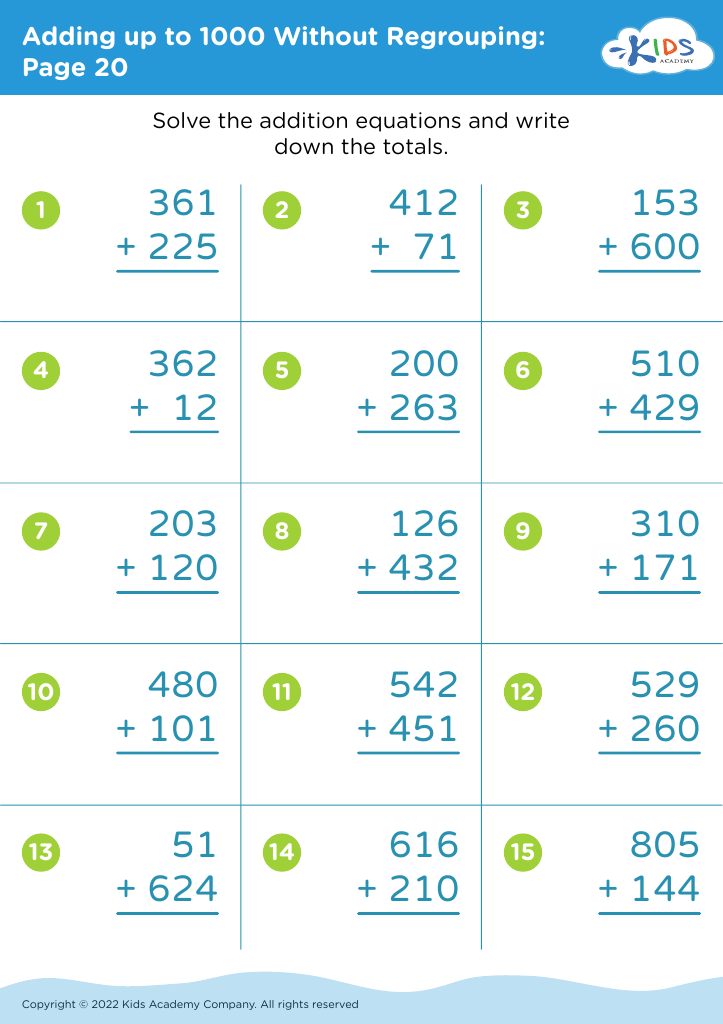
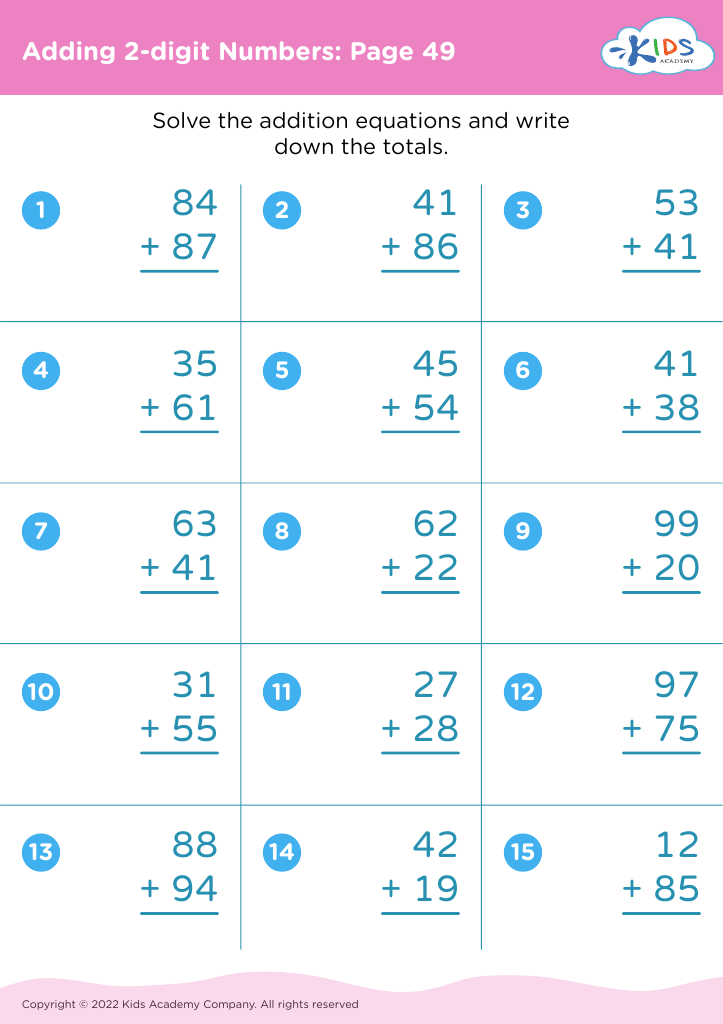
Boost your child's critical thinking and math abilities with our "Practice Inference Skills Addition Worksheets for 8-Year-Olds." Specially crafted to challenge young minds, these worksheets combine basic addition problems with engaging stories and scenarios to enhance inference skills. Each activity encourages children to draw logical conclusions from given information while strengthening their arithmetic prowess. Perfect for classroom use or at-home practice, our sheets are designed to make learning an exciting adventure. Help your child master addition and build essential reasoning skills in a fun, interactive way with these thoughtfully designed worksheets from Kid’s Academy.








Parents and teachers should place great importance on helping 8-year-olds practice inference skills in addition because these skills form a crucial component of their cognitive and academic development. Inference in the context of addition involves more than just performing basic computations; it encourages children to understand the relationships between numbers, recognize patterns, and draw logical conclusions from given data.
Developing these skills has several benefits. Firstly, it enhances problem-solving abilities. When children learn to make inferences, they overcome challenges more effectively by thinking critically about the number operations required. They also become adept at verifying their results, thus fostering a deeper understanding of mathematical concepts rather than mere rote learning.
Secondly, inference skills are not restricted to mathematics but have broader applications. They improve reading comprehension as children learn to "read between the lines" and comprehend implied information. This enhances their overall academic performance and critical thinking skills.
Lastly, proficiency in these skills builds self-confidence. Mastering addition through inference cultivates a sense of achievement and readiness to tackle more complex math problems in the future. By giving attention to these foundational skills, parents and teachers lay down the groundwork for ongoing educational success and lifelong learning.








