Reading analog clocks Addition Worksheets for 8-Year-Olds
4 filtered results
-
From - To
Enhance your child's math skills with our "Reading Analog Clocks Addition Worksheets for 8-Year-Olds." Ideal for young learners, these engaging worksheets combine fundamental arithmetic with time-telling practice. Watch as your child develops crucial addition skills while learning to read analog clocks. Specifically designed for 8-year-olds, these worksheets offer a variety of problems that integrate math operations with practical time exercises. Perfect for both classroom and home activities, our worksheets make learning fun and interactive. Empower your child with the confidence to excel in math through our thoughtfully crafted resources. Download now for free!
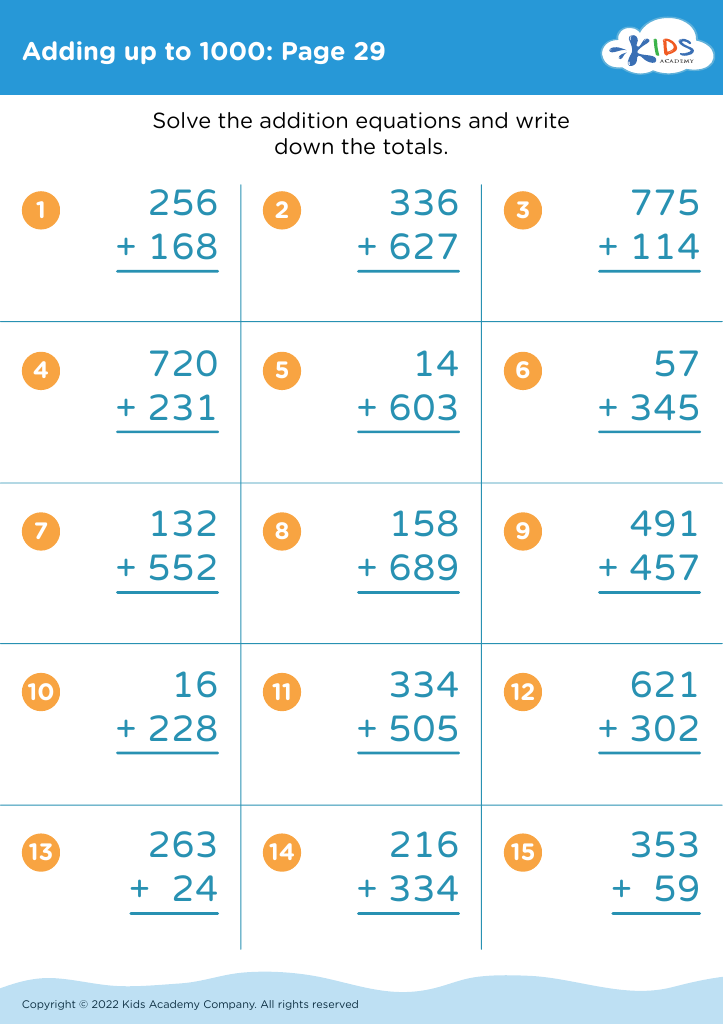
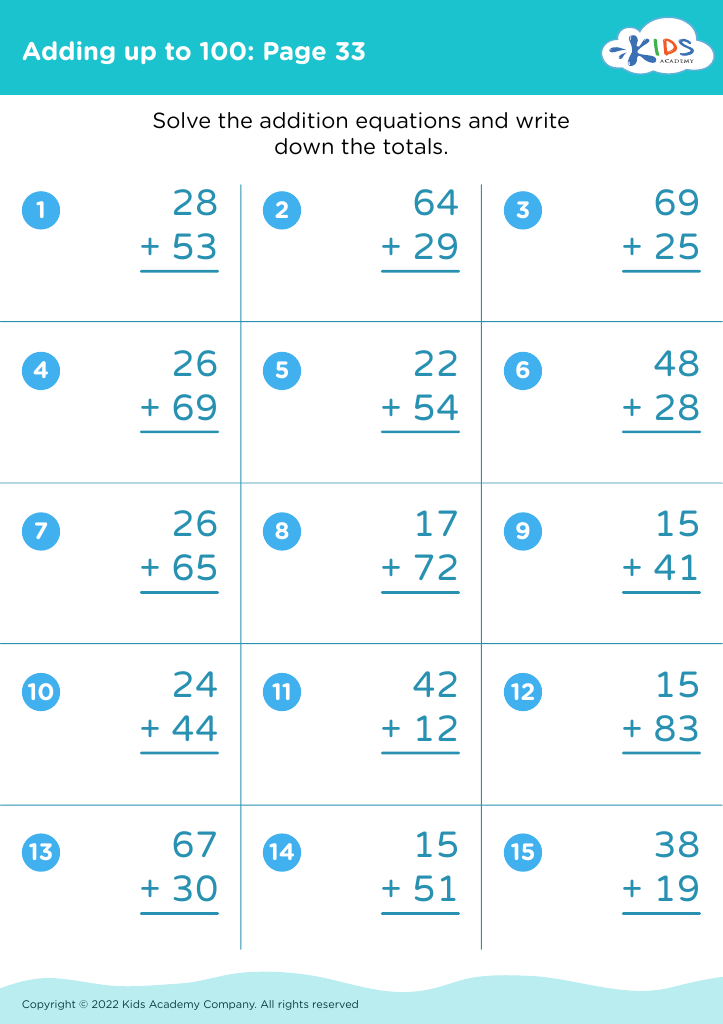
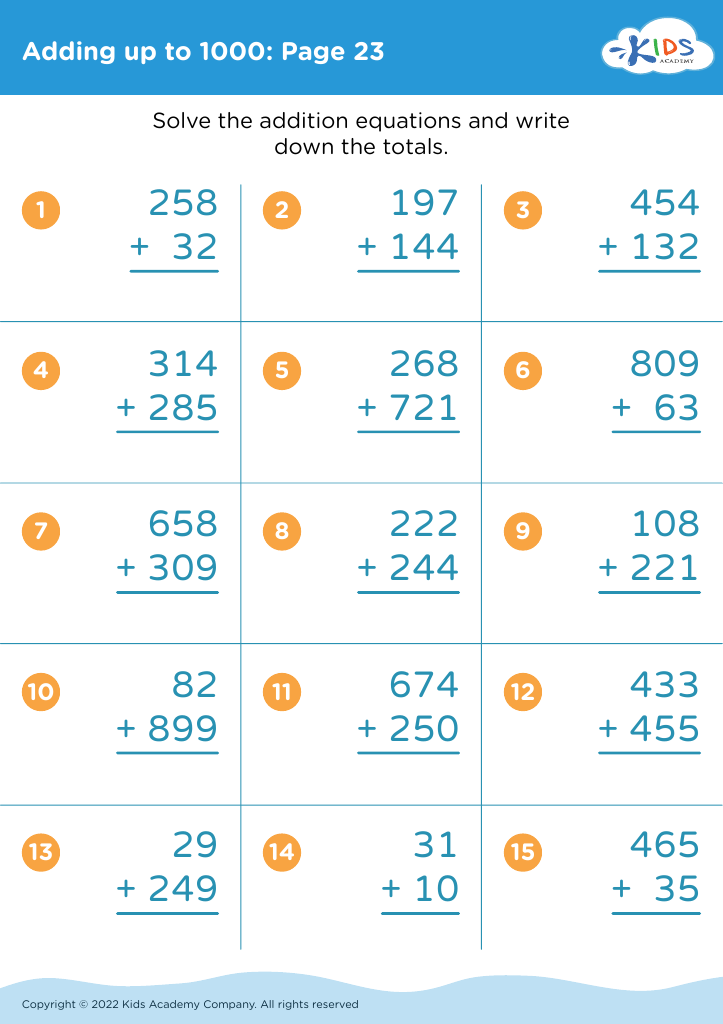
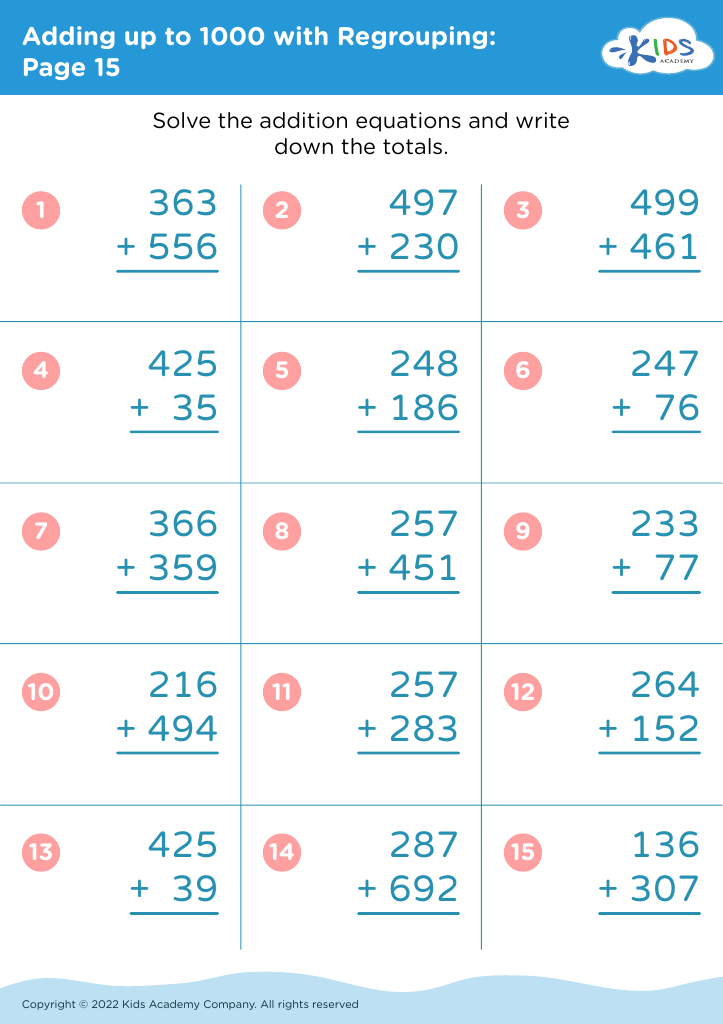








Teaching 8-year-olds to read analog clocks and perform basic addition is crucial for their cognitive and practical development. Analog clocks, unlike digital, help kids understand the passage of time by visualizing it. This skill also strengthens their ability to comprehend fractions, since an hour divided into 60 minutes gives practical experience in partitioning, which lays groundwork for more complex arithmetic operations.
Mathematics addition, on the other hand, is fundamental for everyday problem-solving and logical reasoning. Adding time intervals or calculating end times for activities enhances time management skills, which are crucial as they advance in school. Mastery of these abilities ensures they can complete tasks independently, fostering self-reliance and confidence.
Moreover, reading analog clocks and doing addition are more than just academic skills; they are lifetime skills. Whether it involves cooking, travel, or managing a schedule, reading an analog clock and having basic arithmetic proficiency are frequently used in adult life. Also, both skills encourage attention to detail and persistence—traits valuable beyond the classroom.
Investing time in these areas can enrich a child’s mental toolkit, making them better prepared for future academic and real-world challenges._balancing practical life scenarios and reinforcing the interconnected nature of knowledge fosters well-rounded intellectual growth.








