Vocabulary development Addition Worksheets for 8-Year-Olds
5 filtered results
-
From - To
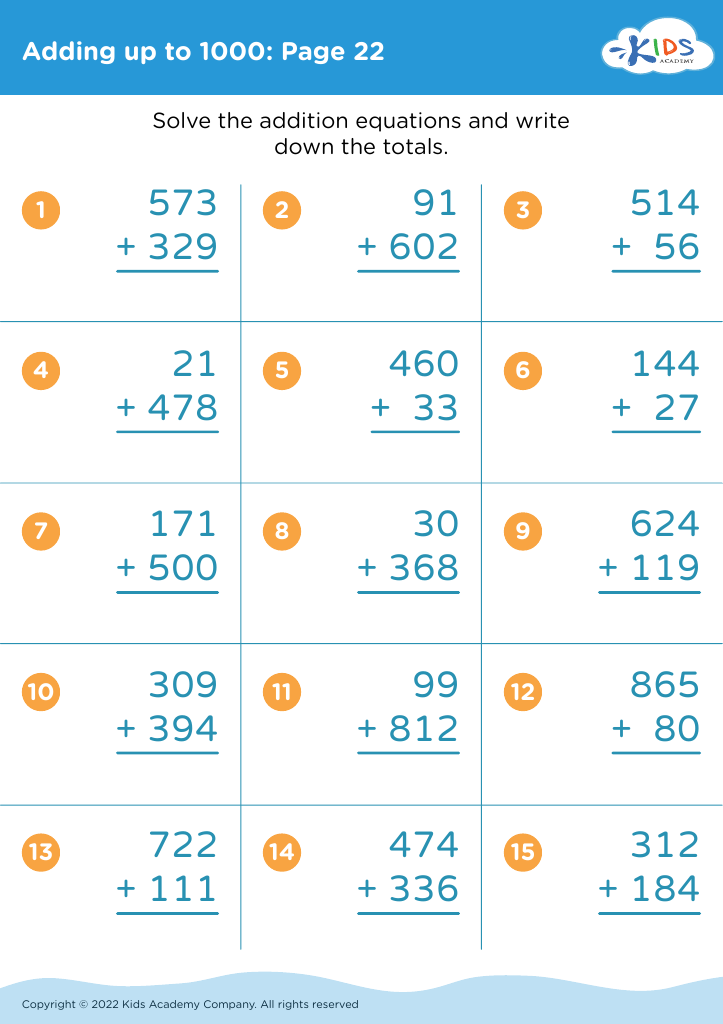
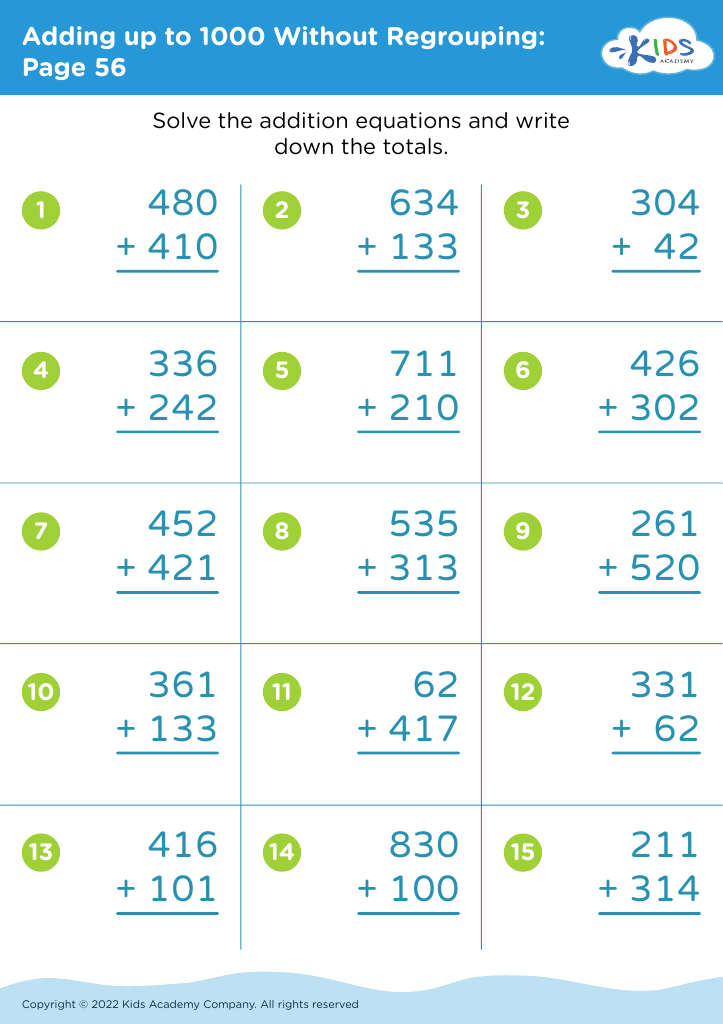
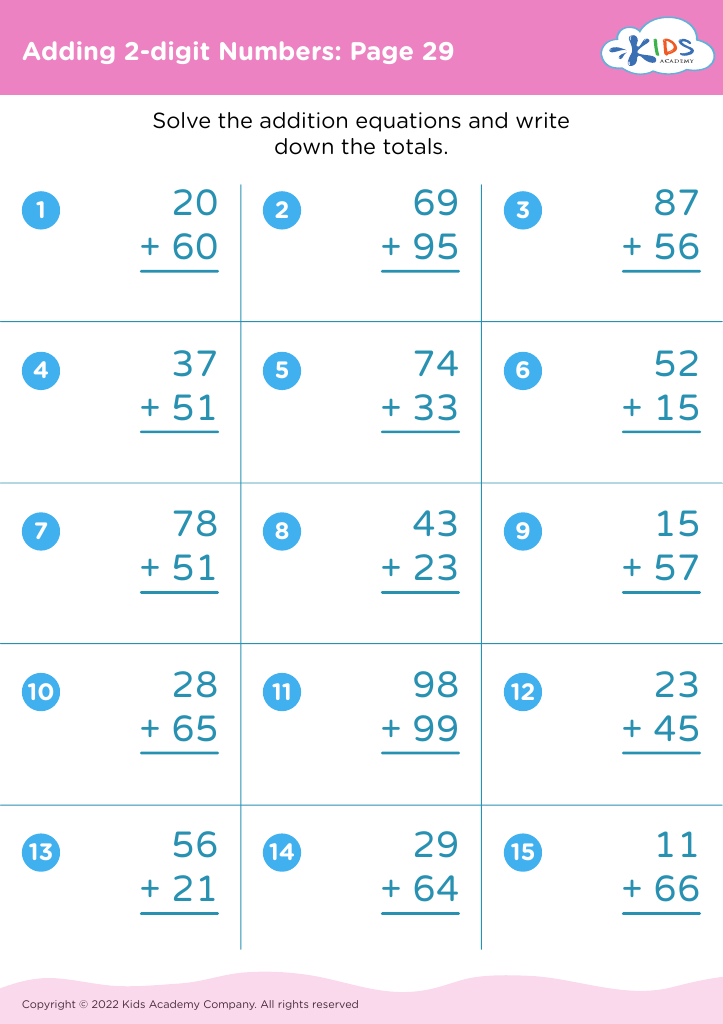
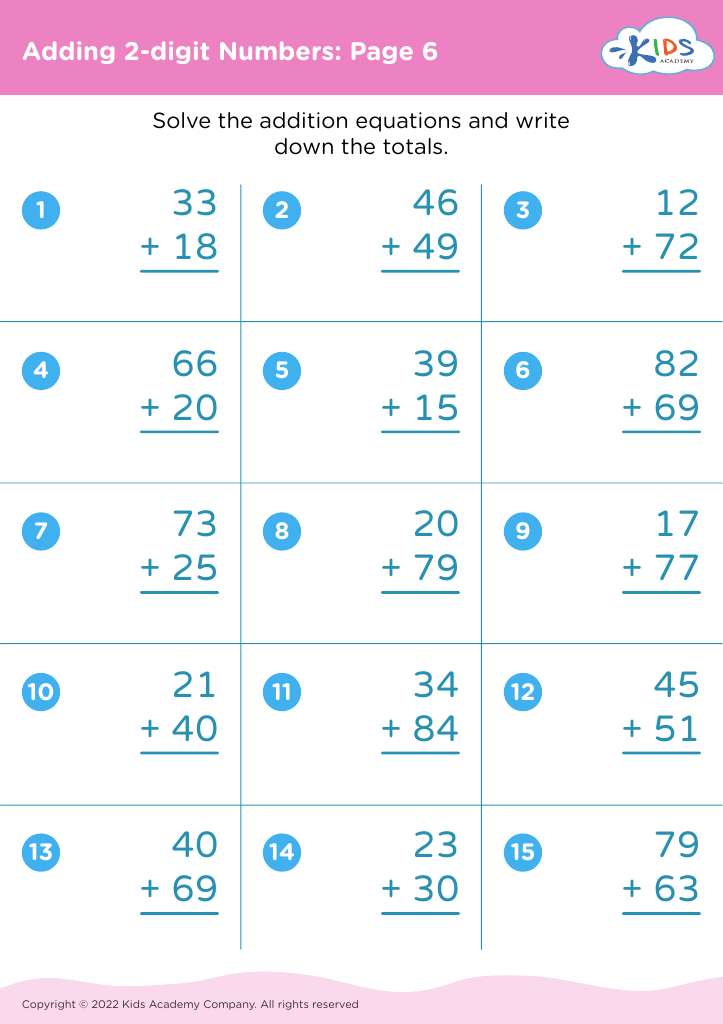
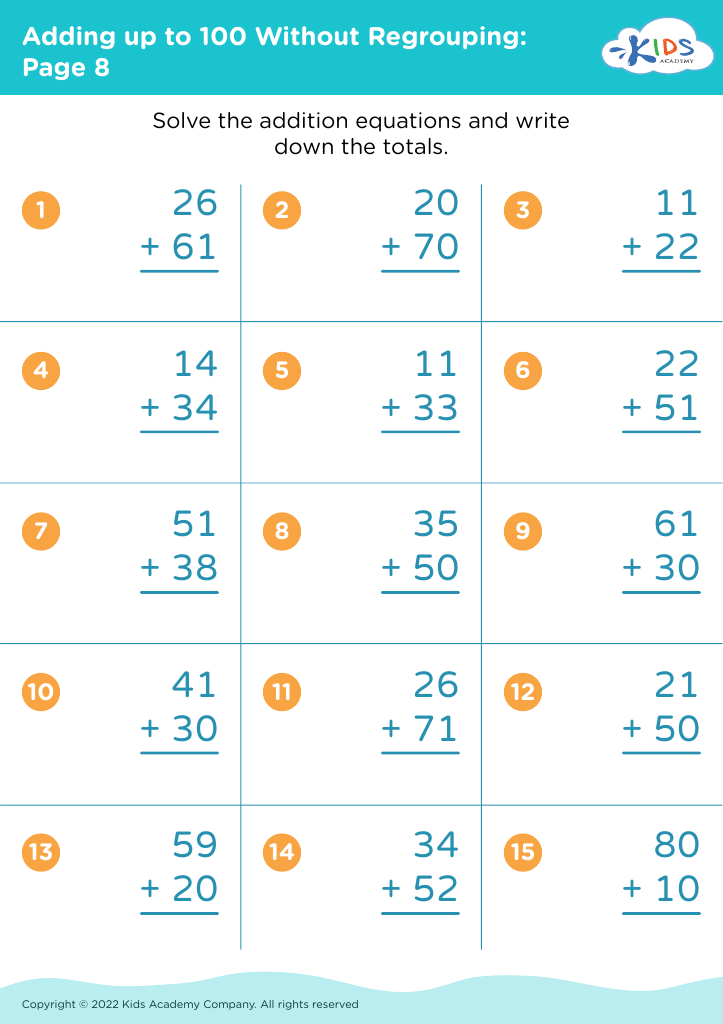
Enhance your 8-year-old’s mathematical and vocabulary skills with our engaging Vocabulary Development Addition Worksheets! Designed to strengthen their understanding of addition, these worksheets incorporate essential vocabulary that broadens their language while they learn. Each activity is crafted to foster not only mathematical fluency but also the ability to communicate mathematical concepts clearly. Ideal for home or classroom use, our interactive worksheets keep children motivated and focused on learning. Explore our collection today and empower your child to express their mathematical thinking confidently, ensuring a solid foundation for future success in both math and language arts!








Vocabulary development is crucial for 8-year-olds as it significantly impacts their overall language skills, academic performance, and self-confidence. At this age, children are transitioning from learning to read to reading to learn, making a rich vocabulary essential for comprehension in subjects such as science, math, and social studies. A robust vocabulary allows children to express their thoughts and ideas more clearly, fostering effective communication.
Additionally, vocabulary is linked to critical thinking and the ability to understand complex concepts. When parents and teachers focus on enriching children's vocabulary through engaging activities—like reading diverse books, playing word games, or encouraging discussions—they enable children to develop cognitive skills necessary for problem-solving and innovation.
Furthermore, a strong vocabulary can also enhance children’s social interactions. It helps them connect with peers and express emotions appropriately, which is vital for building relationships. By prioritizing vocabulary development, parents and teachers contribute to a child's academic and social success, setting them on a path to lifelong learning. Investing time in vocabulary-building activities not only enriches a child's language skills but also fosters a love for learning that can last a lifetime.








